Table of Contents
Transforming compact spaces with proper illumination doesn’t require a massive investment. Under cabinet light bars have revolutionized how we brighten kitchens, workstations, and shelving areas, offering targeted lighting exactly where you need it most. For those working with limited square footage and an even more limited budget, the market now offers surprisingly capable options under $50 that deliver professional-grade results without the premium price tag.
The key to finding the perfect budget-friendly solution lies in understanding which features truly matter for small spaces and which specifications you can compromise on without sacrificing performance. Compact areas present unique challenges—every inch counts, heat dispersion becomes critical, and the wrong color temperature can make a tiny room feel even smaller. This guide walks you through everything you need to know to make an informed decision, from decoding technical specifications to installation strategies that maximize both light output and precious counter space.
Top 10 Under Cabinet Light Bars under $50
Detailed Product Reviews
1. JUSJUBR Plug-in Under Cabinet Lighting, 2pcs 12 Inch Dimmable Closet Light, Cold White 6000K Linkable USB LED Light Bar, Memory Function, Under Counter Lights for Kitchen, Desk, Workspace
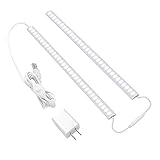
Overview: The JUSJUBR kit includes two 12-inch LED light bars producing a combined 400 lumens of 6000K cold white light. Each bar features 33 LEDs housed in a slim metal frame, powered by USB for plug-and-play convenience. The linkable design lets you connect multiple units, while the built-in dimmer adjusts brightness from 10% to 100%. This system targets budget-conscious users needing discreet, functional under-cabinet lighting without complex wiring or smart features.
What Makes It Stand Out: The memory function recalls your last brightness setting—a rare feature in this price range. Its ultra-thin profile remains virtually invisible when mounted, while the linkable capability allows expanding coverage by adding more bars. USB power flexibility means you can run it from a laptop, power bank, or wall adapter. The 6000K cold white temperature is optimized for detailed tasks like food preparation, reducing eye strain during focused work.
Value for Money: At approximately $20-25 for a two-bar kit, this offers exceptional value. Comparable single-bar units often cost the same, so getting double the coverage is a clear advantage. LED efficiency ensures minimal electricity costs, and the metal construction suggests reasonable durability. While premium smart lights cost 3-4x more, JUSJUBR covers essential functions brilliantly for those prioritizing practicality over advanced features.
Strengths and Weaknesses: Strengths include the memory function, effortless adhesive installation, linkable expandability, slim design, and low heat output. The metal frame feels sturdy despite being lightweight. Weaknesses are modest brightness (200 lumens per bar) limiting coverage area, adhesive pads that may weaken on textured surfaces over time, and lack of screw-mounting options for permanent installation. The memory only functions when power remains connected.
Bottom Line: This is a no-brainer for renters, dorm residents, or anyone seeking affordable, reliable under-cabinet lighting. It won’t impress with smart features, but absolutely delivers where it counts: simple installation, consistent performance, and practical adjustability. Perfect for small kitchens, desks, or closets where hardwiring isn’t feasible.
2. Under Cabinet Light, 12 Inch Plug in LED Closet Light with Memory Function, Cold White 6000K, Super Slim Dimmable Workbench,Under Counter Lights for Kitchen
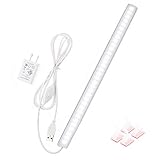
Overview: This single 12-inch LED bar delivers 33 LEDs of 6000K cold white light, producing sufficient illumination for focused task areas. The USB-powered design enables plug-and-play operation from any 5V adapter, while the integrated dimmer switch allows seamless brightness adjustment. Marketed as an “invisible” lighting solution, its ultra-slim profile practically disappears under cabinets. The memory function recalls your last brightness setting, though it resets if fully unplugged from power.
What Makes It Stand Out: The remarkably thin profile is its defining trait—most competitors are noticeably thicker. The built-in dimmer switch eliminates need for separate controllers, keeping things simple. Its metal frame construction feels premium compared to plastic alternatives at this price. The “invisible” design philosophy works perfectly for minimalist kitchens where you want light without seeing the source.
Value for Money: Priced under $15 for a single bar, this is one of the most affordable quality options available. You’re getting metal construction, dimming capability, and decent brightness for very little money. While cheaper no-name brands exist, the memory function and build quality justify the small premium. It’s ideal for targeted lighting rather than whole-kitchen solutions.
Strengths and Weaknesses: Strengths include the ultra-thin design, sturdy metal housing, simple controls, and easy adhesive mounting. The diffused lens prevents harsh LED dot reflections on countertops. Weaknesses: memory resets when unplugged, single-bar package limits coverage, adhesive-only mounting may not suit all surfaces, and the output may feel underpowered for larger spaces. No linkability means each bar needs separate power.
Bottom Line: For those needing discreet, straightforward task lighting in one specific area, this delivers exceptional value. It’s perfect for renters wanting non-permanent solutions or homeowners adding light to a single dark cabinet. Don’t expect whole-room coverage, but for its intended purpose—focused, affordable illumination—it’s hard to beat. Choose this for simplicity and stealth over smart features.
3. Benreom 3 Pcs RGB Under Cabinet Lights Kit, Smart App and Remote Control Under Cabinet Lighting, Dimmable Under Counter Lights for Kitchen, Plug in LED Lights Bar for Cabinet, Counter, Workbench, Desk

Overview: Benreom’s three-bar kit revolutionizes under-cabinet lighting by merging task illumination with entertainment. Beyond standard white light, it offers 16 million RGB colors controlled via 40-key remote or smartphone app. Each bar delivers dimmable output from 0-100%, with dynamic modes syncing to music or microphone input. The kit includes three 12-inch bars, power supply, and mounting accessories, targeting users wanting both functional and ambient lighting.
What Makes It Stand Out: The music sync feature transforms your kitchen into a dynamic entertainment space—colors pulse with your playlist or ambient sound. With 213 dynamic modes, timer functions, and DIY color creation, customization is virtually limitless. The app control adds convenience, letting you adjust lighting from anywhere in the room. This is the only product here treating lighting as an experience, not just utility.
Value for Money: At $35-40 for three smart RGB bars, you’re paying a premium over basic white options, but gaining features found in systems costing twice as much. Philips Hue equivalents would run $100+ for similar capability. If you’ll use the color features—even occasionally—the value proposition is strong. For pure task lighting, though, you’re paying for unused potential.
Strengths and Weaknesses: Strengths include unparalleled color options, dual control methods, music synchronization, and three-bar coverage. The white light, while mixed rather than pure, is adequate for general tasks. Weaknesses: the white isn’t pure 6000K (it’s RGB-mixed), setup requires more time, app connectivity can occasionally lag, and the entertainment focus may not suit traditional kitchens. No voice assistant integration.
Bottom Line: Buy this if you love hosting parties, want mood lighting for movie nights, or simply enjoy customizing your space. It’s overkill for utilitarian kitchens, but perfect for open-plan living areas where lighting doubles as decor. The smart features work reliably, and the sheer fun factor justifies the cost. For basic task lighting only, look elsewhere.
4. Maylit Under Cabinet Lights Plug in, 3 Pcs 12 Inch Ultra Thin Under Cabinet Lighting, Super Bright Daylight White Under Counter Lights for Kitchen, Dimmable Light for Cabinet, Counter, Workbench, Desk

Overview: Maylit’s three-bar kit prioritizes raw brightness with 81 high-output LEDs delivering 1200 lumens of 6000K daylight white. Each ultra-thin 0.25-inch bar mounts seamlessly under cabinets, providing professional-grade illumination for kitchens, workshops, or desks. The touch-sensitive dimmer offers 1-100% adjustment with simple taps. Included are both adhesive pads and screws, giving installation flexibility. This system is built for those who need serious light output without smart-home complexity.
What Makes It Stand Out: The 1200-lumen output dwarfs most competitors, eliminating shadows in even the largest kitchen workspaces. The touch dimmer responds instantly without fumbling for switches. At just 0.25 inches thick, these bars remain virtually hidden while delivering maximum performance. Offering both tape and screw mounting in the box shows thoughtful design for different user needs.
Value for Money: Around $30 for three ultra-bright bars represents outstanding value. Comparable brightness from brands like Lithonia would cost $60-80. You’re getting commercial-level illumination, metal construction, and premium mounting options at budget pricing. The energy efficiency ensures low operating costs despite the high output.
Strengths and Weaknesses: Strengths include exceptional brightness, ultra-thin profile, dual mounting options, responsive touch control, and robust build quality. The daylight white is crisp and accurate for color-critical tasks. Weaknesses: no memory function, basic on/off cycling resets brightness, no smart features, and the intense output may be overwhelming in small spaces. The power brick is larger than some competitors.
Bottom Line: If your priority is maximum visibility for cooking, crafting, or working, this is your best choice. It eschews gimmicks for pure performance, delivering professional-grade brightness at a DIY price. Perfect for serious home chefs or garage workshops where shadows aren’t an option. The installation flexibility and slim profile are bonuses on an already compelling package.
5. Under Cabinet Lighting, LED Motion Sensor Light Indoor, 2200mAh USB Rechargeable Closet Lights Battery Operated, Stick On Magnetic Wireless Dimmable Under Counter Lights for Kitchen(2 Pack)

Overview: This two-pack of battery-powered lights liberates you from outlets entirely. Each bar features 62 LEDs producing 160 lumens, powered by a 2200mAh rechargeable battery lasting 10 hours at max brightness or 40-60 days in motion-sensor mode. The intelligent PIR sensor detects movement within 10 feet, gradually illuminating to prevent harsh light shock. Four modes include Always On, Always Off, Auto Day, and Auto Night. Magnetic mounting enables tool-free installation and removal for charging.
What Makes It Stand Out: The gradual illumination feature is genuinely eye-friendly—no more blinding midnight kitchen trips. Motion sensitivity works reliably, and the 20-second auto-dim conserves battery brilliantly. USB-C charging with included cables is modern and fast (2-hour full charge). The magnetic system makes repositioning effortless, perfect for renters. Having both motion and manual modes provides unmatched flexibility.
Value for Money: At $35-40 for two rechargeable motion lights, the value is solid. While pricier than plug-in options, you save on electrician costs and gain placement freedom. Comparable battery lights with weaker features run $25-30 each. The long battery life and premium sensor tech justify the investment if you need wireless convenience.
Strengths and Weaknesses: Strengths include true wireless freedom, intelligent motion sensor, long battery life, fast USB-C charging, magnetic mounting, and stepless dimming. The gradual on/off is a standout user-friendly feature. Weaknesses: 160 lumens per bar is modest, requiring multiple units for larger areas. The motion sensor may trigger falsely from pets, and you’ll need to remember to recharge periodically. No remote control.
Bottom Line: These excel in closets, pantries, stairs, or anywhere outlets are scarce. The motion sensor adds convenience and saves power, while the magnetic design simplifies life. Don’t expect to illuminate entire kitchens, but for targeted wireless lighting, they’re unbeatable. Perfect for renters, older homes, or anyone prioritizing convenience over maximum brightness.
6. maylit Under Cabinet Lighting Plug in, 14 Inch Linkable Ultra Bright LED Light Bar, Renter Friendly Lamp, Wired Indoor Lights for Kitchen Cabinet, Counter, Workbench, Desk, Shelf, Cool White

Overview: The maylit 14-inch LED light bar delivers powerful 6000K daylight illumination for under-cabinet applications. Designed for kitchens, workbenches, and office spaces, this linkable system offers professional-grade brightness while consuming minimal energy, promising up to 85% savings compared to traditional fixtures.
What Makes It Stand Out: The linkable design distinguishes this product, supporting two connection methods—a 4.9ft cable for spaced installations or a direct connector for seamless rows. The convenient inline switch eliminates awkward reaching, while dual mounting options (adhesive pads or screw clips) provide renter-friendly flexibility without requiring an electrician.
Value for Money: Compared to single, non-linkable fixtures, the maylit system’s expandability justifies its modest price premium. The ability to chain multiple bars with minimal hardware investment makes it more economical for large spaces than buying separate units, while the LED longevity reduces replacement costs.
Strengths and Weaknesses: Strengths include exceptional brightness, energy efficiency, versatile installation methods, and the practical inline switch. The linkable architecture adapts to various layouts. Weaknesses include the cool white-only option (no warm white variant) and potential adhesive degradation on textured or greasy surfaces over time. The plastic construction, while functional, lacks the premium feel of aluminum alternatives.
Bottom Line: Ideal for renters and homeowners seeking adaptable, bright under-cabinet lighting without hardwiring. The linkable design and dual mounting make it a versatile, cost-effective solution for illuminating countertops, desks, and workspaces.
7. JUSJUBR 12-Inch Slim LED Under Cabinet Light with Memory Function, Warm White 3000K Dimmable USB Light Bar for Rooms

Overview: The JUSJUBR 12-inch LED bar offers warm 3000K illumination in an ultra-slim profile designed to disappear under cabinets. With 33 LEDs per bar and aluminum construction, it provides pleasant, flicker-free lighting for kitchens, closets, and workspaces while functioning as an effective heat sink.
What Makes It Stand Out: The “invisible” narrow design maximizes illumination while minimizing visual clutter. Its step-dimming capability includes a memory function that retains brightness settings between uses (when powered continuously). The aluminum body provides durability and thermal management uncommon in this price tier, while USB power enables flexible placement.
Value for Money: For warm-white under-cabinet solutions, this unit competes well against bulkier alternatives. The aluminum construction and memory function deliver premium features at a mid-range price, though the USB-only power may require additional adapters.
Strengths and Weaknesses: Strengths include the slim aesthetic, quality aluminum build, reliable dimming, pleasant warm light temperature, and straightforward adhesive installation. The memory function enhances convenience. Weaknesses include the memory resetting upon disconnection from power, USB dependency requiring accessible ports or adapters, and limited length options (single 12-inch bar versus linkable systems).
Bottom Line: Perfect for those prioritizing warm, discreet lighting with quality construction. The slim profile and memory function make it excellent for permanent installations where the power source remains constant.
8. AXHHTVCGY RGB Light Bar with Color Memory & Dimmable Brightness for Monitor/Desk, Under Cabinet Lights with 8 Colors & Dynamic Modes, Magnetic Installation for Kitchen, Room, Shelf, USB Powered

Overview: The AXHHTVCGY RGB light bar prioritizes ambiance over primary illumination, offering eight preset colors and dynamic modes for mood lighting applications. With magnetic and adhesive mounting options and a 4.75-foot USB cable, it targets decorative accent lighting for monitors, desks, cabinets, and entertainment spaces.
What Makes It Stand Out: Color versatility defines this product, with cycling effects and intelligent memory that preserves your last selected color and brightness. The magnetic backing enables instant, tool-free installation on ferrous surfaces, while the generous USB cable allows flexible placement without battery concerns.
Value for Money: As a specialized mood-lighting solution, it delivers RGB capability at a price point below full-spectrum smart lights. However, its limited brightness makes it a poor value for those seeking primary task lighting—it’s strictly a complementary accent piece.
Strengths and Weaknesses: Strengths include vibrant color selection, reliable memory function, dual installation methods, and USB convenience. The magnetic mounting is particularly innovative. Weaknesses include insufficient brightness for task work, lack of warm/cool white temperature options beyond basic white, and potential color accuracy limitations for professional applications.
Bottom Line: Best suited for gamers, streamers, and ambiance enthusiasts wanting customizable accent lighting. Not recommended as a primary under-cabinet work light, but excellent for creating atmospheric effects.
9. Under Cabinet Lights Plug-in Cold White 6000K, Dimmable LED Under Cabinet Lighting, 4pcs 12 Inch Under Counter Lights for Kitchen with Memory Function, LED Light Bar for Closet, Pantry, Workbench

Overview: This four-pack of 12-inch LED bars provides comprehensive 6000K cold white coverage for budget-conscious buyers. Each bar houses 33 LEDs and features integrated dimming with memory, offering a complete under-cabinet solution for kitchens, pantries, and workbenches in a single package.
What Makes It Stand Out: The four-bar configuration delivers exceptional value, enabling whole-kitchen illumination without separate purchases. The “invisible” slim profile minimizes visual impact while providing even light distribution. The dimmer-switch memory retains preferences, and the all-in-one kit simplifies project planning.
Value for Money: Competing single-bar units cost nearly as much as this complete four-piece set, making it arguably the best value for larger installations. The unified kit eliminates compatibility concerns while providing professional results at a DIY price point.
Strengths and Weaknesses: Strengths include outstanding multi-bar value, adequate brightness, memory function, simple adhesive installation, and low energy consumption. The metal frames add durability. Weaknesses include reliance on adhesive mounting (no screw option mentioned), cool-white-only output limiting ambiance flexibility, and potential connection reliability issues with multiple linked units.
Bottom Line: An unbeatable value for illuminating multiple cabinets or a full kitchen run. The four-pack configuration makes it the smart choice for comprehensive under-cabinet projects on tight budgets.
10. ASOKO 16 Inch Under Cabinet Lights,Plug and Play Under Counter Lighting,6000K Cool White with 700LM Bright,ETL Light Bar with ON/Off Switch for Kitchen,Under Desk,Workbench

Overview: The ASOKO 16-inch light bar emphasizes safety and simplicity, featuring ETL certification and 700-lumen brightness at 6000K cool white. With reinforced cords, a simple on/off switch, and extended 1.6-meter cable, it targets users wanting reliable, no-fuss under-cabinet illumination without complex features.
What Makes It Stand Out: ETL certification provides verified safety assurance rare in this category, while the reinforced plug design withstands frequent use. The 16-inch length and 700LM output deliver substantial coverage from a single unit, and the generous power cable accommodates various room layouts without extensions.
Value for Money: While lacking advanced features like dimming or linking, the safety certification and robust construction justify its competitive price. It positions itself as a “set it and forget it” solution, prioritizing reliability over flexibility.
Strengths and Weaknesses: Strengths include certified safety, impressive brightness, durable construction, extended cable length, and straightforward operation. The dual mounting options (3M stickers or screws) enhance versatility. Weaknesses include non-dimmable operation, single-bar limitation (non-linkable), cool-white-only output, and lack of memory or smart features.
Bottom Line: Ideal for safety-conscious users wanting bright, reliable under-cabinet lighting without complexity. The ETL certification makes it perfect for kitchens where electrical safety is paramount.
Understanding Under Cabinet Lighting for Compact Spaces
What Defines a “Budget” Light Bar
Budget under cabinet lighting typically falls into the sub-$50 category, but price alone doesn’t tell the full story. These fixtures prioritize essential functionality over premium materials and advanced smart features. You’ll find cost savings through simplified construction, standard LED strips rather than custom chips, and basic but reliable mounting systems. The sweet spot exists where manufacturers balance affordability with non-negotiable quality standards like proper electrical safety certifications and adequate heat management.
Why Compact Spaces Have Unique Lighting Needs
Small kitchens, RVs, dorm rooms, and tiny home offices suffer from shadows and dark corners that make tasks difficult. In these environments, under cabinet lights serve as primary task lighting rather than supplemental illumination. The proximity to work surfaces means beam angle becomes crucial—too narrow and you’ll create harsh spotlights, too wide and you’ll waste lumens on walls. Compact spaces also amplify every design choice; a bulky fixture that might look fine in a spacious kitchen becomes an eyesore when it’s inches from your face.
Benefits of Affordable Light Bars
Budget fixtures democratize good lighting design, making professional results accessible to renters, students, and anyone unwilling to invest hundreds in permanent fixtures. Modern LED technology means even inexpensive options offer 30,000+ hour lifespans, effectively lasting years with daily use. The low price point also encourages creative applications—lighting inside closets, under bathroom vanities, or along stair railings—without financial risk. Many budget models now include features like dimming and color temperature adjustment that were premium-only just a few years ago.
Key Features to Evaluate in Budget Light Bars
Brightness Levels and Lumens
For compact spaces, 150-300 lumens per foot provides adequate task lighting without overwhelming glare. A 12-inch bar at 200 lumens works perfectly for small prep areas, while 24-inch fixtures around 400 lumens illuminate standard countertops. Be wary of exaggerated claims—some budget brands inflate numbers. Look for actual lumen ratings rather than “equivalent to” comparisons. Remember that under cabinet lighting serves as focused task illumination; excessive brightness in tight quarters creates harsh reflections on polished countertops.
Color Temperature Options
The Kelvin scale determines whether your space feels warm and cozy or bright and clinical. For compact kitchens, 3000K-4000K offers the most versatility—warm enough to feel welcoming but cool enough for accurate food prep color rendering. Some budget fixtures offer adjustable color temperature, typically ranging from 2700K (warm white) to 5000K (daylight). This flexibility proves invaluable in multi-use spaces where you might want bright light for cooking and warmer tones for evening ambiance. Fixed-temperature models around 3500K provide the best single-option compromise for most users.
Power Source Variations
Budget light bars typically offer three power solutions: plug-in, battery-operated, or hardwired. Plug-in models provide the easiest installation for renters, requiring only an accessible outlet. Battery-powered options eliminate cord clutter but need periodic recharging—look for USB-C rechargeable units that don’t require proprietary cables. Hardwired fixtures offer the cleanest look but may need professional installation, potentially negating budget savings. For compact spaces, low-voltage DC systems (12V or 24V) are safer and more energy-efficient than direct AC options.
Size and Form Factor Considerations
Measure your available space carefully, accounting for outlets, backsplash trim, and cabinet overhang. Ultra-slim profiles under 0.5 inches deep virtually disappear when mounted. For standard cabinets with a 1-inch lip, fixtures up to 0.75 inches thick remain hidden from normal viewing angles. Length matters too—choose bars that are 3-6 inches shorter than your cabinet width to avoid awkward overhangs. Some budget lines offer linkable modules, letting you connect multiple short bars to fit irregular spaces precisely.
Build Quality vs. Price Point
Affordable doesn’t have to mean flimsy. Look for aluminum housings that dissipate heat effectively—plastic bodies may warp over time. Polycarbonate diffusers provide better light distribution than clear plastic covers, reducing hot spots. Check IP ratings for moisture resistance; IP44 handles occasional steam and splashes, essential for kitchen use. Even at budget prices, fixtures should feel solid, with secure connectors and no rattling components when shaken gently.
Energy Efficiency Metrics
LED efficiency is measured in lumens per watt. Quality budget fixtures achieve 80-100 lumens per watt, meaning a 5-watt bar produces 400-500 lumens. This translates to pennies per month in electricity costs. Compare wattage across similar lumen outputs—lower wattage indicates better efficiency. Some models include auto-shutoff timers or motion sensors that further reduce energy waste, particularly valuable in compact spaces where lights might accidentally stay on.
Installation Methods for Small Spaces
Hardwired vs. Plug-in Solutions
Hardwired installations create seamless, outlet-free aesthetics but require electrical boxes behind cabinets and possibly an electrician, costing more than the fixture itself. For true budget projects in compact spaces, plug-in models with discreet cable management offer the best value. Look for fixtures with side-mounted power cords rather than rear-exiting cables, which are easier to route along cabinet bottoms. Some include cable channels or clips that paint-match to your cabinet color, making cords virtually invisible.
Adhesive Mounting Techniques
Most budget light bars include 3M adhesive backing, but proper surface prep determines long-term success. Clean mounting areas with alcohol to remove grease and grime. For textured or porous surfaces, apply a thin bead of silicone caulk along the fixture’s back edge for extra security. In humid environments, reinforce adhesive mounts with small screws at each end—pre-drill pilot holes to avoid splitting cabinet material. Temperature fluctuations in compact spaces like RVs can cause adhesive failure; mechanical fasteners are more reliable there.
Magnetic Installation Options
Some budget fixtures feature magnetic mounting strips, allowing tool-free installation and easy removal for cleaning or relocation. This works best on metal surfaces or when paired with adhesive metal plates. For wooden cabinets, screw thin metal strips into place first, then magnetically attach the light bar. This hybrid approach combines secure mounting with convenient adjustability. Magnetic systems are ideal for renters since they leave minimal damage when removed.
Space-Saving Placement Strategies
In compact spaces, mount fixtures at the front edge of cabinets to maximize countertop illumination and minimize rear wall shadows. For cabinets less than 12 inches deep, position lights 1-2 inches from the front lip. In ultra-tight areas like galley kitchens, consider vertical mounting on cabinet sides to illuminate adjacent workspaces. Under-shelf mounting inside cabinets can light up interiors without consuming exterior space—perfect for glass-fronted cabinets or open shelving units.
Design Considerations for Tight Areas
Profile Height and Visibility
Low-profile fixtures under 0.5 inches high remain hidden from normal sightlines in rooms with standard 8-foot ceilings. For spaces with lower ceilings or where users are frequently seated, consider “ultra-slim” designs around 0.3 inches. Some budget models achieve this by using side-firing LEDs with light guides rather than top-mounted chips, creating a thinner housing. Remember that visible fixtures draw attention to cabinet undersides, potentially making compact spaces feel more cluttered.
Finish and Color Options
Budget lines typically offer white, black, or silver finishes. White blends seamlessly with most cabinet interiors and reflects light upward, increasing perceived brightness. Black fixtures virtually disappear against dark countertops or inside deep cabinet recesses. Silver or brushed nickel complements modern appliances but may create unwanted reflections on glossy surfaces. For truly invisible installations, paintable fixtures allow custom color matching—just ensure paint doesn’t block ventilation slots or cover the diffuser.
Light Distribution Patterns
Beam angle determines how light spreads across your work surface. Narrow 90-degree beams create focused pools of light suitable for specific task zones like cutting boards. Wider 120-degree beams provide more uniform coverage across entire countertops. For compact spaces, asymmetrical lenses that direct light forward at a 45-degree angle often work best, illuminating the counter while minimizing glare on backsplashes. Frosted diffusers soften edges and eliminate the “dotted” appearance of individual LEDs.
Dimming Capabilities
Dimming extends a fixture’s versatility, allowing bright light for food prep and subdued ambiance for entertaining. Budget options typically offer step-dimming (3-5 preset levels) rather than smooth 0-100% control. Some include memory functions that remember your last setting. Verify compatibility with existing dimmer switches—most low-voltage LED bars require specific LED-rated dimmers. Wireless remote dimming eliminates the need for wall switches in compact spaces where electrical modifications aren’t possible.
Performance Factors That Matter
LED Lifespan Expectations
Even budget LEDs should last 30,000-50,000 hours, which translates to 10+ years of normal kitchen use. However, heat is the enemy of LED longevity. Fixtures with aluminum housings and proper ventilation slots will outlast plastic-bodied alternatives. Look for LM-80 certification data if available, which indicates the LEDs have been tested for lumen maintenance over time. Avoid fixtures where LEDs are directly visible without diffusers—this often indicates minimal heat sinking and shorter lifespan.
Heat Generation Concerns
Compact spaces amplify heat issues. Quality budget fixtures operate at or below room temperature, thanks to efficient LED technology and heat-dissipating designs. Touch-test fixtures after 30 minutes of operation—excessive heat indicates poor design that will shorten component life. In enclosed cabinets or RVs, thermal protection circuits that automatically dim overheating fixtures provide valuable protection. Never install non-dimmable fixtures in spaces where they’ll run continuously for hours.
Flicker-Free Operation
Invisible flicker from poor LED drivers causes eye strain and headaches, especially problematic in compact spaces where you’re close to the light source. Quality budget fixtures use constant-current drivers that eliminate flicker. Test by waving your hand quickly under the light—if you see stroboscopic effects or multiple ghost images, the fixture has noticeable flicker. Look for “flicker-free” claims in specifications, though this isn’t always guaranteed in the lowest price tier.
Warranty and Support
Even at under $50, reputable manufacturers back their products with at least a one-year warranty. Some offer two-year coverage, indicating greater confidence in build quality. Read warranty terms carefully—many exclude damage from improper installation or environmental factors. Check for accessible customer support and replacement parts availability. A company that offers individual component replacements (like power supplies or mounting hardware) demonstrates commitment to long-term product support.
Smart Features on a Budget
Motion Sensor Integration
Passive infrared (PIR) sensors automatically turn lights on when they detect movement, perfect for hands-free operation when your hands are messy. In compact spaces, sensors with 6-10 foot range prevent false triggers from adjacent areas. Look for adjustable timeout settings (30 seconds to 10 minutes) to balance convenience with energy savings. Some models include light sensors that prevent daytime activation, though these may not work reliably under cabinets where it’s always somewhat dark.
Remote Control Functionality
Infrared (IR) remotes add convenience without Wi-Fi complexity or security concerns. Basic remotes offer on/off, dimming, and sometimes color temperature adjustment. Radio-frequency (RF) remotes work through cabinet doors, letting you control lights mounted inside cabinets. For compact spaces, keychain-sized remotes store easily in drawers. Ensure remotes have clear labeling and don’t require line-of-sight if the fixture will be tucked deep under cabinets.
Timer and Scheduling Options
Built-in timers automatically shut lights off after set intervals, preventing energy waste in compact spaces where lights are easily forgotten. Some budget fixtures offer 1-hour, 2-hour, and 4-hour presets. More advanced models include programmable schedules, though these are rare under $50. For renters, plug-in timers between the outlet and fixture provide scheduling without permanent installation. Battery-powered models with timers significantly extend charge intervals.
Compatibility with Existing Systems
If you’re adding to existing lighting, ensure voltage and connector compatibility. Many budget lines use proprietary connectors, making expansion difficult. Universal 5.5mm barrel connectors or standard USB connections offer more flexibility. For smart home enthusiasts, some budget fixtures respond to smart plugs, enabling voice control through Alexa or Google Home without native Wi-Fi capability. Check amperage draw to avoid overloading shared circuits in small spaces with limited electrical service.
Troubleshooting Common Issues
Dealing with Uneven Lighting
Gaps between linked fixtures or inconsistent brightness along a single bar create distracting hot spots. For linkable systems, ensure connectors seat fully—partial connections cause voltage drop and dim sections. If a single fixture shows unevenness, the LED strip may have damaged chips or poor thermal contact. Adding a thin diffuser or moving the fixture slightly forward often smooths out harsh transitions. In compact spaces, consider using two shorter bars rather than one long one to avoid coverage gaps.
Addressing Power Supply Problems
Buzzing or humming indicates an incompatible or failing power supply. Ensure your outlet provides clean power—garbage disposals and microwaves on the same circuit can cause interference. Budget fixtures often include basic transformers that aren’t dimmer-compatible. If lights flicker during operation, the power supply may be undersized for the fixture’s draw. Replacement adapters matching voltage and amperage specs are inexpensive fixes, but verify polarity before connecting.
Fixing Adhesive Failures
When adhesive mounts fail, clean both surfaces thoroughly with alcohol, then apply fresh 3M VHB tape (Very High Bond) rated for the fixture’s weight. For permanent solutions, drill small pilot holes and use #4 or #6 pan-head screws through the fixture’s mounting holes. In humid environments, apply a thin silicone bead around the perimeter after mechanical mounting to prevent moisture infiltration. Magnetic mounting systems eliminate adhesive concerns entirely for suitable surfaces.
Managing Glare and Reflections
Polished granite, quartz, and glossy tile backsplashes create problematic reflections in compact spaces. Position fixtures closer to the front cabinet edge to direct light downward rather than backward. Adding a frosted diffuser or applying a matte clear film to the backsplash reduces glare without changing aesthetics. Adjusting color temperature cooler (toward 4000K) often feels less harsh than warm tones when reflected. In extreme cases, install a small valance or light shield along the fixture’s front edge to block direct view of the LEDs.
Frequently Asked Questions
What is the ideal lumen output for a small kitchen under cabinet light?
For compact kitchens under 50 square feet, aim for 200-300 lumens per linear foot of cabinet. This provides sufficient task lighting without overwhelming the space. A 12-inch fixture around 250 lumens works perfectly for most countertop tasks like chopping and reading recipes.
Can I hardwire a plug-in light bar myself to hide the cord?
While technically possible, converting a plug-in fixture to hardwired violates electrical codes in most jurisdictions and voids warranties. It also creates safety hazards if not done correctly. For a code-compliant solution, use cord-hiding raceways or install an outlet inside the cabinet above the fixture.
How do I know if a budget light bar will fit under my cabinets?
Measure the depth of your cabinet lip and the available clearance height. Most cabinets have a 1-inch overhang, so fixtures under 0.75 inches thick remain hidden. Check the product’s “profile height” specification and subtract 0.25 inches for safe clearance. Also measure length, leaving 3 inches of clearance on each end.
Will adhesive mounting damage my cabinets when removed?
Quality 3M adhesive can remove cleanly if done correctly. Use dental floss or fishing line to saw through the adhesive pad, then roll off remaining residue with your thumb. Apply heat with a hair dryer to soften stubborn adhesive. For painted cabinets, test in an inconspicuous area first as removal may lift paint.
Are battery-powered light bars bright enough for cooking tasks?
Modern USB-rechargeable LED bars can achieve 200+ lumens, sufficient for most kitchen tasks. However, battery life at maximum brightness may be only 4-6 hours. For primary task lighting, plug-in models are more reliable. Reserve battery options for supplemental lighting or spaces without outlet access.
What causes LED light bars to buzz or hum?
Buzzing typically stems from incompatible dimmer switches or poor-quality LED drivers. Standard wall dimmers designed for incandescent bulbs often cause LEDs to hum. Use LED-specific dimmers or switch to a non-dimmable fixture. Loose components vibrating at 60Hz can also create noise—tighten all screws and ensure the housing is rigid.
Can I cut a light bar to fit a specific space?
Only fixtures explicitly marked as “cuttable” can be safely shortened, and only at designated cutting points. Cutting non-cuttable fixtures destroys the electrical circuit and voids warranties. For custom lengths, look for modular systems with linkable 6-inch or 12-inch sections that connect via cables or couplers.
How long do budget LED light bars actually last?
Quality budget fixtures should last 30,000-50,000 hours (10-15 years with daily use). However, heat is the primary failure factor. Fixtures in poorly ventilated cabinets or running continuously may fail sooner. Those with aluminum housings and proper ventilation typically outlast plastic models by 2-3 years.
Do I need a special dimmer switch for LED under cabinet lights?
Yes, standard dimmers rarely work correctly with low-voltage LED fixtures. You need an LED-compatible dimmer designed for electronic low-voltage (ELV) or magnetic low-voltage (MLV) loads. Alternatively, choose fixtures with built-in dimming controlled by a remote or touch sensor, bypassing wall switch compatibility issues entirely.
What’s the difference between linkable and standalone light bars?
Linkable fixtures connect together to share a single power source, creating longer runs without multiple outlets. They use proprietary connectors or cables between units. Standalone bars operate independently, each requiring separate power. For compact spaces, standalone models often provide more placement flexibility, while linkable systems reduce cord clutter in larger installations.
See Also
- 10 Under Cabinet Light Bars That Solve Task Lighting Gaps in 2026
- 10 Best Under Cabinet Light Bars for Task Lighting in 2026
- 10 Premium Under Cabinet Light Bars Worth the Investment for Luxury Kitchens
- 10 Best Budget Under Cabinet Lighting Options Under $50 for Small Spaces
- 10 Best Budget Under Cabinet Lighting Under $50 for DIY Enthusiasts in 2026