Table of Contents
The modern kitchen demands lighting that’s both functional and inviting, and compact fluorescent bulbs have evolved to meet these challenges head-on. As we move into 2026, kitchen design trends emphasize energy consciousness without sacrificing the warm, bright illumination essential for cooking, dining, and gathering. Compact fluorescent light bulbs (CFLs) offer a compelling middle ground between traditional incandescent warmth and the sometimes harsh efficiency of LEDs, making them particularly well-suited for the multi-functional kitchen environment where color accuracy and ambiance matter just as much as your energy bill.
Understanding what makes a CFL ideal for kitchen use requires looking beyond simple wattage comparisons. The right bulb needs to withstand temperature fluctuations near stoves, provide excellent color rendering for food preparation, and fit seamlessly into everything from pendant fixtures to recessed cans. Whether you’re renovating your entire kitchen or simply replacing a few outdated bulbs, knowing which features prioritize safety, efficiency, and aesthetic appeal will transform your cooking space from dim and dated to brilliantly functional.
Top 10 Compact Fluorescent Light Bulbs for Kitchen
Detailed Product Reviews
1. Xtricity Compact Fluorescent Light Bulbs T2 Spiral, E26 Base, 13W (60W Equivalent), 2700k Soft White, 900 Lumens, CFL, 120V - UL Listed, (6 Pack)

Overview: The Xtricity 6-pack offers reliable CFL lighting with a warm 2700K soft white glow. These 13-watt bulbs replace 60-watt incandescents while delivering 900 lumens, making them suitable for everyday residential use. The mini spiral T2 design fits most standard fixtures with E26 bases.
What Makes It Stand Out: This six-pack bundle provides excellent bulk value for whole-home lighting projects. The UL listing ensures safety standards, while instant-on and flicker-free operation eliminate traditional CFL annoyances. With a 10,000-hour lifespan, these bulbs last significantly longer than incandescent alternatives.
Value for Money: At this quantity, the per-bulb cost becomes highly competitive against both incandescent and LED options. While LEDs offer longer lifespans, these CFLs provide substantial energy savings at a lower upfront investment. The six-pack format is ideal for landlords or homeowners refreshing multiple rooms simultaneously.
Strengths and Weaknesses: Strengths include energy efficiency (78% savings), versatile application across various fixtures, and reliable soft white color rendering. Weaknesses involve the mercury content requiring careful disposal, slight warm-up time to full brightness, and 900 lumens being slightly dimmer than some 60W equivalents. The spiral design may be visually intrusive in exposed fixtures.
Bottom Line: A practical choice for budget-conscious consumers needing multiple bulbs. Perfect for enclosed fixtures in living spaces, bedrooms, and dining areas where warm lighting is preferred. Consider LEDs for premium longevity, but these deliver solid performance at an attractive price point.
2. Xtricity Compact Fluorescent Light Bulbs T2 Spiral, E26 Base, 13W (60W Equivalent), 5000k Daylight, 900 Lumens, CFL, 120V - UL Listed, (4 Pack)

Overview: This Xtricity 4-pack delivers crisp 5000K daylight illumination in an energy-efficient CFL package. Consuming just 13 watts to produce 900 lumens, these bulbs replicate natural daylight for task-oriented spaces. The E26 base ensures compatibility with standard American fixtures.
What Makes It Stand Out: The daylight color temperature sets this apart from standard soft white offerings, providing enhanced visibility and color accuracy. This makes it ideal for workspaces, garages, and kitchens where detail-oriented tasks occur. The mini spiral design maintains a compact profile while delivering consistent, flicker-free performance.
Value for Money: The four-pack offers moderate bulk savings for targeted applications. While the per-bulb cost is slightly higher than larger quantities, it’s perfect for consumers who need specific task lighting rather than whole-house solutions. Compared to daylight LEDs, these provide similar color quality at a fraction of the initial cost.
Strengths and Weaknesses: Strengths include excellent color rendering for tasks, instant-on capability, UL safety certification, and 10,000-hour lifespan. Weaknesses are the lower lumen output relative to some competitors, mercury content, and the 5000K temperature being too harsh for relaxing living spaces. The four-bulb quantity may be insufficient for larger projects.
Bottom Line: Best suited for utility areas requiring bright, accurate lighting. Excellent for home offices, craft rooms, or bathrooms where daylight simulation enhances functionality. Skip these for bedrooms or living rooms, but embrace them for productivity zones where color temperature matters most.
3. KOR (Pack of 4) PL26W/3U/4P/5000K - 26 Watt Triple Tube - GX24Q-3 (4 Pin) Base - 5000K Bright White - Compact Fluorescent Light Bulb.

Overview: The KOR 26-watt triple tube CFL is a specialized plug-in bulb designed for fixtures with GX24Q-3 4-pin sockets. Delivering 5000K bright white light, this 100-watt equivalent provides substantial illumination for dedicated applications where standard screw-base bulbs won’t fit.
What Makes It Stand Out: The unique triple-tube configuration maximizes light output in a compact form factor, while the specific GX24Q-3 base ensures proper compatibility with matching ballasts. This is not a universal bulb—it’s engineered for commercial and residential fixtures requiring this exact base type.
Value for Money: As a specialty bulb, the per-unit cost is higher than standard CFLs, but still substantially lower than equivalent LED plug-ins. The 4-pack provides adequate spares for commercial settings. For those with compatible fixtures, this offers the most economical way to maintain existing installations without rewiring.
Strengths and Weaknesses: Strengths include high light output (100W equivalent), long life compared to incandescent, and maintenance-free operation once installed. The 5000K temperature is excellent for task lighting. Major weaknesses are the extremely limited compatibility—this ONLY works with GX24Q-3 sockets—and the inability to interchange with other pin configurations. Contains mercury and requires ballast compatibility.
Bottom Line: Purchase only if your fixtures explicitly require GX24Q-3 base bulbs. Excellent for commercial spaces, kitchens, and bathrooms with compatible recessed or pendant fixtures. Verify your socket type before buying, as returns for mismatched bases are common. For new installations, consider LED alternatives with replaceable drivers.
4. UNITEDLUX E26 Spiral CFL Light Bulbs Medium Base 13Watt (60Watt Equivalent) Soft White 2700K, 1040Lm Non-dimmable Compact Fluorescent Light, (3 Pack)

Overview: UNITEDLUX delivers a premium CFL experience with this 3-pack of 13-watt soft white bulbs. Producing 1040 lumens at 2700K, they outshine standard 60-watt equivalents while maintaining warm, inviting color quality. The E26 medium base ensures universal fixture compatibility.
What Makes It Stand Out: Exceptional 15,000-hour lifespan exceeds typical CFL ratings by 50%, while RoHS compliance ensures environmental safety. The standout feature is the 180-day free replacement guarantee, demonstrating manufacturer confidence. At 1040 lumens, these are noticeably brighter than competing 900-lumen CFLs.
Value for Money: Though priced slightly higher than budget CFLs, the extended lifespan and guarantee provide long-term value. The energy savings—90% reduction versus incandescent—quickly offset the modest premium. Three bulbs cover small to medium homes, though larger packs offer better per-unit pricing.
Strengths and Weaknesses: Strengths include superior brightness, exceptional longevity, safety certifications, and strong warranty support. The non-dimmable limitation is standard for CFLs but worth noting. Weaknesses include only three bulbs per pack for larger projects, mercury content requiring proper disposal, and potential size constraints in very compact fixtures.
Bottom Line: An excellent mid-tier choice balancing performance, longevity, and consumer protection. Ideal for homeowners wanting reliable, bright lighting without LED pricing. The guarantee mitigates purchase risk, making this a smart investment for primary living spaces where warm, consistent illumination is essential.
5. UNITEDLUX 13 Watt (60 Watt) Compact Fluorescent Light, Soft White 2700K, 1040LM, Spiral Medium Base CFL Light Bulbs (4 Pack)

Overview: This UNITEDLUX 4-pack provides high-performance CFL lighting with impressive 1040-lumen output from just 13 watts. The 2700K soft white temperature creates comfortable ambient lighting throughout residential and commercial spaces. Standard E26 bases ensure effortless installation in existing fixtures.
What Makes It Stand Out: The combination of high lumen output and full-spectrum lighting with CRI 82 delivers excellent color accuracy uncommon in budget CFLs. This 4-pack configuration hits the sweet spot for most consumers—enough bulbs for multiple rooms without excessive inventory. The compact T2 spiral technology maximizes light while minimizing physical footprint.
Value for Money: Offering four bulbs at competitive pricing, this pack delivers strong value for whole-home lighting updates. The 10,000+ hour lifespan provides years of maintenance-free operation, while 90% energy savings versus incandescent quickly recover initial costs. Bulk pricing makes this more economical than smaller packs.
Strengths and Weaknesses: Strengths include bright 1040-lumen output, energy efficiency, versatile applications across home and office, and instant full brightness. The full-spectrum design enhances color rendering. Weaknesses are non-dimmable operation, mercury content requiring special disposal, and spiral design potentially clashing with decorative exposed fixtures. CFL technology means slight warm-up time.
Bottom Line: A versatile, cost-effective solution for general lighting needs. Perfect for homeowners seeking brighter-than-standard CFL performance without premium LED pricing. Ideal for living rooms, bedrooms, and offices where warm, abundant light is desired. The four-pack quantity suits most residential projects admirably.
6. Xtricity Compact Fluorescent Light Bulbs T2 Spiral, E26 Base, 23W (100W Equivalent), 5000k Daylight, 1520 Lumens, CFL, 120V - UL Listed, (2 Pack)

Overview:
The Xtricity T2 Spiral CFL delivers an impressive 1520 lumens of daylight-balanced illumination while consuming just 23 watts, making it a direct replacement for 100-watt incandescent bulbs. This two-pack features standard E26 medium bases for universal installation in most household fixtures and is UL Listed for safety assurance.
What Makes It Stand Out:
These bulbs excel with their high light output and 5000K daylight color temperature, ideal for task lighting and spaces requiring crisp, natural illumination. The compact T2 spiral design fits most enclosures where bulkier CFLs won’t, while the instant-on, flicker-free operation eliminates traditional CFL annoyances. The 10,000-hour lifespan provides years of reliable service.
Value for Money:
Priced competitively for a specialty daylight CFL, these offer substantial energy savings over incandescents. However, at roughly $4-6 per bulb, they face stiff competition from similarly-priced LED alternatives that last 2-3 times longer and contain no mercury. The two-pack quantity suits small projects but lacks bulk discount appeal.
Strengths and Weaknesses:
Strengths: Exceptional brightness; true daylight color; instant-on performance; UL safety certification; fits standard sockets.
Weaknesses: Contains mercury requiring special disposal; not dimmable; 5000K may feel too clinical for living spaces; CFL technology is increasingly obsolete; limited to two bulbs per package.
Bottom Line:
A solid choice if you specifically need high-output daylight CFLs for existing fixtures, but modern LED alternatives offer better long-term value, longevity, and environmental safety. Purchase only if your application demands CFL technology.
7. (Pack of 4) 13W CFL Light Bulbs – Single Tube, 2-Pin GX23 Base, 5000K Bright White – Compatible with Sylvania CF13DS/850, Philips PL-S 13W/850, GE F13BX/850

Overview:
This four-pack of 13-watt CFL bulbs features a GX23 2-pin base designed for dedicated fluorescent fixtures. Emitting 5000K bright white light with 82 CRI, these single U-shaped tubes serve as direct replacements for major brand models like Sylvania, Philips, and GE, making them ideal for commercial and residential maintenance.
What Makes It Stand Out:
The GX23 base compatibility is highly specific—this is both its defining feature and limitation. Each bulb ships in individual boxes, ensuring damage-free delivery. The 5000K color temperature provides excellent task lighting for offices, kitchens, and workspaces where clarity matters. The four-pack quantity suits multi-fixture replacements.
Value for Money:
At approximately $3-4 per bulb, these offer reasonable value for hard-to-find GX23 replacements. Bulk packaging reduces per-unit cost compared to single purchases. However, the specialized base means limited reuse potential, and the underlying CFL technology offers minimal advantage over increasingly affordable LED retrofit options for GX23 fixtures.
Strengths and Weaknesses:
Strengths: Perfect compatibility match; secure individual packaging; consistent bright white light; cost-effective multi-pack; instant-on operation.
Weaknesses: GX23 base only (non-interchangeable); contains mercury; requires compatible ballast; shorter lifespan than LEDs; being phased out in many markets.
Bottom Line:
Purchase only if you have existing GX23 fixtures requiring replacement. For new installations or complete retrofits, consider upgrading to LED modules instead. These serve a narrow but necessary niche in legacy lighting systems.
8. Barfelty E26 CFL Light Bulbs 13Watt, T2 Spiral Soft White 2700K 900lm E26 Medium Base Compact Fluorescent Light Bulbs, UL Approved, 120v 60Hz, Self Ballasted CFL Bulbs (60Watt Equivalent), Pack of 4

Overview:
Barfelty’s four-pack of 13-watt spiral CFLs provides a soft white 2700K glow equivalent to 60-watt incandescent bulbs while using 78% less energy. Producing 900 lumens through a T2 spiral design, these self-ballasted bulbs feature standard E26 bases for universal residential compatibility and UL approval for safety.
What Makes It Stand Out:
The warm 2700K color temperature creates comfortable ambient lighting ideal for living spaces, distinguishing it from harsher daylight CFLs. The self-ballasted design simplifies installation—just screw into any standard socket. With 10,000-hour lifespans and flicker-free instant-on performance, these deliver reliable everyday illumination for table lamps, sconces, and ceiling fixtures.
Value for Money:
Offering four bulbs for roughly $10-12, the per-unit cost undercuts most LED alternatives. Energy savings of 90% versus incandescents provide measurable utility bill reductions. However, LEDs now match this price point while lasting 15,000-25,000 hours and eliminating mercury concerns, making the long-term value proposition questionable.
Strengths and Weaknesses:
Strengths: Excellent price point; warm soft white light; universal E26 base; UL approved; instant-on; versatile applications.
Weaknesses: Contains mercury; not dimmable; warm-up time to full brightness; CFL technology is sunset; shorter lifespan than modern LEDs.
Bottom Line:
A budget-friendly option for replacing multiple incandescent bulbs with minimal upfront investment. For new purchases or eco-conscious consumers, spending slightly more on LED equivalents yields superior longevity, efficiency, and environmental safety.
9. UGOODIS GU24 13Watt 2700K 900lm CFL Light Bulbs, T3 Spiral Gu24 Base 2 Prong (60W Equivalent) Soft White Compact Fluorescent Light Bulbs, UL Approved, 120v 60Hz, Self Ballasted, Indoor Use (3 Pack)

Overview:
UGOODIS offers a three-pack of 13-watt CFL bulbs featuring a GU24 twist-lock base, delivering 900 lumens of warm 2700K soft white light. Designed as 60-watt incandescent replacements, these self-ballasted spirals include safety-conscious features like flame-retardant PBT bases and UL approval for residential and commercial indoor applications.
What Makes It Stand Out:
The GU24 base with integrated ballast allows direct installation in modern energy-efficient fixtures without separate ballasts. The T3 spiral design maximizes light output in a compact form. Notably, the flame-retardant base material reduces fire risk—a thoughtful safety enhancement often overlooked in budget CFLs. RoHS compliance ensures minimal hazardous substances.
Value for Money:
At $9-11 for three bulbs, the per-unit cost is competitive for GU24 CFLs. Energy savings of 80% versus incandescents provide payback within months of regular use. However, GU24 LED bulbs now cost only slightly more while delivering 2-3x the lifespan and better dimming compatibility, making these CFLs a short-term solution.
Strengths and Weaknesses:
Strengths: Secure GU24 twist-lock connection; safety-enhanced base; warm soft white light; UL approved; RoHS compliant; instant-on.
Weaknesses: GU24 base limits fixture compatibility; contains mercury; three-pack offers less value than four-packs; not dimmable; shorter lifespan than LEDs.
Bottom Line:
A reliable replacement for existing GU24 CFL fixtures, especially where safety certifications matter. For new installations or upgrades, GU24 LED alternatives provide superior long-term value. Buy only if maintaining fluorescent-based GU24 systems.
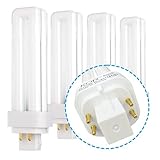
10. KOR 13W CFL Light Bulb, Double Tube, G24Q-1 4-Pin Base, 4100K Cool White – Pack of 4 (Replaces Philips, GE Models)
Overview:
KOR’s four-pack features 13-watt double-tube CFL bulbs with G24Q-1 4-pin bases, producing 4100K cool white light for commercial and residential fixtures. Designed as direct plug-in replacements for Philips 38328-1 and GE 97597 models, these bulbs target maintenance applications in recessed cans, desk lamps, and ceiling fixtures requiring this specific base configuration.
What Makes It Stand Out:
The double-tube configuration provides more uniform light distribution than single U-shaped designs. The precise G24Q-1 4-pin compatibility ensures seamless replacement in dedicated CFL fixtures with electronic ballasts. The 4100K cool white temperature hits the sweet spot between daylight and warm white, making it versatile for offices, bathrooms, and kitchens.
Value for Money:
Priced around $12-15 for four bulbs, these offer reasonable value for hard-to-find G24Q-1 replacements. Bulk packaging suits multi-fixture commercial environments. However, the entire G24Q category faces obsolescence as LED retrofit modules become standard. These CFLs represent a maintenance-only purchase with no forward compatibility.
Strengths and Weaknesses:
Strengths: Exact G24Q-1 fit; double-tube design; balanced 4100K color; cost-effective four-pack; replaces major brand models.
Weaknesses: Requires G24Q-1 socket and compatible ballast; contains mercury; not self-ballasted; limited to legacy fixtures; shorter lifespan than LED retrofits.
Bottom Line:
Essential only for maintaining existing G24Q-1 fixtures. For any new construction or fixture replacement, upgrade to integrated LED modules. These serve a diminishing maintenance market and offer no advantages over modern alternatives.
Understanding Compact Fluorescent Technology for Kitchen Applications
Compact fluorescent bulbs operate by driving electric current through a gas-filled tube, creating ultraviolet light that excites a phosphor coating to produce visible illumination. This technology has matured significantly, offering instant-on performance and improved color quality that earlier generations lacked. For kitchen environments, modern CFLs provide consistent brightness without the flicker that once plagued fluorescent lighting.
How CFLs Differ from LEDs in Kitchen Settings
While LEDs dominate headlines, CFLs maintain distinct advantages in certain kitchen scenarios. They typically distribute light more evenly in omnidirectional fixtures, reducing harsh shadows over countertops. The phosphor technology in quality CFLs can also render warm tones more naturally, making wood cabinets and food colors appear more authentic compared to some early-generation LEDs.
Key Features to Evaluate When Choosing Kitchen CFLs
Selecting the right compact fluorescent involves balancing multiple technical specifications with real-world kitchen demands. Focus on lumens rather than watts to gauge true brightness, and prioritize bulbs with a Color Rendering Index (CRI) above 80 for accurate food color representation.
Wattage Equivalents Explained
A 13-15 watt CFL typically replaces a 60-watt incandescent, while 18-20 watt versions substitute for 75-watt bulbs. However, kitchen task areas often benefit from higher lumen outputs, so consider 23-watt CFLs (100-watt equivalent) for detailed prep work zones.
Brightness and Lumen Requirements for Different Kitchen Areas
Kitchen lighting isn’t one-size-fits-all. The sink area where you wash produce needs different illumination than a cozy breakfast nook. General ambient lighting requires 30-40 lumens per square foot, while task areas demand 70-80 lumens per square foot for safety and precision.
Task Lighting vs Ambient Lighting Considerations
Under-cabinet installations should deliver focused beams of 500-700 lumens to eliminate countertop shadows. In contrast, ceiling fixtures providing ambient light can use broader 800-lumen bulbs spaced strategically to avoid dark corners without creating overwhelming brightness.
Color Temperature and Kitchen Ambiance
Color temperature, measured in Kelvin (K), dramatically affects how your kitchen feels and functions. Lower Kelvin values (2700K-3000K) produce warm, yellowish light similar to incandescent bulbs, while higher values (3500K-4100K) create cooler, whiter light that enhances alertness and color accuracy.
Warm vs Cool Tones for Food Preparation Areas
For general kitchen use, 3000K-3500K strikes an ideal balance, making white countertops look crisp while keeping wood tones rich. Areas dedicated to food photography or intricate garnishing benefit from 4000K-5000K CFLs that reveal true colors, but these cooler tones can feel clinical in dining zones.
Energy Efficiency Metrics That Matter
The best kitchen CFLs convert over 60% of electrical energy into light compared to incandescent bulbs’ 10% efficiency. Look for bulbs delivering at least 60 lumens per watt to ensure you’re maximizing energy savings without sacrificing brightness.
Understanding the Energy Star Rating
Energy Star certification guarantees the bulb meets strict efficiency, lifetime, and performance standards. For kitchens, this rating also ensures the CFL maintains consistent light output over time, resisting the gradual dimming that can make cooking tasks more difficult as bulbs age.
Base Types and Fixture Compatibility
Kitchen fixtures utilize several base configurations, and mismatched bases remain a common purchasing error. Medium Edison screw bases (E26) fit most standard ceiling fixtures and pendants, while candelabra bases (E12) suit decorative chandeliers.
Common Kitchen Fixture Connections
GU24 twist-lock bases appear increasingly in modern kitchen builds due to their safety features, preventing incorrect bulb installation. Always verify your fixture’s base type before purchasing, as adapters can compromise both safety and electrical efficiency.
Dimmable vs Non-Dimmable Options
Not all CFLs work with dimmer switches, and using non-dimmable bulbs with dimmers creates fire hazards and dramatically reduces bulb lifespan. True dimmable CFLs contain specialized ballasts that maintain stable operation across voltage variations.
Compatibility with Existing Dimmer Switches
Even dimmable CFLs may not function properly with older dimmer technology designed for incandescent loads. For smooth dimming from 100% to 20% brightness, pair dimmable CFLs with modern CL (Compact Fluorescent/LED) rated dimmers that prevent flicker and ensure full range control.
Lifespan and Durability Considerations
Quality kitchen CFLs last 8,000 to 15,000 hours—eight to fifteen times longer than incandescent bulbs. However, kitchen environments present unique challenges including heat, grease, and vibration that can shorten lifespan if you choose poorly constructed bulbs.
Factors That Affect Longevity in Kitchen Environments
Frequent on-off cycling near entryways or pantries reduces CFL lifespan more than continuous operation. For high-traffic switches, consider bulbs rated for “rapid cycle” use. Additionally, enclosed fixtures trap heat; select bulbs specifically designed for enclosed applications to prevent premature failure.
Mercury Content and Environmental Impact
All CFLs contain small amounts of mercury—typically 3-5 milligrams—sealed within the glass tubing. While this enables energy savings that reduce power plant emissions, proper handling and disposal remain critical for environmental protection.
Safe Handling Procedures in the Kitchen
If a CFL breaks in a food preparation area, immediate and thorough cleanup is essential. Ventilate the space, avoid using vacuum cleaners that spread mercury vapor, and follow EPA guidelines for collecting fragments. Store used bulbs in rigid containers until recycling to prevent breakage.
Shape and Size Variations for Kitchen Fixtures
CFLs come in spiral, twin-tube, triple-tube, and covered A-shape designs. The classic spiral offers maximum surface area for brightness but may appear industrial in exposed fixtures. Covered A-shapes mimic traditional bulb silhouettes, ideal for decorative pendants where aesthetics matter.
Decorative vs Functional Designs
For open fixtures above islands, consider CFLs with frosted glass covers that diffuse light softly and hide the spiral element. In recessed cans, bare spiral CFLs work efficiently, while under-cabinet installations benefit from linear twin-tube designs that distribute light evenly across backsplash areas.
Specialty CFL Options for Kitchen Tasks
Beyond standard replacements, specialized CFLs address specific kitchen challenges. Black light CFLs can detect pet stains on flooring, while full-spectrum bulbs support herb gardens on windowsills.
CFLs for Under-Cabinet Lighting
Slimline CFLs measuring under 12mm in diameter fit discreetly under cabinets without protruding. These typically feature plug-in bases rather than screw types, connecting to low-profile ballasts that minimize cabinet depth requirements while delivering brilliant task lighting.
Installation Safety and Best Practices
Never install CFLs with wet hands or in damp locations without appropriate fixtures. Kitchen humidity near stoves and sinks can cause short circuits if bulbs aren’t rated for damp locations.
Avoiding Common Installation Mistakes
Tightening CFLs too forcefully can crack the plastic base or damage fixture sockets. Hand-tighten until snug, then give a quarter-turn more. For hard-to-reach fixtures, use suction cup bulb changers rather than overextending on ladders, which risks both personal injury and fixture damage.
Cost Analysis and Long-Term Savings
While CFLs cost 3-5 times more than incandescent bulbs upfront, their extended lifespan and energy savings generate positive ROI within 6-12 months in frequently used kitchen fixtures.
Calculating Your Kitchen’s ROI
A 18-watt CFL used 4 hours daily saves approximately $4-6 annually per bulb versus a 75-watt incandescent. Multiply this by 6-8 kitchen fixtures, and you’re looking at $30-50 in yearly savings while replacing bulbs far less frequently.
Transitioning from Incandescent to CFL
Gradual replacement often works better than whole-kitchen swaps. Start with the most-used fixture to appreciate immediate energy savings, then replace others as incandescents burn out.
Reducing Your Carbon Footprint
Each CFL prevents approximately 450 pounds of power plant emissions over its lifetime compared to incandescent use. For environmentally conscious homeowners, this carbon reduction rivals the impact of recycling programs while delivering superior kitchen illumination.
Disposal and Recycling Guidelines
Never dispose of CFLs in household trash. The mercury content makes them hazardous waste, though many retailers offer free recycling programs. Home improvement stores and some supermarkets maintain collection bins specifically for spent CFLs.
Finding Local Recycling Programs
Check Earth911’s database for municipal collection sites or mail-in programs. Some waste management companies provide special pickup services for a nominal fee. Keeping a designated collection box in your garage simplifies storing used bulbs until you accumulate enough for a recycling trip.
Frequently Asked Questions
What wattage CFL should I use in my kitchen pendant lights? For standard 8-10 foot ceilings, 15-18 watt CFLs (60-75 watt equivalent) provide adequate ambient light. If pendants serve as task lighting over an island, consider 20-23 watt versions for enhanced visibility during food preparation.
Can I use CFLs in my range hood light? Most range hoods generate excessive heat that damages CFLs and poses fire risks. Check your hood’s specifications—only if it’s rated for CFL use and provides proper ventilation should you install them. LED alternatives often perform better in high-heat applications.
How do I clean up a broken CFL bulb safely? Immediately open windows and leave the room for 15 minutes. Wear gloves, collect visible glass and powder with stiff paper, and place fragments in a sealed glass jar. Wipe the area with damp paper towels, then dispose of all materials at a hazardous waste facility.
Will CFLs make my white kitchen look yellow? Choose bulbs labeled “cool white” or “daylight” with 3500K-4100K color temperature. These render whites crisply without yellow casts. Avoid “warm white” 2700K bulbs in all-white kitchens, as they can make surfaces appear cream-colored rather than pure white.
Why does my CFL flicker when first turned on? This occurs when bulbs are used with incompatible dimmers or in cold temperatures below 50°F. Some CFLs flicker briefly during the initial warm-up phase, which is normal. If flickering persists, replace the bulb—consistent flickering indicates ballast failure or voltage irregularities.
Are enclosed fixtures safe for CFLs? Only use CFLs specifically rated for enclosed fixtures. Standard CFLs overheated in enclosed spaces can fail prematurely or, in rare cases, pose fire hazards. Enclosed-rated bulbs have modified ballasts that tolerate higher operating temperatures.
How long should kitchen CFLs last? With typical kitchen use of 3-4 hours daily, quality CFLs should last 6-10 years. However, frequent on-off cycling can reduce lifespan by 20-30%. Bulbs in range hoods or near heat sources may last only 3-5 years due to thermal stress.
Can CFLs interfere with my kitchen radio or WiFi? Poorly shielded CFLs can emit electromagnetic interference (EMI) that disrupts sensitive electronics. Energy Star rated bulbs must meet strict EMI standards. If you experience interference, replace the bulb with a higher-quality, EMI-suppressed model.
What’s the difference between spiral and covered CFL performance? Spiral CFLs deliver slightly more lumens per watt due to better heat dissipation. Covered A-shape bulbs sacrifice 10-15% efficiency for aesthetic appeal but distribute light more evenly, reducing harsh shadows in decorative fixtures.
Should I wait for my old bulbs to burn out before switching to CFLs? For maximum energy savings, replace frequently used incandescent bulbs immediately. The electricity savings outweigh the remaining value of the old bulb. For rarely used fixtures, wait for burnouts to avoid unnecessary expense.
See Also
- 10 Best Value Compact Fluorescent Light Bulbs for Long-Lasting Use in 2026
- We Tested 50 Compact Fluorescent Light Bulbs - Here are the 10 Best for Garages
- 10 Best Compact Fluorescent Light Bulbs for Reducing Electricity Bills in 2026
- 10 Best Compact Fluorescent Light Bulbs for Office Lighting This Year
- 10 Best Motion Sensor Light Bulbs for Hallways in 2026