Table of Contents
Imagine the warm, nostalgic glow of an antique chandelier or the delicate silhouette of a mid-century sconce. Vintage lighting fixtures possess an irreplaceable charm, a character built into their metalwork, glass, and design that modern reproductions often struggle to capture. Yet, keeping these beloved pieces illuminated with traditional incandescent bulbs presents a dilemma: the energy inefficiency, short lifespan, and potential heat risks clash with contemporary living standards and environmental awareness. The solution lies in the remarkable evolution of LED technology, specifically designed to honor the past while embracing the future. Finding the right decorative LED bulb isn’t just about swapping out a filament; it’s about preserving the soul of your vintage fixture with light that feels authentically period-perfect.
Gone are the days when LED meant a cold, clinical glare utterly incompatible with the soft ambiance of a filament bulb. Today’s market offers sophisticated decorative LEDs engineered to mimic the look, feel, and even the light distribution of vintage styles, from delicate Edison filaments to smooth candle flames. However, navigating this space requires careful consideration. Not all decorative LEDs are created equal, especially when paired with the unique demands of older fixtures – think unusual base sizes, tight enclosures, sensitive dimmers, and the critical need for visual authenticity. Choosing poorly can result in a bulb that looks glaringly modern, flickers annoyingly, or worse, damages your cherished fixture. This guide cuts through the noise, focusing on the essential features and considerations you must evaluate to illuminate your vintage treasures beautifully and safely with the best LED options available in 2026.
Top 10 Decorative LED Bulbs
Detailed Product Reviews
1. DAYBETTER 4 Pack Vintage LED Edison Bulbs, E26 Led Bulb 60W Equivalent, Dimmable Led Light Bulbs, High Brightness 800 LM Warm White 2700K, ST58 Antique LED Filament Bulbs, Clear Glass Style for Home

Overview:
The DAYBETTER 4-pack ST58 LED Edison bulbs blend vintage aesthetics with modern efficiency. These E26-base bulbs deliver 800 lumens of warm 2700K light, mimicking traditional filament designs while using just 8W (60W equivalent). Ideal for decorative fixtures like pendants or chandeliers, they prioritize ambiance without compromising functionality.
What Makes It Stand Out:
Their standout feature is the seamless dimming capability (10%-100%) across most standard dimmers, eliminating flicker or buzz. The high CRI (80+) ensures natural color rendering, and the clear glass with visible filaments offers authentic retro appeal. Energy savings are substantial—90% less power than incandescents—with a 15,000-hour lifespan.
Value for Money:
Priced competitively for a 4-pack, these bulbs justify cost through longevity and efficiency. At $0.96/year (3 hrs/day), they undercut alternatives like incandescents (which cost ~$7.20/year for equivalent light) and lack the premium markup of some designer vintage LEDs.
Strengths and Weaknesses:
Strengths: Smooth dimming, eye-friendly warm light, low heat output, and versatile E26 compatibility. Weaknesses: No explicit UL/RoHS certification noted (unlike competitors), and the 15,000-hour lifespan is average for LEDs—shorter than high-end models (25,000+ hours).
Bottom Line:
A solid choice for vintage-inspired decor seeking reliable dimming and energy savings. Recommended for living spaces but verify dimmer compatibility; skip if certified safety standards are non-negotiable.
2. TJOY 12 Pack Vintage 8W ST58 LED Edison Light Bulbs, Dimmable, 60W Equivalent, 800Lumens, 2700K Warm White, E26 Base LED Filament Bulb, CRI80+, Antique Glass Style for Home, Bedroom, Office, Farmhouse

Overview:
TJOY’s 12-pack ST58 bulbs offer warm 2700K vintage lighting with modern efficiency. Each 8W bulb replaces 60W incandescents, producing 800 lumens via exposed filaments in clear glass. Designed for E26 fixtures, they suit chandeliers, wall sconces, or farmhouse decor, emphasizing both style and practicality.
What Makes It Stand Out:
UL/RoHS/FCC certification ensures safety—a key differentiator—and the 15,000-hour lifespan (13.7 years at 3 hrs/day) promises reliability. Smooth dimming (10%-100%) works with 95% of dimmers (including Lutron), while the CRI80+ minimizes eye strain. The 12-pack also offers exceptional bulk value.
Value for Money:
At ~$0.96/year operating cost, these outperform incandescents ($7.20/year) and rival single-pack LEDs on cost-per-bulb. The 1-year warranty and safety certifications add peace of mind, making this pack ideal for whole-home retro upgrades without overspending.
Strengths and Weaknesses:
Strengths: Certified safety, broad dimmer compatibility, warm ambiance, and low heat. Weaknesses: Warm white (2700K) lacks versatility for task lighting, and the ST58 shape may not fit all enclosed fixtures.
Bottom Line:
Top pick for safety-conscious buyers wanting abundant vintage bulbs. Highly recommended for residential or commercial retro projects; avoid only if cooler lighting is needed.
3. TJOY Edison Light Bulbs 60W Equivalent, Dimmable Vintage LED Light Bulbs, E26 Medium Base, Warm White 2700K, ST58, 8W, 800LM, 80+ CRI, Antique Decorative Filament LED Bulb, Clear Glass, 6 Pack

Overview:
This TJOY 6-pack ST58 LED bulb set merges Edison-era charm with energy efficiency. Emitting 800 lumens of 2700K warm light from an 8W draw, they fit standard E26 sockets and target decorative applications—from bedroom vanities to café pendant lights—where ambiance is paramount.
What Makes It Stand Out:
The bulbs’ skin-tone-softening warm light enhances relaxation, while flicker-free dimming (10%-100%) ensures compatibility with most residential dimmers. UL/RoHS/FCC certifications and a 1-year warranty bolster trust, and the 15,000-hour life reduces replacement hassle significantly.
Value for Money:
Priced mid-range for a 6-pack, they undercut incandescents long-term ($0.96/year vs. $7.20). Though pricier per bulb than the TJOY 12-pack, this option suits smaller spaces or testers. The certified safety justifies a slight premium over non-certified rivals.
Strengths and Weaknesses:
Strengths: Certified safety, soothing warm light, versatile fixture compatibility, and quiet dimming. Weaknesses: Not ideal for task-oriented areas needing brighter/cool light, and the 6-pack offers less bulk savings than larger sets.
Bottom Line:
An excellent mid-sized investment for cozy, certified-safe vintage lighting. Best for bedrooms or dining areas; choose the 12-pack if covering multiple rooms.
4. TJOY 12 Pack A19 Vintage LED Edison Bulbs, Dimmable, 60W Equivalent, High Brightness 2700K Warm White, 8W E26 Standard Base, 800 Lumens, CRI80+, Clear Glass Filament Bulb for Home, Farmhouse

Overview:
TJOY’s 12-pack A19 bulbs deliver vintage filament style in a standard shape. Using 8W for 800 lumens (2700K), these E26 bulbs suit common fixtures like table lamps or ceiling fans. They balance retro design with everyday functionality for homes seeking subtle character.
What Makes It Stand Out:
The A19 shape—a ubiquitous household silhouette—makes these more versatile than ST58 bulbs for standard lamps. Smooth dimming (10%-100%) and flicker-free operation pair with UL certification, while the 15,000-hour life and $0.96/year cost ensure practicality.
Value for Money:
This 12-pack offers the best cost-per-bulb among TJOY’s vintage lines. It’s cheaper per unit than the ST58 12-pack (due to simpler manufacturing) and vastly outperforms incandescents on longevity. Ideal for whole-home retro upgrades on a budget.
Strengths and Weaknesses:
Strengths: Universal A19 compatibility, certified safety, energy efficiency, and warm ambiance. Weaknesses: Less “exposed filament” visual drama than ST58 bulbs, limiting decorative impact in open fixtures.
Bottom Line:
The go-to for vintage aesthetics in standard lamps. Highly recommended for general home use where classic bulb visibility isn’t critical; opt for ST58 if showcasing filaments is essential.
5. hansang Vanity Light Bulb 5000K Daylight 8 Pack G25 LED Globe Light Bulb for Bathroom Vanity Mirror Decorative,E26 Medium Base, 5W 60W Incandescent Equivalent,500LM,Non-dimmable

Overview:
hansang’s 8-pack G25 bulbs prioritize precision lighting for vanities. Emitting 500 lumens of 5000K daylight (11 a.m. sun equivalent), these 5W E26 bulbs replace 60W incandescents. Designed specifically for makeup and grooming, they target bathrooms and dressing areas needing crisp, shadow-free illumination.
What Makes It Stand Out:
The 5000K daylight spectrum enhances color accuracy for makeup application, while the globe shape (G25) ensures even, diffused light. IP-rated construction resists moisture, and a built-in safety fuse prevents overheating—critical for humid bathroom environments.
Value for Money:
Though non-dimmable, their $0.60/year operating cost (vs. $7.20 for incandescents) and 10x longer lifespan justify the price. The 8-pack suits dual-vanity setups, but dimmable alternatives may offer more ambiance flexibility at a slight premium.
Strengths and Weaknesses:
Strengths: Daylight accuracy, bathroom-safe design, flicker-free operation, and compact globe shape. Weaknesses: Non-dimmable (limiting mood adjustment), lower brightness (500LM vs. 800LM in others), and cool light may feel harsh in relaxing spaces.
Bottom Line:
Essential for vanity tasks but niche. Highly recommended for makeup/grooming zones; avoid in living areas where warm, dimmable light is preferred.
6. ASOMST 4-Pack Vintage Edison LED Bulbs, 60W Equivalent, 850LM 6W Edison Light Bulb Daylight White 5000K, ST58 LED Filament Bulb E26 Base, Non-Dimmable

Overview: These non-dimmable ST58 LED filament bulbs offer a modern twist on vintage Edison styling with daylight-white (5000K) illumination. Designed for functional brightness over ambiance, they target task lighting and commercial settings needing crisp, clean light. The 4-pack provides an affordable entry into energy-efficient vintage decor.
What Makes It Stand Out: The standout feature is the high 850 lumens at 5000K daylight temperature—uncommon for vintage bulbs, which typically favor warmer tones. Combined with a high CRI 85+ rating, it ensures vivid color accuracy ideal for workspaces or retail displays. The 360-degree beam angle eliminates dark spots, and the non-flickering, UV/IR-free output prioritizes eye comfort.
Value for Money: At 6W (90% less energy than 60W incandescents), they slash electricity costs significantly. The 25,000-hour lifespan reduces replacement hassle, though the non-dimmable limitation narrows versatility. Priced competitively for a 4-pack, they deliver strong value for utility-focused buyers over ambiance seekers.
Strengths and Weaknesses:
Pros: Exceptional brightness for tasks; true daylight color temperature; high CRI; cool operation; wide commercial/residential use.
Cons: Non-dimmable; cool white may feel sterile in living spaces; lower warmth than typical vintage bulbs.
Bottom Line: Ideal for kitchens, garages, or retail where bright, accurate lighting matters. Skip if you prefer warm, dimmable ambiance—it’s a functional workhorse, not a mood setter.
7. Vintage LED Edison Bulb G30 4W Dimmable LED Filament Bulb Globe Pineapple Shaped Light Bulb 2300K Warm White E26 400LM Equivalent 40W Incandescent (Amber)

Overview: This unique pineapple-shaped G30 bulb merges whimsical design with energy efficiency. Emitting a warm 2300K amber glow, it’s crafted for decorative impact in open fixtures like pendants or string lights. The dimmable feature and compact size suit intimate residential settings.
What Makes It Stand Out: The standout is its playful pineapple globe design—a rare aesthetic in vintage LEDs. Dimmability (uncommon at this price) allows ambiance control, while the ultra-warm 2300K amber hue creates a cozy, nostalgic vibe. At 4W (replacing 40W incandescents), it’s ultra-efficient with $0.9/year running costs.
Value for Money: The 2-year warranty and 25,000-hour lifespan justify its budget price. Though lower in lumens (400LM) than competitors, it excels as accent lighting. Outperforms incandescents in longevity but lags behind warmer-white LEDs in versatility for primary lighting.
Strengths and Weaknesses:
Pros: Eye-catching design; smooth dimming; ultra-warm amber tone; exceptional energy savings; strong warranty.
Cons: Low brightness (400LM); niche application; shorter beam angle limits task use.
Bottom Line: Perfect for cafes, bedrooms, or string lights where style trumps brightness. Avoid for task lighting—it’s a charming accent piece worth the investment for ambiance-focused spaces.
8. PARTPHONER LED Light Bulbs Dimmable Vintage Edison Bulb, E26 LED Bulb 60W Equivalent 720 Lumens, Warm White 2700K, ST58 Antique LED Filament Bulb CRI 85+, Clear Glass, Pack of 4

Overview: A balanced dimmable ST58 bulb offering warm 2700K light with smooth brightness control. This 4-pack targets living spaces needing adjustable vintage charm, from chandeliers to floor lamps. It emphasizes user-friendly dimming without compromises on color quality.
What Makes It Stand Out: Seamless dimming (10–100% without buzz/flicker) is its crown jewel, a frequent pain point in vintage LEDs. The 2700K warm white and CRI 85+ ensure inviting, natural color rendering, while the 720-lumen output strikes a practical balance between ambiance and usability.
Value for Money: Competitive pricing for a dimmable 4-pack with 25,000-hour longevity. Saves 90% on energy versus incandescents. Slightly pricier than non-dimmable alternatives but justified by superior versatility—ideal for those prioritizing mood lighting without sacrificing functionality.
Strengths and Weaknesses:
Pros: Flawless dimming performance; warm, natural light; high CRI; broad fixture compatibility; quiet operation.
Cons: Moderate brightness (720LM vs. 850LM competitors); no daylight-white option.
Bottom Line: The top choice for living rooms or dining areas where dimming matters. Excellent value for ambiance seekers—just confirm dimmer compatibility pre-purchase.
9. Hizashi Vintage LED Edison Bulb Dimmable, 6W Equivalent 60W, 3000k Soft White, E26 Base Led Light Bulbs, 700LM, UL Listed, High CRI 95+ Eye Protection, Clear Glass, Pack of 12

Overview: This premium 12-pack features industry-leading CRI 95+ and UL certification, targeting color-critical environments. The soft-white 3000K bulbs blend vintage aesthetics with professional-grade accuracy, suited for galleries, retail, or high-end homes.
What Makes It Stand Out: The exceptional CRI 95+ (vs. typical 80–85) makes colors pop realistically—unmatched in this category. UL listing ensures safety, while 90% dimmer compatibility and flicker-free operation deliver reliability. The massive 12-pack offers bulk savings for whole-home upgrades.
Value for Money: Higher upfront cost is offset by unparalleled color fidelity and the 12-bulb economy. At 25,000 hours (22 years at 3 hrs/day), long-term savings shine. Justifies premium pricing for designers or those sensitive to poor color rendering.
Strengths and Weaknesses:
Pros: Best-in-class CRI 95+; UL safety certified; excellent dimming; eye-friendly light; bulk-value pack.
Cons: Slightly lower lumens (700LM); premium price per bulb; soft white may lack warmth for some.
Bottom Line: Essential for studios or discerning homeowners wanting truer colors. The dimmable workhorse for quality-focused buyers—worth every penny.
10. Ascher Vintage LED Edison Bulbs, 6W, Equivalent 60W, Non-Dimmable, High Brightness Cool White 4000K, ST58 Antique LED Filament Bulbs with 80+ CRI, E26 Medium Base, Clear Glass, Pack of 6
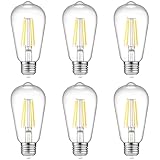
Overview: A no-frills 6-pack of cool-white (4000K) ST58 bulbs emphasizing utility. Designed for modern spaces needing clean, neutral light, it suits offices, kitchens, or commercial spots where vintage style meets functional brightness.
What Makes It Stand Out: The 4000K cool white—a midpoint between warm and daylight—delivers alertness without sterility. At 700 lumens and CRI 80+, it offers decent color accuracy for its price. The 6-pack provides broad coverage for fixtures like café pendant clusters or workshop task lights.
Value for Money: Budget-friendly for a 6-pack with solid energy savings (90% less power). However, CRI 80+ lags behind competitors (85–95+), and non-dimmability limits flexibility. Best for cost-conscious buyers prioritizing brightness over nuance.
Strengths and Weaknesses:
Pros: Affordable multi-pack; cool-white versatility; flicker-free; wide commercial use; easy E26 installation.
Cons: Mediocre CRI; non-dimmable; cool tone may feel harsh in homes.
Bottom Line: A practical pick for garages, retail, or modern kitchens needing bright, efficient light. Opt for higher-CRI models if color accuracy is critical.
Understanding Vintage Fixture Compatibility
Why Standard LEDs Often Fail Vintage Applications
Standard A19 LED bulbs are designed for modern, open fixtures but frequently clash with vintage aesthetics. Their bulky plastic bases, opaque diffusers, or visible internal components disrupt the clean lines and exposed elements characteristic of older designs. More critically, vintage fixtures often have smaller sockets (like E12 candelabra or E17 intermediate bases) or unique shapes (globe, flame tip) that standard bulbs simply don’t fit or visually complement. The mismatch isn’t just cosmetic; it can cause physical strain on delicate sockets or prevent proper seating.
The Critical Role of Base Size and Shape
Ignoring base compatibility is a common and costly mistake. Vintage fixtures frequently utilize bases uncommon in modern homes: E12 (candelabra) for chandeliers and sconces, E17 (intermediate) for some appliances and older ceiling fixtures, or even rare B10 or CA10 candle bases. Measuring your existing bulb’s base diameter (in millimeters) or consulting the fixture manual is non-negotiable. Furthermore, the bulb’s shape must align with the fixture’s design intent – a standard A-shape bulb looks absurd in a delicate candle sleeve, while a large globe overwhelms a small sconce.
Heat Management in Enclosed and Vintage Fixtures
Vintage fixtures, particularly enclosed globes, lanterns, or tightly fitted shades, trap heat far more effectively than modern open designs. While LEDs run cooler than incandescents, they are still sensitive to excessive heat buildup, which drastically shortens their lifespan. Not all decorative LEDs are rated for enclosed fixtures. Using a bulb not specifically designated as “Enclosed Fixture Rated” in these vintage applications is a surefire path to premature failure. Always verify this critical specification against your fixture type.
Decoding Decorative LED Features for Authenticity
Filament Design: Beyond Just Aesthetics
The visual appeal of filament LEDs is paramount for vintage looks, but the technology behind them matters. True “filament” LEDs use multiple LED chips mounted on a glass or sapphire strip, connected with fine wires, mimicking the look of old carbon or tungsten filaments. Look for bulbs advertising “360-degree filament design” – this ensures light emanates evenly in all directions, crucial for fixtures where the bulb is visible from multiple angles, unlike directional standard LEDs. The number and arrangement of filaments (single, double helix, mesh) also impact the visual texture and authenticity.
Color Temperature: Capturing the Warm Glow
The harsh, blue-tinged light of early LEDs is a thing of the past, but getting the warmth right for vintage settings is still vital. Aim for bulbs in the 2200K to 2700K range. 2200K offers the deepest, candle-like warmth reminiscent of very early incandescents, perfect for intimate dining rooms or bedrooms. 2700K is the standard “soft white” incandescent equivalent, suitable for most general vintage applications. Avoid anything above 3000K, which starts to appear unnaturally cool and modern, instantly breaking the vintage illusion. Consistency across multiple bulbs in a fixture is also key.
Color Rendering Index (CRI) for True-to-Life Hues
Color Rendering Index (CRI) measures how accurately a light source reveals the true colors of objects compared to natural light. Incandescents have a perfect CRI of 100. For vintage fixtures where the warmth and richness of materials like wood, fabric, or stained glass matter, prioritize LEDs with a CRI of 90 or higher (Ra9 >90 is ideal). A low CRI (below 80) makes colors look dull, flat, or unnatural, undermining the ambiance your fixture creates. High CRI is non-negotiable for truly authentic and pleasing vintage lighting.
Navigating Performance and Practicality
Dimmability: Compatibility is Key
Most vintage homes have older dimmer switches designed for the high electrical load of incandescent bulbs. Many standard LEDs flicker, buzz, or fail to dim smoothly with these legacy dimmers. For vintage fixtures on dimmer circuits, you must select bulbs explicitly labeled “Dimmable” and verify compatibility with your specific dimmer model (check the bulb manufacturer’s compatibility list if possible). Look for bulbs advertising smooth dimming down to very low levels (5% or less) for the best candle-like effect. Newer “dimmable anywhere” LEDs offer broader compatibility but still require verification.
Lumen Output vs. Incandescent Equivalency
Don’t get stuck on wattage! Wattage measures energy consumption, not brightness. Focus on lumens (lm), the measure of actual light output. Use this as a guide: a vintage 40W incandescent equivalent needs ~450 lumens, 60W ~800 lumens, 75W ~1100 lumens, 100W ~1600 lumens. However, for purely decorative fixtures (like chandelier arms or small sconces), you often need less actual light than the old incandescent wattage suggested. Prioritize the visual effect and ambiance over raw lumens; a lower-lumen, high-CRI, warm bulb often creates a more authentic vintage feel than a brighter, cooler one.
Lifespan Expectations in Real-World Vintage Setups
While manufacturers tout 15,000-25,000 hour lifespans, real-world conditions in vintage fixtures can shorten this. Heat buildup in enclosed fixtures (even with rated bulbs), incompatible dimmers causing stress, voltage fluctuations in older wiring, and frequent on/off cycling all impact longevity. Manage expectations: a bulb lasting 5-7 years in a well-matched, open vintage fixture is excellent. Buying bulbs with longer warranties (3+ years) from reputable brands provides some peace of mind against premature failure due to manufacturing defects.
Selecting the Perfect Bulb Shape and Style
Candle vs. Flame Tip vs. Globe: Matching the Fixture
The bulb shape must harmonize with the fixture’s design language:
- Candle (B-shape): Straight or slightly curved tip. Classic for chandeliers and wall sconces. Choose based on tip style (blunt, pointed).
- Flame Tip (F-shape): Curved, tapered tip mimicking a flickering flame. Essential for authentic Victorian or Edwardian sconces and chandeliers. Getting this wrong is visually jarring.
- Globe (G-shape): Spherical. Used in bathroom vanities, pendant lights, and some mid-century fixtures. Size (G25, G30, G40) must match the shade or enclosure.
- Edison Style: Often A-shape or G-shape but with prominent visible filaments. Best for industrial or exposed-bulb vintage looks.
The Importance of Clear vs. Frosted Glass
This choice dramatically affects the fixture’s appearance:
- Clear Glass: Essential for showcasing intricate filament designs. Creates sparkle and highlights the bulb’s form, ideal for open fixtures like chandeliers where the bulb is a focal point. Can cause slight glare if not diffused by the fixture.
- Frosted/Etched Glass: Softens the light, reduces glare, and hides the internal LED components. Better for fixtures with smaller shades or where a more diffuse, even glow is desired (e.g., some sconces or table lamps). Can slightly mute the filament detail.
Scaling Bulb Size to Fixture Proportions
A bulb that’s too large overwhelms a delicate fixture; one that’s too small looks lost. Pay close attention to the bulb’s maximum diameter (e.g., ST64, B35) and overall length. Measure the space within your fixture’s shade or enclosure. Vintage fixtures often require smaller profiles than modern equivalents. A bulb listed as “vintage size” or “mini” is often a safer bet than standard modern decorative sizes. When in doubt, opt for a slightly smaller bulb – it’s less visually disruptive than one that’s too big.
Ensuring Safety and Long-Term Viability
Voltage Requirements and Older Wiring
Homes with vintage fixtures often have older electrical systems. While most modern LEDs operate on standard 120V (in North America), verify the bulb’s voltage range. More importantly, ensure the fixture’s wiring is in good condition. Old, brittle wiring can’t handle even the lower load of LEDs safely if it’s compromised. If the fixture feels hot (beyond mild warmth) with an LED bulb, or you notice flickering unrelated to dimmers, consult an electrician – it could indicate underlying wiring issues exacerbated by the different electrical characteristics of LEDs.
The Significance of Quality Construction
Cheap decorative LEDs often cut corners: flimsy bases that crack when screwed in, poor internal heat dissipation leading to early failure, inconsistent color temperature from bulb to bulb, or filament designs that look obviously artificial. Invest in bulbs from manufacturers known for quality vintage-style LEDs. Look for features like robust ceramic or metal bases (not just plastic), high-quality glass, and reputable third-party safety certifications (UL, ETL, CSA). The slightly higher upfront cost is justified by longevity and reliability.
Future-Proofing Your Investment
Lighting technology continues to evolve. While today’s best bulbs are excellent, consider aspects that aid future upgrades: standard base sizes (so replacements are easier years later), bulbs with easily replaceable drivers (rare, but some high-end models offer this), and purchasing from brands with a history of supporting vintage lines. Avoid obscure, proprietary bases or designs that might become impossible to replace in 5-10 years. Choose bulbs that prioritize timeless design over fleeting tech gimmicks.
Frequently Asked Questions
Frequently Asked Questions
Can I use any LED bulb in my antique chandelier? Not necessarily. You must match the base size (often E12 candelabra), choose the correct shape (typically candle or flame tip), ensure it’s dimmable if on a dimmer, and verify it’s suitable for the fixture’s enclosure level. Using the wrong type can damage the fixture or look inappropriate.
Why does my new vintage-style LED bulb flicker with my old dimmer switch? Older dimmers are designed for the high electrical load of incandescent bulbs. Many LEDs require compatible dimmers. Check if the bulb is dimmable and consult the manufacturer’s compatibility list for your specific dimmer model. You may need to upgrade the dimmer switch.
What color temperature gives the most authentic vintage look? For the warmest, most candle-like glow reminiscent of early electric lighting, choose 2200K. For a standard soft white similar to mid-20th century incandescents, 2700K is ideal. Avoid anything above 3000K for true vintage ambiance.
Are filament LED bulbs safe for enclosed vintage glass shades? Only if the bulb is explicitly rated for enclosed fixtures. Heat buildup is a major cause of LED failure. Using a non-enclosed rated bulb in a tight glass enclosure will significantly shorten its lifespan, regardless of the fixture’s age.
How do I know if the bulb size will fit my small vintage sconce? Measure the diameter and height of the space within your sconce’s shade or housing. Compare this to the bulb’s specifications (max diameter like B22, overall length). Vintage fixtures often require “mini” or “vintage size” bulbs; standard modern decorative bulbs are frequently too large.
Why is Color Rendering Index (CRI) so important for vintage lighting? High CRI (90+) ensures that the warm light accurately reveals the true colors of your furniture, fabrics, and the fixture itself. Low CRI makes colors look dull and unnatural, destroying the rich ambiance vintage fixtures are designed to create.
Can LED bulbs damage the wiring in my old house? The bulbs themselves won’t damage sound wiring. However, old, degraded wiring that was marginal for incandescents might show issues (like flickering) with LEDs due to their different electrical characteristics. If you have concerns, have an electrician inspect the fixture’s wiring.
Do vintage-style LED bulbs really last as long as advertised in old fixtures? Lifespans (e.g., 15,000 hours) are based on ideal lab conditions. In vintage fixtures – especially enclosed ones, with older dimmers, or in homes with voltage fluctuations – actual lifespan may be shorter. Properly matched bulbs in suitable fixtures should still last significantly longer than incandescents.
Why do some decorative LEDs look obviously fake compared to incandescents? Poor quality bulbs often have uneven filament lighting, visible dark spots, unnatural color, or plastic-looking “filaments.” Look for true 360-degree filament designs, high CRI, warm color temps (2200K-2700K), and bulbs from reputable manufacturers specializing in vintage aesthetics.
Is it worth paying more for vintage-style LED bulbs? Absolutely. Higher-quality bulbs offer better color accuracy, smoother dimming, more authentic filament appearance, robust construction for delicate bases, longer lifespans in challenging vintage setups, and greater peace of mind regarding safety and fixture compatibility. It’s an investment in preserving your fixture’s beauty.
See Also
- 10 Proven Methods for Mastering A19 LED Bulbs in Standard Lamps and Fixtures
- 10 Best Value Decorative LED Bulbs for Accent Lighting in 2026
- The 10 Ultimate Best Decorative LED Bulbs for Ambiance in 2026
- We Tested 50 Decorative LED Bulbs - Here are the 10 Best for Living Rooms
- Top 10 Best LED Light Bulbs for Home Use in 2026