Table of Contents
As the days grow shorter and outdoor living spaces become extensions of our homes, the right lighting can transform your yard from a dark void into a welcoming sanctuary. Digital light timers have revolutionized how we control outdoor illumination, offering precision, convenience, and energy savings that manual switches simply can’t match. Whether you’re looking to enhance security, highlight landscaping features, or create the perfect ambiance for evening gatherings, understanding the evolving technology of outdoor lighting timers is essential for any homeowner in 2026.
The landscape of outdoor lighting control has shifted dramatically in recent years, moving beyond simple on/off schedules to sophisticated systems that respond to weather, seasons, and even your daily routines. Today’s digital timers offer features like astronomical timing that adjusts automatically to sunset and sunrise times, smartphone integration that lets you control lights from anywhere in the world, and multi-zone programming that gives you granular control over different areas of your property. This guide will walk you through everything you need to know to make an informed decision about which type of digital timer will best serve your outdoor lighting needs.
Top 10 Digital Light Timers
Detailed Product Reviews
1. BN-LINK Indoor Digital Timer Outlet, Dual Outlet 7 Day Programmable Light Switch, 3 Prong Plug in Timers for Electrical Outlets, Lamps, Fans, 8 On/Off Programs, 1 Pack, 15A/1875W, ETL Listed

Overview: The BN-LINK dual-outlet timer offers 7-day programmable control for indoor devices. This single-pack unit manages two grounded outlets simultaneously with eight daily on/off cycles. ETL-listed with 15A/1875W capacity, it handles lamps, fans, and appliances with minute-level precision through a clear digital interface.
What Makes It Stand Out: Eight customizable weekly programs provide exceptional scheduling flexibility. Vacation mode randomizes lighting to simulate occupancy. A backup battery preserves settings during outages, and the Daylight Savings button simplifies seasonal changes. Dual outlets controlled together maximize efficiency for paired devices like lamps or holiday decorations.
Value for Money: For single-location automation, this unit delivers strong value. It costs less than two separate timers while controlling dual devices. Energy savings from automated lighting and appliances typically offset the purchase price within months. The robust feature set matches premium competitors at a mid-range price point.
Strengths and Weaknesses: Strengths include versatile programming, dual-outlet convenience, reliable battery backup, and security features. The simultaneous control works perfectly for synchronized devices. Weaknesses: outlets cannot be programmed independently, limiting flexibility. The single-pack requires separate purchases for multiple rooms. Initial setup demands careful manual reading despite intuitive buttons.
Bottom Line: Ideal for concentrated automation where two devices share schedules. Perfect for entertainment centers, paired lamps, or kitchen appliances. While lacking independent outlet control, its reliability and comprehensive features make it an excellent choice for targeted dual-device management in homes or offices.
2. BN-LINK Indoor Digital Timer Outlet, Dual Outlet 7 Day Programmable Light Switch, 3 Prong Plug in Timers for Electrical Outlets, Lamps, Fans, 8 On/Off Programs, 2 Pack, 15A/1875W, ETL Listed

Overview: This two-pack bundles BN-LINK’s dual-outlet digital timers, offering expanded home automation coverage. Each unit independently controls two grounded outlets with eight weekly programs. Both timers feature identical 15A/1875W capacity, ETL certification, and minute-precision scheduling for comprehensive indoor device management across multiple locations.
What Makes It Stand Out: The dual-pack configuration provides immediate multi-room capability at significant savings. Each timer operates independently with full programming features including Vacation mode for security, backup battery for outage protection, and Daylight Savings adjustment. Controlling four total outlets simultaneously solves whole-home automation needs.
Value for Money: The two-pack delivers exceptional value, typically costing 30-40% less than buying units separately. This bulk pricing makes whole-home automation affordable. With four controllable outlets total, the cost-per-outlet drops dramatically compared to single-outlet timers. Energy savings multiply across multiple automated devices, accelerating return on investment.
Strengths and Weaknesses: Strengths include multi-room convenience, independent timer operation, robust security features, and excellent bulk pricing. Each unit maintains full functionality. Weaknesses: both outlets on each timer remain synchronized, lacking independent control. The initial investment is higher despite savings. Programming multiple units requires repeated setup steps.
Bottom Line: Perfect for homeowners wanting comprehensive automation without piecemeal purchasing. Automate living room, bedroom, and kitchen simultaneously. While each timer’s outlets stay paired, the independent units provide location flexibility. The bulk savings and consistent performance make this the smartest choice for multi-room timer deployment.
3. BN-LINK Indoor Digital Timer Outlet,24 Hour Light Timer Easy Programmable,Mini 2 Prong Plug in Timers for Electrical Outlets,Lamps,Fans,2 On/Off Programs,2 Pack,15A/1875W, ETL Listed

Overview: BN-LINK’s mini 24-hour timer strips complexity for straightforward daily automation. This two-pack features compact two-prong outlets with just two on/off programs per day. The space-saving design fits tight spaces while providing 15A/1875W capacity. Clear display and five-button programming simplify operation for basic lighting and device control needs.
What Makes It Stand Out: The ultra-compact form factor stacks on wall outlets without blocking adjacent plugs, a rare advantage in crowded power strips. Two units provide flexible placement options. The simplified programming eliminates confusion for users wanting basic schedules. Backup battery and Daylight Savings mode add unexpected premium features to this minimalist device.
Value for Money: This budget-friendly two-pack costs less than many single premium timers. The per-unit price makes it ideal for basic automation projects. While limited to two daily programs, the energy savings from controlling lamps or fans still deliver solid ROI. Perfect for cost-conscious buyers prioritizing simplicity over advanced features.
Strengths and Weaknesses: Strengths: incredibly compact design, straightforward programming, dual-pack value, and surprising backup features. The two-prong configuration suits most lamps and small electronics. Weaknesses: only two daily programs restrict complex scheduling. Two-prong limitation excludes grounded appliances. Outlets cannot be controlled independently. The 24-hour cycle lacks weekly variation.
Bottom Line: Best suited for simple, repetitive daily schedules like morning coffee makers or evening lamps. The space-saving design excels in cramped outlets. While not for complex automation, its reliability and dual-pack convenience make it perfect for basic security lighting or energy-saving applications where simplicity triumphs over sophistication.
4. DEWENWILS 24 Hour Programmable Digital Timer Outlet, Timers for Electrical Outlets, Light Timer for Indoor Lamp Fan Aquarium, 1 Grounded Outlet, 125V/15A/1000W, 3 Prong, 1/2 HP, 1 Pack

Overview: DEWENWILS offers a compact 24-hour digital timer with a single grounded outlet. This unit provides three daily repeat programs with minute-level precision. Rated at 15A/1000W, it handles lamps, fans, and aquarium equipment. The minimalist design features a large LCD screen, silent operation, and side-switch mode selection for streamlined daily automation.
What Makes It Stand Out: Silent operation makes it uniquely bedroom-friendly, unlike many audible timers. The three-group daily programming (Always On/Auto/Always Off) provides simple yet effective control. The compact, frosted-front design blends aesthetically with modern decor. A three-month backup battery retention exceeds many competitors. The half-horsepower rating supports small motor applications.
Value for Money: Positioned as a mid-range single-outlet timer, it offers excellent value for targeted applications. The lower 1000W rating reduces cost while covering most household needs. For aquariums, bedroom lamps, or plant lights, it provides premium features like silent operation and extended battery backup without premium pricing, typically undercutting dual-outlet alternatives.
Strengths and Weaknesses: Strengths: silent operation, aesthetic compact design, strong backup battery, simple three-mode operation, and motor compatibility. The single-outlet focus ensures reliable performance. Weaknesses: 1000W limitation restricts high-wattage appliances. Only three programs lack weekly flexibility. Single outlet requires multiple units for multi-device control. No vacation randomization feature.
Bottom Line: Ideal for noise-sensitive environments like bedrooms or nurseries. Perfect for aquariums, plant lights, or single-lamp automation where silent operation matters. While wattage-limited and program-basic, its reliability, aesthetics, and quiet performance make it the top choice for specific low-wattage, single-device applications requiring discretion.
5. Fosmon 24 Hour Programmable Digital Timer Outlet (2 Pack), ON/Off Program, LCD Display, Mini Indoor Single Plug-in, 125V 15A for Seasonal Light, Lamp, Heater, Portable Fan, Aquarium
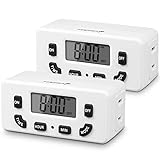
Overview: Fosmon’s two-pack delivers compact 24-hour digital timers with single polarized two-prong outlets. Each unit offers programmable daily cycles with manual override. Rated 125V/15A, they handle heaters, fans, and seasonal lighting. The low-profile design fits behind furniture, while the LCD display enables quick programming. ETL, FCC, and RoHS certifications ensure safety compliance.
What Makes It Stand Out: The limited lifetime warranty stands out in a market of short-term guarantees. Side-entry plugs maximize space efficiency in tight spots. The two-pack allows independent control of two devices at significant savings. Polarized two-prong design enhances safety while maintaining broad device compatibility. USA-based customer service provides responsive support.
Value for Money: Exceptional value through bulk packaging and lifetime warranty. The per-unit cost rivals basic mechanical timers while offering digital precision. Two units provide immediate multi-device automation without separate purchases. Energy savings from controlling heaters or fans quickly recover the modest investment. The warranty adds long-term value unmatched by competitors.
Strengths and Weaknesses: Strengths: lifetime warranty, space-saving design, dual-pack affordability, safety certifications, and responsive customer support. The manual override offers flexibility. Weaknesses: two-prong limitation excludes grounded devices. Single outlet per timer restricts multi-device control. No vacation randomization or backup battery mention. Programming is basic compared to 7-day models.
Bottom Line: Perfect for users wanting two simple, reliable timers with long-term protection. Ideal for seasonal decorations, portable heaters, or fans where basic daily schedules suffice. The warranty and dual-pack value make it a smart choice for budget-conscious buyers prioritizing coverage over advanced features. Best for straightforward automation needs.
6. OSKOS 2-Pack Indoor 24-Hour Programmable Indoor Digital Timer with Polarized Plug and Large Screen, Plug-in Outlet Timer for Lights, Lamps, and Fans, 15A/1875W, UL Listed

Overview: The OSKOS 2-Pack Indoor Digital Timer delivers straightforward 24-hour scheduling for everyday devices. Each unit features a clever dual-outlet design with one always-on polarized outlet and one timer-controlled outlet, allowing simultaneous operation of both scheduled and continuous devices. The large LCD screen and five-button interface simplify programming for lights, fans, and small appliances.
What Makes It Stand Out: The asymmetric outlet configuration distinguishes this timer from single-outlet competitors. The slim profile prevents blocking adjacent wall sockets—a common frustration with bulkier timers. UL listing ensures rigorous safety testing, while the polarized plug adds basic shock protection. The daily repeat function requires minimal reprogramming, ideal for consistent routines.
Value for Money: Sold as a two-pack, this offering provides excellent per-unit value compared to individual timers. While lacking advanced features like 7-day programming or vacation modes, the price point reflects its focused functionality. It competes favorably with entry-level timers while offering the convenience of a spare unit for multiple rooms.
Strengths and Weaknesses: Strengths include the dual-outlet design, space-saving form factor, certified safety, and intuitive controls. The always-on outlet proves unexpectedly useful for devices needing continuous power. Weaknesses are limited to daily schedules only, lack of grounding (polarized only), and absence of vacation randomization. The single timer-controlled outlet may restrict complex setups.
Bottom Line: This 2-pack suits users seeking reliable, no-frills daily automation for lamps and fans. The dual-outlet design adds versatility, making it a practical choice for basic indoor scheduling needs.
7. BN-LINK 7-Day Heavy Duty Digital Timer with Dual Outlet, LCD Display, 3-Prong Programmable Design, for Lights, Fans, Coffee Machine, Home, Office, Indoor Use, 125V 15A 1875W, 2 Pack

Overview: The BN-LINK 7-Day Heavy Duty Digital Timer offers sophisticated scheduling for demanding indoor applications. With dual grounded outlets and robust 15A/1875W capacity, it handles everything from coffee machines to heating systems. The programmable interface supports up to eight daily on/off cycles with minute-level precision, while preset day combinations streamline setup.
What Makes It Stand Out: Seven-day programming with per-day customization provides unmatched flexibility compared to 24-hour timers. The vacation mode randomizes lighting patterns to simulate occupancy, enhancing security. Daylight saving time adjustment eliminates manual clock resets. Dual three-prong outlets accommodate grounded appliances, and the LCD display remains readable in various lighting conditions.
Value for Money: While priced higher than basic timers, the feature set justifies the premium. Eight programmable events, vacation mode, and DST functionality rival more expensive smart plugs. For users needing complex schedules or travel frequently, the investment pays dividends in energy savings and security.
Strengths and Weaknesses: Strengths include versatile 7-day scheduling, dual grounded outlets, vacation randomization, and strong load ratings (15A resistive, 10A tungsten, 1/2HP). The interface balances sophistication with usability. Weaknesses: both outlets switch simultaneously (no independent control), and the larger footprint may block adjacent sockets. The learning curve slightly exceeds simpler models.
Bottom Line: This heavy-duty timer excels for complex scheduling and vacation security. The robust feature set and dual outlets make it ideal for whole-room automation and frequent travelers.
8. Fosmon Digital Timer for Electrical Outlets, Indoor 24 Hour Light Timer Programmable, Mini Plug in Outlet for Lamps, Fans, Grow Lights, 2 On/Off Programs, 15A/1875W, ETL Listed

Overview: The Fosmon Digital Timer prioritizes space efficiency and simplicity for basic 24-hour scheduling. Its compact, single-outlet design suits tight spaces behind furniture or in crowded power strips. The unit supports two on/off programs daily, making it appropriate for lamps, fans, grow lights, and aquarium equipment requiring consistent cycles. The quiet operation ensures it won’t disturb sleep or work environments.
What Makes It Stand Out: The side-entry plug and ultra-low profile maximize outlet accessibility, allowing two units in a standard duplex outlet. A built-in battery maintains settings for over 100 hours during power outages—a rare feature in this price class. ETL, FCC, and RoHS certifications demonstrate thorough safety compliance. The limited lifetime warranty provides unusual long-term protection for budget electronics.
Value for Money: Positioned as an entry-level option, the Fosmon timer offers exceptional value through its warranty and battery backup. While limited to two programs, it costs less than feature-rich alternatives. The space-saving design alone justifies the price for users with outlet constraints or those needing multiple timers throughout a home.
Strengths and Weaknesses: Strengths include the compact footprint, battery backup, multiple safety certifications, and lifetime warranty. The polarized outlet reduces shock risk, and manual override adds convenience. Weaknesses are the single outlet, lack of grounding, and restriction to only two daily programs. No vacation mode or 7-day capability limits flexibility for travelers.
Bottom Line: Perfect for cramped spaces and straightforward timing needs. The battery backup and warranty distinguish it from disposable alternatives, making it a reliable choice for single-device automation.
9. BN-LINK 7 Day Outdoor Heavy Duty Digital Programmable Timer, Outdoor Timer Outlet Waterproof, 2 Grounded Electrical Outlets for Christmas Lights, 15A 1/2HP,ETL Listed

Overview: The BN-LINK 7-Day Outdoor Timer brings sophisticated scheduling to exterior applications. Its weatherproof housing protects internal components from rain, dust, and UV exposure, while dual grounded outlets control landscape lighting, fountains, and holiday displays. The unit supports eight daily programs with minute-level granularity, operating reliably across seasons. The heavy-duty material ensures longevity in harsh conditions.
What Makes It Stand Out: IP-rated weather protection with a durable cover sets this apart from indoor-only timers. The heavy-duty construction withstands temperature extremes, and the grounded outlets provide safe operation for outdoor equipment. Vacation mode randomizes lighting patterns to deter intruders, while daylight saving adjustment ensures accuracy year-round. The two outlets operate in unison, simplifying synchronized display control for elaborate setups.
Value for Money: Outdoor-rated timers command a premium, and this model delivers competitive features at a mid-range price. The dual outlets effectively double its utility without requiring splitters. For seasonal decorations or permanent landscape lighting, the durability and programmability justify the cost over basic mechanical timers that lack precision.
Strengths and Weaknesses: Strengths include robust weatherproofing, flexible 7-day programming, dual grounded outlets, and security features. The 1/2HP rating handles small pumps and motors. Weaknesses: outlets aren’t independently controlled, the housing is bulky, and the display may be difficult to read in direct sunlight. Proper installation requires vertical mounting for optimal water resistance, limiting placement options.
Bottom Line: An essential tool for outdoor automation. The weatherproof design and flexible programming make it ideal for holiday lighting, security, and landscape applications where reliability matters most.
10. DEWENWILS 24 Hour Programmable Digital Timer Outlet, Timers for Electrical Outlets, Indoor Light Timers for Lamp Fan Aquarium, 2 Grounded Outlet, 125V/15A Resistive/1000W Tungsten, 3 Prong, 1 Pack

Overview: The DEWENWILS 24-Hour Programmable Timer balances simplicity with useful features for indoor automation. Supporting three daily on/off events with a 24-hour repeat cycle, it handles lamps, fans, aquariums, and seasonal decorations. Dual grounded outlets provide safe operation for three-prong devices, while the compact design preserves outlet accessibility.
What Makes It Stand Out: A six-month memory retention function preserves settings through extended power outages—superior to most competitors. The three-mode selector switch (OFF/AUTO/ON) enables manual override without disrupting programmed schedules. Silent operation makes it ideal for bedrooms and offices where mechanical timer ticking would be intrusive. The matte finish and large LCD display enhance aesthetic appeal and usability.
Value for Money: Positioned in the mid-range, this timer justifies its price through memory retention and silent operation—features often reserved for premium models. The dual outlets add utility, though the lower tungsten rating (1000W) requires attention when controlling incandescent loads. It offers better value than basic timers for users prioritizing convenience.
Strengths and Weaknesses: Strengths include exceptional memory retention, silent operation, three control modes, dual grounded outlets, and user-friendly buttons. The random security mode adds vacation protection. Weaknesses: limited to three programs daily, lower tungsten capacity than some competitors, and no 7-day or daylight saving adjustments. Both outlets share the same timer schedule.
Bottom Line: A reliable choice for indoor environments requiring quiet operation and robust memory. The six-month retention and manual override make it particularly suitable for areas with frequent power interruptions.
Why Digital Timers Are Essential for Outdoor Lighting
Energy Savings and Security Benefits
Digital timers eliminate wasted electricity by ensuring your outdoor lights operate only when needed. Unlike manual switches that rely on memory (or lack thereof), programmable timers follow precise schedules that prevent lights from burning all night unnecessarily. This translates directly into lower utility bills and reduced environmental impact. From a security standpoint, timed lighting creates the illusion of occupancy even when you’re away, deterring potential intruders far more effectively than lights that stay on constantly or not at all.
Convenience and Automation Advantages
The days of stumbling through dark yards to flip switches are behind us. Modern digital timers automate your entire outdoor lighting system, adjusting for seasonal changes without requiring manual reprogramming. Many 2026 models offer vacation modes that randomize lighting patterns, astronomical features that sync with natural light cycles, and the ability to create complex scenes that coordinate multiple light fixtures. This level of automation means your outdoor spaces are always perfectly lit without any daily effort on your part.
Key Features to Look for in 2026 Models
Wi-Fi Connectivity and App Control
Nearly all premium digital timers now offer wireless connectivity that puts control literally in your pocket. Look for timers with robust, well-reviewed mobile applications that allow you to adjust schedules, brightness levels, and timing from anywhere with internet access. The best apps provide intuitive interfaces, offline functionality, and real-time status updates so you always know which lights are on or off. Consider whether the app requires a subscription fee or if core features remain free after purchase.
Astronomical Timing Features
Astronomical timers represent one of the most significant advancements in outdoor lighting control. These intelligent devices use your location’s coordinates to calculate exact sunrise and sunset times throughout the year, automatically adjusting your lighting schedule as days lengthen and shorten. This eliminates the need for constant manual updates and ensures your lights activate precisely when ambient light fades, not according to an arbitrary clock time that becomes increasingly misaligned with actual darkness as seasons change.
Multi-Channel and Zone Control
Sophisticated outdoor lighting setups often require different areas to operate on independent schedules. Multi-channel timers allow you to control pathway lights, security floodlights, decorative string lights, and landscape spotlights separately from a single device. This zoning capability lets you create layered lighting effects, reduce energy consumption in low-traffic areas, and highlight specific features only during certain hours. For larger properties, timers supporting six or more independent channels provide maximum flexibility.
Battery Backup and Memory Functions
Power outages shouldn’t disrupt your carefully planned lighting schedules. Quality digital timers include built-in battery backups or non-volatile memory that preserves your programming during electrical interruptions. This feature proves especially valuable for vacation homes or during storm seasons when power flickers are common. Check the battery life specifications and whether replacements are user-serviceable or require professional installation.
Types of Digital Light Timers for Outdoor Use
Plug-in Timers
Plug-in timers offer the simplest installation path for homeowners who aren’t comfortable with electrical work. These units connect directly between your outlet and lighting fixtures, requiring no wiring modifications. They’re ideal for controlling holiday lights, string lights, or temporary installations. However, they do require weatherproof outdoor outlets and protective enclosures, and they may not handle high-wattage fixtures like powerful floodlights.
In-Wall Switch Timers
In-wall timers replace existing light switches and provide a clean, permanent solution for controlling hardwired outdoor lighting. These devices integrate seamlessly with your home’s electrical system and typically support higher wattage loads than plug-in models. Installation requires basic electrical knowledge or a professional electrician, but the result is a more reliable and aesthetically pleasing setup. Many 2026 models fit standard electrical boxes and work with existing wall plates for a unified look.
Mechanical vs Digital vs Smart
While mechanical timers still exist, they lack the precision and flexibility of digital alternatives. Basic digital timers offer programmable schedules but no remote access. Smart timers represent the top tier, combining digital precision with Wi-Fi connectivity, voice control, and integration with broader home automation systems. For outdoor lighting in 2026, smart timers provide the best long-term value despite higher upfront costs, as they adapt to evolving technology standards and offer features that become increasingly indispensable.
Installation Considerations
Electrical Requirements and Safety
Before purchasing any timer, verify its voltage and amperage ratings match your lighting system. Most residential outdoor lighting operates on 120V, but low-voltage landscape systems require specialized timers with transformer integration. Always check the maximum load rating—exceeding this can damage the timer or create fire hazards. For installations near water features or in consistently damp locations, GFCI protection is non-negotiable. When in doubt, consult a licensed electrician to ensure compliance with local electrical codes.
Weatherproofing Ratings Explained
Outdoor timers must withstand rain, snow, humidity, and temperature extremes. Look for IP (Ingress Protection) ratings that indicate sealing effectiveness. An IP65 rating means complete dust protection and resistance to water jets from any direction—suitable for most outdoor applications. IP67 offers even greater water protection for submerged or flood-prone areas. Beyond IP ratings, consider operating temperature ranges. Quality outdoor timers function reliably from -40°F to 120°F, ensuring year-round performance in any climate.
Programming and Smart Features
Setting Up Schedules and Scenes
Modern timers allow incredibly nuanced programming beyond simple on/off times. You can create gradual dimming transitions that mimic natural sunset, randomize timing for security purposes, or establish complex scenes that activate multiple zones in sequence. The best interfaces let you copy schedules between days, create custom groups of lights, and set up conditional rules (e.g., “turn on only if temperature is above freezing”). Look for timers that offer both quick-setup wizards for beginners and advanced customization options for power users.
Voice Control Compatibility
Integration with voice assistants has become standard for smart timers. Confirm compatibility with your existing ecosystem—whether that’s Amazon Alexa, Google Assistant, Apple HomeKit, or Samsung SmartThings. The level of integration matters: basic compatibility might only allow on/off commands, while deeper integration enables brightness adjustments, scene activation, and status queries through natural language. Some timers even support multi-user voice recognition, allowing family members to create personalized lighting preferences.
Weather Resistance and Durability
Materials and Construction Quality
The best outdoor timers feature UV-resistant plastics that won’t crack or yellow after seasons of sun exposure. Internal components should be conformal-coated to protect against moisture and corrosion. Metal mounting brackets and stainless steel screws prevent rust, while silicone gaskets create tight seals around wire entry points. Don’t overlook the durability of buttons and displays—membrane-sealed controls prevent water ingress better than mechanical switches, and LED displays should be bright enough to read in direct sunlight yet dim enough not to become a nuisance at night.
Extreme Weather Performance
Beyond basic water resistance, consider how timers perform in specific challenging conditions. In coastal areas, salt spray resistance becomes crucial. For regions with heavy snowfall, timers should operate reliably when buried under snow and ice. Desert climates demand tolerance to fine dust and extreme heat. Some advanced models include internal heaters that prevent condensation in humid climates or temperature sensors that adjust performance based on ambient conditions. Reading user reviews from your specific climate zone provides valuable real-world insights.
Energy Efficiency Benefits
LED Compatibility and Dimming
Most modern outdoor lighting uses LED bulbs, but not all timers work optimally with them. Look for timers specifically rated as LED-compatible, with features like adjustable minimum load settings that prevent flickering. Dimmable timers offer additional energy savings by allowing you to run lights at reduced brightness during low-traffic hours. Advanced models provide customizable dimming curves that maintain consistent perceived brightness across different LED fixtures and ages.
Monitoring and Reporting Features
Smart timers often include energy monitoring that tracks consumption in real-time. This data helps identify inefficient fixtures, calculate exact operating costs, and optimize schedules for maximum savings. Some systems generate monthly reports comparing your usage to similar homes or highlight anomalies that might indicate malfunctioning equipment. This level of insight transforms your timer from a simple switch into a comprehensive energy management tool.
Troubleshooting Common Issues
Common Problems and Solutions
Even quality timers occasionally experience issues. Lights that don’t turn on as scheduled often indicate programming errors, power supply problems, or expired backup batteries. Flickering usually signals incompatible bulb types or loose connections. If your timer loses its schedule repeatedly, the backup battery likely needs replacement or the device is overheating. Many 2026 models include diagnostic modes that display error codes or send alerts to your phone when problems arise, simplifying troubleshooting significantly.
Maintenance Tips
Annual maintenance extends timer lifespan and ensures reliable operation. Clean exterior surfaces with a damp cloth to remove dirt and debris that could compromise seals. Inspect wire connections for corrosion and tighten any loose terminals. Test the backup battery yearly and replace according to manufacturer recommendations. For smart timers, keep firmware updated to access the latest features and security patches. In spring and fall, review and adjust schedules to account for changing daylight hours.
Integration with Smart Home Systems
Protocols and Compatibility
Smart timers communicate using various wireless protocols. Wi-Fi offers direct internet connectivity but may strain your network with many devices. Zigbee and Z-Wave create mesh networks that are more reliable for large properties but require a hub. Thread, the newest protocol, promises improved reliability and lower power consumption. Consider your existing smart home infrastructure and future expansion plans when choosing a protocol. Some timers support multiple protocols, providing flexibility as technology evolves.
Hub Requirements and Standalone Operation
While some timers work independently via Wi-Fi, others require a central hub for full functionality. Hubs enable local control when internet is down, reduce Wi-Fi congestion, and facilitate complex automation involving multiple device types. However, they add cost and complexity. Evaluate whether the hub offers additional benefits beyond lighting control—many manage security systems, climate control, and entertainment devices, potentially justifying the investment if you’re building a comprehensive smart home.
Cost Considerations and Value
Initial Investment vs Long-Term Savings
Basic digital timers start at modest price points, while feature-rich smart models represent a more significant investment. Calculate potential energy savings by comparing your current lighting usage to optimized schedules. Most households recoup the cost of a quality timer within 1-2 years through reduced electricity bills. Factor in intangible benefits like enhanced security and convenience when evaluating value. Remember that the cheapest option rarely offers the best long-term value—durability and feature set matter more than initial price.
Feature Tiers and Pricing
Entry-level digital timers provide basic scheduling and may suffice for simple setups. Mid-range models add astronomical timing, multi-channel control, and basic smart features. Premium tiers offer advanced energy monitoring, sophisticated scene creation, and robust third-party integrations. Consider which features you’ll actually use—paying for capabilities you don’t need wastes money, while skimping on essential features leads to premature replacement. The sweet spot for most homeowners is a mid-range smart timer with room for growth.
Frequently Asked Questions
What makes a timer suitable for outdoor use specifically? Outdoor timers must have robust weatherproofing, typically IP65 or higher ratings, and operate across extreme temperature ranges. They feature sealed enclosures, corrosion-resistant components, and UV-stable materials that withstand sun exposure. Unlike indoor timers, they include safety features like ground fault protection and higher surge resistance to handle outdoor electrical conditions.
Can I control multiple outdoor lighting zones with one timer? Yes, multi-channel timers can independently control several zones. These devices have separate output circuits, each programmable with unique schedules. You can control pathway lights, security floods, and decorative lighting from a single unit. For extensive systems, some timers support expansion modules that add even more zones.
Do smart timers work when the internet is down? Most smart timers include local memory that continues running pre-programmed schedules without internet connectivity. However, remote access and real-time adjustments require an active connection. Timers using hub-based protocols like Zigbee or Z-Wave often provide better offline functionality than pure Wi-Fi models.
How difficult is it to install an in-wall timer myself? If you’re comfortable turning off breakers and have basic wiring knowledge, many in-wall timers come with clear instructions for DIY installation. However, any electrical work carries risks. If you’re unsure about identifying hot wires, understanding load ratings, or local code requirements, hiring a licensed electrician is the safest option.
Will a digital timer work with my existing LED landscape lights? Most modern digital timers are LED-compatible, but verify the minimum and maximum load ratings. Low-voltage LED systems require timers designed to work with transformers. Check for features like adjustable minimum loads to prevent flickering and ensure the timer supports the total wattage of all connected fixtures.
How long do backup batteries typically last? Backup batteries in quality timers usually last 3-5 years under normal conditions. Some units use capacitors that last even longer but provide shorter outage protection. Many 2026 models feature rechargeable batteries that self-charge during operation. Replace batteries proactively every 3 years to avoid losing schedules during power outages.
Can timers integrate with solar-powered outdoor lights? Standard timers aren’t designed for low-voltage DC solar systems. However, some smart timers can control AC-powered fixtures that supplement solar lighting, or manage grid-tie systems where solar charges batteries that power AC lights. For pure solar setups, look for specialized DC timers designed for photovoltaic systems.
What happens to my timer during daylight saving time changes? Smart timers with Wi-Fi connectivity automatically adjust for daylight saving time changes. Basic digital timers require manual adjustment, though many now include simple one-button DST corrections. Astronomical timers may need location verification to maintain accuracy after time changes.
Are there timers that respond to weather conditions? Advanced smart timers can integrate with local weather services to adjust lighting based on conditions. They might delay activation on bright full-moon nights, activate earlier during heavy storms, or turn off during clear nights with adequate ambient light. Some premium models include built-in light sensors for hyper-local adjustments.
How do I calculate the right timer capacity for my lighting setup? Add up the wattage of all bulbs or fixtures you plan to control. Include a 20% safety margin above this total when selecting a timer. For LED systems, use actual wattage, not incandescent equivalents. If controlling motors (like landscape lighting transformers), ensure the timer supports inductive loads, which have higher startup current requirements than resistive lighting loads.
See Also
- How to Upgrade Your Outdoor Lighting with PAR38 Flood Light LED Bulbs
- 10 Best Outdoor LED Bulbs for Security Lighting in 2026
- 2026’s Top 10 Outdoor LED Bulbs for Security Lighting
- 10 Best Solar Powered Outdoor Lights for Overcoming Poor Yard Lighting in 2026
- The 10 Best Timer Switches for Outdoor Lighting in 2026