Table of Contents
Rising utility bills and environmental consciousness have homeowners everywhere searching for smarter ways to reduce energy consumption without sacrificing comfort. Lighting accounts for nearly 15% of the average household’s electricity use, making it one of the most accessible targets for meaningful savings. While switching to LED bulbs was the first wave of lighting efficiency, the next evolution lies in intelligent lighting control—and that’s where modern dimmer switches shine.
Unlike simple on/off switches, today’s advanced dimmer technologies allow you to fine-tune light output while simultaneously cutting energy draw, extending bulb life, and creating the perfect ambiance for any activity. But not all dimmers are created equal when it comes to actual energy conservation. Understanding the technology, compatibility requirements, and key efficiency features will help you make informed decisions that deliver real, measurable savings on your electricity bill year after year.
Top 10 Dimmer Switches
Detailed Product Reviews
1. Leviton SureSlide Dimmer Switch for Dimmable LED, Halogen and Incandescent Bulbs, 6674-P0W, White

Overview: The Leviton SureSlide 6674-P0W offers straightforward dimming control for homeowners seeking reliable performance without complexity. Supporting 150W LED and 600W incandescent/halogen loads, this white dimmer installs easily in standard wallboxes without requiring a neutral wire. Its classic slider design provides intuitive brightness adjustment for everyday lighting needs across various rooms.
What Makes It Stand Out: Leviton’s proprietary bulb compatibility tool sets this dimmer apart, helping users identify optimal LED pairings to eliminate flicker before purchase. The customizable dimming range allows fine-tuning minimum and maximum levels—a crucial feature for problematic LED bulbs. Its slim profile accommodates crowded electrical boxes, while 3-way compatibility (with a separate switch) adds versatility for multi-location control without complexity.
Value for Money: Positioned as a mid-range option, the SureSlide delivers professional-grade features at a consumer-friendly price point. While not the cheapest dimmer available, its adjustable settings prevent the frustration of incompatible LEDs, potentially saving replacement costs. The 150W LED capacity suits most residential applications without paying for unnecessary overhead you won’t use.
Strengths and Weaknesses: Pros: No neutral wire required; Adjustable dimming range eliminates flicker; Slim profile fits most boxes; Proven brand reliability; 3-way capable Cons: 150W LED limit may restrict multi-bulb fixtures; Wallplate not included; Requires separate 3-way switch for multi-location
Bottom Line: The Leviton SureSlide 6674-P0W is a solid choice for straightforward LED dimming projects. Its flicker-elimination features and easy installation make it ideal for upgrading single-fixture rooms where reliability matters more than maximum capacity.
2. Leviton Decora Slide Dimmer Switch for Dimmable LED, Halogen and Incandescent Bulbs, DSL06-1LZ, White with Ivory and Light Almond Faceplates
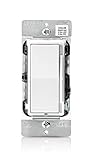
Overview: The Leviton Decora DSL06-1LZ elevates the standard dimmer with enhanced LED capacity and versatile styling. Handling 300W LED and 600W incandescent/halogen loads, this dimmer ships with interchangeable white, ivory, and light almond faceplates to match any décor. The no-neutral-wire installation simplifies upgrades in older homes with existing wiring.
What Makes It Stand Out: The triple-faceplate package provides immediate aesthetic flexibility without separate purchases. Its higher 300W LED capacity accommodates multiple bulbs or high-wattage fixtures, while the adjustable dimming range fine-tunes performance. The Decora form factor offers a modern paddle on/off with discrete slider control, blending contemporary looks with familiar operation.
Value for Money: Excellent value for multi-room projects or those uncertain about wall color schemes. Getting three faceplates effectively provides three dimmers in one, saving $10-15 compared to buying plates separately. The 300W LED rating future-proofs your investment as lighting efficiency improves and bulb wattages decrease.
Strengths and Weaknesses: Pros: Three included faceplates; 300W LED capacity; No neutral required; Adjustable dimming range; Modern Decora styling Cons: Bulkier than slim models; 3-way requires separate switch; Side adjustment wheel can be tricky to access; Premium price over basic models
Bottom Line: The DSL06-1LZ is perfect for renovation projects where décor matching is paramount. The included faceplates and higher LED capacity justify the modest price premium, making it a smart choice for living areas and kitchens with multiple bulbs.
3. ELEGRP Digital Dimmer Light Switch for 300W Dimmable LED/CFL Lights and 600W Incandescent/Halogen, Single Pole/3-Way LED Slide Dimmer, Wall Plate Included, UL Listed, 6 Pack, Matte White
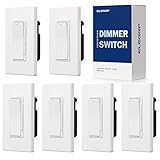
Overview: ELEGRP’s six-pack digital dimmer bundle targets contractors and ambitious DIYers with advanced MCU-integrated circuitry. Each switch handles 300W LED/CFL or 600W incandescent/halogen loads without requiring a neutral wire. The matte white finish and included wallplates provide a clean, modern aesthetic throughout entire homes.
What Makes It Stand Out: The digital control chip delivers superior performance with a gradual fade-on function that reduces inrush current and extends bulb life. The optional locator light guides you in dark rooms—a thoughtful touch rarely seen at this price. True 3-way compatibility (single dimmer per circuit) and universal 99% bulb compatibility claims demonstrate engineering confidence.
Value for Money: Exceptional bulk pricing makes this under $15 per dimmer, competing with budget brands while offering premium features. For whole-house installations, the savings are substantial versus buying individually. The included wallplates add another $10-15 value per switch, eliminating hidden costs and providing everything needed for installation.
Strengths and Weaknesses: Pros: Outstanding per-unit price; Digital fade-on technology; Locator light feature; Includes wallplates; 300W LED capacity; No neutral needed Cons: Six-pack commitment may be excessive for small projects; Lesser-known brand; Locator light may not suit all users; Installation instructions could be clearer
Bottom Line: This ELEGRP six-pack is unbeatable for large-scale installations. The digital features and locator light punch above their weight class, making them ideal for builders or homeowners upgrading multiple rooms simultaneously while maintaining a consistent look.
4. Lutron Ariadni/Toggler LED+ Dimmer Light Switch for Dimmable LED, Halogen and Incandescent Dimmer Switch, 150W, Single-Pole/3-Way, AYCL-153P-WH, White

Overview: Lutron’s Ariadni/Toggler AYCL-153P-WH represents premium dimming technology in a traditional toggle-style format. Tested on thousands of bulbs, this 150W LED dimmer ensures flicker-free performance through sophisticated circuitry. The classic toggle design with small slider offers familiar operation for conservative users upgrading older homes while maintaining traditional aesthetics.
What Makes It Stand Out: Lutron’s exhaustive testing protocol and proprietary LED+ technology guarantee compatibility with the widest possible bulb range. Over 250 discrete dimming levels provide unparalleled precision for creating perfect ambiance. The traditional toggle appearance preserves vintage aesthetics where Decora switches would look out of place, making it ideal for heritage renovations.
Value for Money: While priced at a premium, Lutron’s reliability reduces callback risk and bulb replacement frustration. The 150W capacity limits its application, but for single-fixture rooms, it’s an investment in peace of mind. Wallplates cost extra, which adds to the total investment but allows customization for unique décor.
Strengths and Weaknesses: Pros: Industry-leading compatibility testing; 250+ dimming levels; Proven reliability; Traditional aesthetic; Superior flicker elimination Cons: 150W LED limit restricts multi-bulb use; Wallplate not included; Premium pricing; Toggle style may feel dated to some
Bottom Line: Choose Lutron when bulb compatibility uncertainty keeps you awake at night. The AYCL-153P-WH is the gold standard for flicker-free performance in heritage homes or for users who prioritize proven reliability over raw capacity.
5. BESTTEN 2 Pack Dimmer Light Switch, Universal Lighting Control, Single Pole or 3 Way, Compatible with LED Dimmable Lamp, CFL, Incandescent, Halogen Bulb, Decorator Wallplate Included, UL Listed, White
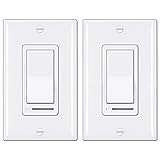
Overview: BESTTEN’s two-pack offers budget-conscious consumers reliable dimming with included wallplates. Each switch supports 150W LED/CFL or 600W incandescent/halogen loads without needing a neutral wire. The memory function recalls previous brightness levels, while the side adjustment wheel fine-tunes compatibility. Decorator styling suits modern interiors.
What Makes It Stand Out: The memory function is rare in this price class, adding convenience by returning to your preferred brightness automatically. The side adjustment wheel provides accessible flicker elimination without removing the faceplate. Including wallplates in a two-pack represents genuine value, eliminating last-minute hardware store runs and hidden costs.
Value for Money: Among the most affordable UL-listed dimmers available, the two-pack typically costs less than a single premium brand dimmer. Per-unit pricing under $10 makes these ideal for rentals, workshops, or budget renovations where basic functionality trumps advanced features. The included plates add $5-8 value per switch.
Strengths and Weaknesses: Pros: Excellent price point; Memory function; Includes wallplates; No neutral required; Side adjustment wheel; UL Listed Cons: 150W LED capacity limits applications; Lesser-known brand longevity uncertain; Basic build quality; Memory may reset after power outages
Bottom Line: BESTTEN delivers no-frills dimming for price-sensitive projects. Perfect for landlords, garages, or secondary rooms where the memory function and included plates provide surprising convenience without premium costs. Don’t expect Lutron refinement, but do expect solid basic performance.
6. Kasa Smart Dimmer Switch HS220, Single Pole, Needs Neutral Wire, 2.4GHz Wi-Fi Light Switch Works with Alexa and Google Home, UL Certified, No Hub Required, 1 Pack

Overview: The Kasa HS220 brings intelligent lighting control to single-pole setups without requiring a dedicated hub. This UL-certified smart dimmer connects directly to your 2.4GHz Wi-Fi network, enabling remote operation through the intuitive Kasa app. Designed for modern homes with neutral wiring, it transforms standard lighting into a voice-controlled, automated experience.
What Makes It Stand Out: The step-by-step app-guided installation significantly reduces setup anxiety for DIYers. The “Gentle Off” feature with double-click fading is perfect for bedrooms, gradually dimming lights to darkness. Advanced scheduling capabilities include an Away Mode that randomly activates lights to simulate occupancy, enhancing home security. Voice control through Alexa and Google Assistant provides true hands-free convenience.
Value for Money: Priced competitively for a single smart dimmer, the HS220 offers premium features without subscription fees. While requiring neutral wire limits retrofit applications, it eliminates the cost of proprietary hubs. Compared to premium brands like Lutron Caseta, it delivers 80% of the functionality at 60% of the cost, making it an accessible entry point into smart lighting.
Strengths and Weaknesses: Strengths include straightforward app setup, reliable voice control, gentle dimming transitions, and robust scheduling options. The UL certification ensures safety compliance. Weaknesses are the neutral wire requirement (problematic in older homes), single-pole-only limitation, 2.4GHz Wi-Fi restriction, and lack of 3-way compatibility. The design feels slightly utilitarian compared to designer switches.
Bottom Line: Ideal for tech-savvy homeowners with neutral wiring seeking affordable smart dimming for single-pole locations. Perfect for bedrooms and living spaces where scheduling and voice control add daily convenience. Those in older homes or needing 3-way control should consider alternatives.
7. ELEGRP Dimmer Light Switch for 300W Dimmable LED/CFL Lights and 600W INC/HAL Bulbs, Single Pole/3-Way LED Slide Dimmer Light Switch, Wall Plate Included, UL Listed, 10 Pack, White

Overview: This ten-pack of traditional dimmer switches from ELEGRP offers a cost-effective solution for whole-home dimming upgrades. Compatible with dimmable LED, CFL, incandescent, and halogen bulbs, these switches work in both single-pole and 3-way configurations without requiring a neutral wire, making them versatile for any home age.
What Makes It Stand Out: The MCU-integrated digital circuit control provides exceptionally smooth, gradual lighting transitions that reduce eye strain and extend bulb lifespan. The optional locator light illuminates the switch in darkness without being intrusive. The no-neutral-wire requirement is a major advantage for retrofitting older homes where neutral wires may be absent from switch boxes.
Value for Money: At roughly $5-7 per switch in this bulk pack, the value proposition is outstanding—individual premium dimmers often cost $15-25 each. This makes whole-house lighting upgrades financially accessible. The inclusion of wall plates and UL listing adds further value, eliminating additional purchases and ensuring safety compliance.
Strengths and Weaknesses: Strengths include universal bulb compatibility, no neutral wire requirement, smooth digital dimming, locator light feature, and exceptional bulk pricing. The slim profile eases installation in crowded boxes. Weaknesses include lack of smart features, manual operation only, potential complexity in 3-way wiring for novices, and the utilitarian aesthetic may not suit high-end interiors.
Bottom Line: Perfect for contractors, landlords, or homeowners undertaking comprehensive lighting upgrades across multiple rooms. The no-neutral requirement and bulk pricing make it ideal for older home renovations where smart features aren’t prioritized. Skip if you require app control or voice automation.
8. Lutron Diva LED+ Dimmer Light Switch for Dimmable LED, Halogen, and Incandescent Bulbs, 150 Watt, Single-Pole or 3-Way, DVCL-153P-WH, White (2-Pack)

Overview: Lutron’s Diva LED+ represents premium analog dimming technology, tested across thousands of bulbs to eliminate flicker. This two-pack handles 150W of dimmable LED/CFL or 600W of incandescent/halogen loads in single-pole or 3-way setups. The familiar Decora-style rocker with slider design offers intuitive manual control with precision dimming.
What Makes It Stand Out: Lutron’s proprietary HED technology optimizes dim range and prevents interference with other dimmers—critical in multi-switch installations. With over 250 discrete lighting levels, it provides finer control than standard dimmers. The extensive bulb compatibility testing ensures reliable performance where cheaper dimmers fail, particularly with problematic LED bulbs.
Value for Money: While pricier than budget dimmers, the two-pack offers savings over individual purchase. Lutron’s reputation for reliability and flicker-free performance justifies the premium, reducing callbacks for contractors and frustration for homeowners. The cost-per-year over a decade makes this economical compared to replacing failed budget dimmers.
Strengths and Weaknesses: Strengths include bulletproof reliability, anti-flicker technology, broad compatibility, smooth slider action, and 3-way capability. The brand’s technical support is industry-leading. Weaknesses include higher upfront cost, no smart features, requires specific bulb compatibility checking, and the 150W LED limit may be restrictive for multi-bulb fixtures.
Bottom Line: Best suited for quality-conscious homeowners and professionals prioritizing reliability over connectivity. Ideal for spaces with finicky LED bulbs where flicker-free performance is non-negotiable. Choose this over smart switches when manual control with exceptional dimming quality is the primary goal.
9. Leviton Decora Smart Dimmer Switch, Wi-Fi 2nd Gen, Neutral Wire Required, Works with Matter, My Leviton, Alexa, Google Assistant, Apple Home/Siri & Wired or Wire-Free 3-Way, D26HD-1RW, White

Overview: Leviton’s second-generation smart dimmer is a future-ready device supporting Matter, enabling seamless integration across all major smart ecosystems. This Wi-Fi dimmer requires neutral wiring and offers sophisticated controls including customizable fade rates and Night Settings. It supports both wired and wireless 3-way configurations, providing installation flexibility.
What Makes It Stand Out: Matter compatibility ensures this switch won’t become obsolete as smart home standards evolve. The My Leviton app’s Night Settings automatically provide softer lighting during late hours. Advanced anti-flicker settings allow fine-tuning for specific bulb types, min/max brightness, and performance optimization—features rarely seen in consumer-grade smart dimmers.
Value for Money: Positioned at a premium price point, this dimmer justifies cost through Matter certification and multi-platform support (Alexa, Google, Apple Home/Siri). While more expensive than Kasa, it eliminates ecosystem lock-in concerns. For Apple Home users, it’s among the few reliable options, making the premium worthwhile for that audience.
Strengths and Weaknesses: Strengths include Matter support, universal ecosystem compatibility, sophisticated fade customization, Night Settings, and flexible 3-way options. The brand’s commercial-grade build quality inspires confidence. Weaknesses include the neutral wire requirement, premium pricing, potentially complex setup for novices, and the My Leviton app experience lags behind competitors.
Bottom Line: The ideal choice for smart home enthusiasts invested in multiple ecosystems or planning future expansion. Essential for Apple HomeKit users needing reliable dimming. Worth the premium for its future-proof Matter support and advanced customization, but overkill for simple Alexa/Google-only setups.
10. Kasa Smart Dimmer Switch HS220P3, Single Pole, Needs Neutral Wire, 2.4GHz Wi-Fi Light Switch Works with Alexa and Google Home, UL Certified,, No Hub Required, 3-Pack

Overview: This three-pack bundles Kasa’s HS220 smart dimmer, offering identical features to the single unit but with significant cost savings for multi-room projects. Each switch provides single-pole Wi-Fi dimming via 2.4GHz networks, requiring neutral wiring. The UL-certified design ensures safety while enabling voice control and remote access without a hub.
What Makes It Stand Out: The bulk packaging reduces per-unit cost by approximately 25-30% compared to individual purchase, making whole-home smart lighting affordable. The consistent Kasa ecosystem experience across all rooms simplifies management through a single app. The scheduling and Gentle Off features scale beautifully across bedrooms, living areas, and kitchens.
Value for Money: Exceptional value for covering three locations, bringing per-switch cost near budget territory while maintaining smart features. For homes needing multiple smart dimmers, this pack saves $20-30 versus individual purchases. The value compounds when considering consistent user experience and centralized control versus mixing brands.
Strengths and Weaknesses: Strengths include bulk savings, reliable app control, voice integration, scheduling, and UL certification. The 0-100% dimming range is precise. Weaknesses mirror the single unit: neutral wire requirement excludes older homes, single-pole only limitation restricts versatility, 2.4GHz-only connectivity, and lack of Matter support may limit future compatibility.
Bottom Line: Perfect for homeowners modernizing multiple rooms simultaneously who have neutral wiring and need only single-pole control. The three-pack offers compelling savings for cohesive smart lighting systems. Skip if you need 3-way circuits or have pre-1980s wiring, but otherwise represents the best value in entry-level smart dimming.
Understanding Dimmer Switch Technology
How Traditional Dimmers Work
Traditional dimmer switches from decades past operated through a method called resistive dimming, which essentially functioned like a valve for electricity. These devices would burn off excess energy as heat to reduce light output—a process that ironically wasted more energy than it saved. Modern dimmers have completely revolutionized this approach, using sophisticated electronics to rapidly switch the power on and off thousands of times per second. This pulse-width modulation delivers the same dimming effect while actually reducing total energy consumption rather than just converting it to waste heat.
Modern Electronic Dimmers Explained
Today’s electronic dimmer switches employ microprocessors and advanced circuitry to precisely control power delivery. By cutting the AC sine wave at strategic points, these devices reduce the RMS voltage reaching the bulb. The key difference is that modern dimmers only draw the power that’s actually needed for the desired brightness level. When you dim a light to 50%, you’re using roughly 50% of the energy—not exactly linear due to bulb physics, but remarkably close. This represents a fundamental shift from old rheostat-style dimmers that consumed full power regardless of brightness setting.
The Physics Behind Energy Savings
The energy-saving magic happens through reduced wattage draw and decreased heat generation. LED bulbs paired with compatible dimmers show the most dramatic efficiency gains. When you dim an LED to 75% of its maximum output, you might see a 60-65% reduction in energy consumption. This non-linear relationship works in your favor—the human eye perceives light logarithmically, so a small reduction in brightness creates a disproportionately large energy savings. Additionally, running bulbs at lower power extends their lifespan exponentially, reducing replacement costs and manufacturing energy overhead.
Types of Dimmer Switches for Maximum Efficiency
Leading Edge vs. Trailing Edge Dimmers
These two primary dimming technologies affect energy efficiency differently. Leading edge dimmers cut the front of the AC waveform and work well with traditional incandescent and some LED bulbs. Trailing edge dimmers, however, cut the back of the waveform and offer superior performance with modern LEDs and CFLs. They produce less electromagnetic interference, operate more quietly, and typically achieve better energy efficiency at lower dimming levels. For a home filled with LED lighting, trailing edge technology represents the smarter long-term investment.
Smart Dimmer Switches
Smart dimmers take energy efficiency to another level by adding intelligence to power control. These devices connect to your home network and allow remote operation, scheduling, and automation. The energy savings multiply when lights automatically dim during bright daylight hours, turn off when rooms are unoccupied, or respond to utility peak pricing signals. Many models consume less than 1 watt in standby mode, making their monitoring capabilities virtually free from an energy perspective.
Universal Dimmer Switches
Universal dimmer switches are engineered to work with virtually any bulb type—incandescent, halogen, CFL, or LED. While convenient, their jack-of-all-trades design sometimes compromises peak efficiency. They achieve compatibility through broader tolerances, which can mean slightly higher standby power consumption or less precise dimming curves. However, for mixed-bulb households transitioning to full LED, they offer a practical bridge solution that still provides meaningful energy savings over standard switches.
Multi-Location Dimmer Switches
For stairways, hallways, or large rooms with multiple entry points, multi-location dimmers allow control from several switches. Energy efficiency benefits emerge when you can easily dim or turn off lights from wherever you are, reducing the tendency to leave lights blazing at full power. Advanced models feature LED indicators showing current brightness levels, preventing unnecessary adjustments and repeated energy-wasting cycling.
Plug-In Dimmer Modules
Not every lighting fixture needs hardwired dimming. Plug-in dimmer modules offer flexibility for lamps and temporary installations while delivering the same energy-saving benefits. These portable solutions are ideal for renters or for controlling groups of accent lights. Modern versions include smart features and consume minimal standby power, making them efficient alternatives to replacing built-in switches.
Key Features That Drive Energy Efficiency
Wattage Rating and Load Capacity
Selecting the appropriate wattage rating directly impacts efficiency. An oversized dimmer operating a small load wastes energy through internal losses. Conversely, an undersized dimmer working near maximum capacity runs hot and inefficient. The sweet spot is a dimmer rated for roughly 125-150% of your total connected load. This provides headroom for efficiency while avoiding the penalty of overengineering.
Minimum Load Requirements
Every dimmer has a minimum load threshold—typically 10-40 watts for LED-compatible models. Below this threshold, the dimmer may not function properly or will consume disproportionate standby power relative to the load. For maximum efficiency with a single low-wattage LED bulb, choose a dimmer specifically designed for low-load applications. These models can operate efficiently with loads as small as 3-5 watts.
LED Compatibility Standards
True energy savings only materialize when dimmers and bulbs speak the same language. Look for dimmers tested and certified for LED compatibility, indicated by specific technical standards. These models prevent flickering, ensure smooth dimming from 0-100%, and avoid the phantom power draw that occurs when mismatched components create electrical feedback loops. The most efficient pairings achieve near-perfect power factor correction.
Power Consumption in Standby Mode
Even when lights are off, smart dimmers draw small amounts of power for their electronics. Energy-efficient models keep this standby consumption under 0.5 watts—practically negligible over a year. Less efficient models might draw 2-3 watts, which adds up across multiple switches. Always check standby power specifications, especially when planning whole-home installations.
Dimming Range and Flicker Prevention
A wider dimming range translates directly to greater energy-saving potential. Dimmers that can smoothly reduce output to 5% or lower allow for significant power reduction while maintaining usable light. Advanced flicker prevention circuitry ensures stable operation at low levels, preventing the inefficient cycling that occurs when bulbs struggle to maintain illumination.
Compatibility Considerations
Matching Dimmers to Light Bulb Types
The efficiency equation breaks down quickly with mismatched components. LED bulbs require LED-rated dimmers that understand their low power draw and electronic drivers. Using an old incandescent dimmer with LEDs causes poor performance, potential flickering, and surprisingly high energy waste due to inefficient power conversion. Halogen bulbs work with most LED-rated dimmers, but specialized halogen dimmers extract maximum efficiency from these hotter-running bulbs.
Understanding TRIAC vs. ELV Dimmers
TRIAC dimmers control standard line-voltage fixtures and represent the most common residential option. ELV (Electronic Low Voltage) dimmers are required for low-voltage lighting systems with transformers, like some track lighting or recessed fixtures. Using the wrong type creates massive inefficiency and potential damage. ELV dimmers typically cost more but deliver superior efficiency in compatible systems by providing cleaner power delivery to sensitive transformers.
Multi-Way Switching Configurations
Three-way and four-way circuits require specific dimmer designs for optimal efficiency. In these setups, only one dimmer should control the load while companion switches provide simple on/off functionality. Advanced systems use communication protocols between switches to maintain consistent dimming levels without redundant power conversion, preventing the energy loss that would occur if multiple dimmers tried to control the same circuit.
Smart Home Ecosystem Integration
Energy efficiency multiplies when dimmers integrate seamlessly with smart home platforms. Automated scenes that dim lights based on time of day, occupancy, or natural light levels eliminate human forgetfulness from the equation. Look for dimmers that support open standards for maximum compatibility, ensuring your investment remains efficient and functional as your smart home evolves.
Installation and Setup Factors
Single-Pole vs. Three-Way Wiring
Single-pole installations are straightforward and typically achieve the highest efficiency since power flows through a single control point. Three-way configurations require careful wiring to avoid creating parallel paths that waste energy. Modern dimmers with traveler-wire optimization ensure electrons take the most efficient route, minimizing resistance losses in complex switching arrangements.
Neutral Wire Requirements
Many smart dimmers require a neutral wire connection for their electronics. While this enables advanced features, it can complicate installation in older homes. Some newer models operate without a neutral by drawing tiny amounts of power through the bulb—an elegant solution but one that can cause ghosting or reduced efficiency with certain LEDs. Understanding your home’s wiring before purchasing prevents costly inefficiencies.
Gang Box Space Considerations
Advanced dimmers with heat sinks and smart components are physically larger than basic switches. Crowding multiple dimmers into a small gang box restricts airflow, causing them to run hotter and less efficiently. Proper spacing allows for adequate heat dissipation, maintaining optimal performance. In multi-gang installations, consider using derated dimmers specifically designed for tight spaces.
Professional vs. DIY Installation
While DIY installation saves money upfront, professional electricians ensure optimal efficiency through proper wire gauge selection, secure connections, and correct load balancing. Loose connections create resistance that wastes electricity as heat. Professionals also verify that your electrical panel can handle the cumulative standby loads of multiple smart dimmers, preventing system-wide inefficiencies.
Advanced Energy-Saving Features
Motion Sensing Capabilities
Dimmer switches with built-in occupancy sensors eliminate energy waste from forgotten lights. Advanced models combine dimming with graduated response—dimming to 50% after a few minutes of no motion, then turning off completely after longer periods. This staged approach saves more energy than simple on/off sensors while providing gentle lighting transitions that don’t startle occupants.
Scheduling and Automation
Time-based automation ensures lights never burn unnecessarily at full power. Morning routines can start with gentle 30% brightness, gradually increasing to 100% as darkness falls. Integration with sunrise/sunset times creates seasonal adjustments that optimize natural light usage. These programmed behaviors deliver consistent savings that human operation simply can’t match.
Energy Monitoring and Reporting
Some smart dimmers include real-time energy monitoring that tracks consumption patterns. This data reveals inefficiencies you never knew existed—like that hallway light consuming 40 watts at full power when 15 watts would suffice. Usage reports help identify opportunities for further efficiency improvements, creating a feedback loop that continuously optimizes your lighting energy profile.
Vacation Mode Security Benefits
While primarily a security feature, vacation modes that randomly cycle lights contribute to energy efficiency by ensuring lights run at reduced brightness during extended absences. Rather than leaving fixtures blazing at full power to deter burglars, these intelligent patterns simulate occupancy using minimal energy, typically 60-70% less than continuous full-power operation.
Cost Analysis and ROI
Upfront Investment vs. Long-Term Savings
Quality dimmer switches cost more than standard switches, but the payback period is surprisingly short. A $30 dimmer controlling a 60-watt LED fixture can save $10-15 annually in electricity costs when used consistently. The real financial benefit comes from extended bulb life—dimming LEDs by 25% can triple their lifespan, saving $20-30 in replacement costs over several years.
Utility Rebates and Incentive Programs
Many utility companies offer rebates for installing energy-efficient lighting controls. These programs can offset 25-50% of the purchase price, dramatically improving ROI. Some regions even provide time-of-use rate discounts for homes with smart dimming systems that can automatically reduce consumption during peak demand hours. Checking local programs before purchasing can significantly reduce your net investment.
Bulb Longevity Benefits
Every 10% reduction in brightness extends LED bulb life by approximately 30-40%. This exponential relationship means aggressive dimming strategies pay dividends far beyond electricity savings. Bulbs that last 15,000 hours at full brightness can exceed 40,000 hours when typically operated at 70% power. The avoided manufacturing and disposal energy of fewer replacements adds substantial environmental savings to your personal financial benefits.
Whole-Home Impact Calculations
The cumulative effect of whole-home dimming is substantial. A typical household with 30 light fixtures averaging 12 watts each can save 400-600 kWh annually by implementing strategic dimming. At average electricity rates, this translates to $50-80 yearly savings, plus extended bulb life worth another $30-50. Over a decade, a $500 investment in quality dimmers returns $800-1,300 in total value while reducing your carbon footprint by over 4,000 pounds of CO2.
Troubleshooting Common Issues
Flickering and Buzzing Solutions
Flickering indicates inefficient power conversion and wastes energy through rapid on-off cycling. This usually stems from incompatible dimmer-bulb pairings or insufficient load. Solutions include adding a dummy load resistor (though this wastes some energy) or better yet, switching to properly matched components. Buzzing often occurs when dimmers operate near their minimum load threshold, forcing them to work harder and less efficiently.
Dimming Range Problems
When lights won’t dim below 30-40%, you’re missing out on significant energy savings. This limitation typically occurs with mismatched dimmers and bulbs or when the dimmer’s minimum load isn’t met. Installing a compatible low-load dimmer or switching to bulbs specifically designed for deep dimming restores the full efficiency potential, allowing operation at 5-10% brightness for substantial power reduction.
Ghosting and Glowing When Off
Some LED bulbs emit a faint glow when switched “off” through a dimmer, indicating phantom power draw. This occurs when the dimmer’s electronics leak small currents to sense the load. While the waste is minimal—often less than a watt—it indicates poor compatibility. Solutions include adding a bypass capacitor or, more efficiently, switching to bulbs designed to prevent this phenomenon, ensuring zero standby waste.
Overheating Prevention
Excessive heat generation signals energy waste and potential safety issues. Overheating typically results from overloaded circuits, poor connections, or inadequate ventilation. Derating dimmers in multi-gang boxes—using only 80% of their rated capacity—prevents heat buildup. Ensuring solid wire connections and proper load calculations keeps operation cool and efficient, as every degree of excess temperature represents wasted energy.
Safety and Certification Standards
UL Listing and Safety Ratings
UL (Underwriters Laboratories) certification ensures dimmers meet strict safety and efficiency standards. UL-listed dimmers undergo testing for standby power consumption, heat generation under load, and electromagnetic interference—all factors that affect real-world energy efficiency. Avoid uncertified devices that may claim efficiency but lack independent verification of their performance claims.
Overload Protection Features
Quality dimmers include automatic overload protection that shuts down the circuit before damage occurs. This prevents catastrophic failures that could create energy-wasting short circuits or fire hazards. Some advanced models feature gradual overload response, first reducing output to protect components while maintaining some illumination rather than complete shutdown—balancing safety with efficiency.
Heat Dissipation Design
Efficient dimmers manage heat through carefully engineered heat sinks and thermal pathways. Aluminum construction dissipates heat better than plastic, while finned designs increase surface area for cooling. Better heat management means less energy lost to thermal waste and more stable operation at all dimming levels. This design consideration directly impacts the device’s energy efficiency ratio.
Warranty Considerations
Longer warranties often correlate with higher efficiency designs. Manufacturers confident in their thermal management and component quality typically offer 3-5 year warranties. These robust designs maintain their efficiency over time rather than degrading. A dimmer that loses 10% efficiency annually due to component stress quickly negates any initial savings advantage.
Frequently Asked Questions
How much energy can I realistically save with dimmer switches?
Most households save 15-25% on lighting electricity costs. Dimming LEDs to 75% brightness saves approximately 60% of the energy while providing nearly the same perceived light. Combined with scheduling and automation, savings can reach 30-40% for well-managed systems.
Do dimmer switches work with all LED bulbs?
No. LED bulbs must be specifically labeled “dimmable” and tested for compatibility with your dimmer model. Mismatched combinations cause flickering, poor dimming range, and energy waste. Always check manufacturer compatibility lists before purchasing.
Can dimmer switches reduce my carbon footprint?
Absolutely. A typical home can reduce CO2 emissions by 200-400 pounds annually through strategic dimming. When multiplied by extended bulb life reducing manufacturing demands, the total environmental impact becomes substantial.
Why do some dimmer switches feel warm to the touch?
Slight warmth is normal—dimmers dissipate small amounts of power as heat. However, excessive heat indicates overload or poor installation. Well-designed dimmers should feel only mildly warm during operation. Excessive heat represents wasted energy and potential safety issues.
Are smart dimmers worth the extra cost for energy savings?
Smart dimmers typically pay for themselves in 2-3 years through enhanced automation and scheduling that human operation can’t match. The ability to create scenes, respond to occupancy, and integrate with other systems multiplies their efficiency advantage over manual dimmers.
What causes LED bulbs to flicker on dimmer switches?
Flickering results from incompatible dimming protocols, insufficient minimum load, or poor-quality bulb drivers. The dimmer and bulb argue about how to handle the chopped AC waveform, creating inefficient power delivery. Using matched, high-quality components eliminates this waste.
Can I install a dimmer switch myself?
If you have basic electrical knowledge and your home has modern wiring with a neutral wire, DIY installation is feasible. However, improper installation creates resistance losses and safety hazards. When in doubt, professional installation ensures optimal efficiency and safety.
Do dimmers save money if I already use LED bulbs?
Yes. While LEDs are efficient, they’re not maximally efficient at full brightness. Dimming a 10-watt LED to 70% might use only 4-5 watts—a 50% reduction. The savings are smaller than with incandescents but still meaningful across multiple fixtures.
How long do modern dimmer switches typically last?
Quality dimmer switches last 15-20 years under normal use. Their lifespan often exceeds that of the bulbs they control. Longevity depends on operating temperature, load matching, and power quality. Efficient operation correlates directly with extended lifespan.
Will dimmer switches interfere with my Wi-Fi or other electronics?
Poorly designed dimmers can generate electromagnetic interference. However, modern trailing-edge dimmers and properly certified models include filtering that prevents interference. Quality installation with proper grounding further eliminates potential disruptions while maintaining efficient operation.
See Also
- 10 Must-Have LED Dimmer Switches for Energy Efficiency in 2026
- How to Choose the 10 Best Dimmer Switches for Energy Efficiency in 2026
- 10 Best Dimmer Switches for Incandescent Bulbs This Year
- The 10 Best Dimmer Switches Every First-Time Homeowner Needs This Year
- The 10 Best Dimmer Switches Every DIY Enthusiast Needs This Year