Table of Contents
Imagine sinking into your favorite armchair after a long day, the soft glow of perfectly adjusted lighting wrapping the room in warmth. That magic moment isn’t accidental—it’s the result of a thoughtfully chosen dimmer switch working quietly behind the wall. Modern living rooms demand more than just on/off functionality; they require lighting that adapts seamlessly to movie nights, lively gatherings, or quiet moments with a book. The right dimmer transforms your space from merely illuminated to truly inviting, setting the emotional tone for every experience you have within those walls. It’s the unsung hero of ambiance, turning a standard room into a personalized sanctuary.
Yet, navigating the world of dimmer switches can feel surprisingly complex. With rapid advancements in lighting technology, compatibility issues, and a dizzying array of control options, choosing the wrong dimmer can lead to frustrating flickering, limited functionality, or even safety hazards. Many homeowners make the mistake of treating dimmers as simple replacements, only to discover compatibility clashes with energy-efficient bulbs or smart home systems later. Understanding the nuances—beyond just the basic dimming range—is crucial for avoiding costly mistakes and ensuring your living room lighting evolves gracefully with your lifestyle and future tech upgrades. Let’s demystify the process and equip you with the knowledge to make a confident, future-proof choice.
Top 10 Dimmer Switches
Detailed Product Reviews
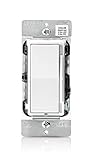
1. Leviton Decora Slide Dimmer Switch for Dimmable LED, Halogen and Incandescent Bulbs, DSL06-1LZ, White with Ivory and Light Almond Faceplates
Overview:
This Leviton Decora Slide Dimmer offers a reliable, cost-effective solution for adjusting light levels in residential spaces. Designed for compatibility with dimmable LEDs, halogens, and incandescents, it targets homeowners seeking ambiance control without rewiring. Its slim profile and included multi-color faceplates simplify integration into existing setups.
What Makes It Stand Out:
The DSL06-1LZ excels with its 300W LED/600W incandescent capacity and adjustable dimming range—critical for eliminating LED flicker and optimizing energy use. The absence of a neutral wire requirement broadens compatibility with older homes, while Leviton’s online bulb compatibility tool ensures seamless pairing. The included ivory and light almond faceplates add immediate customization.
Value for Money:
Priced competitively for a premium brand, it delivers exceptional value. The higher 300W LED rating accommodates more bulbs than many rivals (like the 150W SureSlide), and the bundled faceplates eliminate extra costs. It outperforms budget options in reliability and bulb compatibility, justifying its modest premium over basic switches.
Strengths and Weaknesses:
Strengths: Robust 300W LED support; no neutral wire needed; easy installation; adjustable dimming range; includes multiple faceplates; reliable 3-way compatibility (with separate switch). Weaknesses: Requires manual bulb compatibility checks; faceplate styles may not suit all decors; lacks smart features or locator light.
Bottom Line:
An excellent choice for traditional dimming needs, especially in LED-heavy homes. Its power capacity, flexibility, and included accessories make it a top-value pick for straightforward, flicker-free ambiance control without smart tech complexity.
2. Leviton SureSlide Dimmer Switch for Dimmable LED, Halogen and Incandescent Bulbs, 6674-P0W, White

Overview:
Leviton’s SureSlide Dimmer (6674-P0W) is a streamlined solution for single-location dimming, targeting users prioritizing simplicity and compatibility with modern bulbs. It handles common residential lighting loads but with a lower LED capacity than Leviton’s Decora line, positioning it as a focused entry-level option.
What Makes It Stand Out:
Its standout feature is the 150W LED/600W incandescent rating, ideal for smaller rooms or fixtures with fewer bulbs. Like the DSL06, it offers adjustable dimming range to prevent flicker and works without a neutral wire. The dedicated compatibility tool ensures pairing success, though the lower wattage is a key differentiator from Leviton’s higher-capacity models.
Value for Money:
It offers solid value for low-to-moderate LED loads at a slightly lower price than the DSL06. However, the 150W LED limit may necessitate multiple units for larger spaces, reducing long-term savings. Budget alternatives exist, but Leviton’s trusted reliability and compatibility support justify the cost for flicker-sensitive installations.
Strengths and Weaknesses:
Strengths: Simple installation (no neutral wire); effective flicker reduction via adjustable range; compact design; leverages Leviton’s compatibility resources; affordable for small rooms. Weaknesses: Limited 150W LED capacity restricts use in larger areas; only includes a white faceplate; lacks advanced features like locator lights; 3-way requires separate switch.
Bottom Line:
A dependable, no-frills dimmer for bedrooms or accent lighting where LED loads are light. Choose this over the DSL06 only if your fixture uses ≤150W of LEDs; otherwise, the higher-capacity model offers better versatility per dollar.
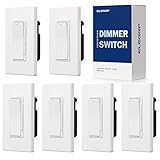
3. ELEGRP Digital Dimmer Light Switch for 300W Dimmable LED/CFL Lights and 600W Incandescent/Halogen, Single Pole/3-Way LED Slide Dimmer, Wall Plate Included, UL Listed, 6 Pack, Matte White
Overview:
This ELEGRP 6-pack delivers a cost-efficient, digitally controlled dimming solution for whole-home upgrades. Targeting DIYers and landlords, it combines high compatibility (300W LED/600W incandescent), a locator light, and wallplates in a bulk bundle, emphasizing practicality and safety with UL certification.
What Makes It Stand Out:
Its MCU-based digital circuit enables smooth fade-on/fade-off transitions, reducing bulb stress and eye strain—a rarity in this price tier. The included locator light (customizable on/off) and universal 99% LED compatibility stand out, alongside single-pole/3-way flexibility. The 6-pack format with wallplates offers exceptional setup convenience.
Value for Money:
Outstanding value for multi-switch projects. The per-unit cost is significantly lower than single-brand switches (like Leviton or Lutron), especially with wallplates included. While build quality may not match premium brands, the digital dimming tech and locator light provide features often found in pricier models, ideal for budget-conscious renovations.
Strengths and Weaknesses:
Strengths: Ultra-affordable in bulk; smooth digital fade-on/off; locator light; no neutral wire needed; includes 6 wallplates; high 300W LED compatibility. Weaknesses: Build quality less robust than Leviton/Lutron; limited color/style options (matte white only); fewer brand-specific compatibility assurances; basic aesthetics.
Bottom Line:
The smart choice for economical whole-house dimmer installations where advanced features like app control aren’t needed. Its digital smoothness, locator light, and bulk pricing make it a high-value workhorse for landlords or DIYers.
4. Lutron Ariadni/Toggler LED+ Dimmer Light Switch for Dimmable LED, Halogen and Incandescent Dimmer Switch, 150W, Single-Pole/3-Way, AYCL-153P-WH, White

Overview:
Lutron’s Ariadni/Toggler LED+ dimmer is a premium, performance-focused switch engineered for flawless LED integration. Targeting quality-conscious homeowners, it leverages extensive bulb testing to deliver flicker-free dimming across over 250 light levels, though limited to 150W LED loads.
What Makes It Stand Out:
Lutron’s exhaustive testing on “1,000s of bulbs” ensures exceptional flicker-free performance—a major pain point with LEDs. The 250+ lighting levels provide granular ambiance control unmatched by basic dimmers. Its mechanical toggler design offers intuitive, satisfying operation preferred by traditional switch users.
Value for Money:
Priced higher than generic brands, it justifies cost through reliability and bulb compatibility confidence. While the 150W LED limit and separate wallplate purchase slightly dent value, the reduced risk of returns or flicker fixes makes it cost-effective for critical installations. Competes closely with Leviton but excels in tested performance consistency.
Strengths and Weaknesses:
Strengths: Unrivaled flicker-free reliability via extensive testing; precise 250+ light levels; robust mechanical toggler feel; single-pole/3-way versatility; trusted Lutron quality. Weaknesses: Limited 150W LED capacity; wallplate sold separately; no smart features or locator light; higher price point.
Bottom Line:
The top recommendation for hassle-free, high-fidelity dimming where LED compatibility is non-negotiable. Ideal for dining rooms or living areas where perfect ambiance matters—worth the investment for peace of mind despite the lower wattage.
5. Kasa Smart Dimmer Switch HS220, Single Pole, Needs Neutral Wire, 2.4GHz Wi-Fi Light Switch Works with Alexa and Google Home, UL Certified, No Hub Required, 1 Pack

Overview:
Kasa’s HS220 is a Wi-Fi-enabled smart dimmer targeting tech-savvy users seeking voice/app control without a hub. It requires a neutral wire and 2.4GHz Wi-Fi, positioning itself as a user-friendly entry into smart lighting for modern, neutrally wired homes.
What Makes It Stand Out:
Seamless app-guided setup, voice control via Alexa/Google, and versatile scheduling (including “Away Mode”) differentiate it from traditional dimmers. The “Gentle Off” feature for bedtime routines and remote access add unique convenience. No hub requirement simplifies the ecosystem versus some competitors.
Value for Money:
Priced mid-range for smart switches, it delivers strong value through robust app functionality and broad voice assistant support. The neutral wire requirement limits older home use, but the time-saving automation (timers, away lighting) justifies the cost for smart home adopters. Cheaper non-smart dimmers exist, but lack these capabilities.
Strengths and Weaknesses:
Strengths: Intuitive app control; voice assistant compatibility; advanced scheduling/Away Mode; “Gentle On/Off” feature; no hub needed; UL certified. Weaknesses: Mandatory neutral wire excludes pre-1980s homes; 2.4GHz Wi-Fi only; app dependency for full features; lower 150W LED capacity; basic physical switch feel.
Bottom Line:
Highly recommended for smart home integrations in neutrally wired houses. Its automation features and ease of use outweigh the wiring limitations, making it a standout for hands-free, scheduled lighting control in contemporary settings.
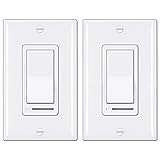
6. BESTTEN 2 Pack Dimmer Light Switch, Universal Lighting Control, Single Pole or 3 Way, Compatible with LED Dimmable Lamp, CFL, Incandescent, Halogen Bulb, Decorator Wallplate Included, UL Listed, White
Overview:
The BESTTEN 2-Pack dimmer switch offers versatile lighting control for residential setups, supporting single-pole or 3-way installations without requiring a neutral wire. Designed for compatibility with dimmable LEDs, CFLs, incandescents, and halogens (up to 150W LED/CFL or 600W incandescent), it includes decorator wallplates and features UL certification for safety.
What Makes It Stand Out:
Its standout feature is the side adjustment wheel, which lets users fine-tune the dimming range to eliminate LED flickering—a common pain point. The memory function recalls your last brightness setting upon power-on, while the horizontal slider provides intuitive, full-range control. The polycarbonate build ensures heat and fade resistance.
Value for Money:
Priced competitively for a 2-pack, it delivers robust functionality without smart-tech premiums. It outperforms basic dimmers in flicker prevention and compatibility, though it lacks advanced features like app control. Ideal for budget-conscious buyers needing reliable, no-frills dimming.
Strengths and Weaknesses:
Strengths: Easy neutral-wire-free installation; broad bulb compatibility; effective flicker adjustment; durable construction; included wallplates.
Weaknesses: No locator light; limited to one dimmer per 3-way circuit; max LED load (150W) lags behind some competitors; no smart integration.
Bottom Line:
A dependable, affordable solution for standard dimming needs, especially for flicker-prone LED setups. Best for users prioritizing simplicity and reliability over smart features.
7. Lutron Diva LED+ Dimmer Light Switch for Dimmable LED, Halogen, and Incandescent Bulbs, 150 Watt, Single-Pole or 3-Way, DVCL-153P-WH, White (2-Pack)

Overview:
Lutron’s Diva LED+ dimmer is engineered for flicker-free performance with dimmable LEDs, halogens, and incandescents (up to 150W LED/CFL or 600W incandescent). This 2-pack supports single-pole or 3-way setups and leverages Lutron’s extensive bulb compatibility testing.
What Makes It Stand Out:
Lutron’s patented technology optimizes dimming range and prevents interference between multiple dimmers. It offers 250+ lighting levels for precise ambiance control and includes a detailed compatibility chart tested across thousands of bulbs—ensuring reliable, flicker-free operation where cheaper models struggle.
Value for Money:
Priced higher than entry-level dimmers, it justifies cost through superior engineering and Lutron’s reputation for reliability. The 2-pack deal enhances value for whole-home installations, though it lacks smart features. A worthwhile investment for bulb compatibility peace of mind.
Strengths and Weaknesses:
Strengths: Exceptional flicker prevention; broad bulb compatibility; smooth dimming range; reliable 3-way support; UL-certified safety.
Weaknesses: No neutral-wire-free option (unlike competitors); no memory function; no locator light; max LED load capped at 150W.
Bottom Line:
The top choice for hassle-free dimming with diverse bulb types, especially in multi-dimmer homes. Recommended for users prioritizing compatibility and performance over smart capabilities.
8. ELEGRP Dimmer Light Switch for 300W Dimmable LED/CFL Lights and 600W INC/HAL Bulbs, Single Pole/3-Way LED Slide Dimmer Light Switch, Wall Plate Included, UL Listed, 10 Pack, White

Overview:
This 10-pack ELEGRP dimmer targets large-scale installations, supporting up to 300W LED/CFL or 600W incandescent loads. It features digital dimming technology, neutral-wire-free installation, and a unique locator light, making it suitable for both retrofits and new builds.
What Makes It Stand Out:
The MCU-controlled digital circuit enables fade-on functionality (reducing bulb stress) and smooth dimming. The optional locator light—factory-set to glow when lights are off—enhances nighttime usability. Its 300W LED capacity (double many rivals) and “99% bulb compatibility” claim address common dimmer limitations.
Value for Money:
The 10-pack offers exceptional bulk value for contractors or whole-home upgrades. At ~$1.50 per unit, it outperforms similarly priced single units in features like higher wattage support and the locator light. A cost-efficient workhorse for professional use.
Strengths and Weaknesses:
Strengths: High 300W LED capacity; fade-on tech extends bulb life; locator light; neutral-wire-free; ultra-slim design; 10-pack savings.
Weaknesses: Basic slider interface (no memory); locator light can’t be customized; limited customer support visibility; no smart features.
Bottom Line:
A high-value, high-performance choice for volume installations needing robust, neutral-wire-free dimming. Ideal for electricians or budget-focused DIYers tackling multiple rooms.
9. BESTTEN 3 Pack Slide Dimmer Light Switch, Quiet Rocker, Super Slim Single Pole or 3 Way Dimmable Switch, Max 300W LED, CFL, 600W Incandescent, ETL Listed, White

Overview:
BESTTEN’s 3-pack slide dimmer emphasizes space-saving design and quiet operation, supporting up to 300W LED/CFL or 600W incandescent loads. ETL-certified and neutral-wire-free, it targets DIYers seeking easy, unobtrusive upgrades for standard lighting circuits.
What Makes It Stand Out:
Its super-slim profile fits cramped electrical boxes where bulkier dimmers fail, while the ultra-quiet rocker mechanism ensures silent operation. The slide dimmer offers precise, intuitive control, and the 300W LED capacity matches premium competitors at a lower price point.
Value for Money:
The 3-pack balances affordability with enhanced specs (300W LED support vs. 150W in Product 6). It’s cheaper per unit than Lutron or Leviton but sacrifices advanced features. Perfect for cost-effective whole-home dimming where smart tech isn’t needed.
Strengths and Weaknesses:
Strengths: Slim design fits tight spaces; quiet operation; 300W LED compatibility; neutral-wire-free; includes wallplates; ETL safety certified.
Weaknesses: No flicker-adjustment wheel; no memory function; no locator light; basic build quality; max load still lags behind ELEGRP’s 10-pack.
Bottom Line:
A practical, budget-friendly dimmer for straightforward installations in tight spaces. Best for DIYers wanting reliable, quiet dimming without extras.
10. Leviton Decora Smart Dimmer Switch, Wi-Fi 2nd Gen, Neutral Wire Required, Works with Matter, My Leviton, Alexa, Google Assistant, Apple Home/Siri & Wired or Wire-Free 3-Way, D26HD-1RW, White

Overview:
Leviton’s Decora Smart Dimmer is a premium Wi-Fi-enabled switch requiring a neutral wire. It integrates with Matter, Apple Home, Alexa, and Google Assistant, offering app control, voice commands, and customizable automation for modern smart homes.
What Makes It Stand Out:
As a Matter-compatible 2nd-gen device, it future-proofs your setup with cross-platform reliability. Features like customizable fade rates, preset light levels, and automatic “softer lighting” at night (via My Leviton) elevate convenience beyond basic dimming. Neutral wire ensures stable performance with sensitive LEDs.
Value for Money:
Priced high for a single unit, it delivers exceptional value for smart-home enthusiasts through robust Matter/HomeKit support and no hub requirement. Justifies cost with advanced automation versus non-smart dimmers, though the neutral wire requirement limits retrofit appeal.
Strengths and Weaknesses:
Strengths: Matter/HomeKit/Alexa/Google support; intuitive app automation; flicker prevention settings; voice control; customizable night lighting.
Weaknesses: Requires neutral wire (excludes older homes); higher upfront cost; app-centric setup may deter beginners; no physical locator light.
Bottom Line:
The definitive choice for integrated smart lighting. Recommended for tech-savvy users building a Matter-compatible ecosystem who prioritize automation over simple dimming.
Understanding Dimmer Switch Fundamentals
What Exactly Does a Dimmer Switch Do?
At its core, a dimmer switch regulates the electrical current flowing to your light fixtures, reducing brightness to create softer, more adaptable illumination. Unlike simple on/off switches, dimmers use sophisticated electronics (often TRIAC or MOSFET-based) to “chop” the AC waveform, effectively lowering the power delivered to the bulb. This precise control is essential for crafting layered lighting schemes in multi-functional living spaces, allowing you to shift from bright task lighting for reading to subtle background glow for relaxation without changing fixtures.
Why Modern Living Rooms Specifically Need Specialized Dimmers
Contemporary living room designs often blend multiple light sources—recessed ceiling lights, statement pendants, wall sconces, and under-cabinet lighting—each potentially requiring different dimming capabilities. Open-concept layouts mean lighting must transition smoothly between zones, demanding consistent performance across various circuits. Furthermore, the prevalence of smart home integration and energy-efficient LED lighting in modern builds introduces specific compatibility requirements that older dimmer technologies simply cannot handle, making the right choice non-negotiable for seamless operation.
Critical Compatibility Considerations
Bulb Technology: The LED Imperative
The shift to LED lighting is the single biggest factor influencing dimmer selection today. Unlike incandescent bulbs, LEDs require dimmers specifically engineered for their low-wattage operation and electronic drivers. Using an incompatible dimmer with LEDs often causes flickering, buzzing, limited dimming range (e.g., only working at full brightness or near-off), or premature bulb/driver failure. Always verify the dimmer is explicitly rated for the type and total wattage of your LED bulbs, including any minimum load requirements.
Voltage and Electrical System Requirements
Standard residential dimmers operate on 120V AC systems, but it’s vital to confirm your home’s voltage matches the dimmer’s specifications. Pay close attention to the dimmer’s maximum load capacity (wattage rating)—exceeding this can cause overheating and failure. For larger living rooms with multiple fixtures, calculate the combined wattage of all connected bulbs at their highest possible dimming level (not the dimmed level) to ensure it stays safely below the dimmer’s maximum rating. Don’t forget to account for potential future additions!
Fixture and Circuit Compatibility
Not all light fixtures dim well, even with the correct switch. Enclosed fixtures, for example, can trap heat, stressing both the dimmer and the bulb. Dimmers designed for resistive loads (like old incandescents) often struggle with the capacitive or inductive loads found in fluorescent or certain LED fixtures. Additionally, multi-location switching (controlling lights from two or more points) requires specific 3-way or smart multi-location dimmer setups—standard single-pole dimmers won’t function correctly in these circuits. Always check fixture manufacturer recommendations.
Installation and Safety Essentials
Assessing Your Electrical Box Space and Wiring
Before purchasing, verify the physical space inside your wall box. Modern dimmers, especially smart models with additional components for connectivity, can be significantly larger than standard switches. Measure your existing box depth and width. Also, confirm if your wiring includes a neutral wire (typically white)—many smart dimmers require this for consistent power, while traditional dimmers often do not. Lack of a neutral wire drastically limits your options and may require professional electrical work.
The Neutral Wire Conundrum Explained
A neutral wire provides a dedicated return path to the electrical panel, essential for powering the internal electronics of smart dimmers without relying on the light fixture itself. Without a neutral, smart dimmers may cause flickering, fail to stay connected, or prevent lights from turning off completely. While “no-neutral” smart dimmers exist, they often have significant limitations (like requiring a minimum bulb wattage to function or being incompatible with certain bulbs). When possible, installing a neutral wire (via an electrician) is the most reliable path for advanced dimming.
When to Absolutely Call a Licensed Electrician
While replacing a simple single-pole switch might be a DIY project for experienced homeowners, dimmer installation often presents hidden complexities. Call a professional if: your circuit lacks a neutral wire and you want a smart dimmer, you need multi-location dimming, your wiring appears damaged or non-standard, you’re unsure about load calculations, or your home has aluminum wiring (which requires special connectors and expertise). Safety should always override cost savings—faulty installations risk fire or electrocution.
Control Methods and User Experience
Physical Interface Options: Rocker, Slide, or Touch
Your daily interaction with the dimmer matters greatly. Rocker switches offer familiar, tactile feedback. Slide dimmers provide intuitive linear control—push up for brighter, down for dimmer. Touch-sensitive panels deliver a sleek, modern aesthetic with gesture-based or tap controls, often including features like soft-start to extend bulb life. Consider ergonomics: will it be hard to reach? Do users prefer clear physical movement (helpful for low-light adjustment) or minimalist surfaces? Test interfaces in person if possible.
Smart Dimming: Voice, App, and Automation Integration
Smart dimmers unlock transformative control, allowing adjustments via smartphone apps, voice commands (through assistants like Alexa or Google), or automated schedules/routines. Look for compatibility with your existing smart home ecosystem (Zigbee, Z-Wave, Wi-Fi, or specific platforms like Apple HomeKit). Key features include scene setting (e.g., “Movie Mode” dims all lights), geofencing (lights adjust when you arrive home), and integration with other devices (like lowering lights when the TV turns on). Ensure robust connectivity to avoid lag or dropouts.
Precision Dimming Performance: Range and Smoothness
A high-quality dimmer should offer a wide, usable dimming range—from a bright 100% down to a very low 1-5%—without audible buzzing or visible flicker. Smooth, step-free adjustment is crucial for creating the perfect mood; jerky or inconsistent dimming feels cheap and disrupts the experience. Pay attention to low-end performance: can it achieve a true, warm candlelight glow without cutting out? This is heavily dependent on both the dimmer quality and bulb compatibility, so research real-world user experiences.
Design and Aesthetic Integration
Faceplate and Trim Options for Seamless Blending
The dimmer’s visible components should complement your living room’s decor. Choose from standard sizes (single, double, triple gang) and a vast array of finishes: classic white or ivory, metallics (brushed nickel, bronze, black), or even custom colors/painted options. Consider plate styles—traditional rocker covers, minimalist touch panels, or ultra-slim designs. Some systems offer interchangeable faceplates, allowing you to update the look without rewiring as your decor evolves.
Low-Profile and Invisible Installation Techniques
For a truly minimalist aesthetic, explore options like ultra-slim dimmer modules installed behind the wall plate, leaving only a nearly flush touch surface visible. Alternatively, consider in-wall smart dimming relays controlled by separate, discreet keypads or touch panels mounted elsewhere in the room. While often more complex to install, these solutions eliminate bulky switches from primary sightlines, maintaining clean wall lines essential for modern interiors.
Material Quality and Tactile Feel
Don’t overlook the sensory experience. A dimmer with flimsy plastic construction or mushy buttons degrades the perceived quality of your entire space. Opt for switches with solid, premium materials (like high-grade thermoplastics or metal accents) and satisfying, precise action. The slight “click” of a quality rocker or the smooth glide of a slide mechanism contributes subconsciously to the room’s overall sense of craftsmanship and intentionality.
Future-Proofing Your Investment
Adapting to Evolving Lighting Technology
Lighting tech continues to advance rapidly (think tunable white or full-color LEDs). Choose a dimmer with a proven track record of firmware updates via its app or ecosystem. Look for models supporting emerging standards like Bluetooth Mesh or Matter over Thread, which promise better interoperability and longevity as your smart home grows. A dimmer that only works with today’s basic LEDs might be obsolete when you upgrade to more advanced bulbs in a few years.
Scalability Within Your Smart Home Ecosystem
Consider how the dimmer fits into your broader smart home vision. Can it be easily grouped with other lights for room-wide control? Does it support advanced automations beyond simple scheduling (e.g., adjusting based on natural light levels via other sensors)? Ensure the dimmer’s platform isn’t likely to be abandoned; prioritize options backed by major, established ecosystems with a history of long-term support to avoid being locked into a dead-end technology.
Frequently Asked Questions
Frequently Asked Questions
Can I use any dimmer switch with LED bulbs? No, standard incandescent dimmers often cause flickering or poor performance with LEDs. You must select a dimmer explicitly labeled as compatible with LED bulbs, matching both the bulb type and the total circuit wattage, including adhering to any minimum load requirements.
Why does my dimmer buzz or cause lights to flicker? Buzzing or flickering typically indicates incompatibility between the dimmer and the bulbs (common with LEDs), exceeding the dimmer’s load capacity, or using a dimmer not designed for the specific fixture type (like enclosed fixtures). Verify compatibility specs and load calculations.
Do I need an electrician to install a dimmer switch? While simple single-pole replacements might be DIY for experienced individuals, always hire a licensed electrician if you lack a neutral wire (needed for most smart dimmers), require multi-location control, are unsure about wiring, or have aluminum wiring. Safety is paramount.
What is the minimum load requirement for dimmers? Many LED-compatible dimmers require a minimum wattage (e.g., 25W) to function correctly. If your total connected LED wattage is below this (common with efficient bulbs), the dimmer may not work properly or could damage the bulbs. Check the dimmer’s specifications carefully.
Can I control dimmers with voice assistants like Alexa? Yes, smart dimmers with Wi-Fi, Zigbee, or Z-Wave connectivity typically integrate with major voice assistants (Alexa, Google Assistant, Siri) for voice control, provided they are set up within the compatible smart home ecosystem.
Are touch dimmer switches reliable long-term? High-quality touch dimmers from reputable manufacturers are generally very reliable, with no moving parts to wear out. Look for models with robust capacitive touch sensors and positive user reviews regarding longevity and responsiveness.
How do I determine the right wattage dimmer for my room? Add up the maximum wattage of all bulbs connected to the switch (use the bulb’s actual wattage, not equivalent). Choose a dimmer rated for at least 25% more than this total to ensure safety and longevity, especially with LEDs.
Can I dim multiple circuits (e.g., ceiling lights and wall sconces) from one switch? Yes, but you need a multi-circuit or “master” dimmer designed to control several independent lighting loads simultaneously from a single wall station, often paired with in-wall relay modules.
What causes a dimmer to feel hot to the touch? Some warmth is normal under load, but excessive heat usually indicates the dimmer is overloaded (exceeding its wattage rating), installed in an overcrowded electrical box with poor airflow, or is failing. Turn off the circuit and consult an electrician if it’s uncomfortably hot.
Do smart dimmers work during a power outage? Smart dimmers lose connectivity and app/voice control during outages. However, most retain basic manual dimming functionality via the physical switch once power is restored, though settings/schedules may reset depending on the model. Battery backup is rare.
See Also
- The 10 Best Touch Dimmer Switches for Contemporary Living Rooms in 2026
- The 10 Ultimate Best Dimmer Switches for Living Rooms in 2026
- Top 10 Best Dimmer Switches for Living Rooms in 2026
- How to Choose the 10 Best Dimmer Switches with Remote Control for Living Rooms in 2026
- Top 10 Best Dimmer Switches for Modern Homes in 2026