Table of Contents
Imagine walking into a room bathed in the perfect, soft glow you prefer, automatically achieved without lifting a finger. Or picture your hallway lights gently brightening just before your alarm sounds, easing you into the morning. Now, consider that this same system diligently switches off forgotten lights, trims your electricity bill, and reduces your household’s carbon footprint – all through the intelligent combination of dimming and precise timing. As energy costs climb and environmental awareness deepens, the humble light switch has evolved far beyond simple on/off functionality. The integration of dimming capabilities with programmable timers represents a powerful, accessible step towards smarter, more sustainable home management, especially as we approach 2026.
Lighting remains a significant portion of residential energy consumption, often accounting for 10-15% of the average household’s electricity use. Yet, much of this energy is wasted through lights left on in unoccupied rooms or operating at full brightness when ambiance or task lighting requires less. Manually adjusting every switch is impractical; relying solely on memory to turn lights off is unreliable. This is where dimmer switches equipped with timers step in, offering an elegant solution that automates energy savings without sacrificing comfort or convenience. They provide the dual benefit of reducing power consumption through lower light levels and ensuring lights operate only when needed, making them a cornerstone technology for the energy-conscious homeowner seeking both efficiency and a refined living experience.
Top 10 Dimmer Switches with Timer
Detailed Product Reviews
1. Lutron Maestro LED+ Stacked Dimmer & Timer Switch Combo – Space Saving 2 in 1 Design with Top Light Dimmer and Bottom Countdown Timer for Lights or Fans, MACL-L3T251-WH, White

Overview:
This non-smart switch integrates a top dimmer and bottom timer into a single gang plate, eliminating the need for two separate switches. Designed for physical wall control without apps or Wi-Fi, it suits spaces where smart features are unnecessary but space is limited.
What Makes It Stand Out:
Its unique stacked 2-in-1 design saves significant wall space while offering distinct functions: the top dimmer adjusts light levels (with preset, full-on, and fade-to-off options), and the bottom timer controls lights/fans for 5–60 minutes. The orange indicator light visually shows countdown status, a rare practical touch in mechanical switches.
Value for Money:
Priced moderately higher than basic dimmers but well below smart switches, it excels for users needing physical timer/dimmer functionality without subscriptions or apps. It’s ideal for utility rooms, garages, or rentals where smart infrastructure isn’t feasible, offering long-term reliability unmatched by cheaper single-function alternatives.
Strengths and Weaknesses:
Strengths: Space-efficient; intuitive physical controls; no Wi-Fi/app dependency; robust compatibility (75W LED/300W incandescent); clear visual timer indicator.
Weaknesses: No remote/smart features; requires manual operation; coordinating wallplate sold separately; timer can’t be automated or scheduled.
Bottom Line:
A brilliantly practical solution for dedicated timer/dimmer needs in non-smart environments. Choose this for reliable, space-saving mechanical control where app integration is irrelevant—it’s the specialist you didn’t know you needed.
2. Kasa Smart Dimmer Switch HS220, Single Pole, Needs Neutral Wire, 2.4GHz Wi-Fi Light Switch Works with Alexa and Google Home, UL Certified, No Hub Required, 1 Pack

Overview:
Kasa’s HS220 is a Wi-Fi smart dimmer requiring a neutral wire, offering app-based control, voice compatibility (Alexa/Google), and scheduling. It replaces standard switches for remote lighting management without a hub.
What Makes It Stand Out:
The app-guided installation simplifies setup for DIYers, while features like “Gentle Off” (fade-to-sleep dimming) and Away Mode (randomized on/off for security) enhance usability. Seamless 2.4GHz Wi-Fi integration and UL certification ensure safety and broad compatibility.
Value for Money:
Competitively priced among mid-tier smart dimmers, it delivers robust functionality without subscription fees. Though neutral-wire dependent, its reliability, scheduling depth, and no-hub requirement justify the cost versus basic switches or pricier hub-based systems.
Strengths and Weaknesses:
Strengths: Intuitive app; strong voice assistant support; customizable schedules/timers; no hub needed; UL safety certified.
Weaknesses: Neutral wire mandatory; 2.4GHz Wi-Fi only; no Matter support limits future-proofing; no Apple HomeKit/Siri integration.
Bottom Line:
An excellent entry into reliable, hub-free smart lighting for Alexa/Google users. Prioritize this if you have neutral wiring and want dependable app control—just confirm compatibility before purchase.
3. Kasa Matter Smart Dimmer Switch: Voice Control w/Siri, Alexa & Google Assistant | UL Certified | Timer & Schedule | Easy Guided Install | Neutral Wire Required | Single Pole | 2.4GHz Wi-Fi | KS225

Overview:
The KS225 leverages Matter protocol for cross-platform smart home integration, supporting Apple Home, Alexa, Google, and SmartThings. It includes dimming, scheduling, and voice control via a neutral-wire setup.
What Makes It Stand Out:
Matter compatibility is its crown jewel, enabling unified control across ecosystems—even offline via LAN. The 1–100% dimming range, Multi-Admin access (multiple users/services), and robust Away Mode set it apart as a future-proof hubless solution.
Value for Money:
Priced slightly above Wi-Fi-only models, the Matter investment pays off for multi-ecosystem households. Avoiding vendor lock-in and ensuring long-term compatibility justifies the premium, especially versus single-platform alternatives.
Strengths and Weaknesses:
Strengths: True Matter support; seamless cross-platform control; detailed scheduling; offline LAN operation; comprehensive voice assistant coverage.
Weaknesses: Neutral wire essential; installation complexity for beginners; minor app inconsistencies during Matter setup.
Bottom Line:
The definitive choice for Matter adopters seeking ecosystem flexibility. If you use multiple smart platforms, this switch’s interoperability makes it worth every penny—skip it only if committed to a single non-Matter system.
4. Amazon Basics Smart Dimmer Switch, Single Pole, Works with Alexa Only, Voice Control, 2.4 GHz Wi-Fi, No Hub Required, Neutral Wire Required, White

Overview:
This budget-friendly dimmer is Alexa-exclusive, requiring neutral wiring and 2.4GHz Wi-Fi. It focuses on core smart functionality: voice control, scheduling via Alexa routines, and app-based management.
What Makes It Stand Out:
Its simplicity shines—zero app complexity beyond Alexa setup, making it ideal for Amazon-centric homes. The guided installation video and Alexa-exclusive troubleshooting streamline deployment for non-tech users.
Value for Money:
The lowest-priced option here, it’s perfect for Alexa devotees seeking basic smart dimming without bells and whistles. However, its single-platform limitation reduces value for mixed-ecosystem households.
Strengths and Weaknesses:
Strengths: Extremely affordable; effortless Alexa integration; straightforward installation; no hub/app beyond Alexa.
Weaknesses: Alexa-only (no Google/HomeKit); limited scheduling flexibility; no physical dimming customization; prone to Alexa app glitches.
Bottom Line:
A functional barebones switch for Alexa loyalists on a budget. Avoid if you use other assistants or want nuanced dimming—otherwise, it’s a cost-effective starter smart switch.
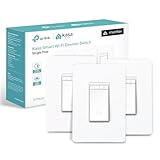
5. Kasa Smart Kasa Matter Smart Dimmer Switch: Voice Control w/Siri, Alexa & Google Assistant,UL Certified, Timer & Schedule, Easy Guided Install,Neutral Wire Required, Single Pole, 2.4GHz Wi-Fi, 3-Pack
Overview:
Identical to Product 3 (KS225) but sold as a 3-pack, this Matter-enabled dimmer offers cross-platform control, scheduling, and voice support via neutral-wire installation—now bundled for multi-switch homes.
What Makes It Stand Out:
The 3-pack delivers Matter’s ecosystem flexibility (Apple, Alexa, Google, SmartThings) at a bulk discount. Consistent features—1–100% dimming, Away Mode, and offline LAN control—make it ideal for whole-home Matter deployment.
Value for Money:
Savings per unit beat buying singles, maximizing value for Matter adopters upgrading multiple rooms. The per-switch cost nears basic smart dimmers, but Matter’s longevity and cross-compatibility elevate its ROI significantly.
Strengths and Weaknesses:
Strengths: Matter interoperability; bulk pricing; consistent cross-platform performance; robust scheduling; UL safety.
Weaknesses: Neutral wire needed for all units; identical setup complexity as single units; slight premium over non-Matter packs.
Bottom Line:
The smart bulk buy for Matter enthusiasts. If outfitting multiple rooms, this pack eliminates ecosystem headaches while saving money—skip only if you need fewer than three switches.
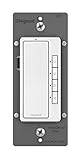
6. Legrand Radiant Digital Countdown Timer Rocker Light Switch, For Home Lighting Control, with Locator & Time Indicator, 60/40/20/10 Minute Settings, RT2WCCV4, White, 1 Count
Overview:
This Legrand Radiant switch replaces standard wall switches with preset countdown timers for lights or fans. Designed for closets, garages, or bathrooms, it automatically shuts off after 10, 20, 40, or 60 minutes using dedicated buttons, eliminating wasted energy from forgotten fixtures. Its digital display shows remaining time, and a locator LED aids visibility in darkness.
What Makes It Stand Out:
The fixed, one-touch timer intervals (no programming) ensure foolproof operation ideal for low-traffic areas. High-impact thermoplastic construction and blade retention technology promise durability, while the slim back body simplifies installation in crowded boxes. The illuminated time indicator provides clear visual feedback, a rarity in basic timers.
Value for Money:
Priced moderately above standard switches but below smart timers, it excels for specific use cases like exhaust fans or storage areas where simple, automatic shutoff is needed. It avoids the complexity and cost of app-based systems while delivering tangible energy savings over manual operation.
Strengths and Weaknesses:
Strengths: Extremely intuitive; robust build quality; no neutral wire or app required; visual time indicator; locator light. Weaknesses: Fixed intervals lack customization; not suitable for whole-home scheduling; digital display may be too bright in bedrooms; requires single-pole wiring only.
Bottom Line:
An excellent, no-fuss solution for targeted energy savings in utility spaces. If you need automatic shutoff for fans or infrequently used lights without smart features, this durable, easy-to-install switch delivers exceptional value and reliability.
7. Leviton Decora Programmable and Astronomical Timer Switch for Lights and Motor Loads, Neutral Wire Required, Single Pole or 3-Way, VPT24-1PZ, White with Ivory and Light Almond Faceplates

Overview:
This Leviton programmable switch automates lighting and motor loads (fans, pumps) via customizable schedules. Using an integrated astronomical clock, it adjusts for local sunrise/sunset and daylight saving time, enhancing both convenience and home security without manual seasonal tweaks.
What Makes It Stand Out:
The standout feature is its true astronomical clock, which auto-adjusts schedules based on your ZIP code—perfect for porch or landscape lighting. Supporting up to 49 events weekly and randomization for “away mode,” it offers pro-level flexibility. Compatibility with 3-way circuits (using companion switch) broadens its application.
Value for Money:
Justifying its premium price, it replaces multiple standalone timers and reduces energy waste significantly. Compared to smart switches needing hubs/apps, it operates independently once programmed, offering reliability and long-term savings on lighting and motor loads like pool pumps.
Strengths and Weaknesses:
Strengths: True astronomical scheduling; robust 1HP motor support; 3-way capability; randomization for security; intuitive button programming. Weaknesses: Requires neutral wire (excludes older homes); no voice/app control; programming is menu-driven (steeper learning curve); indoor use only.
Bottom Line:
A top-tier choice for automating outdoor/indoor lighting and motors with precision. If you prioritize hands-off, season-adjusted scheduling and don’t need smart-home integration, this reliable, feature-rich timer is worth the investment.
8. Kasa Apple HomeKit Smart Dimmer Switch KS220P3, Single Pole, Neutral Wire Required,2.4GHz Wi-Fi Light Works with Siri, Alexa and Google Home,UL Certified, No Hub Required,White, 3 Count (Pack of 1)

Overview:
This Kasa smart dimmer integrates seamlessly with Apple HomeKit, Alexa, and Google Assistant, enabling voice control, scheduling, and remote management of lights via Wi-Fi—no hub needed. Designed for single-pole setups, it requires a neutral wire and 2.4GHz network.
What Makes It Stand Out:
Apple HomeKit support is its crown jewel, allowing Siri voice commands and Apple-centric automation. The Kasa app’s guided installation simplifies setup, while features like “Gentle Off” (fade-to-sleep) and randomized “Away Mode” enhance usability. True dimming with multiple control methods (app, voice, physical switch) adds versatility.
Value for Money:
Competitively priced among HomeKit switches, it eliminates hub costs and leverages existing Apple/Google ecosystems. Energy savings from scheduling and remote control justify the cost, especially compared to non-smart alternatives. The 3-pack offer improves value for multi-room setups.
Strengths and Weaknesses:
Strengths: Full HomeKit/Alexa/Google integration; no hub; user-friendly app; gentle dimming; strong scheduling; UL certified. Weaknesses: Neutral wire mandatory; 2.4GHz Wi-Fi only; “Gentle Off” may annoy some users; requires Apple TV/HomePod for remote HomeKit access.
Bottom Line:
Ideal for Apple-centric smart homes seeking reliable, hub-free dimming. Despite neutral-wire limitations, its seamless ecosystem integration and thoughtful features make it a standout choice for tech-savvy users prioritizing convenience and automation.
9. Lutron Maestro Countdown Timer Switch for Fans and Lights, Timer Switch for Lights, 3A/150-Watt LED Bulbs, Single-Pole/Multi-Location, MA-T51MN-WH, White

Overview:
Specialized for bathroom exhaust fans and low-traffic lighting, this Lutron timer switch offers adjustable countdown (1–60 mins) to ensure fans run long enough for moisture removal without wasting energy. Works in single-pole or multi-location setups (with add-on accessory switch).
What Makes It Stand Out:
Its focus on fan control sets it apart—unlike light-centric timers, it’s optimized for motor loads and integrates with Lutron motion sensors (e.g., for lights) while the timer handles fans. The adjustable countdown (via dial) provides flexibility over fixed-interval competitors, and its compact design fits standard boxes.
Value for Money:
Priced affordably for its niche, it prevents mold damage from inadequate ventilation and cuts fan runtime costs. Cheaper than smart alternatives but more purpose-built than generic timers, it’s a cost-effective solution for moisture-prone areas where precision timing matters.
Strengths and Weaknesses:
Strengths: Adjustable timer (1–60 mins); fan/motor load optimized; multi-location capable; compact size; integrates with Lutron sensors. Weaknesses: No digital display; requires accessory switch for 3-way; wallplate sold separately; limited to 150W LED (low for lights).
Bottom Line:
The best-in-class choice for bathroom ventilation control. If you need a dedicated, reliable timer for exhaust fans or closet lights with adjustable duration, this well-engineered switch delivers targeted value and energy savings.
10. Lamp Cord with Dimmer, LED Timing Function,Dimmable & Timer 2/4/8Hrs, Dimmer for String Lights Max 360W,18 AWG 2 Prong Extension Cord for Indoor/Outdoor String Lights, Indoor Plants, Floor Lamp

Overview:
This inline dimmer cord integrates timer and brightness control into a 6-foot extension cord for lamps or string lights. Offering 10-step dimming and 2/4/8-hour auto-shutoff, it targets decorative lighting, indoor plants, or small fixtures without wall-switch modifications.
What Makes It Stand Out:
Its tool-free installation (no wiring expertise) and portability let users add smart-like features to any plug-in device. Dual dimming methods (tap for step changes, hold for smooth fade) and high 360W capacity (for LED) cater to string lights and grow lamps. The timer function auto-disables devices, enhancing safety.
Value for Money:
An ultra-budget solution for retrofitting existing lamps—far cheaper than smart switches or hardwired timers. The 360W rating handles most string lights, and its outdoor-rated design adds versatility. Ideal for renters or temporary setups where wall modifications aren’t feasible.
Strengths and Weaknesses:
Strengths: No installation skill needed; portable; 10-step + smooth dimming; 2/4/8h timer; outdoor-rated; high LED wattage. Weaknesses: Max 3A (360W) conflicts with 18 AWG rating (typically 10A); awkward cord-bulge design; timing resets after power loss; not for high-wattage incandescents.
Bottom Line:
A practical, affordable add-on for decorative lighting automation. Despite minor safety ambiguities, its ease of use and timer/dimming features make it perfect for string lights or lamps where hardwired solutions aren’t an option.
Understanding Dimmer Switches with Timer Functionality
What Exactly is a Dimmer Switch with Timer?
A dimmer switch with a timer combines two essential features into a single wall-mounted unit. The dimmer component allows you to adjust the intensity of your lights, lowering energy consumption whenever full brightness isn’t necessary. The timer function enables you to program specific on and off times, or set durations for how long the lights remain on after activation (like a vacation mode or stairwell light). This integration automates both light level control and operating schedules, moving beyond basic manual switches or simple timers that lack dimming capability.
The Core Technology Behind Dimming and Timing
Modern dimmers primarily use “trailing edge” or “leading edge” phase-cut technology to reduce the voltage supplied to the light source, thereby lowering its output and energy draw. The timer function is typically managed by a small internal microcontroller or digital circuit. This brain stores your programmed schedules (on/off times, dim levels at specific times) and executes them reliably, often powered by a small internal battery to maintain settings during brief power outages. Understanding this technology helps in selecting a unit compatible with your specific lighting types.
Why Combine Dimming with Timing for Maximum Savings?
Using dimming alone saves energy proportional to the reduced light level (e.g., dimming to 50% brightness typically uses around 40% less energy than full power for incandescent/halogen, and significant savings for compatible LEDs). Timing ensures lights aren’t left running unnecessarily. Combining them delivers compounded savings: lights operate only during needed hours and at the lowest practical brightness level for the task or ambiance. This dual-action approach tackles the two biggest sources of lighting energy waste – duration and intensity.
Key Features to Evaluate Before Purchasing
Compatibility: The Non-Negotiable Starting Point
Compatibility is paramount and often the most common pitfall. You must verify the dimmer switch is explicitly compatible with:
- Your bulb type: LED, CFL, Halogen, or Incandescent. Modern dimmers are often LED-specific or “universal,” but older models may not work correctly with LEDs, causing flickering or buzzing. Check the minimum and maximum load wattage specified by the manufacturer against the total wattage of all bulbs on the circuit.
- Your electrical system: Standard single-pole, 3-way, or 4-way switches require different dimmer models. Ensure the timer dimmer matches your existing wiring setup.
Types of Timer Functions Available
Timer capabilities vary significantly:
- Daily Schedules: Program different on/off times and dim levels for each day of the week (ideal for consistent routines).
- Random/Vacation Mode: Simulates occupancy by turning lights on and off at varying times, enhancing security.
- Countdown Timers: Automatically turn lights off after a preset duration (e.g., 15, 30, 60 minutes), perfect for hallways, bathrooms, or children’s rooms.
- Sunrise/Sunset Syncing: Advanced models (often smart-enabled) adjust schedules based on local sunrise/sunset times, ensuring lights operate only during darkness.
Dimming Range and Smoothness
Not all dimmers offer the same range or quality of dimming. Look for:
- Wide Dimming Range: The ability to dim down to very low levels (e.g., 1% or 5%) is crucial for creating ambiance and maximizing energy savings in the evening.
- Smooth Dimming Curve: A good dimmer provides a gradual, flicker-free transition from off to full brightness and back, without audible buzzing, especially at low levels. This is heavily dependent on bulb compatibility.
User Interface and Programming Ease
How you interact with the timer is critical for long-term use:
- Physical Controls: Rotary dials, touch-sensitive sliders, or button interfaces. Consider ease of use, especially for household members less comfortable with technology.
- Digital Display: A clear, backlit display is essential for setting and viewing complex schedules accurately, particularly in low light.
- Intuitive Programming: The setup process should be logical. Complex menu systems can lead to frustration and abandonment of the timer features. Look for models known for user-friendly setup.
Installation and Setup Considerations
Assessing Your Wiring and Electrical Box
Before purchasing, safely turn off the circuit breaker and inspect your existing switch box:
- Available Wires: Standard single-pole switches typically have two “hot” wires (line and load). Timer dimmers often require a neutral wire (usually white) for their internal electronics to function reliably, especially for the timer and display. Older homes may lack neutral wires in switch boxes, limiting your options to models specifically designed for “no neutral” installations (though these can sometimes have compatibility quirks).
- Box Size: Timer dimmers with displays or more complex electronics are often larger than standard switches. Ensure your electrical box has sufficient depth and space to accommodate the new unit without overcrowding.
DIY vs. Professional Installation
While replacing a standard switch with a compatible dimmer can be a DIY project for the experienced homeowner, timer dimmers add complexity:
- DIY Feasibility: If you are comfortable with basic electrical work, have the correct tools (voltage tester!), understand your home’s wiring, and the new dimmer matches your wiring setup (especially neutral wire presence), DIY is possible. Always prioritize safety and confirm power is OFF at the breaker.
- When to Call an Electrician: If you are unsure about wiring, lack a neutral wire where needed, have a multi-location switch setup (3-way/4-way), encounter unexpected wiring, or simply feel uncomfortable, hiring a licensed electrician is the safest and most reliable choice. Incorrect installation can damage the switch, bulbs, or create a fire hazard.
Initial Programming and Calibration
Setting up the timer schedule requires careful attention:
- Setting Time and Date: Accurate internal timekeeping is fundamental for schedules to work correctly. Most units have simple step-by-step prompts.
- Programming Schedules: Input your desired on/off times and corresponding dim levels for each day. Take your time to avoid errors.
- Testing and Adjustment: After programming, test the schedules thoroughly over a day or two. You may need to fine-tune dim levels for optimal ambiance or adjust times based on actual usage patterns. Some models allow for quick manual overrides without erasing the schedule.
Maximizing Energy Savings and Practical Benefits
Quantifying the Potential Energy Reduction
While exact savings depend on usage patterns and bulb types, the combination delivers significant reductions:
- Dimming Savings: Dimming an LED bulb to 50% brightness typically uses 40-50% less energy than full brightness. Dimming to 25% can use roughly 20-30% of full power.
- Timing Savings: Eliminating just one hour of unnecessary lighting per day per fixture adds up. A single 10W LED left off for an extra hour daily saves about 3.65 kWh per year. Multiply this by multiple fixtures and hours saved.
- Compounded Effect: Using both features together means lights are only on when needed and at the lowest necessary level, maximizing kWh reduction.
Strategic Placement for Optimal Impact
Not all rooms benefit equally. Prioritize installation in areas where:
- Lights Are Often Left On: Hallways, bathrooms, laundry rooms, garages, utility rooms.
- Ambiance Matters: Living rooms, dining rooms, bedrooms (where dimming for relaxation or morning routines is valuable).
- Security is a Concern: Exterior lights, front porches (using vacation mode).
- Natural Light Varies: Rooms with large windows where brightness needs change significantly throughout the day.
Extending Bulb Lifespan Through Dimming
Operating lights, especially incandescent and halogen bulbs, at lower voltages significantly extends their operational life. While modern LEDs are long-lasting regardless, running them at reduced brightness can still contribute to even greater longevity, reducing replacement frequency and waste. The timer function further extends lifespan by minimizing total operating hours.
Navigating Smart Features and Connectivity
Built-in Wi-Fi vs. Zigbee/Z-Wave: Understanding Protocols
Many modern timer dimmers offer smart capabilities:
- Wi-Fi Direct: Connects straight to your home Wi-Fi. Easy setup but can congest your network; may have slower response; requires cloud services (potential privacy/dependency).
- Zigbee/Z-Wave: Require a separate hub (like those from SmartThings, Hubitat, or Home Assistant). More reliable, lower latency, better security, and often more robust automations within a larger smart home ecosystem. Generally preferred for serious smart home integration.
App Control and Voice Assistant Integration
Smart timer dimmers unlock powerful features:
- Remote Scheduling: Adjust timers or dim levels from anywhere via smartphone app.
- Voice Commands: Use Alexa, Google Assistant, or Siri to set timers, adjust brightness, or check status hands-free.
- Advanced Automations: Create complex routines (e.g., “Good Morning” dims hallway lights gradually at 6:30 AM, “Away” activates vacation mode on exterior lights). This level of control takes the energy-saving potential and convenience to a new level.
Local Control vs. Cloud Dependence
Consider reliability:
- Local Execution: Automations and basic functions (like the physical switch or pre-programmed timer) work even if your internet goes down or the cloud service has an outage. Crucial for core functionality.
- Cloud Reliance: Features like remote access via app or certain voice commands require an active internet connection and functioning cloud service. Ensure the core timer/dimmer functions operate locally for peace of mind.
Avoiding Common Pitfalls and Troubleshooting
The LED Flicker and Buzz Conundrum
This is the most frequent issue, usually caused by incompatibility:
- Cause: Mismatch between dimmer technology (trailing/leading edge), bulb driver design, and minimum load requirements. Cheap or non-dimmable LEDs are prime culprits.
- Solutions: Use only bulbs explicitly listed as compatible with your specific dimmer model (check manufacturer lists). Ensure total circuit load meets the dimmer’s minimum wattage. Try a different brand/model of dimmable LED bulb. Consider a dimmer specifically designed for low-wattage LED loads.
Timer Drift and Power Outage Recovery
- Drift: Some basic electronic timers can lose or gain a few minutes over weeks/months. Higher-quality units with quartz crystals or regular internet sync (smart models) are more accurate.
- Power Outages: Most modern timer dimmers have a small internal battery or capacitor to retain settings and time for several hours during an outage. However, prolonged outages may require resetting the time and schedule. Check the product specifications for backup duration.
Overcoming Limited Physical Space and Aesthetics
Timer dimmers, especially with displays, are bulkier:
- Deep Electrical Boxes: If your existing box is shallow, you may need an “old work” deep box extender or replacement box, adding complexity to installation.
- Cover Plates: Standard switch plates might not fit. Ensure you purchase a compatible decorator-style plate designed for the specific dimmer model’s size and shape. Consider the visual appeal of the display in your home’s decor.
Long-Term Value and Environmental Impact
Calculating Return on Investment (ROI)
While the upfront cost is higher than a standard switch, the energy savings add up:
- Simple Payback Period: Divide the cost of the dimmer switch by your estimated annual energy savings (in dollars) from using it. For frequently used circuits, payback can occur within 1-3 years, especially considering extended bulb life.
- Long-Term Savings: Over the 10-15+ year lifespan of a quality dimmer, the cumulative savings on electricity bills and replacement bulbs can be substantial, making it a financially sound investment.
Contributing to Household Carbon Footprint Reduction
Every kilowatt-hour saved reduces demand on power plants, most of which still rely on fossil fuels:
- Direct Impact: Lowering your home’s electricity consumption directly decreases your household’s CO2 emissions associated with lighting.
- Scalable Effect: Widespread adoption of energy-efficient lighting controls like timer dimmers contributes significantly to community and national energy conservation goals, reducing strain on the grid and accelerating the transition to cleaner energy sources.
Enhancing Home Value and Appeal
Features that demonstrate energy efficiency and smart home integration are increasingly attractive to potential buyers:
- Modern Convenience: Pre-installed automation for lighting is seen as a desirable modern amenity.
- Tangible Savings: Buyers recognize the ongoing cost savings associated with energy-efficient upgrades. Thoughtful lighting control throughout the home can subtly boost perceived value.
Future-Proofing Your Investment
Adapting to Evolving Lighting Technologies
As LED efficiency improves and new bulb standards emerge:
- Look for Flexibility: Choose dimmers with broad compatibility ranges and firmware update capabilities (common in smart models) to handle future bulb types.
- Modular Design: Some high-end systems allow the dimmer module to be upgraded independently of the faceplate or controls, extending the system’s useful life.
Integration with the Expanding Smart Home Ecosystem
The smart home landscape is rapidly evolving:
- Protocol Choice: Opting for Zigbee or Z-Wave models (with a hub) offers better longevity and interoperability across different brands compared to Wi-Fi-only, which is more susceptible to platform changes or discontinuations.
- Open Standards: Support for Matter over Thread (emerging as a key standard) promises greater future compatibility and reliability across the smart home, making it a desirable feature for forward-thinking purchases.
Frequently Asked Questions
Frequently Asked Questions
Can a dimmer switch with timer really save significant money on my electric bill? Yes, absolutely. Savings come from two sources: reducing light intensity (dimming uses less power) and ensuring lights are only on when needed (timing). While individual fixture savings might seem small, the cumulative effect across multiple lights used daily can lower your lighting-related electricity costs by 20-50% or more over time, translating to tangible reductions on your monthly bill.
Will timer dimmers work with all types of LED light bulbs? No, compatibility is critical. Not all LED bulbs are dimmable, and even dimmable LEDs must be compatible with the specific dimmer switch’s technology. Always check the dimmer manufacturer’s compatibility list for approved bulb brands and models. Using incompatible bulbs often causes flickering, buzzing, or failure to dim properly.
How accurate are the timers, especially during power outages? Most quality timer dimmers have a small internal backup battery or capacitor that maintains the time and programmed schedules for several hours (often 4-12+ hours) during a power outage. After a prolonged outage, you may need to reset the time, but the schedules usually remain intact. High-precision quartz timing ensures minimal drift (less than a minute per month) under normal operation.
Is professional installation necessary for a dimmer switch with timer? It depends on your electrical experience and your home’s wiring. If you are comfortable replacing standard switches and your switch box has the required neutral wire (common in timer dimmers), DIY is feasible with proper safety precautions. However, if you lack a neutral wire, have complex 3-way/4-way wiring, are unsure about safety, or encounter unexpected issues, hiring a licensed electrician is highly recommended to ensure safety and correct function.
Do I lose manual control when the timer is active? No, reputable timer dimmers always allow manual override. You can typically turn the light on/off or adjust the brightness level using the physical switch at any time without disrupting the programmed schedule. The timer simply resumes control according to its settings after your manual input (e.g., if you turn it off manually, it will turn back on at the next scheduled time).
Can I set different dimming levels for different times of day? Yes, this is a key feature of advanced timer dimmers. You can program specific dim levels to activate at your scheduled on-times. For example, set lights to come on at 50% brightness at 7:00 PM for ambiance, then automatically dim to 25% at 10:00 PM for a wind-down period, before turning off at midnight.
Will using a timer dimmer shorten the lifespan of my LED bulbs? Generally, no. Dimming LEDs actually extends their lifespan compared to running them at full brightness continuously. LEDs are most stressed by heat generated at maximum power; operating them at lower brightness levels reduces thermal stress, contributing to even longer operational life than their standard rated hours.
Are timer dimmers suitable for outdoor lighting? Yes, but you must select a model specifically rated for outdoor or damp locations (check the IP rating). Outdoor use is excellent for security (vacation mode), pathway lighting (on at dusk, off at midnight), or accent lighting. Ensure the fixture and bulb are also weatherproof and compatible with the dimmer.
How complex is it to program the daily schedules? Complexity varies by model. Basic units with simple dials or buttons for setting on/off times might take 5-10 minutes. Models with digital displays and multiple daily schedules require more step-by-step input but are usually guided by on-screen prompts. Smart models often have the most intuitive setup via smartphone apps. Always consult the manual and allow time for initial configuration.
Can timer dimmers help reduce my home’s carbon footprint? Definitely. By reducing the total electricity consumed for lighting – both through lower brightness levels and eliminating unnecessary operation – timer dimmers directly decrease the demand for grid electricity. Since a significant portion of electricity generation still relies on fossil fuels, this reduction translates directly into lower carbon dioxide emissions associated with your household energy use.
See Also
- 10 Must-Have LED Dimmer Switches for Energy Efficiency in 2026
- 10 Best Dimmer Switches for Energy Efficiency This Year
- 10 Must-Have LED Dimmer Switches for Energy-Efficient Lighting in 2026
- How to Choose the 10 Best Dimmer Switches for Energy Efficiency in 2026
- 10 Top-Rated Dimmer Switches with Timer According to Experts in 2026