Table of Contents
Picture this: you’ve just stepped outside after sunset, ready to unwind in your backyard oasis, only to be greeted by harsh glare from one corner, eerie shadows swallowing your prized hydrangeas, and a path light stubbornly blinking like a faulty alarm. It’s frustrating, isn’t it? Landscape lighting should transform your outdoor space into a safe, inviting extension of your home after dark—not a source of disappointment or wasted investment. For too many homeowners, the dream of elegant, functional illumination ends in flickering fixtures, yellowed lenses, or systems that simply can’t withstand a single season. The truth is, not all lighting solutions are built to endure real-world conditions, and superficial reviews often miss the critical flaws that only emerge months later.
That’s precisely why a deep, long-term evaluation approach is non-negotiable. While quick snapshots might highlight initial brightness or sleek designs, they rarely reveal how materials weather relentless sun exposure, how connections hold up against freezing winters, or whether color consistency degrades over hundreds of operating hours. Six months of rigorous, hands-on testing—tracking performance through seasonal shifts, heavy rainfall, temperature extremes, and daily use—separates the genuinely reliable systems from those destined for the junk pile. This extended scrutiny uncovers the hidden durability, true maintenance needs, and subtle design elements that define a landscape lighting investment worth making. Forget the hype; let’s explore what actually matters when your lights face the test of time.
Top 10 Landscape Lighting Systems
Detailed Product Reviews
1. ZUCKEO All-in-One Low Voltage Landscape Lighting Kit, 5W LED Landscape Lights with Transformer, 120FT Wire and Connectors, Waterproof Outdoor Spotlight for Yard Garden House, 3000K 12V-24V, 12Pack

Overview: This comprehensive 12-light kit delivers an all-in-one solution for outdoor landscape illumination, featuring energy-efficient 5W LED spotlights, a smart transformer, and ample wiring for DIY installation.
What Makes It Stand Out: Its complete inclusion of 120ft wire and 24 connectors eliminates extra purchases, while the IP66-rated aluminum lights offer rugged durability. The transformer’s photocell sensor and 10-hour timer enable automated, customizable operation.
Value for Money: Priced competitively for a full 12-light setup, it outperforms cheaper kits lacking sufficient wire or connectors. The 80W transformer supports future expansion, justifying its cost versus fragmented alternatives.
Strengths and Weaknesses: Strengths: Fully inclusive kit; robust IP66 waterproofing; 270° adjustable heads; 2-year warranty. Weaknesses: Limited to 120ft wire for 12 lights (may restrict larger yards); warm white only (3000K).
Bottom Line: Ideal for medium-sized yards needing a hassle-free, durable setup—buy this if you prioritize completeness and weather resistance over extensive coverage.
2. SUNVIE 12 Pack Low Voltage Landscape Lights with 300W Transformer 12-24V LED Landscape Lighting Kit 3000K Waterproof Aluminum Landscape Spotlights with Wire Connectors for House Yard Tree Garden

Overview: SUNVIE’s 12-light kit focuses on high-power output with a robust 300W transformer, targeting users seeking bright, scalable outdoor lighting without included wiring.
What Makes It Stand Out: The industrial-grade 300W transformer handles massive expansion, while die-cast aluminum housings ensure longevity. Fastlock2 connectors simplify installation, though wire must be purchased separately.
Value for Money: The transformer’s capacity offers exceptional long-term value for large properties, but the lack of included wire reduces immediate affordability versus all-in-one kits.
Strengths and Weaknesses: Strengths: Powerful 300W transformer; pet-safe low voltage; strong IP65 rating; lifetime support. Weaknesses: No wire included (major oversight); limited warranty clarity on lights vs. transformer.
Bottom Line: Best for large landscapes needing heavy-duty power—skip if you want a true plug-and-play kit, but choose this for scalability and transformer reliability.
3. ZUCKEO All-in-One Landscape Lighting Kit, 5W LED Low Voltage Landscape Lights with Transformer and 80FT Wire, Waterproof Outdoor Spotlight with Connectors for Yard Garden House, 3000K 12-24V 8Pack

Overview: A streamlined 8-light version of ZUCKEO’s system, designed for compact spaces with essential components bundled for straightforward garden or pathway lighting.
What Makes It Stand Out: Retains the IP66 waterproofing and 270° adjustable heads of its bigger sibling, but with a more modest 60W transformer and 80ft wire—perfect for smaller yards.
Value for Money: Excellent for tight budgets or petite properties, costing less than the 12-pack while avoiding the pitfalls of bare-bones kits. The 24-month warranty adds confidence.
Strengths and Weaknesses: Strengths: True all-in-one (no missing parts); weatherproof transformer; easy timer setup; ideal for small areas. Weaknesses: Only 8 lights; 80ft wire limits layout flexibility; no color temperature options.
Bottom Line: A smart buy for small gardens or beginners—opt for this if you need simplicity and completeness without overspending on unused capacity.
4. SUNVIE All-in-One Low Voltage Landscape Lighting Kit, 6W Landscape Lights Wired Aluminum 3000K with Transformer 100FT Wire, 12-24V Waterproof Outdoor Spotlight for Garden Yard House Tree, 8 Pack

Overview: SUNVIE’s 8-light kit emphasizes glare-free illumination and sturdy build quality, featuring 6W anti-glare spotlights and flexible wiring for refined outdoor aesthetics.
What Makes It Stand Out: Patented anti-glare nets and 600-lumen output deliver comfortable, bright lighting without harshness. The 180° adjustable heads and 100ft wire enable precise placement for trees or architectural features.
Value for Money: Higher per-light wattage (6W vs. 5W) justifies the price, though the 8-light count offers less coverage than 12-pack rivals. The memory-function transformer adds premium appeal.
Strengths and Weaknesses: Strengths: Superior anti-glare tech; heavy-duty aluminum housing; versatile transformer modes; patented connectors. Weaknesses: Only 8 lights; IP65 (vs. IP66) slightly less weatherproof; no beam angle specs.
Bottom Line: Choose this for glare-sensitive areas like patios—it’s the top pick for ambiance-focused installations where light quality trumps quantity.
5. SUNVIE All-in-One LED Low Voltage Landscape Lighting Kit, 12-Pack Landscape Lights with Transformer 100FT Wire and Connectors, 3000K Waterproof Low Voltage Landscape Lights for Garden Yard House Tree

Overview: A balanced 12-light kit prioritizing safety and certification, with UL-listed components and compact 3W spotlights suited for subtle pathway or accent lighting.
What Makes It Stand Out: UL-certified 100ft wire and IP65 transformer ensure safety compliance, while the petite 3W lights offer discreet illumination. Fastlock2 connectors maintain SUNVIE’s user-friendly reputation.
Value for Money: Lower-wattage lights reduce brightness but enhance energy efficiency, making it cost-effective for low-intensity needs. The lifetime support offsets the modest lumen output.
Strengths and Weaknesses: Strengths: UL-certified safety; lifetime customer service; compact design; 270° adjustability. Weaknesses: Dimmer 3W lights (less suitable for large areas); “6100ft wire” typo in specs (actual 100ft); limited throw distance.
Bottom Line: Recommended for safety-conscious buyers with small-to-medium yards—ideal for delicate accent lighting, but avoid if high brightness is critical.
6. SUNVIE LED Low Voltage Landscape Lighting Kit Outdoor Waterproof Low Voltage Pathway Lights Wired with Spotlights 3000K Modern Outdoor Landscape Lights with Connectors for Path Yard Garden, 12 Pack
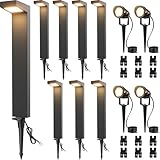
Overview: This 12-piece kit (8 path lights + 4 spotlights) delivers warm 3000K illumination for pathways, gardens, and accent lighting. Designed for low-voltage systems (12-24V), it prioritizes DIY installation with included metal stakes and Fastlock2 connectors but excludes the transformer and wire.
What Makes It Stand Out: The Fastlock2 connectors simplify expansion into existing systems, while the uniform 3000K color temperature ensures cohesive lighting. Die-cast aluminum housings and IP65 waterproofing guarantee weather resilience, and the 50,000-hour lifespan reduces maintenance.
Value for Money: Priced competitively for a 12-light bundle, it offers solid durability. However, the lack of transformer/wire adds $30–$50 to setup costs, making it less economical than all-in-one kits unless you already own those components.
Strengths and Weaknesses: Strengths: Easy assembly; consistent warm light; rugged, long-lasting build; safe low-voltage operation. Weaknesses: Transformer and wire sold separately; spotlights lack adjustable angles; path lights offer limited height customization.
Bottom Line: A reliable, budget-friendly upgrade for existing low-voltage systems, but beginners should factor in extra costs for missing essentials. Ideal for cohesive pathway illumination with minimal fuss.
7. Gardencoin Low Voltage Landscape Spotlight, 12V LED Outdoor Landscape Lighting, Landscape Spot Lights Wired for Garden and Yard, Aluminum Up Lighting Fixture with 5W MR16 Replaceable Bulb (12 Pack)

Overview: This 12-pack spotlight kit features 5W MR16 bulbs (450 lumens, 2700K) in die-cast aluminum fixtures, targeting accent lighting for trees, walls, and architectural features. It requires a separate transformer and wire but emphasizes durability and adjustability.
What Makes It Stand Out: The replaceable MR16 bulb design extends fixture life significantly—no need to replace the entire unit if the bulb fails. The 360° rotating shade and 120° knuckle allow precise beam direction, while textured, rust-resistant aluminum ensures longevity in harsh weather.
Value for Money: Premium pricing is justified by the modular bulb system and industrial-grade build. Though comparable to integrated-LED kits upfront, long-term savings from bulb replacements add value, especially for large installations.
Strengths and Weaknesses: Strengths: Exceptional adjustability; replaceable bulbs save costs; corrosion-proof aluminum; bright, warm output. Weaknesses: No path lights included; transformer/wire not provided; basic 8-inch stakes may require reinforcement in loose soil.
Bottom Line: A top choice for customizable accent lighting where longevity matters. Best for users prioritizing repairability over an all-in-one solution—just budget for additional wiring components.
8. SUNVIE All-in-ONE Landscape Lighting Kit 6-Pack LED Outdoor Pathway Lights, 2-Pack Spotlights, 60W Transformer, 100FT 16/2 AWG Wire and Connectors Outdoor Landscape Lighting for Walkway Garden Yard

Overview: This complete 10-piece kit includes everything: 6 path lights, 2 spotlights, a 60W transformer, 100ft wire, and connectors. It’s designed for effortless full-system installation with flexible layout options and smart transformer features.
What Makes It Stand Out: The UL-listed transformer with photocell, timer, and memory functions eliminates manual scheduling. Patented Fastlock2 connectors enable tool-free wiring along the entire 100ft wire, allowing lights to be placed anywhere—not just fixed intervals.
Value for Money: Exceptional value as a turnkey solution. At $120–$150, it undercuts buying components separately while including premium elements like 16/2 AWG wire. Ideal for beginners avoiding compatibility headaches.
Strengths and Weaknesses: Strengths: Truly “all-in-one”; versatile transformer; flexible wire placement; robust aluminum lights; ETL-listed safety. Weaknesses: Only 8 total lights (limited for large yards); spotlights lack RGB/color options; timer maxes at 10 hours.
Bottom Line: The best starter kit for hassle-free installation. Perfect for small-to-medium yards seeking reliable, professional-looking lighting without sourcing extra parts.
9. SUNVIE 12 Pack RGBW Color Changing Landscape Lights with 300W Low Voltage Landscape Transformer 12-24V LED Landscape Lighting Kit Waterproof Multicolor Spotlights for Christmas House Yard Tree Garden

Overview: This vibrant 12-spotlight kit features RGBW color-changing LEDs controlled via dual remotes, paired with a 300W transformer. Designed for festive or dynamic accent lighting, it includes connectors but not wiring.
What Makes It Stand Out: Dual remotes enable individual light customization (19in range) or group control (50ft range). The 300W transformer supports large setups with 5 operating modes (e.g., timer, photocell), while 16 colors + 4 dynamic modes (fade, strobe) offer creative flexibility.
Value for Money: Justifies its premium price for holiday/seasonal use. The transformer’s high capacity (300W) accommodates future expansions, but the lack of included wire adds $20–$40 to costs.
Strengths and Weaknesses: Strengths: Unmatched color versatility; robust transformer features; IP65 durability; memory functions for settings. Weaknesses: No path lights; wire not included; warm white (2700K) unavailable in RGB mode; remotes require line-of-sight.
Bottom Line: A standout for celebratory or mood lighting, though impractical for functional pathway illumination. Best for users wanting dramatic seasonal displays with minimal wiring complexity.
10. REEGOLD Low Voltage Landscape Lights Outdoor: 7W 700LM LED Landscape Lighting with Connectors for Tree Garden Yard Pathway | 12V 24V Warm White 2700K Spotlights | IP65 Waterproof | 6 Pack

Overview: This 6-pack spotlight kit delivers bright 700-lumen 2700K warm white light using 18 SMD LEDs per unit. Focused on simplicity and reliability, it includes connectors but requires separate transformer and wiring.
What Makes It Stand Out: The 18-chip SMD LED array outperforms single-COB competitors in brightness and heat dissipation, extending the 50,000-hour lifespan. Aluminum housings enhance durability, while IP65 rating ensures all-weather resilience.
Value for Money: Mid-range pricing offers excellent brightness-per-watt (7W ≈ 700 lumens). The 12-month warranty and aluminum build provide peace of mind, though transformer/wire costs aren’t included.
Strengths and Weaknesses: Strengths: Superior brightness; efficient thermal management; strong warranty; simple setup with connectors. Weaknesses: No path lights; non-adjustable fixed beam; transformer/wire sold separately; limited to warm white.
Bottom Line: A dependable, high-output choice for accent lighting on a budget. Ideal for security-focused users wanting bright, consistent illumination without color frills—just remember to purchase wiring extras.
Why Six Months of Testing Matters More Than You Think
Most reviews showcase products fresh out of the box, but outdoor lighting faces relentless environmental stress. Short-term assessments simply can’t replicate the cumulative wear that impacts longevity and performance. Six months of continuous testing provides critical insights into real-world resilience.
The Seasonal Stress Test
Exposing systems to multiple seasons reveals how materials handle UV degradation, thermal expansion, and moisture intrusion. Spring rains test gasket integrity, summer heat challenges plastic housings and driver stability, while autumn leaves and winter frost expose vulnerabilities in seals and connections. Only prolonged exposure shows if finishes peel, metals corrode, or lenses cloud under cyclic conditions.
Long-Term Performance Degradation
Brightness and color consistency often shift subtly over time. Cheap LEDs may dim significantly or shift toward an unpleasant blue tone within months due to poor thermal management or substandard diodes. Drivers can overheat, causing flickering or premature failure. Six months of logged data tracks these changes, identifying systems that maintain their output versus those that deteriorate rapidly.
Real Maintenance Burden Assessment
Initial setup is one thing; ongoing upkeep is another. Extended testing uncovers how often lenses need cleaning due to bug buildup or algae growth, whether connections loosen from ground movement, and how accessible components are for bulb or driver replacement. It reveals whether “low maintenance” claims hold up when pollen, dirt, and weather take their toll.
Energy Consumption Patterns
Actual energy use over hundreds of hours provides a truer picture than manufacturer specs. Systems with inefficient transformers or poorly regulated drivers might draw excess power during long nightly cycles, leading to higher costs than anticipated. Monitoring wattage fluctuations over time identifies hidden inefficiencies.
Key Features to Evaluate Beyond the Basics
When selecting landscape lighting, look past initial shine to the engineering and materials that ensure years of trouble-free operation. Critical features often overlooked in brief reviews become glaringly apparent during extended use.
Weatherproofing That Goes Beyond IP Ratings
While IP67 or IP68 ratings are essential, real-world performance depends on construction details. Look for seamless housings without visible screw holes on the top surface, silicone gaskets that remain pliable after UV exposure, and drainage channels that prevent water pooling. Systems failing after six months often have gaskets that harden and crack, allowing moisture ingress despite a high initial rating.
Thermal Management Design
LEDs generate heat, and trapped heat kills performance and lifespan. Effective thermal design uses aluminum heat sinks bonded directly to the LED board, not just plastic housings. Test units showing significant temperature drops after six months often incorporate passive cooling fins or thermal pads that dissipate heat efficiently, preventing lumen depreciation and color shift.
Driver and Transformer Reliability
The power supply is the system’s heart. Long-term testing exposes drivers prone to overheating, capacitor failure, or voltage fluctuations. Look for potted (encapsulated) drivers that resist moisture and vibration, with wide input voltage ranges to handle grid inconsistencies. Systems surviving six months typically feature drivers rated for 50,000+ hours with robust over-voltage and short-circuit protection.
Material Quality and UV Resistance
Housings made from UV-stabilized polymers or marine-grade aluminum resist yellowing and brittleness. Cheap plastics become chalky and crack within months under direct sun. Test units enduring half a year without discoloration or warping use higher-grade polycarbonates or die-cast metals with powder-coated finishes designed for outdoor permanence.
Connection System Integrity
Waterproof connectors are only as good as their long-term seal. Systems tested for six months reveal whether push-in connectors maintain tension, if wire nuts corrode, or if proprietary plugs develop micro-gaps. Reliable systems use double O-ring seals on connectors and tool-free, screw-down terminals that resist loosening from thermal cycling.
Installation Factors That Impact Longevity
Even the best lighting system fails prematurely with poor installation. Testing highlights how design choices affect setup success and future reliability, directly influencing your long-term satisfaction.
Cable Management and Protection
How easily wires route and secure matters immensely. Systems with flexible, direct-burial-rated cable (not just “outdoor use” labeling) and included stakes or clips simplify clean installation. Test units where cables kink or connectors strain during setup often develop faults later. Proper strain relief at fixtures prevents wire fatigue from ground movement.
Fixture Adjustability and Stability
Fixtures must stay aimed correctly despite foot traffic or weather. Long-term testing shows if adjustable heads slip under their own weight or freeze in position. Reliable units feature robust brass or stainless steel adjustment mechanisms with positive stops, not plastic gears that strip. Stable bases with wide footprints resist tilting in soft soil.
Voltage Drop Mitigation Strategies
As cable runs lengthen, voltage drops cause dimming at the end of the line. Systems surviving six months incorporate design features like higher-voltage drivers (24V vs. 12V), thicker gauge cable, or strategic transformer placement guides. Testing reveals whether included cable is sufficient for recommended run lengths without noticeable output loss over time.
Compatibility and Expandability
Planning for future additions is smart. Testing exposes whether expansion ports remain functional after months of use and if new fixtures integrate seamlessly without overloading the transformer. Systems with modular architectures and clear load capacity margins handle growth better than rigid, closed designs.
Maintenance Realities You Need to Know
The promise of “maintenance-free” lighting is usually a myth. Six months of use clarifies the actual upkeep required to keep your system looking its best and functioning reliably year after year.
Lens Cleaning Frequency and Ease
Dirt, pollen, and bug residue accumulate faster than expected. Systems with smooth, sloped lenses or anti-static coatings resist buildup and wipe clean easily. Test units with textured surfaces or recessed lenses become grimy quickly and require disassembly for proper cleaning—a task few homeowners will perform regularly. Note how often cleaning is genuinely needed to maintain output.
Component Replacement Accessibility
When LEDs or drivers eventually fail (years down the line), can you replace them without digging up fixtures? Long-term testing identifies systems with user-replaceable modules versus those requiring entire fixture swaps. Look for tool-free access panels and standardized components that won’t become obsolete.
Corrosion Monitoring Points
Even quality systems need occasional checks. Testing highlights vulnerable spots: set-screw terminals, ground stakes, or junction boxes where moisture might collect. Systems with stainless steel hardware and dielectric grease on connections show minimal corrosion after six months, while others develop green oxidation that increases resistance and failure risk.
Design Principles for Timeless Outdoor Ambiance
Great landscape lighting enhances your space without drawing attention to the fixtures themselves. Long-term evaluation reveals which design philosophies create enduring beauty and functionality.
Layering Light for Depth and Safety
Effective lighting uses multiple layers: ambient wash for general safety, accent for architectural features, and task lighting for pathways. Systems surviving six months support this through beam angle variety (flood, spot, spread) and dimming capabilities. Avoid single-purpose fixtures that create flat, uninviting spaces or hazardous dark zones between pools of light.
Color Temperature Consistency
A cohesive look requires uniform color temperature (measured in Kelvins). Testing exposes batches where fixtures shift from 3000K to 2700K over time, creating mismatched warm/cool spots. Systems maintaining consistent 2700K-3000K output use binning-controlled LEDs and stable drivers unaffected by temperature swings.
Frequently Asked Questions
Frequently Asked Questions
How does six months of testing provide more value than standard reviews?
Extended testing reveals gradual failures like material degradation, lumen depreciation, and connection corrosion that short reviews miss, giving a true picture of real-world lifespan and reliability under seasonal stress.
Why is thermal management critical for LED landscape lights?
Poor heat dissipation causes LEDs to dim faster, shift color unpleasantly, and fail prematurely. Effective thermal design using metal heat sinks ensures consistent performance and extends usable life significantly.
What weatherproofing features actually matter beyond the IP rating?
Look for seamless housings, double O-ring connectors, UV-resistant materials that won’t yellow, and drainage channels—details that prevent moisture ingress long after the initial IP test conditions.
How can I prevent voltage drop in longer cable runs?
Use thicker gauge cable, opt for 24V systems over 12V, keep runs under manufacturer limits, and place transformers centrally. Testing confirms which systems maintain brightness at the end of extended runs.
Do all “dimmable” landscape lights work well with standard home dimmers?
Not necessarily. True dimmability requires compatible drivers and often specific trailing-edge dimmers. Long-term testing identifies systems that dim smoothly without flickering across various dimmer types.
What’s the biggest maintenance task most homeowners overlook?
Regular lens cleaning—pollen, dust, and bugs drastically reduce output. Systems with smooth, sloped lenses or anti-static coatings minimize this chore compared to recessed or textured designs.
How do I know if a system’s transformer is oversized or undersized?
Check the total system wattage against the transformer’s capacity (80% max load). Testing exposes undersized units that overheat and fail, while oversized ones waste energy and may cause compatibility issues.
Why do some fixtures’ color temperatures change over time?
Inferior LEDs and drivers can’t maintain stable color under heat cycles. Quality systems use tightly binned LEDs and robust thermal management to prevent unwanted shifts from warm to cool tones.
Are wireless controls reliable for long-term landscape lighting?
Depends on the protocol. Systems using robust mesh networks (like some Zigbee variants) tested for six months show better reliability than simple RF remotes prone to signal dropouts in larger yards.
What design mistake makes landscape lighting look cheap quickly?
Over-illumination and poor fixture placement. Avoid spotlighting every plant; instead, use layered, subtle lighting to create depth. Systems enabling precise beam control help maintain an elegant look as your landscape evolves.
See Also
- 10 Best Landscape Lighting After 6 Months of Testing in 2026
- 10 Best Floodlight Bulbs for Garage Lighting After 6 Months of Testing in 2026
- 10 Best Pathway Solar Lights After 6 Months of Testing in 2026
- 10 Essential Low-Voltage Landscape Lighting Kits for DIY Installations in 2026
- The 10 Best Landscape Lighting Designs Every Designer Uses in 2026