Table of Contents
Have you ever settled into your favorite armchair after a long day, ready to unwind under soft, ambient lighting, only to be distracted by that maddening flicker or irritating buzz from your supposedly dimmable LED lights? You’re not alone. Flickering LEDs with incompatible dimmers aren’t just an annoyance; they can cause eye strain, headaches, and completely undermine the relaxing atmosphere you’re trying to create. The shift to energy-efficient LED lighting has been revolutionary, but it’s also exposed a hidden challenge: not all dimmer switches play nicely with modern LEDs, leading to frustrating performance issues that leave many homeowners scratching their heads and wondering why their “smart” home feels anything but.
Understanding the root cause of flicker is the first step toward solving it. Unlike traditional incandescent bulbs that simply resist electrical current, LEDs rely on complex internal drivers to convert and regulate power. When paired with an outdated or incompatible dimmer switch designed for higher-wattage incandescents, this delicate balance is disrupted, causing the light to flicker, shimmer, or cut out entirely at low levels. The good news? Achieving truly smooth, silent, flicker-free dimming with LEDs is absolutely possible – it just requires knowing exactly what to look for in a modern dimmer switch. This guide cuts through the confusion, focusing on the critical technical and practical factors that ensure seamless dimming performance, so you can finally enjoy the perfect ambiance without the headaches.
Top 10 LED Dimmer Switches
Detailed Product Reviews
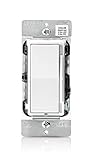
1. Leviton Decora Slide Dimmer Switch for Dimmable LED, Halogen and Incandescent Bulbs, DSL06-1LZ, White with Ivory and Light Almond Faceplates
Overview:
The Leviton Decora DSL06-1LZ is a versatile single-pole dimmer switch designed for modern lighting needs. It supports dimmable LED, halogen, and incandescent bulbs without requiring a neutral wire, making it ideal for retrofitting older homes. The package includes three faceplate options for customization.
What Makes It Stand Out:
Its standout feature is the 300W LED capacity (double most competitors) and adjustable min/max dimming range, eliminating flicker in sensitive LED setups. The slim profile fits standard wallboxes, and Leviton’s robust bulb compatibility tool ensures pairing success. Inclusion of three faceplate colors adds unexpected value.
Value for Money:
Priced mid-range, it justifies cost through higher wattage tolerance and customization. While alternatives like the Lutron offer similar features, the DSL06’s superior LED handling and included accessories provide better long-term utility for the price.
Strengths and Weaknesses:
Strengths: High 300W LED support; no neutral wire needed; flicker-reduction tech; multiple faceplates included; reliable 3-way compatibility.
Weaknesses: Requires manual compatibility checks; 3-way setup needs a separate switch; no locator light or memory function.
Bottom Line:
An excellent choice for LED-heavy homes needing robust dimming control. Its higher wattage capacity and included faceplates make it a top pick for value-focused DIYers upgrading multiple rooms.
2. Leviton SureSlide Dimmer Switch for Dimmable LED, Halogen and Incandescent Bulbs, 6674-P0W, White

Overview:
Leviton’s SureSlide 6674-P0W offers essential dimming functionality for standard lighting setups. This white-only switch supports dimmable LEDs (150W), halogen, and incandescent bulbs up to 600W, targeting cost-conscious users seeking reliable single-pole control.
What Makes It Stand Out:
It shares the DSL06’s core tech—adjustable dimming ranges and no-neutral-wire installation—but at a lower price point. The slim design ensures easy retrofitting, and Leviton’s compatibility tool mitigates LED pairing issues, though its 150W LED limit is restrictive for larger installations.
Value for Money:
Best suited for small rooms or low-wattage LED setups where 300W capacity isn’t needed. It undercuts the DSL06 slightly but lacks included faceplates or higher wattage. Competes well against budget brands but falls short of premium alternatives like Lutron in precision.
Strengths and Weaknesses:
Strengths: Affordable; easy DIY installation; flicker-minimizing adjustments; solid 600W halogen/incandescent support.
Weaknesses: Only 150W for LEDs; single faceplate color; no locator light; requires separate 3-way switch.
Bottom Line:
A dependable, no-frills dimmer for basic applications. Choose this over the DSL06 only if budget is tight and LED wattage needs are modest—otherwise, the DSL06 offers better future-proofing.
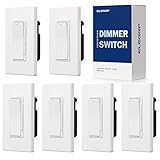
3. ELEGRP Digital Dimmer Light Switch for 300W Dimmable LED/CFL Lights and 600W Incandescent/Halogen, Single Pole/3-Way LED Slide Dimmer, Wall Plate Included, UL Listed, 6 Pack, Matte White
Overview:
ELEGRP’s 6-pack digital dimmer provides bulk-value dimming for LED/CFL (300W) and incandescent (600W) systems. Its MCU-driven tech promises smooth fading, and the matte white finish with included wallplates targets whole-home installations.
What Makes It Stand Out:
The fade-on function reduces bulb stress and extends lifespan—a rarity at this price. The optional locator light (default-on when lights are off) and 99% compatibility claim address common pain points. The 6-pack format offers significant savings for multi-room projects.
Value for Money:
Exceptional for large-scale upgrades: per-unit cost is 30% lower than single Leviton units. While build quality may slightly trail Leviton/Lutron, the locator light, fade-on tech, and bulk pricing make it a smart investment for contractors or homeowners.
Strengths and Weaknesses:
Strengths: Fade-on feature for bulb longevity; locator light; 6-pack value; no neutral wire needed; 300W LED support.
Weaknesses: Matte finish shows scratches; locator light non-adjustable by default; less brand trust than Leviton.
Bottom Line:
Ideal for budget-conscious whole-house dimming. Its innovative fade-on tech and locator light justify choosing it over single-unit competitors when outfitting multiple rooms.
4. Lutron Ariadni/Toggler LED+ Dimmer Light Switch for Dimmable LED, Halogen and Incandescent Dimmer Switch, 150W, Single-Pole/3-Way, AYCL-153P-WH, White

Overview:
Lutron’s AYCL-153P-WH is a premium single-pole/3-way dimmer engineered for flicker-free LED performance. With 250+ lighting levels and rigorous bulb testing, it targets users prioritizing seamless ambiance control in key living spaces.
What Makes It Stand Out:
Its exhaustive compatibility testing across 1,000+ bulbs ensures reliability where others fail. The ultra-fine 250-level dimming creates nuanced lighting transitions impossible with basic sliders. Lutron’s industry reputation for quality adds significant trust.
Value for Money:
Priced higher than Leviton, it justifies cost through unmatched bulb compatibility and precision dimming. Worth the premium for critical spaces (e.g., dining rooms), though overkill for utility areas. Note: Wallplate sold separately inflates true cost.
Strengths and Weaknesses:
Strengths: Best-in-class flicker prevention; 250+ dimming levels; trusted compatibility database; durable build.
Weaknesses: Only 150W LED capacity; wallplate not included; no locator light or fade-on tech.
Bottom Line:
The top choice for LED reliability in ambiance-sensitive rooms. Pay the premium if flicker-free performance is non-negotiable—otherwise, Leviton offers better value for general use.
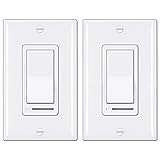
5. BESTTEN 2 Pack Dimmer Light Switch, Universal Lighting Control, Single Pole or 3 Way, Compatible with LED Dimmable Lamp, CFL, Incandescent, Halogen Bulb, Decorator Wallplate Included, UL Listed, White
Overview:
BESTTEN’s 2-pack delivers entry-level dimming for 150W LEDs or 600W incandescents. It includes decorator wallplates and focuses on universal compatibility, targeting DIYers seeking affordable, no-fuss solutions for small projects.
What Makes It Stand Out:
The memory function—recalling your last dim level on power-up—is rare at this price. Side adjustment wheels for flicker elimination and a 3W minimum LED load (lower than most) accommodate modern low-wattage bulbs, enhancing usability.
Value for Money:
Outstanding for tight budgets: two switches + wallplates cost less than one Lutron unit. While dimming smoothness lags behind premium brands, the memory feature and broad compatibility deliver solid utility for bedrooms or hallways.
Strengths and Weaknesses:
Strengths: Memory function; 3W minimum LED load; included wallplates; side flicker adjustment; 2-pack savings.
Weaknesses: Basic dimming curve; 150W LED limit; no locator light; less durable than Leviton.
Bottom Line:
A savvy pick for secondary spaces where budget matters most. The memory function and low minimum load make it a practical everyday dimmer, though not for high-end lighting setups.
6. Amico 6 Pack Dimmer Light Switch, Single-Pole or 3-Way Slide Dimmer Switches for Led Lights, Suitable for 150W Dimmable LED/CFL and 600W Incandescent/Halogen, Wall Plate Included, ETL Listed, White

Overview:
The Amico 6-Pack offers affordable, ETL-listed dimmer switches designed for residential or light commercial use. Compatible with 150W LED/CFL or 600W incandescent/halogen loads, these single-pole or 3-way slide dimmers include wall plates and target flicker-free performance with dimmable bulbs.
What Makes It Stand Out:
Its memory function retains your last brightness setting after power cycles—a rare feature at this price point. The 6-pack provides exceptional value for whole-home upgrades, and rigorous testing with Amico ceiling lights ensures reliable flicker-free dimming for compatible LEDs. ETL certification guarantees safety compliance.
Value for Money:
Priced competitively for a 6-pack bundle, it outperforms single-unit alternatives for multi-room installations. While LED wattage (150W) is lower than some rivals, it covers most household needs. The included wall plates and broad compatibility eliminate hidden costs, making it ideal for budget-conscious renovations.
Strengths and Weaknesses:
Strengths: Memory function; 6-pack value; ETL safety certified; no neutral wire needed; smooth slide operation. Weaknesses: Limited to 150W for LEDs (vs. 300W in others); single dimmer allowed per 3-way circuit; minimal smart-home integration.
Bottom Line:
A cost-effective, reliable solution for basic dimming needs across multiple rooms. Best for users prioritizing affordability and simplicity over high-wattage LED support or advanced features. Highly recommended for whole-house LED dimmer replacements.
7. ELEGRP Dimmer Light Switch for 300W Dimmable LED/CFL Lights and 600W INC/HAL Bulbs, Single Pole/3-Way LED Slide Dimmer Light Switch, Wall Plate Included, UL Listed, 10 Pack, White

Overview:
ELEGRP’s 10-pack dimmer switches leverage digital technology for smooth LED dimming (up to 300W) and incandescent/halogen (600W). UL-listed and featuring a locator light, these single-pole or 3-way switches suit modern homes needing versatile, high-volume dimming solutions.
What Makes It Stand Out:
The MCU-controlled digital circuit enables fade-on functionality, reducing bulb stress and extending lifespan. The optional locator light—which auto-adjusts based on switch state—enhances usability in darkness. Its 300W LED capacity and 99% bulb compatibility exceed industry standards.
Value for Money:
The 10-pack offers unmatched bulk savings for large projects. UL certification, high LED wattage, and fade-on tech typically found in premium models justify the price. Though pricier per unit than basic packs, the durability and advanced features deliver long-term value.
Strengths and Weaknesses:
Strengths: Fade-on for bulb longevity; 300W LED support; locator light; UL certified; ultra-slim design. Weaknesses: Locator light settings require manual adjustment; 3-way circuits restrict dimmer placement; no memory function.
Bottom Line:
A top-tier choice for tech-savvy users seeking future-proof dimming with bulb-protection features. The bulk pack and superior compatibility make it ideal for renovations. Recommended for those prioritizing performance over minimalism.
8. BESTTEN 3 Pack Slide Dimmer Light Switch, Quiet Rocker, Super Slim Single Pole or 3 Way Dimmable Switch, Max 300W LED, CFL, 600W Incandescent, ETL Listed, White

Overview:
BESTTEN’s 3-pack dimmers focus on discreet integration with a super-slim profile, supporting 300W LED/CFL or 600W incandescent loads. ETL-certified and neutral-wire-free, these switches emphasize quiet operation and ease of installation in cramped electrical boxes.
What Makes It Stand Out:
The ultra-shallow design fits tightly packed junction boxes where bulkier dimmers fail—a critical advantage in older homes. The “quiet rocker” mechanism ensures silent sliding, avoiding distracting clicks. Precise dimming control and smooth action cater to noise-sensitive environments.
Value for Money:
Mid-priced for a 3-pack, it balances affordability with niche utility. The slim build solves common installation hurdles, potentially avoiding costly box replacements. While lacking advanced tech like fade-on, its reliability and physical design offer tangible ROI for retrofit projects.
Strengths and Weaknesses:
Strengths: Exceptionally slim profile; silent operation; 300W LED support; easy retrofit; ETL certified. Weaknesses: No locator light or memory; 3-way limitations; basic feature set vs. digital competitors.
Bottom Line:
Perfect for installations where space is constrained, especially in older homes. Prioritizes physical design over smart features. Best for practicality-focused users needing reliable, unobtrusive dimming—highly recommended for tight-box scenarios.
9. Leviton SureSlide Dimmer Switch for Dimmable LED, Halogen and Incandescent Bulbs, 6672-1LW, White

Overview:
Leviton’s SureSlide is a minimalist, single-unit dimmer switch engineered for seamless LED integration (150W) and incandescent/halogen (600W). Its integrated slider and neutral-wire-free design target effortless installation and intuitive control in standard residential settings.
What Makes It Stand Out:
The tool-free slider offers one-touch adjustment from off to full brightness, emphasizing user simplicity. Leviton’s dedicated bulb compatibility tool online resolves pairing uncertainties—a standout resource for LED users. Slim aesthetics and color options (white, ivory, almond) enhance decor flexibility.
Value for Money:
Priced moderately for a single unit, it leverages Leviton’s trusted reliability. The compatibility tool reduces trial-and-error with bulbs, saving time and replacement costs. While wattage (150W LED) lags behind rivals, it suffices for most single-fixture applications.
Strengths and Weaknesses:
Strengths: Intuitive slider; bulb compatibility tool; slim profile; no neutral wire; stylish finishes. Weaknesses: Lower 150W LED limit; no 3-way memory; minimal advanced features (e.g., no locator light).
Bottom Line:
An elegant, user-friendly solution for single-room upgrades where simplicity and brand trust matter. Ideal for DIYers seeking hassle-free dimming without premium tech. Recommended for primary living spaces with standard LED loads.
10. Lutron Skylark LED+ Dimmer Switch for Dimmable LED, Lutron Dimmer Switch For Halogen and Incandescent Bulbs, 150W/Single-Pole or 3-Way, SCL-153P-WH, White

Overview:
Lutron’s Skylark LED+ is a premium single-pole or 3-way dimmer rigorously tested across 1,000+ bulbs for flicker-free performance. Supporting 150W LED/CFL or 600W incandescent loads, it emphasizes precision dimming and universal compatibility in homes of any age.
What Makes It Stand Out:
Lutron’s exhaustive bulb testing ensures unmatched flicker elimination, while 150+ lighting levels enable granular ambiance control. The neutral-wire-free 15-minute installation appeals to DIYers, and the brand’s reputation for reliability adds significant peace of mind.
Value for Money:
Higher-priced than budget packs, but Lutron’s industry-leading compatibility and durability justify the cost for critical installations. The focus on flicker-free operation prevents costly post-installation swaps, making it a smart investment for quality-conscious buyers.
Strengths and Weaknesses:
Strengths: Bulb-tested flicker-free performance; 150+ dimming levels; trusted brand reliability; easy install. Weaknesses: 150W LED limit; no modern extras (locator light/memory); single-unit packaging inflates whole-home costs.
Bottom Line:
The gold standard for eliminating LED dimming issues. Essential for users frustrated by flickering or inconsistent performance. Highly recommended despite the price—especially for dining rooms or bedrooms where lighting quality matters most.
Understanding LED Dimming Challenges
The Physics Behind LED Flicker
LED flicker occurs when the power supplied to the bulb isn’t delivered consistently, especially at lower dimming levels. Traditional “trailing edge” or “leading edge” dimmers chop the AC waveform to reduce power. If the dimmer isn’t specifically engineered for the low-wattage, electronic nature of LED drivers, it can’t maintain a stable minimum load or smooth waveform transition. This results in visible flicker, often most pronounced when lights are dimmed below 20-30%, or an audible buzzing sound as components vibrate.
Why Old Dimmers Fail with LEDs
Dimmer switches designed decades ago for incandescent bulbs rely on a high minimum load (often 60W or more) to function correctly. Modern LED bulbs consume a fraction of that power – sometimes as little as 4-8W per bulb. When the total connected LED load falls below the dimmer’s minimum requirement, the circuit becomes unstable. This instability prevents the dimmer from properly regulating the current, leading directly to flickering, drop-out (lights turning off before the dimmer reaches zero), or inconsistent performance across multiple bulbs.
Compatibility: The Hidden Culprit
Compatibility isn’t just about the dimmer switch; it’s a three-way relationship between the dimmer, the specific LED bulb(s), and the fixture housing them. Factors like the LED driver’s design quality, the presence of other electronic devices on the same circuit (like transformers for low-voltage lights), and even the wiring in your walls can interact negatively with an unsuitable dimmer. Assuming “dimmable” LED bulbs will work with any dimmer is the most common mistake leading to poor results.
Essential Compatibility Factors
Matching Dimmer Type to LED Technology
Modern dimmers are primarily categorized as “trailing edge” (electronic low voltage - ELV) or “leading edge” (magnetic low voltage - MLV/incandescent compatible). Trailing edge dimmers are generally the superior choice for most standard household LED bulbs because they provide smoother control at low levels and handle the lower wattages more effectively. However, some specialized fixtures or older dimmable LEDs might still require leading edge compatibility. Always verify the dimmer’s specifications against your bulb manufacturer’s compatibility list.
Minimum and Maximum Load Requirements
This is non-negotiable. Calculate the total wattage of all LED bulbs connected to a single dimmer switch. Ensure this total falls comfortably within the dimmer’s specified minimum and maximum load range for LED use (not the higher incandescent range). For example, if a dimmer states a minimum LED load of 10W and a maximum of 150W, and you have ten 9W bulbs (90W total), you’re within range. If you only have two 5W bulbs (10W total), you’re at the absolute minimum, which often still causes issues – aim for at least 20-25% above the stated minimum for reliable performance.
Bulb and Fixture Certification Matters
Reputable LED bulb manufacturers rigorously test their products with specific dimmer models and publish compatibility lists (often called “Dimmable Product Lists” or “Compatibility Tool” results on their websites). Look for bulbs carrying certifications like “Lutron LED Certified” or “Leviton Verified” – these indicate successful testing with a major dimmer brand’s specific models. Equally important is the fixture itself; enclosed fixtures can overheat cheaper LED drivers, exacerbating dimming problems, so ensure the bulb is rated for enclosed use if applicable.
Installation and Circuit Considerations
Single-Pole vs. Multi-Location Dimming
Determine your wiring setup before purchasing. A standard single-pole switch controls lights from one location. For controlling lights from two locations (like top and bottom of stairs), you need a 3-way compatible dimmer paired with a standard 3-way switch, or two companion dimmers designed for multi-location control. Attempting to use a standard single-pole dimmer in a 3-way circuit is a guaranteed path to malfunction and flicker. Verify the dimmer explicitly states “3-way/4-way compatible” if needed.
Neutral Wire: The Modern Necessity
Most newer “smart” dimmers and many advanced standard dimmers require a neutral wire to function correctly and provide stable low-end dimming performance. The neutral wire provides a dedicated return path for the small amount of power the dimmer itself needs to operate its internal electronics, separate from the switched load going to the lights. Older homes often lack neutral wires in switch boxes. Check your existing switch box before buying; if no neutral wire (typically white, bundled in the back) is present, you’ll need to select a dimmer specifically designed to work without one, though these may have slightly reduced compatibility or feature sets.
Circuit Noise and Interference
Electrical “noise” from other devices on the same circuit (like motors, older fluorescent ballasts, or even some power supplies) can interfere with the sensitive electronics in both the dimmer and the LED drivers, causing erratic behavior or flicker. If possible, dedicate the lighting circuit solely to the LED lights you intend to dim. If flicker persists after correct installation, try moving other high-draw or noisy appliances to a different circuit to isolate the problem.
Key Features for Optimal Performance
Adjustable Dimming Range
A crucial feature for eliminating low-end flicker is an adjustable dimming range or “minimum brightness” setting. This allows you to set the lowest level the lights will dim to before cutting off, effectively skipping the unstable portion of the dimmer’s travel where flicker typically occurs. Instead of the light turning off abruptly at 10%, you might set the minimum to 15% or 20%, ensuring stable, flicker-free operation from that point down to the set minimum. This is often adjusted via a small trim pot or digital setting on the dimmer module.
Preset Scenes and Memory Functions
For consistent, flicker-free ambiance without manual adjustment each time, look for dimmers with scene memory or preset recall. These allow you to save your preferred brightness level (e.g., “Movie Night” at 30%) and instantly return to that exact, stable setting with a single tap, avoiding the unstable low-dimming zone altogether. This is particularly valuable in frequently used rooms where you want reliable performance without fiddling with the slider.
Soft-Start and Fade Features
Soft-start gradually ramps the lights up to the desired level when turned on, preventing a harsh, sudden burst of light that can stress LED drivers. Fade features smoothly transition between brightness levels instead of jumping. While primarily about user experience, these gentle transitions also place less electrical stress on the LED drivers compared to abrupt changes, contributing to long-term stability and reducing potential flicker triggers during level changes.
Smart Dimming Integration
Protocol Compatibility for Stability
If integrating with a smart home system (like Zigbee, Z-Wave, Wi-Fi, or proprietary ecosystems), ensure the dimmer switch uses a protocol compatible with your hub or voice assistant. Mismatched protocols lead to unreliable communication, which can manifest as delayed responses, unresponsive controls, or unexpected flickering due to inconsistent power signals. Verify compatibility with your specific ecosystem (e.g., “Works with Hubitat,” “Zigbee 3.0 Certified,” “Apple HomeKit Secure Router Compatible”) before purchasing.
Load Handling in Smart Scenarios
Smart dimmers often have slightly higher minimum load requirements than their non-smart counterparts due to their internal radios and processors drawing a small amount of standby power. A dimmer that works fine with 5 bulbs manually might flicker when controlled via an app if the total load is right at the minimum threshold. When using smart dimmers, it’s even more critical to significantly exceed the stated minimum LED load (aim for 2x the minimum if possible) to ensure stable operation under all control methods.
Firmware Updates and Long-Term Support
Flicker issues can sometimes be resolved through firmware updates that improve compatibility algorithms. Choose smart dimmer brands known for regular, reliable firmware updates delivered seamlessly via your smart home platform. Check community forums or reviews for the brand’s history of addressing compatibility issues post-launch. Long-term software support ensures your dimmer can adapt to future LED bulb models, preventing obsolescence and flicker problems down the line.
Troubleshooting Persistent Flicker
The Systematic Isolation Method
When flicker occurs, don’t guess. Use a systematic approach: First, replace one bulb at a time with a known compatible model to rule out a single faulty bulb. Next, try the problematic bulb(s) on a different, known-good dimmer circuit. If the issue follows the bulb, it’s the bulb or fixture. If the issue stays with the circuit, the dimmer or wiring is suspect. This isolates whether the problem is the bulb, the dimmer, or the interaction between them.
Checking for Loose Connections
A surprisingly common cause of flicker is loose wire connections, either at the dimmer switch terminals, the light fixture sockets, or within wire nuts in the junction box. Power off the circuit at the breaker, then carefully inspect and re-tighten all connections. Loose neutrals are particularly problematic for modern dimmers. Even a slightly loose connection can cause intermittent arcing or voltage drops, interpreted by the LED driver as flicker.
Addressing Grounding Issues
Improper grounding can create electrical noise and instability. Ensure the dimmer switch itself is properly grounded (connected to the circuit’s ground wire, usually bare copper or green). While not always the primary cause, a missing or faulty ground can exacerbate flicker problems, especially in older homes. If other troubleshooting fails, consulting an electrician to verify proper circuit grounding is a worthwhile step.
Professional Installation vs. DIY
Assessing Your Electrical Skill Level
Replacing a standard switch with a dimmer can be a DIY project if you understand basic electrical safety, can correctly identify wires (line, load, neutral, ground), and follow the manufacturer’s instructions precisely. However, mistakes like misidentifying the line wire, improper grounding, or exceeding circuit capacity can create fire hazards or persistent flicker. If you’re uncomfortable working inside your electrical panel, unsure about wire identification, or lack a voltage tester, professional installation is strongly recommended – safety should always outweigh cost savings.
When an Electrician is Non-Negotiable
Certain situations absolutely require a licensed electrician: installing a dimmer where no neutral wire exists in the switch box (rewiring may be needed), adding a new circuit for dedicated lighting, dealing with complex multi-location setups (3-way/4-way), or if your home has older wiring like knob-and-tube. Electricians have the tools, expertise, and knowledge of local electrical codes to ensure the installation is not only flicker-free but also safe and up to code, preventing potential hazards that could void insurance.
Benefits of Professional Calibration
A skilled electrician doesn’t just swap switches; they can measure actual circuit loads, verify voltage stability, check for grounding issues, and sometimes fine-tune dimmer settings based on real-world performance with your specific bulbs. This level of calibration, especially with high-end or complex lighting systems, often results in significantly smoother, more reliable dimming performance than a DIY install, justifying the professional cost for critical spaces.
Future-Proofing Your Lighting Control
Investing in Adaptable Technology
Choose dimmers with features designed for longevity, such as broad compatibility ranges (covering a wide spectrum of LED wattages and types), updatable firmware (for smart models), and robust construction. Dimmers labeled as “Universal” or “Future-Proof” often incorporate more sophisticated electronics capable of handling evolving LED driver technologies, reducing the likelihood you’ll need to replace the dimmer when you upgrade your bulbs in a few years.
Considering Scalability for Expansions
If you plan to add more lights to the circuit later (e.g., under-cabinet lighting, additional recessed cans), select a dimmer with a maximum load rating significantly higher than your current needs. This avoids having to replace the dimmer later, and ensures stable performance even as your lighting setup grows. Factor in potential future additions when calculating your initial load requirements.
The Role of Quality Components
Don’t skimp on the dimmer itself. Higher-quality dimmers use better internal components (like higher-grade capacitors and inductors) that provide cleaner power regulation, handle electrical noise more effectively, and maintain stable performance over a wider range of conditions. This upfront investment in a reputable, well-reviewed dimmer model is often the single most effective way to guarantee long-term, flicker-free dimming compared to the cheapest available option.
Frequently Asked Questions
What’s the single most important thing to check before buying an LED dimmer?
Always verify the dimmer’s minimum and maximum load specifications specifically for LED bulbs, not just the higher incandescent ratings. Mismatched load requirements are the leading cause of flicker and drop-out issues.
Can I use the same dimmer for both LED and incandescent bulbs on the same circuit?
Generally, no. Mixing bulb types on one dimmer circuit almost guarantees poor performance. The dimmer cannot simultaneously satisfy the vastly different electrical requirements of LEDs and incandescents, leading to flicker, buzzing, or reduced bulb lifespan. Use separate circuits or dimmers for each type.
Why do my LED lights flicker only when dimmed very low?
This usually indicates the total connected LED load is too close to or below the dimmer’s minimum requirement. The dimmer struggles to maintain a stable current at very low power levels. Solutions include adding more bulbs (if possible), replacing bulbs with slightly higher-wattage dimmable LEDs, or installing a dimmer with a lower minimum load rating.
Do I really need a neutral wire for a standard (non-smart) LED dimmer?
Many modern standard dimmers designed for optimal LED performance do require a neutral wire to provide stable low-end dimming and prevent flicker. While some “no neutral” dimmers exist, they often have stricter compatibility requirements and may still exhibit issues with certain LED loads. Check the specific dimmer’s installation requirements.
How can I tell if the problem is the dimmer or the LED bulb?
Isolate the issue: Take the problematic bulb and test it on a different, known-good dimmer circuit. If it flickers there too, the bulb or its fixture is likely the culprit. If it works fine elsewhere, the original dimmer is incompatible or faulty. Check the bulb manufacturer’s compatibility list for your dimmer model.
What does “ELV” or “MLV” mean on a dimmer switch?
ELV (Electronic Low Voltage) refers to trailing-edge dimmers, generally best for most standard household LED bulbs. MLV (Magnetic Low Voltage) refers to leading-edge dimmers, often used for older halogen low-voltage systems but sometimes compatible with specific LEDs. Always match the dimmer type to your bulb’s requirements.
Can a dimmer switch cause my LED bulbs to burn out faster?
Yes, an incompatible dimmer can stress the LED driver electronics through inconsistent power delivery, voltage spikes, or operating outside the bulb’s designed parameters. This significantly shortens the bulb’s lifespan, leading to premature failure. Proper dimmer-bulb matching is crucial for longevity.
Is flicker harmful, or just annoying?
While primarily annoying, persistent visible flicker can cause eye strain, headaches, and fatigue in sensitive individuals. More importantly, it’s a clear indicator of an unstable electrical situation that could potentially stress components and lead to premature failure of either the bulbs or the dimmer itself.
Why do some “dimmable” LED bulbs still flicker with a compatible dimmer?
Even certified compatible combinations can have issues if the total load is marginal, wiring is suboptimal, there’s circuit noise from other devices, or the specific bulb batch has slight manufacturing variations. Adjusting the dimmer’s minimum brightness setting often resolves this minor instability.
Can I fix flicker by just buying more expensive LED bulbs?
Not necessarily. While higher-quality bulbs often have better drivers that tolerate a wider range of dimmers, compatibility is still fundamentally about matching the bulb’s electrical characteristics to the dimmer’s capabilities. An expensive bulb on a completely wrong dimmer type will still flicker. Always check compatibility lists first.
See Also
- 10 Must-Have LED Dimmer Switches for Energy-Efficient Lighting in 2026
- 10 Best 3-Way Dimmer Switches for Staircase Lighting in 2026
- The 10 Ultimate Best Single Pole Dimmer Switches for Bedroom Lighting in 2026
- 10 Must-Have LED Dimmer Switches for Energy Efficiency in 2026
- 10 Best Value Dimmer Switches for Whole-Home Lighting Control in 2026