Table of Contents
Transforming your standard lamps into intelligent, motion-activated lighting solutions has never been more accessible. Motion sensor light bulbs offer a seamless way to add convenience, security, and energy efficiency to any room without rewiring or installing complicated fixtures. These innovative bulbs screw directly into your existing table lamps, floor lamps, and desk lamps, instantly upgrading them with hands-free operation that responds to your presence.
After extensive research into the evolving landscape of motion sensor technology, we’ve discovered that the key to finding the perfect bulb lies not in brand names or marketing claims, but in understanding the nuanced features that determine real-world performance. Whether you’re looking to illuminate a dark hallway, create a safer bathroom environment for nighttime navigation, or simply reduce energy waste in forgotten rooms, the right motion sensor bulb can revolutionize how you interact with your living spaces. This comprehensive guide walks you through everything you need to know to make an informed decision that matches your specific needs and lamp configurations.
Top 10 Motion Sensor Light Bulbs
Detailed Product Reviews
1. Motion Sensor Light Bulbs, 13W (100Watt Equivalent), Motion Activated Dusk to Dawn Security LED Bulb, 5000K Daylight, Energy-Efficient, for Indoor and Outdoor Lighting, Porch, Stairs, Hallway 2Pack

Overview: These 13W motion sensor bulbs deliver 100W equivalent brightness in a convenient two-pack configuration. Producing 1100 lumens of crisp 5000K daylight, they automatically activate via PIR motion detection within 8-16 feet during low-light conditions (<15 lux), shutting off after 30-45 seconds of inactivity.
What Makes It Stand Out: The dual PIR motion and dusk-to-dawn sensors provide seamless automation without Wi-Fi or hubs. With a 20,000-hour lifespan and 85% energy savings, these bulbs offer substantial illumination for diverse security applications. Their versatility spans staircases, porches, garages, and hallways effectively.
Value for Money: At 13W delivering 1100 lumens, the energy savings quickly offset initial costs. The two-pack provides adequate coverage for most entry points, though larger homes may require additional units. Compared to traditional 100W incandescents, these typically pay for themselves within months of regular use.
Strengths and Weaknesses: Pros include bright daylight illumination, wide 8-16ft detection range, straightforward installation, and robust energy efficiency. Cons involve strict installation requirements—the sensor must remain exposed and face downward, making them incompatible with enclosed, frosted, or recessed fixtures. The 30-45 second timeout may feel brief for some applications.
Bottom Line: An excellent choice for straightforward security lighting in compatible fixtures. Ideal for homeowners seeking reliable, bright illumination without smart home complexity, provided you can accommodate the exposed-sensor installation requirements.
2. Motion Sensor Light Bulbs for Outdoor Indoor, 9W A19 Motion Detector Led Bulb, 60 Watt Equivalent, E26 800lm 5000K Daylight, Dusk to Dawn Motion Activated Security Lights for outside, Inside (2 Pack)

Overview: This 9W two-pack offers 60W equivalent brightness with precise motion detection capabilities. Emitting 800 lumens of 5000K daylight, these bulbs feature intelligent PIR infrared sensors with a 10-13 foot detection range and optimized 6.8-8 foot mounting height for targeted coverage.
What Makes It Stand Out: The manufacturer provides exceptionally detailed installation parameters, specifying exact detection heights, lux activation thresholds (on below 18Lux, off above 30Lux), and mounting restrictions. With 25,000-hour lifespan and premium LED beads, these prioritize precision over raw power.
Value for Money: Lower wattage maximizes energy savings, making these ideal for frequently-trafficked areas where lights often remain on unnecessarily. The two-pack suits smaller homes or specific zones like basement stairs or porch entries where 800 lumens suffices, offering solid ROI through efficiency.
Strengths and Weaknesses: Pros include meticulous installation guidance, longer lifespan than many competitors, precise sensor calibration, and excellent energy efficiency. Cons feature lower brightness limiting large-area coverage, strict 6.8-10 foot mounting height requirements, and incompatibility with glass or metal covers.
Bottom Line: Perfect for detail-oriented users needing targeted lighting in specific locations. Follow the installation guidelines exactly, and you’ll get reliable, efficient performance. Not suited for those wanting maximum brightness or flexible mounting options.
3. Motion Sensor Light Bulbs, 13W (100Watt Equivalent), Motion Activated Dusk to Dawn Security LED Bulb, 5000K Daylight, Energy-Efficient, for Indoor and Outdoor Lighting, Porch, Stairs, Hallway 4Pack

Overview: Functionally identical to Product 1, this four-pack provides the same 13W, 100W equivalent performance with 1100 lumens of 5000K daylight. The PIR motion and dusk-to-dawn sensors activate within 8-16 feet in low light, shutting off after 30-45 seconds.
What Makes It Stand Out: The four-pack configuration offers comprehensive whole-home coverage in a single purchase. You get identical specifications—20,000-hour lifespan, 85% energy savings, and broad compatibility—across multiple entry points without mixing product lines, ensuring aesthetic consistency.
Value for Money: Bulk packaging delivers superior per-bulb value versus two-pack options. For homes requiring four or more security lights, this eliminates multiple purchases and ensures consistent performance and appearance throughout your property, reducing overall project costs substantially.
Strengths and Weaknesses: Pros mirror Product 1: bright 1100-lumen output, wide detection range, significant energy savings, and versatile indoor/outdoor application. Cons include the same critical installation constraints—sensors must face downward and remain completely unobstructed, rendering them incompatible with enclosed, upside-down, or frosted fixtures.
Bottom Line: If you need multiple motion sensor bulbs and have compatible fixtures, this four-pack delivers exceptional value and uniformity. Verify your fixtures accommodate exposed sensors before purchasing to avoid disappointment and ensure optimal performance.
4. GE LED+ Motion Sensor LED Light Bulbs, 12W, Outdoor Security Lights, A21, Warm White (2 Pack)

Overview: GE’s 12W two-pack offers trusted brand reliability in a warm white (3000K) motion sensor bulb. Consuming just 11 watts while delivering 75W equivalent brightness, these damp-rated bulbs provide automatic illumination with a remarkable 24-foot detection range and 90-degree viewing angle.
What Makes It Stand Out: GE’s renowned quality backs this product with an exceptional 13.7-year lifespan and $104 claimed energy savings. The 24-foot detection distance far exceeds competitors, while the damp-rating ensures reliability in humid outdoor conditions without requiring smart home ecosystems or complex setup.
Value for Money: Premium brand pricing is justified by extended lifespan, superior detection range, and proven reliability. The energy savings calculation demonstrates clear long-term value, particularly for outdoor security applications where consistent performance is critical and replacement is inconvenient.
Strengths and Weaknesses: Pros include GE brand reputation, industry-leading 24-foot detection range, damp-rated durability, effortless setup without apps or hubs, and impressive longevity. Cons feature warm white color temperature less ideal for security purposes, 75W equivalent brightness lower than 100W alternatives, and potentially higher cost per lumen.
Bottom Line: Choose these for maximum detection range and brand peace of mind. The warm white tone suits ambient lighting better than stark security applications, but the reliability and range make them excellent for general-purpose motion lighting.
5. 4-Pack Motion Sensor Light Bulbs, 12W(100W Equivalent) E26 A19 Security LED Bulb Outdoor/Indoor, Motion Activated Dusk to Dawn Bulb(Energy Efficient) for Front Porch, Garage, Basement, Hallway, Stairs

Overview: This robust four-pack delivers 12W, 100W equivalent performance with 1100 lumens of 5000K daylight. Featuring IP44 waterproof rating and wide operating temperature range (-10°C to 35°C), these bulbs are engineered for demanding outdoor environments while maintaining indoor versatility.
What Makes It Stand Out: The IP44 waterproof rating and 120-degree sensing angle provide superior outdoor durability and coverage. Detection range scales with mounting height up to 24 feet, offering installation flexibility. The four-pack configuration with rugged specs makes this ideal for comprehensive property coverage.
Value for Money: Four-pack pricing combined with outdoor-ready construction eliminates the need for separate weatherproof fixtures. The 85% energy savings versus 100W incandescents, coupled with durable design, delivers excellent long-term value for exterior applications requiring reliable all-weather performance.
Strengths and Weaknesses: Pros include IP44 waterproof rating, wide 120-degree sensing angle, extensive temperature tolerance, bright 1100-lumen output, and scalable detection range. Cons require switch to remain on (potential phantom load), installation orientation restrictions, and sensor must avoid enclosure for proper function.
Bottom Line: The optimal choice for outdoor security lighting in variable climates. The waterproof rating and wide sensing angle justify selection for porches, garages, and pathways where weather resistance is paramount. Ensure switches remain on for sensor functionality.
6. Aovpex Motion Sensor Light Bulbs, Dusk to Dawn, 13W 100W Equivalent, Movement Activated Security LED Bulb, 5000K Cool White, for Outdoor Indoor, Porch Garage Basement Hallway Closet, 2 Pack

Overview: Aovpex delivers a dual-sensor LED bulb combining motion detection with dusk-to-dawn intelligence. This 13W bulb produces 5000K cool white light equivalent to a 100W incandescent, making it suitable for security and general illumination across indoor and outdoor spaces. The two-pack offering targets homeowners seeking automated lighting for multiple locations without complex installations.
What Makes It Stand Out: The integrated dual-sensor system intelligently deactivates motion detection during daylight hours (>40lux) and reactivates in darkness (<15lux), preventing unnecessary activation. Its 12-18 foot detection range provides ample coverage for most residential applications, while the 30-second auto-off timer balances energy conservation with practical illumination needs. The 85% energy savings claim translates to measurable electricity cost reductions over the bulb’s lifespan.
Value for Money: Priced competitively against standard 100W LEDs, these bulbs deliver premium sensor technology without the premium cost. The two-pack configuration offers immediate multi-room deployment, eliminating the need for separate dusk-to-dawn and motion sensors that could cost significantly more. Long-term savings from reduced energy consumption and automated operation provide compelling total cost of ownership benefits.
Strengths and Weaknesses: Strengths include the intelligent dual-sensor system, wide detection range, significant energy savings, and versatile application potential. The 5000K cool white output excels at security lighting. Weaknesses center on strict installation requirements—fixtures must be open, sensor must face downward, and the 30-second duration may prove too brief for some users. The cool white temperature lacks warmth for cozy indoor spaces.
Bottom Line: These bulbs excel as automated security lighting for open fixtures in garages, porches, and basements. Ensure your fixtures accommodate the sensor’s positioning requirements before purchasing. For those seeking set-and-forget outdoor security on a budget, this two-pack delivers exceptional functionality, provided installation constraints are met.
7. Aukora Motion Sensor Light Bulbs, 12W (100-Watt Equivalent) E26 Motion Activated Dusk to Dawn Security Bulb Outdoor/Indoor for Front Door Porch Garage Basement Hallway Closet(Cold White 2 Pack)

Overview: Aukora’s 12W motion sensor bulbs provide 1000 lumens of cold white illumination (6000-6500K) in a standard E26 base. Designed for both indoor and outdoor use within temperature ranges of 14°F to 95°F, these bulbs target homeowners in varied climates seeking automated security lighting. The two-pack includes manual guidance for optimal installation.
What Makes It Stand Out: The PIR sensor positioned at the bulb’s tip offers a 45-60 second extended illumination period—50% longer than many competitors. This duration proves practical for stair navigation and task completion. The bulb’s operational temperature range down to 14°F makes it viable for unheated garages and cold-climate exterior applications where many sensors fail. The 8-10 foot detection range concentrates sensitivity in high-traffic zones.
Value for Money: These bulbs deliver 100W equivalent brightness while consuming only 12W, achieving the standard 85% energy savings benchmark. The extended timer and cold-weather capability add value without price premiums. For northern climate residents, the operational reliability in freezing temperatures prevents seasonal replacement costs, enhancing long-term value.
Strengths and Weaknesses: Strengths include the extended 45-60 second timer, impressive cold-weather performance, bright 6000K+ output for security, and focused detection zone that reduces false triggers. Weaknesses involve the shorter detection range (8-10ft) limiting coverage area, and mandatory open fixture requirement that restricts installation options. The cold white color temperature may feel clinical for indoor living spaces.
Bottom Line: Aukora suits cold-climate users needing reliable automated lighting in garages, basements, and exterior entrances. The extended illumination period and freeze-resistant operation justify consideration, but verify your fixture’s openness and mounting height to ensure the sensor’s effectiveness. For harsh winter regions, these offer specialized performance worth the investment.
8. TORCHSTAR LED Motion Sensor Light Bulb, 9W (60W Eqv) 900LM, E26 Base, A19 Motion Activated LED Light Bulb for Laundry, Basement, Hallway, Closet, UL FCC DOE Listed, 6000K Pure White, Pack of 2

Overview: TORCHSTAR’s 9W bulbs deliver 900 lumens of 6000K pure white light, equivalent to 60W incandescents. UL, FCC, and DOE certifications distinguish this pair as safety-verified for indoor residential use. Designed specifically for closets, laundry rooms, and hallways, these prioritize hands-free convenience over maximum brightness, backed by a two-year warranty.
What Makes It Stand Out: The 180-second (3-minute) auto-off duration stands as the longest timer in this category, accommodating extended tasks without manual intervention. At the recommended 8.2-foot mounting height, the 3.28-4.92 foot detection radius creates a precise activation zone ideal for doorway entries and closet openings. The triple certification (UL, FCC, DOE) provides documented safety assurance absent in many competitors.
Value for Money: While delivering only 60W equivalent brightness, these bulbs excel in specific applications where prolonged illumination matters more than raw output. The two-year warranty and safety certifications justify a modest price premium for quality-conscious buyers. For elderly residents or mobility-impaired users, the extended timer reduces fall risks associated with sudden darkness.
Strengths and Weaknesses: Strengths include the exceptional 180-second duration, comprehensive safety certifications, targeted detection zone that minimizes false triggers, and warranty coverage. The bulbs consume minimal energy at 9W. Weaknesses involve lower brightness limiting security applications, restricted detection radius requiring careful positioning, and pure white color potentially feeling stark in residential settings.
Bottom Line: TORCHSTAR excels as specialized indoor task lighting for closets, laundry rooms, and hallways serving seniors. Don’t expect primary security illumination—choose these for convenience and safety in occupied spaces where extended automatic lighting adds practical value. The certifications and warranty make this a reliable, if niche, investment.
9. GE LED+ Motion Sensor LED Light Bulbs, 12W, Outdoor Security Lights, Daylight, A21 (2 Pack)
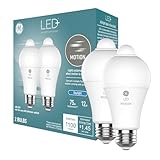
Overview: GE’s LED+ series brings legacy brand reliability to motion sensor lighting with these 12W A21 bulbs. Delivering 75W equivalent daylight illumination, these damp-rated bulbs feature a 24-foot detection range and 90-degree viewing angle. The package promises up to 13.7 years of maintenance-free operation and $104 in lifetime energy savings.
What Makes It Stand Out: The 24-foot detection range dramatically exceeds typical 10-18 foot limits, providing true perimeter security coverage. The damp rating certifies performance in humid outdoor conditions where standard bulbs fail. GE’s 13.7-year lifespan estimate reflects rigorous testing standards. The 90-degree viewing angle enables broader coverage from single fixtures, reducing the number of bulbs needed for area illumination.
Value for Money: GE commands a brand premium, but delivers measurable returns through exceptional longevity and energy savings. The $104 savings claim, combined with damp-rated durability, positions these as cost-effective for outdoor security despite higher upfront cost. The extended detection range may eliminate need for additional security hardware, compounding savings.
Strengths and Weaknesses: Strengths encompass the unmatched 24-foot detection range, damp-rated outdoor certification, proven brand reliability, and 90-degree wide-angle coverage. The daylight color temperature optimizes security visibility. Weaknesses include only 75W equivalent brightness (less than some competitors), potential over-sensitivity in high-traffic areas, and premium pricing. The A21 size may not fit all fixtures.
Bottom Line: GE LED+ represents the premium choice for serious outdoor security applications. The detection range and damp rating justify investment for perimeter lighting, porch coverage, and garage security. Accept the modest brightness trade-off for superior coverage and brand-backed longevity. For homeowners prioritizing reliable, long-term outdoor automation, these warrant the higher price point.
10. Motion Sensor Light Bulbs, 13W (100Watt Equivalent), Motion Activated Dusk to Dawn Security LED Bulb, 2700K Warm White, Energy-Efficient, for Indoor and Outdoor Lighting, Porch, Stairs, Hallway 2Pack

Overview: This generic-branded 13W bulb delivers 100W equivalent brightness in a warm 2700K color temperature, distinguishing it from the cool-white dominance in this category. Producing 1100 lumens with a 20,000-hour lifespan, these bulbs target users seeking security functionality without sacrificing ambient warmth. The two-pack addresses multiple indoor and outdoor locations.
What Makes It Stand Out: The 2700K warm white output uniquely balances security illumination with residential ambiance, reducing the institutional feel common to motion sensor bulbs. The 20,000-hour lifespan exceeds many competitors, promising extended service intervals. The 100W equivalent brightness at 13W maintains the 85% energy savings standard while delivering warmer, more inviting light suitable for front porches and living areas.
Value for Money: As a generic offering, these likely price below brand-name alternatives while matching or exceeding key specifications. The warm white option eliminates need for separate ambient lighting fixtures, providing dual-function value. Combined 100W brightness and extended lifespan deliver strong performance-per-dollar metrics for budget-conscious homeowners unwilling to compromise on light quality.
Strengths and Weaknesses: Strengths include the unique warm white color temperature, high 1100-lumen output, long 20,000-hour lifespan, and standard 85% energy savings. The aesthetic versatility suits both security and decorative applications. Weaknesses involve unknown brand reliability, lack of certifications (UL, FCC), and the same installation restrictions—enclosed fixtures will block sensors. Warranty terms remain unspecified.
Bottom Line: Choose these warm-white bulbs when security needs must coexist with residential aesthetics. Ideal for front porches, entryway lighting, and indoor hallways where harsh cool white feels unwelcoming. Verify fixture compatibility and accept brand uncertainty for significant cost savings and superior ambiance. For ambiance-conscious security on a budget, this pair delivers compelling warmth and brightness.
How Motion Sensor Light Bulbs Transform Standard Lamps
Understanding the Technology Behind Motion-Activated Lighting
Motion sensor light bulbs integrate micro-sensors directly into the bulb assembly, eliminating the need for external control units. These sensors detect movement through various technologies, triggering an internal switch that activates the LED elements. The entire system operates within the compact form factor of a standard bulb, drawing power from the same socket that would traditionally provide continuous electricity to a conventional bulb.
Benefits of Upgrading Your Standard Lamps
The advantages extend far beyond simple convenience. Motion sensor bulbs automatically eliminate the problem of lights left on in empty rooms, potentially reducing energy consumption by 35-60% in frequently used spaces. They provide enhanced safety for seniors or children navigating dark areas, and offer security benefits by startling potential intruders when activated. The installation requires no tools, electricians, or smart home hubs—just a simple screw-in replacement.
Common Applications in Modern Homes
These bulbs excel in strategic locations throughout your home. Place them in entryway table lamps that welcome you with light as you return home. Use them in basement floor lamps that activate when you descend stairs carrying laundry. Bedroom nightstand lamps with motion sensors prevent fumbling for switches during midnight bathroom trips. Home office desk lamps conserve energy during breaks, while garage workbench lamps ensure you never work in darkness.
Key Features to Evaluate Before Purchasing
Detection Range and Angle Specifications
Detection capabilities vary dramatically between models, typically spanning 10 to 26 feet with angle ranges from 90 to 360 degrees. For table lamps positioned in corners, a 120-degree sensor might suffice, while centrally located floor lamps benefit from wider coverage. Consider your room layout and lamp placement—the sensor’s field of view must align with expected movement patterns to avoid frustrating dead zones.
Time Delay Settings and Customization
The illumination duration after activation ranges from 30 seconds to 10 minutes across different options. Some advanced models offer customizable timing through companion apps or manual switches, allowing you to set different durations for day versus night. Think about your typical activities—reading nooks might need 5-minute delays, while hallway lamps could function optimally with 60-second intervals.
Light Output and Color Temperature Options
Brightness levels typically range from 450 lumens (equivalent to 40-watt incandescent) to 1600 lumens (100-watt equivalent). Color temperatures span warm white (2700K) for cozy living spaces to daylight (5000K) for task-oriented areas. Many bulbs now offer adjustable color temperatures, letting you modify the ambiance without changing hardware. Consider how the lamp’s purpose aligns with these specifications.
Energy Efficiency Ratings Explained
Look for bulbs consuming 6-15 watts while delivering equivalent incandescent brightness. The lumens-per-watt ratio indicates efficiency, with quality options achieving 80-100 lumens per watt. Standby power consumption—electricity used while monitoring for motion—typically ranges from 0.3 to 1.5 watts. This vampire draw, while minimal, impacts long-term operating costs and should factor into your decision.
Compatibility with Different Lamp Types
Not all motion sensor bulbs work with every lamp style. Touch-sensitive lamps, those with built-in dimmers, or fixtures with electronic timers may cause compatibility issues. The bulb’s physical dimensions matter too—oversized sensor housings might protrude beyond lampshades, affecting both aesthetics and detection capability. Always verify base type (E26, E12, GU10) matches your fixture.
Types of Motion Sensors Used in Light Bulbs
Passive Infrared (PIR) Technology
PIR sensors detect heat signatures from moving objects, making them energy-efficient and reliable for detecting people and animals. They work by identifying rapid changes in infrared radiation across their detection zones. However, they struggle to detect motion through glass or in extreme temperature conditions, and may miss slow-moving individuals or those wearing insulating clothing.
Microwave Sensors: How They Differ
Microwave sensors emit continuous radar waves that reflect off moving objects, offering superior sensitivity and penetration through thin walls or glass. They detect motion regardless of temperature differences, making them more consistent across seasons. The trade-off includes higher standby power consumption and potential interference with other wireless devices in your home.
Dual-Technology Sensors for Enhanced Accuracy
Premium options combine PIR and microwave sensors, requiring both to trigger before activating. This hybrid approach dramatically reduces false alarms from pets, curtains moving due to HVAC airflow, or passing car headlights. The dual-trigger requirement creates a more intelligent system that learns to distinguish between meaningful movement and environmental noise.
Installation and Setup Considerations
Screw-In Base Types and Compatibility
Standard lamps predominantly use E26 medium bases, but accent lamps may require E12 candelabra bases. Verify your fixture’s specifications before purchasing. Some motion sensor bulbs include adapter rings for multiple base types, though these can add height and affect stability. The bulb’s weight distribution differs from conventional bulbs due to sensor components, potentially impacting balance in adjustable or gooseneck lamps.
Positioning for Optimal Performance
Sensor placement significantly impacts effectiveness. Position lamps so the sensor faces expected entry points rather than walls or furniture. Avoid placing near HVAC vents, windows with heavy traffic outside, or areas where pets frequently move. The ideal height for floor lamps is 36-48 inches from the floor, while table lamps perform best at 24-30 inches elevation.
Calibration and Sensitivity Adjustment
Many motion sensor bulbs feature manual sensitivity dials or app-controlled calibration. Test different settings by walking through detection zones at various speeds. Some models include ambient light sensors that prevent daytime activation—calibrate these by covering the sensor during your preferred darkness threshold. The learning period typically requires 24-48 hours of normal use for optimal performance.
Troubleshooting Common Installation Issues
Flickering upon installation often indicates incompatible lamp electronics. Rapid cycling (on-off-on patterns) suggests detection zone overlap or sensitivity set too high. Bulbs that won’t activate may be positioned too low, facing reflective surfaces, or experiencing extreme temperature fluctuations. Most issues resolve through repositioning, sensitivity adjustment, or relocating the lamp entirely.
Performance Factors That Matter
Response Time and Activation Speed
Quality motion sensor bulbs activate within 0.3 to 1.5 seconds of detecting movement. Faster response times prove crucial for stairwells and entryways where immediate illumination prevents accidents. Slower response may suffice for bedrooms or offices where gradual lighting is less critical. Test this specification by walking toward the lamp at normal speed—any noticeable delay indicates subpar performance.
False Trigger Prevention Mechanisms
Advanced algorithms prevent activation from minor movements. Look for bulbs with pet-immunity settings that ignore animals under 40 pounds, or those requiring sustained movement across multiple sensor zones. Ambient light detection prevents unnecessary daytime activation, while temperature compensation adjusts sensitivity in hot or cold conditions. These features distinguish reliable bulbs from frustrating ones.
Performance in Various Environmental Conditions
Extreme temperatures affect sensor accuracy and bulb lifespan. Quality options operate reliably from -4°F to 120°F, making them suitable for unheated garages or sunrooms. Humidity resistance matters for bathroom applications—seek IP44 ratings or higher. In coastal areas, corrosion-resistant contacts prevent premature failure from salt air exposure.
Lifespan and Durability Expectations
Motion sensor bulbs typically last 15,000 to 25,000 hours, though the sensor components may degrade faster than LED elements. The constant standby mode and frequent switching cycles create additional stress compared to always-on LEDs. Premium models separate sensor and lighting circuits to extend overall lifespan. Expect 3-5 years of reliable service with normal residential use.
Smart Home Integration Capabilities
Wi-Fi and Bluetooth Connectivity Options
Connected bulbs offer remote configuration and monitoring. Wi-Fi models provide whole-home coverage and cloud-based controls but consume more standby power. Bluetooth options use less energy but require proximity for adjustments. Some hybrid models use Bluetooth for setup and Wi-Fi for ongoing operation, balancing efficiency with convenience. Consider your home network stability and smartphone usage patterns.
Voice Control Compatibility
Integration with Alexa, Google Assistant, or Siri enables voice-activated overrides and status checks. You can ask if the lamp detected motion recently or command it to ignore sensors temporarily. This compatibility requires either direct Wi-Fi connectivity or a compatible smart home hub. Verify that voice commands don’t create feedback loops where the bulb’s activation triggers voice responses.
App-Based Customization Features
Companion applications unlock advanced scheduling, sensitivity curves, and usage analytics. Create vacation modes that simulate occupancy, set different detection zones for day versus night, or receive notifications when motion is detected. The best apps offer firmware updates that improve performance over time. Evaluate app store reviews for reliability and user interface quality before committing.
Integration with Existing Smart Ecosystems
Consider how new bulbs will interact with your current smart devices. Will they trigger other lights through IFTTT or native routines? Can they integrate with security systems to record activation times? Some ecosystems allow grouping multiple motion sensor bulbs to create coordinated lighting zones. Think beyond the single lamp to whole-room automation potential.
Power Consumption and Cost Analysis
Standby Power Draw Considerations
The motion-sensing components require constant low-level power, typically 0.5-1.2 watts. While minimal, this 24/7 draw adds $1-3 annually per bulb to your electricity bill. Compare this against the 40-60 watts saved when the bulb automatically turns off instead of remaining illuminated. The net savings usually justify the standby cost within 6-12 months in moderately used spaces.
Calculating Long-Term Savings
Factor in three cost components: purchase price, operating electricity, and replacement frequency. A $15 motion sensor bulb saving 50 watts for 3 hours daily recoups its cost in 18-24 months through electricity savings alone. Add convenience and security value, and the return on investment becomes compelling. Use your utility rate and typical usage patterns to create personalized calculations.
Comparison with Traditional Lighting Solutions
Motion sensor bulbs cost 2-3 times more than standard LEDs but offer functionality that external solutions can’t match. Motion-sensing wall switches require professional installation and only control single fixtures. Smart plugs keep bulbs constantly powered, eliminating LED efficiency benefits. External motion detectors need wiring and professional mounting. The all-in-one bulb approach provides the most cost-effective upgrade path for renters or those avoiding electrical work.
Design and Aesthetic Considerations
Bulb Shapes and Sizes for Standard Lamps
Motion sensor components add bulk, often making these bulbs 20-40% larger than conventional LEDs. A21 shapes fit most floor lamps, while A15 sizes suit smaller table lamps. Decorative styles like globes or candles rarely incorporate motion sensors due to size constraints. Measure your lampshade clearance and harp height before purchasing to ensure the bulb remains concealed.
Color Rendering Index (CRI) Importance
CRI measures how accurately colors appear under artificial light compared to natural sunlight. Motion sensor bulbs typically range from 80 to 95+ CRI. Higher values (90+) are essential for makeup application, artwork display, or food preparation areas. Lower CRI (80-85) suffices for utility spaces like garages or storage rooms. The difference becomes particularly noticeable in living areas where color accuracy impacts mood and visual comfort.
Dimmable vs. Non-Dimmable Options
Most motion sensor bulbs operate at full brightness only, as dimming circuits complicate the sensor integration. However, some advanced models offer stepped dimming—activating at low brightness for nighttime detection, then brightening with sustained movement. This feature proves invaluable for bedroom lamps where full brightness would disrupt sleep cycles. Verify dimmer switch compatibility, as many motion sensor bulbs malfunction when paired with traditional dimming controls.
Maintenance and Troubleshooting
Cleaning Sensor Components
Dust and grime on sensor windows reduce detection range by up to 40%. Clean the translucent dome covering the sensor monthly using a microfiber cloth and isopropyl alcohol. Avoid ammonia-based cleaners that can damage the plastic. In kitchen environments, grease accumulation requires more frequent cleaning. Never submerge the bulb or spray cleaners directly onto the sensor.
When to Reset or Recalibrate
Reset your bulb if detection becomes inconsistent or response times increase. Most models reset by toggling the power switch 3-5 times in quick succession. Recalibrate after moving the lamp, changing room layouts, or experiencing seasonal temperature shifts that affect sensor accuracy. Perform calibration during your typical usage hours to capture realistic environmental conditions.
Common Problems and Solutions
Bulbs that stay on continuously often indicate insufficient ambient light for the sensor’s auto-shutoff feature. Those that won’t activate may be too cold—some models require warming to room temperature before functioning. Intermittent flickering usually signals loose connections or incompatible lamp electronics. If sensitivity decreases over time, the sensor window may need cleaning or the bulb may be reaching end-of-life.
Warranty and Support Considerations
Standard warranties range from 1 to 3 years, covering manufacturing defects but not normal wear. Read terms carefully—some exclude commercial use or outdoor applications. Premium manufacturers offer replacement programs for premature sensor failure. Keep purchase receipts and register products online to ensure coverage. Support quality varies significantly; check customer service responsiveness before purchasing from unfamiliar brands.
Frequently Asked Questions
How long do motion sensor light bulbs typically last?
Motion sensor light bulbs generally last between 15,000 and 25,000 hours of actual illumination, which translates to 3-5 years of normal residential use. However, the sensor components may degrade faster than the LED elements, potentially requiring replacement sooner if detection becomes unreliable. The constant standby mode creates additional stress compared to standard LEDs, but quality models separate sensor and lighting circuits to maximize overall lifespan.
Can motion sensor bulbs be used in enclosed lamps?
Most motion sensor bulbs require adequate ventilation and should not be used in fully enclosed fixtures, as heat buildup can damage the sensitive electronic components. The sensor also needs exposure to detect movement effectively. Semi-enclosed lamps with open tops or perforated shades work best. If your lamp is completely enclosed, consider using a compatible smart plug with an external motion detector instead.
Do these bulbs work during the daytime?
Many motion sensor bulbs include ambient light sensors that prevent activation when sufficient natural light is present, saving energy and reducing annoyance. However, you can typically override this feature or adjust the light threshold through manual switches or companion apps. Some models offer “always active” modes for windowless rooms or specific security applications where daytime detection is desired.
Will pets trigger motion sensor light bulbs?
Standard PIR sensors will detect pets, potentially causing unwanted activations. However, many modern bulbs include pet-immunity features that ignore animals under a certain weight threshold (typically 40-80 pounds) by adjusting sensitivity or requiring movement across multiple detection zones. Dual-technology sensors provide even better pet discrimination. Positioning lamps above pet height also reduces false triggers.
Can I adjust how long the light stays on after activation?
Yes, most motion sensor bulbs offer adjustable time delays ranging from 30 seconds to 10 minutes. Basic models use manual dials on the bulb housing, while smart versions allow customization through mobile apps. Some advanced bulbs even offer different timers for day versus night modes, or dynamic timing that extends illumination if continued motion is detected.
Do motion sensor bulbs consume electricity when they’re off?
Yes, motion sensor bulbs draw a small amount of standby power—typically 0.3 to 1.5 watts—to keep the sensor active and monitoring for movement. This vampire draw costs approximately $1-3 per bulb annually. However, this minimal consumption is usually offset many times over by the energy saved from automatic shutoff when rooms are unoccupied.
Are motion sensor bulbs compatible with dimmer switches?
Most motion sensor bulbs are not compatible with traditional dimmer switches and may flicker, malfunction, or fail prematurely when used together. The internal electronics of motion sensor bulbs conflict with dimmer circuitry. If you need dimming capability, look for specifically labeled “dimmable motion sensor bulbs” or use smart bulbs with app-based dimming that bypass the physical dimmer switch entirely.
How sensitive are motion sensor bulbs to temperature changes?
PIR sensors can be affected by extreme temperatures, with sensitivity decreasing in very hot or cold conditions. Quality bulbs include temperature compensation circuits that adjust detection thresholds automatically. Microwave sensors perform more consistently across temperature ranges. For unheated spaces like garages or outdoor applications, choose bulbs rated for -4°F to 120°F operation and consider dual-technology sensors.
Can multiple motion sensor bulbs interfere with each other?
When placed in close proximity, multiple motion sensor bulbs can sometimes create feedback loops where one bulb’s activation triggers another’s sensor. This is more common with microwave sensors that can penetrate light barriers. To prevent interference, space lamps at least 6-8 feet apart, use PIR sensors instead of microwave, or configure different detection zones through app settings if using smart bulbs.
Do motion sensor bulbs require a smart home hub?
No, most motion sensor bulbs operate independently without any hub, Wi-Fi, or smartphone connection. They function as standalone devices that simply screw into existing fixtures. However, smart versions with Wi-Fi or Bluetooth connectivity offer enhanced features through hubs or apps. Choose non-connected models for simplicity and lower cost, or smart versions if you want remote control and integration capabilities.
See Also
- 10 Best Table Lamps After 6 Months of Testing in 2026
- 10 Best Floor Lamps After 6 Months of Testing in 2026
- The 10 Best Table Lamps for Reading in Bed After 6 Months of Testing in 2026
- 10 Best Table Lamps for Home Offices After 6 Months of Testing in 2026
- How to Solve Poor Reading Light with the 10 Best Adjustable Arm Table Lamps in 2026