Table of Contents
Gone are the days when losing your ceiling fan remote meant an expensive brand-specific replacement or—worse—climbing up to pull chains every time you wanted to adjust the speed. In 2026, universal ceiling fan remotes have evolved from simple aftermarket accessories into sophisticated control hubs that seamlessly integrate with smart home ecosystems, offering features that original remotes never dreamed of. Whether you’re managing a vintage Hunter from the ’90s or a modern Hampton Bay with integrated LED lighting, today’s universal solutions promise compatibility across decades of manufacturing standards.
But here’s the reality: not all “universal” remotes live up to the name, and the market has become increasingly complex with the advent of Wi-Fi connectivity, voice control, and proprietary protocols that can make pairing feel like solving a digital puzzle. This comprehensive guide cuts through the marketing noise to help you understand what truly matters when selecting a universal ceiling fan remote for any brand. We’ll explore the technical foundations, smart features worth paying for, installation nuances, and the hidden compatibility issues that can turn a simple upgrade into a weekend project.
Top 10 Universal Ceiling Fan Remotes
Detailed Product Reviews
1. LPHUMEX Universal Ceiling Fan Remote Control Kit, 3-in-1 AC Motor Ceiling Fan Light Timing & Speed Remote, for Hunter/Harbor Breeze/Westinghouse/Honeywell/Other Ceiling Fan lamp
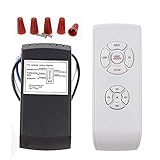
Overview: The LPHUMEX Universal Ceiling Fan Remote Control Kit offers a straightforward solution for upgrading or replacing ceiling fan controls across major brands like Hunter, Harbor Breeze, Westinghouse, and Honeywell. Designed exclusively for AC motor fans, this 3-in-1 kit consolidates fan speed, lighting, and timing functions into a single handheld remote, eliminating the need for pull chains.
What Makes It Stand Out: This kit’s five-wire installation is remarkably simple—no disassembly of light kits or blades required. Just slide down the canopy collar, connect two wires to power and three to the fan, and you’re operational. The timing function (1/2/4/8 hours) adds convenience for bedtime or leaving home, while the included wall cradle keeps the remote accessible. The one-to-one remote-receiver pairing ensures reliable, interference-free operation.
Value for Money: Priced competitively with other universal kits, this offers OEM-quality functionality without the brand premium. It’s an economical alternative to replacing an entire fan unit when only the control system fails. The build quality matches more expensive options, making it a smart mid-range investment for compatible AC motor fans.
Strengths and Weaknesses: Strengths include effortless installation, broad brand compatibility, useful timing features, and clean aesthetics. Weaknesses are the AC motor limitation, the standard receiver size (4.53×1.97×1.06 inches) that may not fit compact canopies, and the mandatory paired replacement—you cannot sync this remote to an existing receiver.
Bottom Line: Ideal for homeowners with standard AC motor ceiling fans seeking a hassle-free upgrade or replacement. Verify canopy space and motor type before purchasing. If compatible, it’s a reliable, feature-rich choice that delivers convenience without complexity.
2. Ceiling Fan Remote Control Replacement, FAN-53T Remote for Harbor Breeze Hampton Bay Allen+Roth Kichler Litex, 3 Speed, Light Dimmer, 303.9MHz, Easy to Set with Mount Holder (Remote Only)

Overview: This FAN-53T remote is a dedicated replacement transmitter, not a universal kit. It specifically targets Harbor Breeze, Hampton Bay, Allen+Roth, Kichler, and Litex fans operating at 303.9MHz with compatible receivers (FAN28R/FAN18R). Crucially, this is remote-only—no receiver or battery included—designed for users whose original receiver still functions but the transmitter is lost or damaged.
What Makes It Stand Out: Precision matching sets this apart. It replicates exact FCC IDs (2AAZPFAN53T, KUJCE9103, CHQ7030T) and model numbers for seamless compatibility. The luminous green dimmer button helps locate the remote in dark rooms while controlling light brightness for incandescent and some dimmable LEDs. The included wall mount holder adds convenience without extra cost.
Value for Money: At a fraction of full-kit prices, this offers targeted value if your existing receiver is operational. It’s significantly cheaper than buying OEM replacements or entire new fan systems. However, incorrect frequency matching renders it useless, making pre-purchase verification essential.
Strengths and Weaknesses: Strengths include exact model replication, dimming capability, glow-in-the-dark button, and easy DIP switch pairing. Weaknesses are the narrow compatibility (303.9MHz only), lack of reverse function, absence of receiver and battery, and potential flickering with non-dimmable LEDs.
Bottom Line: Purchase only if your original remote matches the specified FCC IDs and your receiver functions properly. For those specific scenarios, it’s an economical, perfectly-matched solution. Otherwise, opt for a complete kit to avoid compatibility headaches.
3. Universal Ceiling Fan Remote Control Kit Replacement for Harbor Breeze Hampton Bay Hunter Litex, 3-Speed Light Dimmer with FAN28R Receiver, for 2AAZPFAN53T FAN-53T 11T KUJCE9103 UC7030T

Overview: This complete universal kit from CENMING combines a FAN-53T style remote with a robust FAN28R receiver, offering a comprehensive solution for most 110V AC ceiling fans. Compatible with Harbor Breeze, Hampton Bay, Hunter, and Litex, it replaces both transmitter and receiver for guaranteed synchronization. The kit upgrades manual pull-chain fans to modern remote operation with speed and dimming controls.
What Makes It Stand Out: The powerful 240W-rated receiver significantly exceeds standard capacity, supporting multiple light bulbs and extending component lifespan. The luminous green button aids nighttime operation, while DIP switch programming ensures interference-free pairing. Unlike basic kits, this includes everything needed for installation—receiver, remote, wall mount, wire nuts, and screws.
Value for Money: As a full kit with a high-capacity receiver, it delivers excellent value compared to purchasing components separately. The durable receiver design reduces future replacement costs, making it a wise long-term investment. It’s priced competitively with mid-tier universal kits while offering superior power handling.
Strengths and Weaknesses: Strengths include the high-wattage receiver, complete component set, dimming functionality, and broad AC fan compatibility. Weaknesses are the lack of reverse control (though fans with manual switches remain compatible), unsuitability for hugger-style or DC motor fans, and the absence of a required 9V battery.
Bottom Line: An outstanding choice for upgrading or replacing controls on standard downrod AC ceiling fans. The powerful receiver and complete package justify the investment. Verify your fan type and canopy space, and purchase a 9V battery to complete installation.
4. Universal Ceiling Fan Remote Control Kit 3-in-1 Ceiling Fan Light Timing & Speed Wireless Remote Control and Receiver Kits for Ceiling Fan Lamp

Overview: This universal conversion kit transforms traditional pull-chain ceiling fans into remote-controlled systems. Compatible with major brands like Hunter, Harbor Breeze, Westinghouse, and Honeywell, it provides essential functions—three speeds, timing options, and light control—without complex features. The receiver measures 4.5×2×1 inches, requiring adequate canopy space.
What Makes It Stand Out: The dedicated timing function (1, 2, 4, 8 hours) distinguishes this from basic on/off remotes, offering automated shutoff for energy savings and convenience. Rubber-textured buttons provide tactile feedback and durability, while the included wall holster keeps the remote secure. Installation is straightforward, connecting over existing pull-chain or wall switch configurations.
Value for Money: This kit occupies the budget-friendly segment, offering core remote functionality without premium pricing. The timing feature adds value typically found in higher-priced models. For users seeking basic remote operation without dimming complexities, it delivers essential features at an accessible price point, undercutting OEM replacements significantly.
Strengths and Weaknesses: Strengths include simple installation, useful timer settings, broad compatibility, and durable button design. Weaknesses are the absence of light dimming capability, lack of reverse function, and the critical need to verify receiver fitment in compact canopies. The one-to-one remote-receiver pairing means both must be replaced simultaneously.
Bottom Line: Perfect for users prioritizing convenience and timing automation over advanced lighting control. If your fan uses standard bulbs or separate dimmer switches, this kit offers excellent functionality for the price. Confirm canopy dimensions before ordering to avoid installation issues.
5. Ceiling Fan Remote Control Kit, Timing Wireless Remote Control

Overview: Marketed as 98% compatible, this universal kit targets most ceiling fan brands including Hunter, Harbor Breeze, Westinghouse, and Honeywell. It converts manual fans to remote operation with timing functions and three-speed control. A unique requirement mandates setting pull chains to maximum speed before remote operation, enabling dual-control functionality.
What Makes It Stand Out: The lifetime warranty provides exceptional long-term protection rarely seen in this category. Four timing settings (1, 2, 4, 8 hours) offer flexible automation. The manufacturer humorously notes the receiver’s “shy antenna” that doesn’t extend—an honest detail about the compact design. Rubber-textured buttons enhance usability, and the wall-mount holster adds convenience.
Value for Money: Backed by a lifetime warranty, this kit offers unmatched long-term value. The warranty eliminates replacement cost concerns, making it a financially sound choice despite mid-range pricing. For users willing to manage the pull-chain prerequisite, it delivers premium features with risk-free ownership.
Strengths and Weaknesses: Strengths include the lifetime warranty, multiple timers, broad compatibility claims, and dual-control capability. Weaknesses are the no-dimming design, ambiguous “98%” compatibility promise, and the essential pull-chain configuration step that may confuse some users. The “shy antenna” could indicate limited range in larger rooms.
Bottom Line: A compelling option for those valuing warranty security and timing features. The pull-chain requirement adds a configuration step but enables hybrid control. Verify your fan’s pull-chain accessibility and canopy space. If these conditions are met, the lifetime warranty makes this a worry-free investment.
6. uaelua Universal Ceiling Fan Remote Control Kit Replacement, 6-Speed & Timing, Remote Replacement for DC Ceiling Fan Light

Overview: The uaelua Universal Remote Control Kit targets DC motor ceiling fans, offering enhanced speed control with six distinct settings plus timing functionality. This replacement solution addresses the common frustration of lost or broken remotes for modern DC ceiling fans, providing precise airflow management beyond standard three-speed units.
What Makes It Stand Out: Unlike typical three-speed remotes, this kit’s six-speed capability delivers granular control over fan performance, allowing users to fine-tune airflow for optimal comfort. The integrated timing feature enables automated shutoff scheduling, adding convenience and energy savings. Its DC motor-specific design ensures compatibility with newer, more energy-efficient fan models that require specialized control systems.
Value for Money: Priced competitively against manufacturer-specific replacements, this universal kit often costs 30-40% less than OEM alternatives. The added timing function and expanded speed options provide premium features typically found in higher-end models, making it an economical upgrade rather than just a simple replacement.
Strengths and Weaknesses: Pros include six-speed precision, timing automation, DC motor compatibility, and universal design. Cons involve limited product documentation, potential compatibility verification challenges, and the absence of a reverse function. Users must confirm their DC motor specifications before purchasing.
Bottom Line: Ideal for DC ceiling fan owners seeking enhanced control without premium pricing. Verify compatibility with your specific motor type, but the six-speed functionality and timing features make this a worthwhile upgrade from basic replacements.
7. FAN53T Ceiling Fan Remote Control Replacement,Universal Remote for Harbor Breeze,Hampton Bay,Hunter,Honeywell,Westinghouse,Replace FAN-53T FAN-35T FAN-11T KUJCE9103 CHQ8BT7030T CHQ7030T UC7030T

Overview: This FAN53T replacement remote serves as a direct substitute for numerous major ceiling fan brands, including Harbor Breeze, Hampton Bay, Hunter, Honeywell, and Westinghouse. Designed to match specific model numbers, it provides three-speed control and dimming functionality for compatible units, offering a straightforward solution for lost or damaged remotes.
What Makes It Stand Out: The luminescent green button glows after light exposure, helping locate the remote in dark rooms—a thoughtful feature missing from most alternatives. Its precise model matching system ensures functional compatibility, while the simple DIP switch configuration allows easy synchronization with existing receivers. The included wall mount holder adds convenient storage.
Value for Money: As a transmitter-only replacement, it’s priced affordably at roughly half the cost of complete kit systems. For users with functioning receivers, this eliminates unnecessary expense. However, the required 9V battery and potential need for exact model matching may add hidden costs or frustration.
Strengths and Weaknesses: Pros include brand versatility, glow-in-the-dark button, simple installation, and wall mount. Cons: no reverse function, limited LED dimming compatibility, battery not included, and critical model number dependency. The transmitter-only design means existing receivers must work perfectly.
Bottom Line: Perfect for those who’ve lost their original remote and have confirmed matching model numbers. The luminescent feature is genuinely useful. Double-check compatibility before purchasing to avoid returns, and note the absence of reverse control.
8. 3-Speed Ceiling Fan Remote Control, Black, Low-Medium-High Settings, Wireless Controller with Power Button

Overview: This black 3-speed remote specifically targets Merwry ceiling fan owners needing a straightforward replacement. With its intuitive Low-Medium-High settings and integrated light control, it restores basic functionality without complex features. The sleek design focuses on essential operations for users wanting simplicity over advanced programming.
What Makes It Stand Out: The ergonomic black housing with rounded edges provides comfortable handling and modern aesthetics that complement contemporary décor. Its clear display panel features one-touch buttons with straightforward labeling, eliminating confusion. The compact oval design fits comfortably in hand while remaining portable enough to relocate throughout the room.
Value for Money: Positioned in the mid-range price segment, this remote offers fair value for brand-specific replacement. While universal kits might cost slightly less, the guaranteed Merwry compatibility saves time and potential return hassle. It’s cheaper than purchasing through official channels but lacks the advanced features of premium alternatives.
Strengths and Weaknesses: Pros include ergonomic design, intuitive interface, guaranteed Merwry compatibility, and compact size. Cons involve limited brand applicability, no timing or dimming functions, absence of reverse control, and lack of advanced customization. It’s functionally basic compared to universal options.
Bottom Line: A solid choice for Merwry ceiling fan owners prioritizing simplicity and design. If you own a compatible model and need reliable basic control, this remote delivers. Those wanting advanced features or multi-brand flexibility should consider universal alternatives instead.
9. 2 Pack Universal Ceiling Fan Remote Control Kits with Light Dimmer 3 Speed Fan Controller Receiver Lamp Dim Remote Replacement for Hampton Bay/Hunter/Harbor Breeze/Westinghouse/Honeywell & More

Overview: This two-pack universal kit provides complete remote control solutions for multiple ceiling fans, including receivers and transmitters. Compatible with major brands like Hampton Bay, Hunter, and Harbor Breeze, it converts traditional fans into remote-controlled units. Each kit includes a three-speed fan controller and light dimmer functionality for comprehensive operation.
What Makes It Stand Out: The DIP code pairing system allows customization of frequency codes, preventing interference from neighboring remotes—a crucial feature in multi-unit dwellings. The two-pack configuration offers exceptional value for households with multiple fans, while the included receivers mean even older fans without remote capability can be upgraded. The warranty coverage adds purchase confidence.
Value for Money: Representing excellent bulk savings, this two-pack typically costs only 50% more than single kits, effectively providing the second unit at half price. With receivers included, it eliminates the need for separate purchases. The 30-day money-back guarantee and one-year replacement warranty protect your investment.
Strengths and Weaknesses: Pros include dual complete kits, DIP code customization, brand versatility, dimming capability, and strong warranty. Cons: no reverse function, receiver size may not fit all canopies, non-dimmable LEDs have limited functionality, and 9V battery not included. Installation requires basic wiring knowledge.
Bottom Line: Outstanding value for anyone needing to upgrade or replace multiple ceiling fan controls. The DIP code feature prevents signal conflicts, making it ideal for apartments or closely-spaced rooms. Verify receiver dimensions fit your fan canopy before installation.
10. LPHUMEX Ceiling Fan Remote Control Kit, Small Size Speed, Light & Timing 3 in 1 Wireless Control, Compatible with AC Motor Fans from Harbor Breeze, Hunter, Hampton Bay, etc.
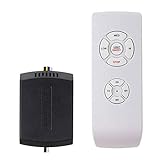
Overview: The LPHUMEX kit specializes in AC motor ceiling fans, offering a compact three-in-one solution with speed control, light operation, and timing functions. Its small receiver design addresses installation challenges in tight ceiling fan canopies, making it ideal for retrofitting older AC fans with modern remote capability. Compatible with major brands like Harbor Breeze and Hunter.
What Makes It Stand Out: The remarkably compact receiver size distinguishes this kit from bulkier alternatives, fitting into slimline and space-constrained canopies where standard receivers won’t. The dedicated timing function offers 1, 2, 4, and 8-hour settings for automated operation. Its AC motor-specific engineering ensures reliable performance without the complexity of DC motor electronics.
Value for Money: Competitively priced against larger receiver kits, this model saves additional costs by eliminating professional installation fees thanks to its easier fit. The three-in-one functionality (speed, light, timing) provides comprehensive control typically found in more expensive systems, representing strong value for AC fan owners.
Strengths and Weaknesses: Pros include ultra-compact receiver, AC motor compatibility, timing functions, straightforward five-wire installation, and included accessories. Cons: incompatible with DC motors, no dimming capability, no reverse function, and requires sufficient canopy space (though minimal). The AC-only limitation restricts versatility.
Bottom Line: Perfect for upgrading AC ceiling fans with space constraints. If your fan canopy is tight and you don’t need dimming or reverse, this kit’s compact design and timing features make it an excellent choice. Verify AC motor type before purchasing to ensure compatibility.
Why Universal Ceiling Fan Remotes Are Essential in 2026
The Smart Home Integration Revolution
Modern homes demand interconnected devices that communicate with central hubs like Alexa, Google Home, or Apple HomeKit. Universal remotes in 2026 aren’t just about turning fans on and off—they’re about creating scenes where your fan automatically adjusts based on room temperature, time of day, or occupancy. This integration eliminates the need for multiple apps and bridges the gap between older ceiling fans and cutting-edge home automation.
Ending the Remote Replacement Cycle
Manufacturer-specific remotes often become discontinued within 5-7 years, leaving you stranded when buttons wear out or units get lost. Universal remotes break this cycle by using standardized frequencies and programmable receivers that work across brands. In 2026, many models come with lifetime frequency updates, ensuring your remote stays compatible with future fan purchases.
Energy Efficiency and Climate Control
Advanced universal remotes now include built-in temperature and humidity sensors that automatically adjust fan speeds to maintain comfort while minimizing energy consumption. This proactive climate management can reduce HVAC costs by up to 15% annually, making the remote an investment rather than just a convenience.
Key Features That Define the Best Universal Remotes
Frequency Compatibility: The Foundation of Universality
The core of any universal remote lies in its frequency range. Most ceiling fans operate on 303MHz, 315MHz, or 433MHz frequencies, but some brands use unique bands. Premium universal remotes scan across multiple frequencies automatically, while basic models require manual dip switch configuration. Understanding your fan’s frequency before shopping prevents compatibility headaches.
Dip Switch Technology vs. Auto-Scan
Traditional universal remotes rely on physical dip switches that must match settings between the remote and receiver. While reliable, this process can be tedious. Auto-scan technology, now standard in mid-tier 2026 models, cycles through thousands of frequency combinations until it finds your fan’s signal. This feature alone can save hours of trial-and-error programming.
Range and Signal Strength Considerations
A remote that works from only 10 feet away defeats its purpose. Look for models boasting 50-100 foot range through walls and floors. Signal strength becomes critical in homes with metal roofing, concrete walls, or extensive smart home interference. Some remotes now feature mesh network capabilities, extending range by piggybacking on other smart devices.
Battery Life and Power Management
The best remotes in 2026 use energy-efficient chipsets that extend battery life to 2-3 years with regular use. Solar-assisted models with ambient light charging panels are emerging, while others feature low-power Bluetooth that only activates Wi-Fi when needed. Check for battery level indicators and consider models using standard AA or AAA batteries over obscure coin cells.
Build Quality and Ergonomic Design
A remote that feels cheap or has mushy buttons will frustrate daily use. Look for rubberized grips, backlit buttons with clear labeling, and solid construction that survives drops. Wall-mounted holders with magnetic docking prevent loss and keep the remote charged if it includes a rechargeable battery.
Understanding Compatibility Across Brands
Major Manufacturer Protocols Explained
Each ceiling fan brand develops proprietary communication protocols beyond simple frequencies. Hunter, Hampton Bay, Harbor Breeze, and Minka Aire use different signal encoding, which can confuse basic universal remotes. Advanced models decode these protocols automatically, but understanding that “universal” doesn’t always mean “instantly compatible” sets realistic expectations.
The Challenge of Proprietary Systems
Some high-end fans from brands like Big Ass Fans or Modern Forms use encrypted signals that standard universal remotes can’t replicate. In these cases, you may need brand-specific receivers or smart home bridges. Always check if your fan model uses a “learning remote” system or closed protocol before purchasing a universal alternative.
When Universal Isn’t Truly Universal
Fans with integrated LED lighting and reverse functions often require remotes with specific dimming capabilities and motor control sequences. A remote that controls speed but can’t dim lights or change direction only solves half the problem. Verify that the universal remote supports all your fan’s functions, not just basic on/off operations.
Testing Compatibility Before You Buy
Many manufacturers offer online compatibility checkers where you input your fan’s model number. Physical retail stores sometimes have test units you can try. When in doubt, purchase from retailers with generous return policies. Bring your old remote to compare frequencies if possible—many universal remotes can clone signals from functioning originals.
Smart Features to Look for in 2026 Models
Wi-Fi and Bluetooth Connectivity
Wi-Fi-enabled remotes connect directly to your home network, enabling control from anywhere via smartphone apps. Bluetooth serves as a backup when Wi-Fi is down and enables proximity-based automation. The best models use both, with Bluetooth for initial setup and local control, Wi-Fi for remote access and voice commands.
Voice Assistant Integration
“Alexa, set bedroom fan to medium” should be a standard command. Look for remotes certified to work with major voice platforms without requiring additional hubs. Some models now support natural language processing, understanding commands like “make it cooler” by increasing speed based on current room temperature.
App-Based Controls and Scheduling
Companion apps should offer more than basic controls. Advanced scheduling lets you create seasonal routines, vacation modes that simulate occupancy, and integration with weather forecasts. The best apps provide usage analytics, showing how often your fan runs and estimating energy savings over time.
Multi-Fan Control Capabilities
Controlling multiple fans from one remote or app is invaluable in open-concept homes. Look for remotes that can manage at least 4-6 fans independently, with customizable names and settings for each. Some systems allow grouping fans by room or creating whole-house scenes.
Temperature and Humidity Sensors
Built-in sensors transform your remote from a simple controller into an environmental manager. These features automatically adjust fan speed when humidity spikes or temperatures cross thresholds. In 2026, some premium models even integrate with smart thermostats to coordinate fan and HVAC operation.
Installation and Setup Considerations
Receiver Installation Basics
Most universal remotes require installing a receiver unit inside the fan’s canopy. This involves basic wiring—connecting the receiver between the house wires and fan motor. Ensure the receiver fits your fan’s canopy size; some compact fans lack space. Turn off power at the breaker, not just the wall switch, before installation.
Programming Your Universal Remote
After physical installation, programming involves pairing the remote to the receiver. Auto-scan models make this simple: press a button and wait. Manual models require setting dip switches and testing each combination. Keep your fan’s manual handy for default settings, and be patient—some fans require specific timing sequences during pairing.
Troubleshooting Common Pairing Issues
If the remote won’t pair, check that the receiver’s antenna is fully extended and not touching metal parts. Ensure the remote’s battery is fresh. Some fans require resetting the receiver by cutting power for 30 seconds. Interference from LED bulbs or nearby electronics can also block signals—try pairing with the fan’s light off initially.
When to Call a Professional
If your fan lacks a neutral wire or you’re uncomfortable working at heights, hire an electrician. Complex installations involving separate wall controls, multiple switches, or integrated lighting dimmers may require professional rewiring. The $100-150 installation cost is worth avoiding electrical hazards or damaging your fan.
Design and Aesthetic Factors
Wall-Mounted vs. Handheld Options
Wall-mounted remotes with docking stations ensure you never lose the remote and can serve as a traditional wall switch replacement. Handheld units offer portability but disappear into couch cushions. Some hybrid systems include both—a wall mount that charges the handheld unit, combining convenience with security.
Aesthetic Finishes and Styles
Universal remotes now come in finishes that match modern home decor: matte black, brushed nickel, white, and even wood grain. Consider your wall plate and switch style. A sleek, minimalist remote looks out of place in a rustic home, while a clunky white plastic remote cheapens a modern space.
Display Screens and Backlighting
LCD screens show current speed, temperature, and timer status but consume more battery. LED backlighting is essential for nighttime use—look for motion-activated lights that illuminate when you pick up the remote. Avoid overly bright displays that become nightlight nuisances in bedrooms.
Button Layout and User Interface
The best remotes separate fan speed buttons from light controls logically. Tactile differentiation—different button shapes or textures—lets you operate by feel in the dark. Some 2026 models feature customizable button functions, letting you disable features you never use to simplify the interface.
Price Ranges and Value Propositions
Budget-Friendly Basics
Entry-level universal remotes ($15-30) offer basic on/off and speed control for single fans. They typically use dip switches and lack smart features. These work well for simple installations but may not support light dimming or reverse functions. Consider these for guest rooms or rentals where advanced features aren’t needed.
Mid-Range Feature Sets
The sweet spot for most homeowners lies in $35-60 remotes offering auto-scan, multi-fan control, and basic smart integration. These models support most fan functions, include decent range, and often come with wall mounts. They provide 80% of premium features at half the cost, making them ideal for primary living spaces.
Premium Smart Home Hubs
High-end remotes ($70-150) function as dedicated fan control hubs with Wi-Fi, voice integration, and environmental sensors. They support 6+ fans, offer detailed scheduling, and integrate with broader home automation systems. These justify their cost in smart homes or for tech enthusiasts wanting maximum control and energy savings.
Warranty and Support Considerations
A 1-year warranty is standard, but premium models offer 2-3 years. More important is manufacturer support—does the company provide firmware updates? Is there a helpline for programming issues? Check online reviews for support quality. A slightly more expensive remote with excellent support beats a cheap one that leaves you stranded when pairing fails.
Maintenance and Longevity Tips
Battery Management Strategies
Remove batteries during long periods of non-use to prevent corrosion. For rechargeable models, avoid letting them fully discharge—top off monthly. Keep spare batteries on hand, as weak batteries cause pairing issues that mimic compatibility problems. Some remotes now send low-battery alerts to your smartphone.
Cleaning and Care
Use isopropyl alcohol and a microfiber cloth to clean button contacts and casing. Avoid harsh chemicals that degrade rubberized grips. For remotes used in kitchens or outdoor-adjacent areas, quarterly cleaning prevents grease and moisture buildup that can seep inside and damage circuitry.
Firmware Updates for Smart Remotes
Wi-Fi-enabled remotes receive firmware updates that improve compatibility and add features. Enable automatic updates in the companion app, but be aware that updates can occasionally reset custom settings. Back up your configurations before updating, and read release notes to understand what changes each update brings.
Extending the Lifespan of Your Remote
Store wall-mounted remotes away from direct sunlight to prevent UV damage to buttons. Avoid dropping handheld units—internal antenna damage isn’t visible but drastically reduces range. If your remote has a removable clip, periodically tighten screws that loosen with daily use. With proper care, a quality universal remote should last 8-10 years.
Frequently Asked Questions
What makes a ceiling fan remote truly universal in 2026? True universality means auto-scanning across multiple frequencies (303MHz, 315MHz, 433MHz) and decoding major manufacturer protocols automatically. It should support all fan functions—speed, light dimming, and reverse—without brand-specific limitations. However, some proprietary systems from premium brands may still require dedicated remotes.
Can I install a universal remote receiver myself? Yes, if you’re comfortable with basic electrical work and your fan has a standard canopy with space for the receiver. The process involves turning off power at the breaker, connecting three to five wires, and securing the receiver. If your fan lacks a neutral wire or has complex multi-switch wiring, hire an electrician to avoid safety hazards.
Will a universal remote work with my fan’s LED light kit? Most modern universal remotes support LED dimming, but compatibility varies. Check if your fan uses standard dimmable LEDs or proprietary bulbs with special drivers. Some fans require specific dimming curves that only original remotes provide. Test light dimming functionality immediately after pairing, as speed control may work while dimming fails.
How do I find my ceiling fan’s frequency? Check the original remote’s battery compartment for a sticker listing the MHz. If unavailable, look up your fan’s model number online—most manuals list frequency in specifications. As a last resort, auto-scan universal remotes can detect frequency automatically, though this process may take 10-15 minutes of scanning.
What’s the difference between a remote and a smart switch? A remote is handheld or wall-mounted with wireless control of the fan receiver. A smart switch replaces the wall switch entirely, wiring directly into your home’s electrical system. Smart switches offer more reliable control but require more complex installation. Remotes are ideal for retrofitting existing fans without rewiring walls.
Can one remote control multiple fans independently? Yes, many mid-tier and premium remotes support 4-6 fans with independent control. Each fan needs its own receiver, programmed to a different “zone” or channel on the remote. The best systems let you name fans in an app and create groups for simultaneous control, like “all bedroom fans” or “downstairs fans.”
Do universal remotes work with fans that have DC motors? Most DC motor fans use proprietary controllers that communicate via digital signals rather than simple radio frequencies. While some advanced universal remotes can control basic DC motor functions, they often can’t access efficiency modes or specialized features. Check for DC motor compatibility specifically—many remotes only support traditional AC motors.
How long should batteries last in a universal remote? With typical use, expect 18-24 months from quality AA or AAA batteries. Remotes with LCD screens or constant Wi-Fi may last 12-18 months. Low-power Bluetooth models can exceed 3 years. Battery life indicators help prevent unexpected failures. Rechargeable models typically need charging every 3-6 months depending on usage.
What causes interference with ceiling fan remotes? LED bulbs (especially non-dimmable), Wi-Fi routers, baby monitors, and metal roofing can block or distort signals. Microwave ovens temporarily interfere when running. If experiencing issues, try changing your remote’s frequency channel (if adjustable) or relocating the receiver’s antenna away from metal surfaces and electronic devices.
Are there outdoor-rated universal ceiling fan remotes? Standard universal remotes are for indoor use only. For outdoor fans, you need specifically rated weather-resistant receivers and remotes with sealed buttons and corrosion-resistant contacts. These are labeled “damp” or “wet location” rated. Using an indoor remote outdoors voids warranties and creates electrical hazards within months due to moisture damage.
See Also
- 10 Best Universal Ceiling Fan Remotes for Any Fan Model This Year
- 10 Premium Ceiling Fan Universal Blades for Any Fixture (Worth the Investment)
- 10 Best Value Universal Ceiling Fan Remotes for Multi-Room Use in 2026
- 10 Best Universal Ceiling Fan Remotes for Replacing Lost or Broken Units This Year
- 10 Affordable Universal Ceiling Fan Remotes That Don’t Sacrifice Quality in 2026