Table of Contents
Nothing’s more frustrating than climbing up to pull a ceiling fan chain because your remote suddenly stopped working—or worse, discovering your brand-new remote won’t even pair with your existing fan. As we move through 2026, the landscape of ceiling fan controls has become increasingly complex, with new wireless standards, smart home integration requirements, and legacy system challenges creating a perfect storm of compatibility headaches for homeowners.
The good news? Modern remote and receiver sets have evolved to address these exact pain points. Today’s solutions offer unprecedented cross-brand functionality, adaptive frequency technologies, and modular designs that can breathe new life into fans from any era. This comprehensive guide will walk you through everything you need to know about selecting the right remote and receiver combination that actually works with your specific setup—no more guesswork, no more returns, and no more standing on chairs.
Top 10 Ceiling Fan Remote and Receiver Sets
Detailed Product Reviews
1. LPHUMEX Universal Ceiling Fan Remote Control Kit, 3-in-1 AC Motor Ceiling Fan Light Timing & Speed Remote, for Hunter/Harbor Breeze/Westinghouse/Honeywell/Other Ceiling Fan lamp
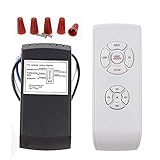
Overview: The LPHUMEX Universal Ceiling Fan Remote Control Kit delivers convenient wireless operation for most AC motor ceiling fans from major brands like Hunter, Harbor Breeze, Westinghouse, and Honeywell. This 3-in-1 solution eliminates the hassle of wall switches, offering separate control for fan speeds, lighting, and timing functions. Installation requires only five wire connections without removing the light kit or blades—simply access the ceiling canopy to connect two power wires and three fan control wires. The receiver unit measures 4.53x1.97x1.06 inches, fitting most standard fan canopies.
What Makes It Stand Out: The kit’s timing function sets it apart from basic remotes, allowing automated operation for energy savings and convenience. The included wall cradle provides dedicated storage, preventing lost remotes. Its one-to-one pairing system ensures your fan won’t respond to neighboring signals, while the clean, modern remote design complements any décor. The brand also emphasizes that remote and receiver must be replaced together, ensuring reliable communication.
Value for Money: Priced competitively against OEM replacements, this universal kit offers broader compatibility at a fraction of brand-specific parts. The three-function capability (speed, light, timer) delivers premium features typically found in more expensive units, making it an economical upgrade for older fans lacking remote capability.
Strengths and Weaknesses: Strengths include straightforward installation, wide brand compatibility, timing functionality, and secure one-to-one pairing. The wall mount adds practical storage. Weaknesses: AC motor limitation excludes modern DC fans, and the receiver’s size may not fit very compact canopies. The mandatory paired replacement means you cannot reuse existing components.
Bottom Line: This LPHUMEX kit excels for standard AC ceiling fan upgrades, offering robust features and easy installation. Verify your fan’s motor type and canopy space before purchasing. It’s ideal for homeowners wanting timer functionality without premium pricing.
2. Universal Ceiling Fan Remote Control Kit Replacement for Harbor Breeze Hampton Bay Hunter Litex, 3-Speed Light Dimmer with FAN28R Receiver, for 2AAZPFAN53T FAN-53T 11T KUJCE9103 UC7030T

Overview: This universal ceiling fan remote kit from CENMING provides comprehensive control for most 110V three-speed AC ceiling fans, specifically targeting popular brands like Harbor Breeze, Hampton Bay, Hunter, and Litex. The FAN28R receiver handles up to 240W, significantly exceeding standard capacity. The system offers independent control of fan speeds (high/medium/low/off) and light dimming, converting traditional fans into remotely operated units. Installation follows the standard five-wire configuration, though the manufacturer advises against use with hugger-style fans due to space constraints.
What Makes It Stand Out: The powerful 240W receiver stands out, accommodating multiple bulbs and extending component lifespan. The green luminous button helps locate the remote in dark rooms—a thoughtful usability feature. Light dimming capability works with incandescent and some dimmable LEDs, though compatibility varies. The remote’s design prioritizes separate, intuitive controls for fan and light functions.
Value for Money: Positioned in the mid-range, this kit justifies its cost through superior power handling and dimming functionality. While pricier than basic no-frills options, the enhanced receiver durability and luminous button add tangible value. It competes favorably against OEM parts costing significantly more.
Strengths and Weaknesses: Strengths include high power capacity, brand versatility, light dimming, and the glow-in-the-dark button. The receiver’s robust build promises longevity. Weaknesses: incompatible with DC motors, hugger fans, and wall-mounted units. The dimmer may cause LED flickering with non-dimmable bulbs, and there’s no reverse function—though fans with built-in switches remain compatible. Battery not included.
Bottom Line: An excellent choice for downrod-style AC fans needing dimming capability and reliable performance. Avoid for hugger or DC motor fans. Verify bulb dimming compatibility to prevent flickering issues.
3. 85112-04 Hunter Fan Ceiling Fan Replacement Remote and Receiver Set.
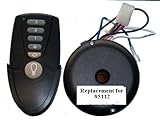
Overview: The 85112-04 represents Hunter’s official replacement remote and receiver set, engineered specifically for compatible Hunter ceiling fan models. As an OEM component, it guarantees seamless integration and maintains factory specifications without the guesswork of universal compatibility. While feature details are minimal in listings, Hunter’s engineering ensures reliable communication between transmitter and receiver, preserving original functionality. This set targets Hunter owners seeking exact-match replacements rather than universal upgrades, prioritizing brand-specific fit over expanded features.
What Makes It Stand Out: Genuine manufacturer certification ensures perfect compatibility and preserves any existing warranty coverage. Unlike universal kits that may require DIP switch programming or troubleshooting, this Hunter set offers plug-and-play simplicity for supported models. The build quality matches original equipment standards, using identical materials and firmware for consistent performance. For purists, maintaining brand authenticity throughout the fixture holds significant value.
Value for Money: Commanding a premium over universal alternatives, this OEM set justifies cost through guaranteed compatibility and reliability. While universal kits offer more features for less money, the Hunter set eliminates risk—critical for expensive fan models where improper components could cause damage. It’s an insurance policy for your investment.
Strengths and Weaknesses: Strengths include assured compatibility, factory-matched performance, warranty preservation, and straightforward installation for Hunter fans. The OEM quality ensures longevity. Weaknesses: limited to specific Hunter models, lacks advanced features like timing or dimming found in universals, and costs substantially more. Minimal product information makes pre-purchase verification challenging.
Bottom Line: Only purchase if you own a compatible Hunter fan and prioritize exact replacement over enhanced functionality. For upgrades or multi-brand households, universal kits offer better value and versatility.
4. uaelua Universal Ceiling Fan Remote Control Kit Replacement, 6-Speed & Timing, Remote Replacement for DC Ceiling Fan Light

Overview: The uaelua Universal Ceiling Fan Remote Control Kit addresses a critical market gap: DC motor ceiling fan compatibility. While most universal kits exclusively support AC motors, this specialized solution offers six-speed control and timing functions for DC-powered fans. The expanded speed settings provide finer airflow adjustment than standard three-speed units. However, the product listing provides minimal technical specifications, requiring careful buyer research before purchase. This kit serves DC fan owners who’ve struggled to find replacement controls.
What Makes It Stand Out: DC motor support is the primary differentiator, as few universal options exist for this growing fan category. The six-speed capability surpasses typical three-speed limitations, enabling precise comfort tuning. Timing functionality adds automation convenience. For DC fan owners facing obsolete or failed original remotes, this represents a rare universal alternative to expensive manufacturer parts.
Value for Money: Pricing likely reflects its niche status and specialized electronics required for DC motor control. While potentially costlier than AC equivalents, it remains cheaper than OEM DC replacements. The value proposition hinges entirely on DC compatibility—AC fan owners should look elsewhere for better-featured, less expensive options.
Strengths and Weaknesses: Strengths include DC motor compatibility, six-speed control, and timing features—addressing a underserved market. Weaknesses: extremely limited product information raises concerns about quality, compatibility verification, and long-term support. Unknown receiver size, power ratings, and brand compatibility create purchase risk. No mention of light control capabilities.
Bottom Line: Consider only if you own a DC motor ceiling fan and can verify specifications match your unit. The lack of detailed information demands caution—contact the seller for technical data before buying. AC fan owners should choose alternative kits.
5. 2 Pack Universal Ceiling Fan Remote Control Kits with Light Dimmer 3 Speed Fan Controller Receiver Lamp Dim Remote Replacement for Hampton Bay/Hunter/Harbor Breeze/Westinghouse/Honeywell & More

Overview: This two-pack universal ceiling fan remote kit delivers exceptional value for multi-fan households or those wanting a spare unit. Compatible with major brands including Hunter, Harbor Breeze, Westinghouse, and Honeywell, each kit converts traditional AC fans into remote-controlled fixtures. The bundle includes two complete sets with DIP code pairing to prevent signal interference between rooms. Installation maintains the standard five-wire configuration, though a 9V battery (not included) powers each remote. Light dimming supports incandescent, halogen, and dimmable LED/CFL bulbs.
What Makes It Stand Out: The dual-pack configuration provides immediate cost savings over individual purchases, ideal for whole-home upgrades. DIP code pairing technology allows customization to prevent cross-room activation—a common issue in dense housing. The manufacturer backs the product with a 30-day money-back guarantee and one-year replacement warranty, demonstrating confidence. Application scope extends beyond residential to commercial settings like offices and hotels.
Value for Money: This bundle offers the best per-unit pricing in the category, effectively providing two kits for less than the cost of many single units. The warranty coverage adds financial protection rarely seen in budget electronics. For properties with multiple fans, the savings compound significantly compared to OEM replacements.
Strengths and Weaknesses: Strengths include exceptional bulk value, DIP security coding, comprehensive warranty, wide compatibility, and dimming capability. The two-pack suits property managers and large homes. Weaknesses: no reverse function, 9V batteries not included, and quality control may vary in budget bundles. Non-dimmable LEDs only support on/off, and receiver size compatibility requires verification.
Bottom Line: Outstanding value for upgrading multiple AC ceiling fans or keeping a backup. The DIP pairing and warranty mitigate common universal remote issues. Verify your fans have adequate canopy space and AC motors before purchasing.
6. Ceiling Fan Remote Replacement Hunter 99770, Universal Ceiling Fan Remote Control Kit Compatible with Hunter Hampton Bay Harbor Breeze,with Dimmer Light,3 Speed Control with Wall Mount
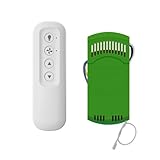
Overview: This universal ceiling fan remote kit targets the 95% compatibility sweet spot, specifically engineered to replace Hunter and Casablanca models like 99770, 99729, and 99198. It delivers essential fan and light control without the complexity of DIP switch programming, making it an accessible upgrade for aging or lost remotes across Harbor Breeze, Hampton Bay, and numerous other major brands.
What Makes It Stand Out: The learn-button pairing system eliminates tedious manual code matching—just point and sync. Unlike many competitors, it includes a dedicated wall mount holder for convenient storage and a clean installation aesthetic. The three-speed fan control and incandescent light dimmer cover core functionality, while the comprehensive compatibility list removes guesswork for Hunter/Casablanca owners seeking direct replacements.
Value for Money: Positioned as a mid-tier solution, this kit offers OEM-level replacement quality at a fraction of dealer prices. The bundled wall mount and six wire nuts add tangible value, though the required 3V battery (not included) incurs a minor extra cost. Compared to brand-specific remotes costing $40-60, this universal option delivers 90% of the functionality for roughly half the investment.
Strengths and Weaknesses: Strengths include effortless pairing, broad brand compatibility, included wall mount, and clear model-specific guidance. Weaknesses are notable: no reverse function, limited dimming (incandescent only—LED/CFL bulbs only switch on/off), and the battery omission. Users must also remember to set original switches to maximum before pairing, adding a minor setup step.
Bottom Line: Ideal for Hunter/Casablanca owners needing straightforward replacement without technical hurdles. Accept the LED dimming limitation and lack of reverse, and you get reliable performance with exceptional ease of installation.
7. 53T Kit Universal Ceiling Fan Remote Control, Replacement for Harbor Breeze Hampton Bay Hunter Litex, 3-Speed Light Dimmer FAN28R Receiver, Replace KUJCE9103 CHQ7030T UC7030T FAN-53T 2AAZPFAN53T Kit

Overview: The 53T kit serves as a precision-engineered replacement for a specific ecosystem of ceiling fans, targeting models using CHQ7030T, UC7030T, and FAN-53T receivers. Designed for Harbor Breeze, Hampton Bay, and Hunter Litex systems, this ETL-listed kit prioritizes reliable performance over universal gimmicks, making it the go-to choice when you know your exact receiver model.
What Makes It Stand Out: DIP code configurability allows seamless integration in multi-fan households without signal interference—critical for homes with two or more units. The ETL certification provides safety assurance often missing in budget alternatives. Installation requires only five wire connections, and the receiver’s compact design fits most canopies without disassembling the entire fan assembly.
Value for Money: This kit hits the value sweet spot for targeted replacements. While slightly pricier than generic universal remotes, its model-specific compatibility eliminates the risk of incompatibility returns. The inclusion of eight wiring caps and a detailed manual reduces installation friction, justifying the modest premium over no-name alternatives.
Strengths and Weaknesses: Strengths include precise model matching, DIP code isolation for multi-fan homes, safety certification, and straightforward wiring. Weaknesses mirror category limitations: no reverse capability, incandescent-only dimming (LED users get only on/off control), and the required A23 battery is absent from the package. The DIP setup, while beneficial, adds a step versus learn-button systems.
Bottom Line: Perfect for users who’ve identified their fan’s original receiver model. The DIP code system and ETL certification make it a reliable, safe choice for targeted replacements where precision matters more than universal flexibility.
8. Universal Ceiling Fan Remote Control Kit, Wireless Remote Control and Receiver Kits for Lamp, 3-in-1 Ceiling Fan Light Timing and Speed Remote

Overview: This streamlined remote kit positions itself as a timing-focused solution for basic ceiling fan and lamp control. Promising compatibility with “most” ceiling fans and lamps, it emphasizes wireless convenience and programmable shutoff over brand-specific precision, catering to users who prioritize scheduling automation over advanced fan features.
What Makes It Stand Out: The four-stage timer (1h, 2h, 4h, 8h) stands out in a crowded field of basic remotes, enabling energy-saving automated shutoff for bedrooms and living spaces. The “ignore obstacles” claim suggests robust RF signal penetration, while the included remote stand offers practical storage. Its 3-in-1 branding implies integrated control of fan speed, lighting, and timing in one unified interface.
Value for Money: Likely positioned as a budget-tier option, this kit’s value proposition hinges on the timing feature absent in many comparably priced alternatives. However, vague compatibility claims create risk of incompatibility. For users with standard wiring and no specialized needs, the timer functionality may justify the purchase, but brand-agnostic buyers should verify fit before committing.
Strengths and Weaknesses: Strengths include useful timing presets, included stand, and straightforward speed/light control. Weaknesses are significant: compatibility claims lack specific model numbers, no mention of light dimming capability, no reverse function, and minimal safety certifications are referenced. The “ignore obstacles” claim is unverified marketing language that may oversell RF performance.
Bottom Line: A decent budget choice for users needing basic timer functionality, but verify compatibility carefully. The lack of detailed specifications makes it a gamble for those with specific brand requirements or advanced lighting needs.
9. Ceiling Fan Remote Control Kit, Timing Wireless Remote Control

Overview: Boasting 98% compatibility with major brands like Hunter, Harbor Breeze, and Westinghouse, this remote kit converts traditional pull-chain fans into modern remote-controlled systems. It explicitly addresses the pull-chain integration challenge and backs its claims with a lifetime warranty, signaling confidence in long-term reliability for residential and light commercial applications.
What Makes It Stand Out: The lifetime warranty is a standout feature rarely seen in this category, eliminating replacement cost concerns. Rubber-textured buttons provide tactile feedback superior to cheap membrane remotes. The ability to “fix two fan lights in one room without interaction” suggests advanced signal isolation, while the four timer presets (1H, 2H, 4H, 8H) add convenience for bedroom and patio use.
Value for Money: Excellent value proposition. The lifetime warranty alone offsets potential price premiums, while rubberized buttons and included wall holster demonstrate attention to user experience. For multi-fan homes, the interference-free operation prevents costly trial-and-error with incompatible units, making it a financially sound long-term investment.
Strengths and Weaknesses: Strengths include exceptional warranty coverage, ergonomic button design, clear pull-chain integration instructions, timer functionality, and broad brand compatibility. Weaknesses: no light dimming (only on/off), no reverse function, and the receiver’s antenna requires careful positioning. Users must manually set pull chains to maximum before remote operation, a minor but essential step.
Bottom Line: The lifetime warranty and robust build quality make this a top-tier universal choice. Accept the lack of dimming and reverse, and you get peace of mind unmatched by competitors.
10. UC7305R Replacement Ceiling Fan Remote Control Receiver Set. Plug and Play Hampton Bay Replacement.

Overview: This hyper-targeted replacement set addresses a singular need: direct, no-modification replacement for Hampton Bay systems using the UC7305R receiver. The “Plug & Play” promise indicates a connector-based installation that eliminates wire splicing, appealing to users seeking the absolute simplest repair path for a specific, common Hampton Bay failure point.
What Makes It Stand Out: True plug-and-play design sets it apart in a field dominated by wire-nut installations. For Hampton Bay owners with UC7305R receivers, this is a drop-in solution that reduces installation time from 30 minutes to under five. The focused compatibility eliminates the guesswork and potential signal conflicts that plague universal kits, ensuring perfect synchronization with original Hampton Bay transmitters.
Value for Money: Commands a premium price justified entirely by convenience. While generic kits cost less, the plug-and-play connector saves time and eliminates the risk of incorrect wiring for non-technical users. For landlords or property managers maintaining multiple Hampton Bay units, the labor savings quickly offset the higher unit cost.
Strengths and Weaknesses: Strengths include effortless installation, guaranteed Hampton Bay UC7305R compatibility, and minimal technical skill requirements. Weaknesses are equally stark: extremely limited compatibility (only UC7305R), no mention of light dimming capability, no timer features, and premium pricing. The minimalist feature description leaves buyers guessing about speed settings and range.
Bottom Line: A must-buy for Hampton Bay UC7305R owners prioritizing convenience over cost. For anyone else, look elsewhere—this single-purpose tool offers no flexibility beyond its narrow design target.
Understanding Remote and Receiver Fundamentals
What Constitutes a Complete Set
A true remote and receiver set includes two essential components: the handheld transmitter (remote) and the canopy-mounted receiver unit. The receiver acts as the brain, wired directly into your fan’s motor housing, while the remote serves as the wireless command center. Unlike standalone universal remotes, complete sets ensure the transmitter and receiver speak the same language from the factory, eliminating the most common pairing failures. In 2026, many sets also include wall-mount cradle options and smartphone bridge accessories as standard.
The Science of Wireless Communication
Modern fan controls operate on specific radio frequencies, typically 304MHz, 315MHz, or 433MHz, with newer models adopting 2.4GHz for smart features. The communication protocol—how data packets are structured—matters more than frequency alone. Dip switch configurations, rolling codes, and learning algorithms all determine whether your remote’s “on” command translates to actual fan rotation. Understanding these technical foundations helps you identify why your current setup fails and what specifications to prioritize.
Why Compatibility Issues Arise
Compatibility problems stem from three primary sources: proprietary protocols that lock you into single-brand ecosystems, frequency congestion from surrounding devices like garage door openers and WiFi networks, and voltage mismatches between older fan motors and modern control circuitry. Additionally, fans manufactured before 2018 often lack the neutral wire connection that newer receivers require, creating installation challenges that appear as compatibility issues.
Key Compatibility Challenges in 2026
Legacy Fan System Limitations
Fans installed before 2020 represent the largest compatibility challenge group. These units typically use analog speed controls and lack the digital communication ports that modern receivers expect. The motor windings may not respond properly to the pulse-width modulation used by current controllers, resulting in humming, insufficient speed variation, or complete operational failure. Identifying your fan’s manufacturing era helps predict these issues before purchasing.
Frequency Interference in Dense Areas
Urban and suburban environments now face unprecedented RF congestion. With smart home devices, mesh networks, and IoT gadgets proliferating, the traditional 433MHz band often suffers from interference. In 2026, premium remote sets incorporate frequency-hopping spread spectrum technology, automatically scanning for clear channels. Without this feature, you may experience intermittent operation, delayed responses, or phantom activations when neighbors operate their devices.
Voltage and Wiring Mismatches
Modern receivers expect stable 110-120V input with a dedicated neutral wire, but many older homes supply variable voltage or lack neutral connections in ceiling boxes. This creates scenarios where the receiver powers on but cannot properly modulate motor speeds. Some 2026 models include auto-sensing voltage regulators and can operate without neutral wires, but these capabilities must be explicitly verified before purchase.
Brand Ecosystem Lock-In Strategies
Major manufacturers have increasingly adopted encrypted protocols that prevent third-party control. While marketed as “security features,” these effectively force brand loyalty. The solution lies in selecting receiver sets that explicitly advertise cross-brand compatibility or use open communication standards like Matter or Zigbee 3.0, which are gaining traction as industry-wide solutions in 2026.
Essential Features for Universal Compatibility
Dip Switch Versus Learning Technology
Dip switches provide manual frequency matching through physical switches on both remote and receiver, offering reliability but limited flexibility. Learning remotes, conversely, can clone existing remote signals or auto-pair with receivers through button sequences. For 2026, hybrid systems combining both technologies offer the best of both worlds—manual override capability with the convenience of automatic configuration.
Multi-Fan Control Capacity
Advanced sets now include channel selection features allowing one remote to operate multiple fans independently. This typically involves 4-16 selectable channels, crucial for homes with several fans in close proximity. Without discrete channel control, signals intended for one fan may trigger others, creating frustrating cross-talk scenarios. Look for sets offering at least 8 channels for future expansion.
Range and Signal Penetration Specifications
Manufacturers’ range claims often assume ideal conditions. Real-world performance depends on wall materials, ceiling height, and interference. For 2026, prioritize sets advertising “mesh network relay” capabilities or signal boosters that can extend effective range through repeaters. Minimum specifications should include 50-foot open-air range and the ability to penetrate at least two standard drywall barriers.
Reverse Cycle and Light Dimming Integration
Not all receivers support reverse functionality or variable light dimming, even if the remote includes these buttons. Compatibility requires both the receiver’s relay capacity and the fan motor’s design to support direction reversal. For light kits, verify the receiver’s wattage rating and dimming type (leading-edge vs trailing-edge), as mismatches cause flickering or bulb failure.
Installation Considerations for DIY Success
Receiver Placement and Mounting Options
Receivers must fit within the fan’s canopy, typically offering just 2-3 inches of clearance. Slim-profile receivers designed for 2026 accommodate tighter spaces, while some sets include remote mounting options that position the receiver in the ceiling box rather than the canopy. Measure your available space and compare against receiver dimensions before purchasing to avoid frustrating fit issues.
Wiring Configuration Requirements
Most modern receivers require connections for line (hot), neutral, ground, and motor leads. Document your existing wiring with photos before disconnecting anything. Some sets include color-coded wire nuts and quick-connect terminals that simplify installation. For fans lacking a neutral wire, specific models can derive phantom power, but this may violate local electrical codes—consult an electrician when in doubt.
Dip Switch Configuration Best Practices
When manually setting dip switches, ensure both remote and receiver match exactly, including orientation (some count switches left-to-right, others right-to-left). Use a fine-point tool to avoid damaging switches. After configuration, test all functions before final mounting, as accessing the receiver post-installation proves difficult. Many 2026 sets include digital dip switch displays that eliminate guesswork.
Professional Installation Scenarios
If your fan connects to a wall switch with separate speed control, or if you’re uncomfortable working with electrical connections, professional installation becomes worthwhile. Electricians can install secondary junction boxes, run neutral wires, or integrate receivers into multi-switch circuits safely. The cost typically ranges from $75-150 but ensures code compliance and preserves warranties.
Troubleshooting Common Operational Issues
Signal Interference Diagnosis
Intermittent operation often indicates RF interference. Use a WiFi analyzer app to identify congested frequencies in your home. Try changing dip switch settings to alternative frequencies, or relocate other wireless devices like baby monitors or cordless phones. Some 2026 receivers include diagnostic LEDs that flash specific patterns to indicate interference levels, simplifying troubleshooting.
Pairing Failure Resolution
When remotes won’t pair, first verify battery voltage exceeds 3.0V—weak batteries cause pairing failures even when LEDs appear bright. Reset both components by removing power for 30 seconds, then initiate pairing mode within 10 seconds of each other. For learning remotes, ensure you’re within 3 feet during the cloning process. Check for physical obstructions like metal ceiling boxes that can shield the receiver’s antenna.
Partial Function Loss Scenarios
If only some functions work (e.g., fan speeds but not light), this typically indicates insufficient receiver capacity or incorrect wiring. Verify the receiver’s amp rating matches or exceeds your fan’s draw. For light kit issues, check that bulbs are dimmer-compatible—LED bulbs without dimming capability often cause apparent remote failure. Some fans require separate receivers for motor and light functions.
Battery Drain and Power Management
Rapid battery depletion usually stems from stuck buttons or constant signal searching. Clean remote contacts with isopropyl alcohol and ensure buttons release fully. For receivers, verify stable voltage supply—fluctuations cause receivers to repeatedly reboot, draining standby power. 2026 models with sleep-mode circuitry reduce phantom load to under 0.5W, significantly extending battery and component life.
Future-Proofing Your 2026 Purchase
Firmware Update Capabilities
Select receivers with USB-C or over-the-air update capabilities. As communication standards evolve, firmware updates can add support for new protocols or patch security vulnerabilities. This feature, common in smart receivers, is increasingly available in standard RF sets. Avoid closed-system models that cannot adapt to future technology shifts.
Modular Component Design
Premium sets now offer separable transmitter and receiver modules, allowing you to upgrade remotes without replacing the entire receiver. This matters as smart home interfaces evolve—today’s sleek remote may give way to voice control tomorrow, but the receiver should remain functional. Look for receivers with detachable antenna modules and remote cradle accessories.
Cross-Platform Smart Home Integration
Even if you don’t currently use smart home systems, selecting a receiver with Matter, Thread, or Zigbee 3.0 compatibility future-proofs your investment. These emerging 2026 standards ensure your fan will integrate with whatever ecosystem you adopt later. Basic RF-only sets may save money initially but become obsolete as homes adopt unified smart standards.
Emerging RF Standards Awareness
The transition from 433MHz to 2.4GHz and sub-GHz mesh networks continues. Some 2026 sets include dual-band receivers that operate on both legacy and modern frequencies. This transitional technology ensures compatibility with existing remotes while supporting future upgrades. Consider this a bridge solution for fans you plan to keep long-term.
Cost vs. Value Analysis
Budget Tier Considerations
Entry-level sets ($15-30) typically offer basic on/off and speed control with limited range and no smart features. While functional for single-fan installations in interference-free environments, they often fail in real-world conditions. The savings rarely justify the frustration when compatibility issues arise. These sets usually lack proper certification and may pose safety risks.
Mid-Range Value Sweet Spot
Quality universal sets ($35-60) provide reliable performance, 8-16 channels, learning capabilities, and interference resistance. This range offers the best balance of features and reliability for most homeowners. Expect 3-5 year warranties, UL certification, and support for both fan and light functions. Many include wall mounts and battery-saving features that justify the modest premium.
Premium Smart Integration Models
High-end sets ($70-120) include native smartphone control, voice assistant compatibility, and advanced scheduling. The value proposition depends on your smart home adoption. For tech-forward households, the seamless integration and future-proofing justify the cost. These models often include energy monitoring and predictive maintenance alerts, providing ongoing value beyond basic control.
Hidden Costs to Factor
Consider installation costs ($0 for DIY, $75-150 for professional), potential wall switch replacement ($10-25), and auxiliary components like signal repeaters ($20-40). Factor in battery costs—premium sets with efficient power management save $5-10 annually. Also evaluate energy savings from precise speed control, which can reduce fan electricity consumption by 15-25%.
Safety and Certification Standards
UL Listing Importance
Underwriters Laboratories (UL) certification ensures the receiver can handle electrical loads safely without overheating or short-circuiting. In 2026, UL 507 standards specifically address ceiling fan controls, including surge protection and failure-mode testing. Non-certified units may work initially but pose fire hazards, especially with older fan motors that draw variable current.
Electrical Load Ratings
Verify the receiver’s amp and wattage ratings exceed your fan’s maximum draw by at least 20%. Most ceiling fans draw 0.5-1.5 amps, but high-performance models can exceed 3 amps. The receiver should also list maximum wattage for light kits—typically 190W for incandescent or 50W for LED loads. Overloading causes receiver failure and voids warranties.
Thermal Protection Features
Quality receivers include thermal cutoffs that disconnect power if internal temperatures exceed safe thresholds. This protects both the receiver and fan motor during voltage spikes or bearing failures. In 2026, look for receivers advertising “auto-resetting thermal protection” rather than one-time fuses, ensuring continued operation after temporary overloads.
Installation Safety Protocols
Always disconnect power at the breaker, not just the wall switch, before installation. Use a non-contact voltage tester to confirm wires are de-energized. Secure all wire nuts with electrical tape and ensure no bare copper is exposed. Never bypass safety features like grounding connections. If your ceiling box shows signs of heat damage or loose mounting, address these issues before installing new controls.
Smart Home Integration Pathways
Voice Assistant Compatibility
Alexa, Google Home, and Siri control require either native WiFi/Bluetooth in the receiver or a compatible smart home hub. In 2026, Matter-certified receivers work across all three platforms without brand-specific hubs. Verify the set explicitly lists your preferred assistant—generic “smart home compatible” claims often mean limited IFTTT functionality rather than native integration.
App-Based Control Features
Dedicated apps offer advanced scheduling, group control, and energy monitoring unavailable through basic remotes. Look for apps with 4+ star ratings and recent update activity, indicating ongoing developer support. Offline functionality is crucial—some apps require constant cloud connection, causing failures during internet outages. The best apps offer both local network and remote access modes.
Hub Requirements and Limitations
Zigbee and Z-Wave receivers require compatible hubs (SmartThings, Hubitat, etc.) adding $50-100 to your total cost. However, hub-based systems offer superior reliability and don’t congest your WiFi network. In 2026, Thread-enabled receivers using border routers (like Apple TV or Echo 4th Gen) provide hub-like functionality without dedicated hardware, representing a middle-ground approach.
Protocol Support for Future Expansion
Matter protocol adoption accelerates in 2026, promising true cross-platform compatibility. Receivers with Matter support will integrate with any Matter-certified ecosystem, future-proofing your investment. Thread, Matter’s preferred transport layer, creates a self-healing mesh network that’s more reliable than WiFi. Even if you’re not using smart home tech today, these protocols ensure your fan won’t become a compatibility island tomorrow.
Frequently Asked Questions
How do I determine if my ceiling fan is compatible with a universal remote set?
Check your fan’s installation date and motor type. Fans built after 2018 with DC motors offer the highest compatibility. Look for a removable canopy cover with at least 2 inches of internal space. Verify the fan has a neutral wire connection and that the motor wattage falls within the receiver’s rated capacity (typically under 180W). If your fan uses an integrated LED light kit with proprietary dimming, you may need a manufacturer-specific set.
Can I install a remote receiver without a neutral wire in my ceiling box?
Some 2026 models feature “no-neutral” technology that derives phantom power through the fan motor, but this approach has limitations. It may cause LED lights to glow dimly when off, can interfere with proper speed control, and violates electrical code in some jurisdictions. The safer solution is having an electrician run a neutral wire, which typically costs $75-150 but ensures full functionality and code compliance.
Why does my remote work intermittently or only at close range?
This usually indicates RF interference or weak signal strength. First, replace the remote battery with a fresh alkaline cell (not rechargeable). Next, check for interference sources like WiFi routers, baby monitors, or neighboring remotes on the same frequency. Try changing the dip switch pattern to a different channel. If issues persist, your receiver may have a damaged antenna—consider a set with external antenna capability or a signal repeater.
Will a smart remote set work during internet outages?
It depends on the technology. WiFi-based smart remotes lose app control without internet, but physical remote buttons usually still function locally. Zigbee, Thread, and Matter-based systems maintain full local network control during outages. Bluetooth remotes work independently but have limited range. For reliability, choose a set with hybrid control—RF remote for primary use plus smart features as an enhancement, not a replacement.
What’s the difference between a learning remote and a universal remote?
Learning remotes can clone signals from an existing working remote by receiving and memorizing its transmission pattern. Universal remotes come pre-programmed with codes for multiple brands but cannot learn new ones. In 2026, hybrid models offer both capabilities—pre-programmed codes for common brands plus learning function for proprietary systems. For maximum compatibility, choose a learning-capable set.
Can one remote control multiple fans in different rooms?
Yes, if the remote supports multiple channels (typically 4-16). Each fan needs its own receiver set to a unique channel. Advanced remotes let you select which fan to control or broadcast to all simultaneously. This is ideal for open-concept homes with several fans. Ensure the remote’s range covers the farthest fan, or use a mesh-enabled set that relays signals between receivers.
How long should a quality remote and receiver set last?
Expect 5-7 years from a quality set with proper installation. The receiver typically fails first due to heat and voltage stress. Look for models with 3+ year warranties and thermal protection. Remotes last longer but suffer from button wear and battery corrosion. Premium sets with silicone button seals and gold-plated contacts resist environmental damage better. Avoid sets with less than a one-year warranty.
Are Matter-certified ceiling fan controls worth the premium price?
For households planning smart home expansion, absolutely. Matter ensures your fan works with any ecosystem (Apple, Google, Amazon, Samsung) without brand lock-in. As of 2026, Matter-compatible sets cost 30-50% more but eliminate the need to replace controls when you switch platforms. For simple RF-only needs without smart home plans, standard universal sets offer better value.
What causes humming or buzzing sounds after installing a new receiver?
This indicates the receiver’s speed control method is incompatible with your fan motor type. AC induction motors require capacitor-based speed control, while DC motors need PWM (pulse-width modulation). Using the wrong type creates harmonic vibrations heard as humming. Verify your fan motor type and select a receiver specifically designed for it. Some 2026 models auto-detect motor type and adjust control methods accordingly.
Can I add a remote to a fan that currently only has a wall switch control?
Yes, but you’ll need to modify the wiring. The receiver installs between the incoming power and the fan, with the wall switch now controlling power to the receiver rather than directly to the fan. Set the wall switch to “on,” then use the remote for daily control. Some sets include a “wall switch bypass” mode that lets the switch act as a master on/off while the remote handles speed and light settings. Always turn off power at the breaker before installation.
See Also
- 10 Ceiling Fan Remote and Receiver Sets That Solve Connection Issues in 2026
- 10 Most Durable Ceiling Fan Remote and Receiver Sets Based on Real User Reviews in 2026
- 10 Ceiling Fan Remote and Receiver Sets Recommendations for Renters in 2026
- 10 Ceiling Fan Mounting Brackets That Solve Compatibility Issues in 2026
- 10 Best Ceiling Fan Remotes for Lost Remote Replacement in 2026