Table of Contents
Living in a rental property often means working within strict boundaries when it comes to modifications, yet comfort shouldn’t be a compromise. Ceiling fans represent one of the most cost-effective ways to improve air circulation and reduce energy costs, but fumbling for pull chains in the dark or dealing with inconveniently placed wall switches can quickly diminish their convenience. For renters seeking modern functionality without permanent alterations, remote and receiver sets offer an elegant solution that bridges the gap between tenant comfort and landlord restrictions.
The landscape of ceiling fan controls has evolved dramatically, with 2026 bringing more sophisticated yet renter-friendly options than ever before. These systems have become increasingly compact, energy-efficient, and designed with temporary installation in mind. Whether you’re dealing with vaulted ceilings where pull chains are out of reach, or you simply want to upgrade your bedroom fan for those midnight adjustments without leaving your bed, understanding what features matter most can transform your rental experience without risking your security deposit.
Top 10 Ceiling Fan Remote and Receiver Sets
Detailed Product Reviews
1. LPHUMEX Universal Ceiling Fan Remote Control Kit, 3-in-1 AC Motor Ceiling Fan Light Timing & Speed Remote, for Hunter/Harbor Breeze/Westinghouse/Honeywell/Other Ceiling Fan lamp
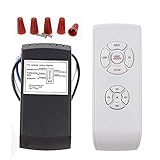
Overview: The LPHUMEX Universal Ceiling Fan Remote Control Kit delivers a straightforward solution for upgrading AC motor ceiling fans with modern remote functionality. Designed as a direct replacement for major brands including Hunter, Harbor Breeze, and Westinghouse, this 3-in-1 system controls fan speeds, lighting, and timing functions. The installation process requires only five wire connections and doesn’t necessitate removing the light kit or blades—simply lower the canopy to access the wiring compartment.
What Makes It Stand Out: This kit’s true universal compatibility with AC motors sets it apart from brand-specific replacements. The one-to-one pairing between remote and receiver ensures interference-free operation, while the included wall cradle provides convenient storage. The receiver’s compact footprint (4.53×1.97×1.06 inches) fits most standard fan canopies, and the system preserves separate control over three fan speeds and light operation.
Value for Money: Priced competitively against OEM replacements that often cost twice as much, this kit offers exceptional value for multi-brand households. DIY installation eliminates electrician fees, and the robust build quality suggests longevity. Compared to basic on/off remotes, the added timing functionality and speed variability justify the modest premium.
Strengths and Weaknesses: Strengths include broad AC motor compatibility, straightforward five-wire installation, clean remote aesthetics, and reliable one-to-one signal pairing. Weaknesses involve the AC motor limitation (not DC-compatible), potential fit issues with compact canopies, and lack of reverse functionality. Users must verify motor type and canopy space before purchase.
Bottom Line: For homeowners with AC motor ceiling fans seeking an affordable, reliable upgrade, the LPHUMEX kit delivers excellent functionality without brand-name pricing. Just confirm your fan’s motor type and canopy dimensions first.
2. Universal Ceiling Fan Remote Control Kit Replacement for Harbor Breeze Hampton Bay Hunter Litex, 3-Speed Light Dimmer with FAN28R Receiver, for 2AAZPFAN53T FAN-53T 11T KUJCE9103 UC7030T

Overview: This CENMING-branded remote kit targets specific replacement scenarios for 110V AC ceiling fans, notably Harbor Breeze and Hampton Bay models. The FAN28R receiver handles up to 240W—substantially more than standard units—while the remote provides three-speed control plus dimming capability for compatible bulbs. Designed for downrod-style fans, it serves as a direct substitute for multiple part numbers including FAN-53T and UC7030T variants.
What Makes It Stand Out: The receiver’s 240W capacity significantly extends operational lifespan by reducing electrical stress, while the luminous green buttons solve nighttime visibility issues. The light dimmer function supports incandescent and select dimmable LEDs, offering nuanced brightness control absent in basic kits. Its precise compatibility list eliminates guesswork for owners of supported models.
Value for Money: While slightly pricier than generic alternatives, the heavy-duty receiver and brand-specific optimization justify the cost. The included wall mount, wire nuts, and comprehensive manual add value, though the required 9V battery isn’t provided. Compared to OEM parts at $50+, this represents meaningful savings without sacrificing quality.
Strengths and Weaknesses: Strengths include the powerful receiver, intuitive dimming controls, glow-in-the-dark buttons, and exact compatibility with major brands. Notable weaknesses are the exclusion of reverse functionality, unsuitability for hugger-style fans, and potential flickering with non-dimmable LEDs. The 9V battery requirement adds ongoing operational cost.
Bottom Line: Ideal for replacing failed remotes in compatible Harbor Breeze or Hampton Bay AC fans, this kit’s robust receiver and dimming features make it a smart mid-range choice. Verify your fan’s reverse switch location and bulb type before purchasing.
3. uaelua Universal Ceiling Fan Remote Control Kit Replacement, 6-Speed & Timing, Remote Replacement for DC Ceiling Fan Light

Overview: The uaelua kit addresses a critical market gap: DC motor ceiling fan control. While most universal remotes exclusively support AC motors, this unit offers six-speed control and timing functions specifically for DC fan systems. The sparse product details suggest a focus on core functionality over marketing fluff, appealing to technically savvy buyers who understand their fan’s motor specifications. It serves as a replacement for lost or malfunctioning DC fan remotes.
What Makes It Stand Out: DC motor compatibility is this kit’s primary differentiator, as DC fans are increasingly common for their energy efficiency yet remain underserved by aftermarket remotes. The six-speed granularity provides finer airflow control than typical three-speed units, while timing functions enhance energy savings. This specialization makes it invaluable for DC fan owners with limited options.
Value for Money: Pricing is difficult to benchmark due to minimal competition in the DC remote space, but the specialized nature likely commands a premium over AC equivalents. For DC fan owners facing OEM replacement costs exceeding $60, this represents potential savings. However, the lack of detailed specifications requires a leap of faith regarding build quality and exact compatibility.
Strengths and Weaknesses: Key strengths are DC motor support, six-speed precision, and timing capabilities. Significant weaknesses include minimal product information, unknown brand reputation, unspecified receiver dimensions, and unclear bulb compatibility. The absence of customer support details or warranty information raises reliability concerns.
Bottom Line: If you own a DC ceiling fan and need remote replacement, this is one of few viable options. Confirm your fan’s voltage and wiring schematic before ordering, and purchase from a retailer with solid return policies to mitigate compatibility risks.
4. 85112-04 Hunter Fan Ceiling Fan Replacement Remote and Receiver Set.
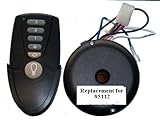
Overview: This OEM Hunter replacement set guarantees factory-spec performance for compatible Hunter ceiling fans. As an original equipment manufacturer part, it eliminates the compatibility uncertainties inherent with universal kits. The model number 85112-04 specifically replaces original Hunter remote systems, maintaining identical functionality and fitment. While lacking detailed feature lists, OEM parts prioritize exact replication over expanded capabilities.
What Makes It Stand Out: The certainty of perfect compatibility is unmatched—every button, function, and wiring connection mirrors the original equipment. This preserves warranty coverage and ensures seamless integration with Hunter’s proprietary receiver protocols. The build quality meets Hunter’s manufacturing standards, using components engineered for specific fan models rather than broad-market compromises.
Value for Money: OEM parts typically cost 40-60% more than universal alternatives, but this premium buys peace of mind. For newer Hunter fans under warranty, using non-OEM parts could void coverage. The investment prevents time-consuming returns and installation headaches common with misfitting universal kits. Resale value of Hunter fans also benefits from maintaining OEM components.
Strengths and Weaknesses: Strengths include guaranteed compatibility, warranty preservation, factory-matched performance, and reliable customer support through Hunter. Weaknesses are the premium price, limited availability, and lack of upgraded features like enhanced dimming or extended range. It won’t add functionality beyond the original remote’s capabilities.
Bottom Line: For Hunter fan owners prioritizing reliability and warranty compliance, this OEM set is the definitive choice. Verify your fan’s model number against Hunter’s compatibility chart before purchasing to ensure proper fitment.
5. 2 Pack Universal Ceiling Fan Remote Control Kits with Light Dimmer 3 Speed Fan Controller Receiver Lamp Dim Remote Replacement for Hampton Bay/Hunter/Harbor Breeze/Westinghouse/Honeywell & More

Overview: This dual-pack kit delivers exceptional value for households with multiple ceiling fans, offering two complete remote systems at a bulk price point. Each unit provides three-speed fan control and dimming functionality for compatible bulbs across major brands including Hampton Bay, Hunter, and Harbor Breeze. The DIP code pairing system allows independent operation without cross-interference, while the straightforward five-wire installation suits DIY enthusiasts.
What Makes It Stand Out: The two-pack configuration provides immediate cost savings over individual purchases and ensures consistent operation across rooms. DIP switch customization prevents signal conflicts in multi-fan homes—a common issue with fixed-code remotes. The comprehensive warranty (30-day money-back, 1-year replacement) demonstrates manufacturer confidence rarely seen in budget electronics.
Value for Money: At effectively half the per-unit cost of single kits, this offering dominates the value proposition. The included warranty mitigates reliability concerns, while the ability to control two fans with independently coded remotes adds practical utility. Even if only one fan needs immediate replacement, the spare provides backup or future expansion.
Strengths and Weaknesses: Strengths include unbeatable bulk pricing, DIP code security, broad AC motor compatibility, dual warranty protection, and included wall mounts. Weaknesses comprise the AC motor limitation, potential LED flickering with non-dimmable bulbs, exclusion of reverse control, and the required 9V batteries (not included). Installation requires adequate canopy space for receivers.
Bottom Line: This two-pack represents the best value for multi-fan households or proactive homeowners wanting a spare. The DIP pairing feature and strong warranty make it a smart, economical choice—just stock up on 9V batteries and verify your fans use AC motors.
6. 53T Kit Universal Ceiling Fan Remote Control, Replacement for Harbor Breeze Hampton Bay Hunter Litex, 3-Speed Light Dimmer FAN28R Receiver, Replace KUJCE9103 CHQ7030T UC7030T FAN-53T 2AAZPFAN53T Kit

Overview:
The 53T Kit delivers a comprehensive replacement solution for popular ceiling fan brands including Harbor Breeze, Hampton Bay, and Hunter. This universal remote and receiver combo restores full fan and light control without requiring complete fixture replacement. Installation involves matching DIP codes between old and new remotes, making it particularly suitable for homes with multiple fans where signal interference prevention is essential. The five-wire setup connects directly to existing fan wiring for straightforward DIY installation.
What Makes It Stand Out:
The DIP code synchronization system enables independent operation of multiple ceiling fans without cross-signal interference—a critical feature often missing in universal kits. With compatibility spanning over a dozen specific models and ETL safety certification, this kit balances versatility with verified performance. The receiver design allows installation without removing light kits or blades, significantly reducing labor time.
Value for Money:
Positioned in the mid-range price tier, this kit justifies its cost through extensive brand compatibility and included safety certification. Brand-specific replacements typically cost 30-50% more while offering narrower application. The complete hardware package (screws, wire nuts, manual) eliminates additional purchases, though the required A23 battery must be bought separately.
Strengths and Weaknesses:
Strengths include wide model compatibility, ETL safety listing, effective DIP code system, and clear installation instructions. Weaknesses comprise no reverse function, limited LED dimming (on/off only), absent battery, and potential canopy space constraints with the receiver size. The DIP setup, while precise, requires more effort than auto-pairing alternatives.
Bottom Line:
Ideal for multi-fan households needing independent control without signal conflicts. The DIP system ensures reliable operation but demands careful setup. Verify your fan model and measure canopy space before purchasing. Perfect for DIY-capable homeowners seeking a safe, cost-effective replacement that covers numerous major brands.
7. Ceiling Fan Remote Replacement Hunter 99770, Universal Ceiling Fan Remote Control Kit Compatible with Hunter Hampton Bay Harbor Breeze,with Dimmer Light,3 Speed Control with Wall Mount
Overview:
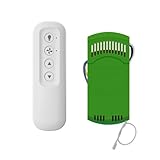
This universal remote kit specifically targets Hunter and Casablanca models while claiming 95% compatibility across major ceiling fan brands. It replaces numerous Hunter remote numbers (99770, 99729, 99198, etc.) and provides separate control of fan speed and light brightness. The package includes a wall mount holder for convenient storage and organization, converting pull-chain fans to modern remote operation.
What Makes It Stand Out:
The “learn” button pairing system eliminates tedious DIP switch configuration entirely—simply point the remote at the receiver and click to synchronize. This instant pairing saves significant installation time and reduces setup errors. The extensive Hunter/Casablanca compatibility list provides confidence for owners of these premium fans, while the wall mount adds value typically sold as an accessory.
Value for Money:
Competitively priced against official Hunter replacements that often cost twice as much, this kit delivers premium brand compatibility at a budget-conscious price point. The included wall mount and comprehensive receiver hardware represent solid value. However, the 95% universal compatibility claim should be verified against your specific fan model before purchase.
Strengths and Weaknesses:
Strengths include effortless learn-button pairing, detailed Hunter model support, included wall mount, and straightforward three-wire installation. Weaknesses are no reverse function, limited LED dimming (incandescent-only brightness control), missing 3V battery, and potentially optimistic universal compatibility claims that may not cover all fan types.
Bottom Line:
Excellent choice for Hunter and Casablanca owners seeking frustration-free replacement. The learn-button pairing is a major advantage over DIP-switch models. Confirm your specific model number matches the compatibility list before ordering. While LED dimming is restricted, the core functionality and installation simplicity make it a top-tier option for brand-specific replacements.
8. Ceiling Fan Remote Control Kit, Timing Wireless Remote Control

Overview:
This feature-rich universal kit distinguishes itself through integrated timing functions and exceptional warranty coverage. Compatible with 98% of ceiling fans from Hunter, Harbor Breeze, Westinghouse, and Honeywell, it transforms traditional pull-chain models into programmable, remote-controlled systems. The kit emphasizes convenience through automated operation and user-friendly tactile design.
What Makes It Stand Out:
Four timing presets (1, 2, 4, and 8 hours) provide automated shutoff capability—perfect for bedrooms, outdoor spaces, or energy-conscious users. The lifetime warranty demonstrates manufacturer confidence rarely seen in this category. Rubber-textured buttons offer superior tactile feedback and durability compared to standard plastic remotes, enhancing daily user experience.
Value for Money:
Outstanding value given the timing functionality and lifetime warranty at a competitive price. Similar kits with timer features typically cost 20-30% more, and warranty coverage is usually limited to one year. For users who regularly use timing features, the premium over basic kits pays for itself through convenience and energy savings.
Strengths and Weaknesses:
Strengths include versatile timing options, comprehensive warranty, quality button construction, and broad 98% compatibility claim. Weaknesses comprise light control limited to on/off (no dimming), requirement to set pull chains to maximum before remote operation, and potential antenna positioning challenges noted in the product description. The receiver size may also challenge smaller canopies.
Bottom Line:
Best suited for users prioritizing timer functionality and long-term reliability. The lifetime warranty provides unmatched peace of mind. While light control is basic, the timing features and build quality make it exceptional for bedroom installations. Verify canopy space and ensure your pull chains are set to maximum speed before installation for optimal performance.
9. Universal Ceiling Fan Remote Control Kit, Wireless Remote Control and Receiver Kits for Lamp, 3-in-1 Ceiling Fan Light Timing and Speed Remote

Overview:
This streamlined universal kit focuses on essential functions without overwhelming complexity. Offering 3-in-1 control for lights, fan speed, and timing, it serves as a straightforward upgrade for most ceiling fan brands. The inclusion of a remote control stand provides convenient storage, while the “reservation function” suggests advanced RF technology that maintains signal reliability through obstacles like walls and ceilings.
What Makes It Stand Out:
The simplified button layout prioritizes intuitive operation over feature density—dedicated controls for light, three fan speeds, and four timer settings (1h, 2h, 4h, 8h) create a one-to-one correspondence between remote and receiver. The obstacle-ignoring signal transmission and reservation function indicate reliable performance in challenging home layouts where line-of-sight operation isn’t possible.
Value for Money:
Positioned as a budget-friendly option, this kit offers fundamental remote functionality with timing features at an accessible price point. However, the vague product description and absence of specific safety certifications or brand compatibility lists may give pause. Value depends entirely on whether your fan falls within the unspecified “most ceiling fan & lamp” category.
Strengths and Weaknesses:
Strengths include simple operation, integrated timing functions, included remote stand, and claimed wide compatibility. Weaknesses are the lack of detailed compatibility information, absence of light dimming capability, no mention of safety certifications (UL, ETL), minimal installation guidance, and unclear receiver specifications regarding size or wiring.
Bottom Line:
Appropriate for basic remote control needs where timing is desired but comprehensive documentation is not critical. The lack of detailed specifications requires buyers to verify fan compatibility through seller communication before purchase. While cost-effective, those seeking confirmed safety standards or premium features should consider alternatives with more robust product information. Best for simple installations.
10. UC7305R Replacement Ceiling Fan Remote Control Receiver Set. Plug and Play Hampton Bay Replacement.

Overview:
The UC7305R Replacement Receiver Set serves a highly specific niche as a direct plug-and-play solution for Hampton Bay ceiling fans originally equipped with UC7305R receivers. Unlike universal kits requiring wiring modifications and compatibility verification, this product focuses exclusively on exact-model replacement. The plug-and-play design promises minimal installation complexity for users needing a precise component match.
What Makes It Stand Out:
True plug-and-play functionality eliminates the wiring and configuration steps universal kits demand. For owners of compatible Hampton Bay fans, this offers a seamless repair path without adapting generic components. The direct replacement approach preserves original fan functionality including light dimming capabilities that universal kits often restrict, maintaining the fan’s intended operation.
Value for Money:
While pricing may exceed basic universal kits, the value lies in guaranteed compatibility and time saved during installation. For those specifically needing UC7305R replacement, the premium is justified by eliminating trial-and-error fitting, potential returns, and modification attempts. The cost of professional installation avoided by true plug-and-play design further enhances value.
Strengths and Weaknesses:
Strengths include exact-model replacement assurance, straightforward installation, and preservation of original fan features. Weaknesses are extremely limited compatibility information, ambiguous package contents (remote inclusion unclear from description), lack of detailed specifications, and narrow application scope that renders it useless for non-UC7305R fans.
Bottom Line:
Purchase only if you have visually confirmed your existing receiver is marked UC7305R. This is a targeted repair part, not a universal solution. For matching models, it provides the simplest replacement path available. All others should select universal kits with broader compatibility guarantees. Verify with the seller that the package includes both receiver and remote before ordering to avoid incomplete sets.
Why Remote and Receiver Sets Are Perfect for Renters
Preserving Your Security Deposit
The primary concern for any renter undertaking improvements is avoiding deductions from their security deposit. Modern remote control kits are specifically engineered for non-permanent installation, utilizing existing wiring connections within the fan’s canopy rather than requiring new holes in walls or ceilings. Most systems connect directly to the wires already powering your fan, meaning no drywall patching or repainting when it’s time to move out. This approach keeps your landlord happy while giving you the modern convenience you deserve during your tenancy.
Temporary Yet Effective Solutions
Unlike hardwired smart switches or built-in wall controls, remote and receiver sets function as an intermediary layer that can be completely removed. The receiver unit tucks neatly into the fan’s mounting bracket, invisible from below, while the remote itself is completely portable. When your lease ends, you can simply disconnect the receiver, reconnect the original wiring configuration, and take the entire system with you to your next home. This portability makes the investment worthwhile across multiple rental properties.
Enhancing Comfort Without Major Renovations
Pull chains break, wall switches are rarely in ideal locations, and climbing on furniture to adjust your fan is both inconvenient and dangerous. Remote systems eliminate these frustrations instantly. Many 2026 models also include dimming capabilities for integrated light kits, reverse functions for seasonal comfort, and programmable timers that help manage energy consumption—features that would otherwise require expensive electrical work in a rental unit.
Understanding the Basics: How These Systems Work
The Transmitter-Receiver Relationship
Every remote control set operates on a simple principle: a handheld transmitter sends a signal to a receiver unit wired into your ceiling fan. The receiver acts as a brain, interpreting your commands and adjusting power delivery to control speed, direction, or lighting. This two-component system is completely self-contained, requiring no changes to your home’s existing electrical infrastructure beyond accessing the fan’s junction box—something any ceiling fan already has.
Frequency Types: RF vs. IR
Radio frequency (RF) remotes have become the standard for ceiling fans in 2026, and for good reason. Unlike infrared (IR) remotes that require line-of-sight and can be blocked by furniture or walls, RF signals pass through obstacles effortlessly. This means you can control your bedroom fan from the living room or adjust the kitchen fan while cooking at the stove. Most systems operate on 433 MHz or 2.4 GHz frequencies, with the latter offering more robust signal strength in homes with multiple wireless devices.
Learning Codes vs. Fixed Codes
Learning code technology represents a significant advancement for renters living in apartments or condos. These systems allow you to pair your remote and receiver with a unique digital signature, preventing interference from neighbors’ remotes. Fixed-code systems, while often cheaper, can sometimes trigger adjacent units in multi-family dwellings. For rental properties, the slight premium for learning code technology is well worth the peace of mind.
Key Features to Look for in 2026
Multi-Speed Control Options
While basic remotes offer three speeds, 2026 models frequently provide five or more discrete speed settings plus a “breeze” mode that randomly varies speed to simulate natural wind patterns. This granular control is particularly valuable in rentals where HVAC systems may be older or less efficient. Look for systems that maintain smooth, quiet operation across all speeds rather than producing noticeable motor hum at lower settings.
Reverse Functionality
Seasonal reversal capabilities have become standard, but implementation varies significantly. The best systems offer a dedicated reverse button on the remote rather than requiring you to access a manual switch on the motor housing. This feature alone can justify the upgrade, as it transforms your fan from a summer cooling tool into a year-round air circulation system that pushes warm air down during winter months.
Light Dimming Capabilities
If your ceiling fan includes an integrated light kit, dimming functionality adds tremendous value. Modern receivers can handle LED, CFL, and incandescent bulbs, with smooth dimming curves that prevent flickering. Some advanced systems even remember your last brightness setting, eliminating the jarring experience of full-blast lighting when you just want a gentle glow for movie night.
Timer and Scheduling Features
Programmable timers allow you to set your fan to run for specific durations—from 30 minutes to 8 hours—perfect for falling asleep without leaving the fan running all night. More sophisticated systems include daily scheduling, so your bedroom fan can automatically create a cooling breeze before your typical bedtime, then switch to a gentle circulation mode overnight.
Installation Considerations for Rental Properties
Non-Invasive Mounting Options
The installation process for most remote kits requires only that you can access the fan’s canopy—the decorative cover where it meets the ceiling. You’ll need to turn off the circuit breaker, remove the canopy, and connect the receiver’s wires to the existing fan wires using wire nuts. This entire process leaves no permanent marks and can be reversed in under 30 minutes. Some newer models even use quick-connect terminals that eliminate wire nut twisting entirely.
Tools You’ll Need
Your toolkit should include a non-contact voltage tester (essential for safety), a screwdriver, wire strippers, and possibly a ladder. No drywall saws, fish tape, or electrical boxes required. This minimal tool requirement makes the project accessible even for renters who’ve never undertaken electrical work. Always photograph the original wiring configuration before disconnecting anything—that photo becomes your restoration guide when moving out.
When to Call Your Landlord
While most installations are renter-friendly, you should review your lease agreement and consider notifying your landlord, especially if electrical work makes you uncomfortable. Some landlords appreciate the upgrade and may even reimburse you for the cost. Others require written permission for any electrical modifications, even temporary ones. A brief email with product specifications and installation details can prevent misunderstandings later.
Power Source Options and Battery Life
Remote Battery Types
Most remotes in 2026 use either coin cell batteries (CR2032) or AAA batteries. Coin cells offer a slimmer remote profile but typically last 12-18 months, while AAA batteries can provide 2-3 years of life but create a bulkier design. Some premium models now feature rechargeable lithium-ion batteries with USB-C charging, eliminating battery replacement costs entirely—a smart choice for environmentally conscious renters.
Receiver Power Draw
The receiver unit draws minimal standby power—typically less than 1 watt when the fan is off. This parasitic draw is negligible on your electricity bill but worth considering if you’re particularly energy-conscious. Some 2026 models include a “vacation mode” that reduces standby consumption to nearly zero when you’re away for extended periods.
Energy Efficiency Ratings
Look for receivers with Energy Star certification or similar efficiency ratings. While not all manufacturers pursue formal certification, those that do have demonstrated that their standby power consumption and operational efficiency meet strict guidelines. This consideration becomes more important in rentals where you’re already managing utility costs carefully.
Range and Signal Strength Factors
Typical Range Expectations
Standard RF remotes in 2026 offer ranges between 50-100 feet in open space, which translates to 30-50 feet through typical residential walls and floors. For most apartments and single-story rentals, this is more than sufficient. Two-story homes may require systems with extended range or signal repeaters if you want to control upstairs fans from downstairs.
Obstacles That Interfere
Metal objects, particularly HVAC ductwork and metal lathe behind plaster walls, can significantly reduce signal strength. Concrete floors between stories in multi-level rentals also create challenges. When shopping, look for systems that explicitly mention “metal construction compatibility” or “high-penetration signal technology” if you suspect these obstacles exist in your rental.
Signal Booster Options
For unusually challenging layouts, some manufacturers offer plug-in signal repeaters that boost the remote’s range without requiring any hardwiring. These simply plug into a wall outlet halfway between your typical remote location and the fan. While adding to the overall cost, they’re completely portable and solve signal issues in older buildings with dense construction.
Compatibility with Existing Ceiling Fans
Motor Type Considerations
Ceiling fan motors fall into two categories: AC induction motors (traditional) and DC motors (modern and efficient). Most 2026 remote kits work with both types, but DC motors often require specific receivers that can handle their electronic speed control systems. Check your fan’s manual or motor housing label before purchasing. If you’ve inherited an older fan in your rental, AC motor compatibility is almost universal.
Wiring Requirements
Standard ceiling fans have three wires: hot (black), neutral (white), and ground (green or bare copper). The remote receiver sits between the ceiling’s wiring and the fan’s wiring, requiring connection points for each. Some fans with integrated lights add a fourth wire (blue) for the light kit. Ensure any remote system you consider matches your fan’s wire count. Adapters exist for unusual configurations, but they’re best avoided in rental situations.
Downrod vs. Flush Mount
The installation space within the canopy differs between downrod-mounted fans (which hang from a pole) and flush-mount or “hugger” fans (which attach directly to the ceiling). Flush-mount fans offer minimal clearance, requiring compact receivers. Many 2026 models are specifically designed as “low-profile” to fit these tighter spaces. Measure your available canopy height before purchasing if you have a flush-mount fan.
Smart Home Integration Possibilities
Voice Control Compatibility
Even as a renter, you can enjoy voice-controlled ceiling fans without permanent smart switches. Many modern remote receivers include optional Wi-Fi or Bluetooth modules that pair with popular voice assistants. These typically plug into the receiver as a small add-on dongle, leaving the core system unchanged. When you move, simply unplug the module and take it with you. This modular approach lets you experiment with smart home tech without landlord approval.
App-Based Controls
Companion smartphone apps offer advanced scheduling, energy monitoring, and integration with other smart devices. The app connects through the same optional Wi-Fi module, meaning your core remote system remains functional even if you remove the smart features later. Some apps even allow you to control multiple fans from one interface—perfect for renters with ceiling fans in several rooms who want unified control.
Hub Requirements
While some systems require a proprietary hub, many 2026 models connect directly to your rental’s existing Wi-Fi network. This hub-free design is ideal for renters who can’t run additional networking equipment or don’t want to invest in ecosystem-specific hardware. Direct Wi-Fi models typically cost slightly more but eliminate clutter and simplify the moving process.
Aesthetic and Design Considerations
Remote Control Styles
Remote designs range from minimalist credit-card-sized models to more substantial handheld units with backlit buttons. For bedroom use, consider remotes with glow-in-the-dark buttons or motion-activated backlighting that won’t disrupt sleep. Living room fans might benefit from larger remotes with dedicated light and fan buttons that are easy to find between couch cushions. Some systems even offer keychain remotes for true portability.
Wall-Mounted Options
Many kits include wall-mounted holders that attach with adhesive strips or removable command hooks—no drilling required. These create a permanent “home” for your remote, preventing loss while mimicking the convenience of a wall switch. Some advanced models offer battery-powered wall stations that function as secondary remotes, giving you both handheld and fixed control locations without any wiring.
Receiver Housing Visibility
While the receiver itself hides inside the fan canopy, the antenna wire sometimes extends slightly beyond it. Most 2026 models feature ultra-compact antennas that coil neatly within standard canopies, remaining completely invisible. For renters with decorative or unusually shaped canopies, confirm the antenna’s length and flexibility in product specifications to ensure it can be tucked away completely.
Budget Planning for Renters
Price Ranges and What to Expect
Entry-level remote sets in 2026 typically cost between $25-40, offering basic three-speed control and on/off light functionality. Mid-range options at $40-70 add features like dimming, reverse, and timer functions. Premium systems reaching $80-120 include smart home integration, extended range, and advanced scheduling. For most renters, the mid-range sweet spot offers the best balance of features and value.
Cost vs. Feature Analysis
Consider which features you’ll actually use daily. A $30 basic remote that solves the “pull chain problem” delivers 80% of the value of a $100 smart system for many users. However, if you’re renting a two-bedroom apartment with fans in both rooms, a dual-fan capable system might justify the premium. Calculate the cost per year of your lease—an $80 system over a two-year lease costs just $3.33 per month for significant comfort improvement.
Long-Term Value
Unlike paint or custom shelving, a remote control system moves with you. This portability transforms the purchase from a sunk cost into a long-term investment. High-quality systems can last through multiple rental properties, making the initial investment more palatable. Consider it part of your “renter’s toolkit”—like quality showerheads or removable smart locks—that enhances every space you occupy.
Troubleshooting Common Issues
Pairing Problems
Most 2026 systems use a simple pairing process: press a button on the receiver while holding a button on the remote. If pairing fails, ensure you’re within 3 feet during the process and that no other remotes are transmitting nearby. Some systems require a “clear” procedure before initial pairing—check the manual for a factory reset combination. Persistent pairing issues often indicate frequency interference from nearby electronics.
Intermittent Signal Loss
If your fan responds inconsistently, first replace the remote battery—even if it’s relatively new. Weak batteries cause more problems than complete failures. Next, check for new sources of interference like recently installed baby monitors or Wi-Fi extenders. Metal objects placed near the fan can also create dead zones; try moving decorative metal bowls or artwork near the ceiling. As a last resort, some receivers allow you to change transmission channels to avoid interference.
Fan Speed Inconsistencies
When speeds feel “off”—for example, high speed feels like medium—this usually indicates a wiring mismatch. Double-check that the receiver’s output wires connect to the correct fan input wires. Some fans have separate windings for different speeds, and crossing these wires creates unexpected behavior. Also verify that your fan’s capacitor (a small cylinder in the canopy) is functioning properly, as a failing capacitor can cause speed irregularities that seem like remote problems.
Moving Out: A Renter’s Guide
Removing Without Damage
The removal process is simply installation in reverse. Take photos of the current wired configuration, then disconnect the receiver and reconnect the original wires exactly as they were. Use wire nuts to secure connections and wrap them with electrical tape for extra security. The entire process typically takes 15-20 minutes per fan. Keep all original wire nuts and hardware in a labeled bag so you can return them with the fan.
Restoring Original Setup
Before uninstalling, reference the photos you took during initial installation. If you didn’t take photos, most standard fans connect black to black (fan motor), blue to blue (light kit), white to white (neutral), and green/bare to ground. When in doubt, consult your fan’s manual online using the model number from the motor housing. Some landlords may appreciate if you leave the remote system installed—it’s worth asking if they’d like to purchase it from you.
Taking It With You
Pack the remote, receiver, and any documentation in the original box if you still have it. If not, a small plastic storage container works well. Label which fan it came from and the installation date. This organization makes reinstallation in your next rental quick and straightforward. The system’s portability means you can enjoy consistent comfort across every home you rent, making the initial effort worthwhile.
Safety and Compliance
UL Listing and Certification
Underwriters Laboratories (UL) certification is non-negotiable for any electrical device in your rental. UL-listed remote systems have undergone rigorous testing for fire safety, shock hazards, and operational reliability. Look for the UL mark on both the receiver and remote. Some online marketplaces sell uncertified knockoffs at tempting prices—these pose genuine safety risks and could invalidate your renter’s insurance if they cause damage.
Electrical Safety for DIYers
Even with simple installations, safety rules apply. Always turn off the circuit breaker, not just the wall switch. Use a non-contact voltage tester to confirm power is off before touching any wires. Never exceed the receiver’s rated amperage—most handle 1.5-2.5 amps, sufficient for standard fans but potentially inadequate for industrial-style units. If your fan’s motor is larger than 60 inches or the label indicates high amperage, consult an electrician.
Building Code Considerations
Most rental agreements prohibit modifications that violate local electrical codes. Remote receiver installations typically don’t trigger code concerns since they don’t alter the building’s permanent wiring. However, some jurisdictions require that all electrical connections be accessible without tools. The receiver tucked in a fan canopy meets this requirement, but avoiding systems that require you to seal connections behind drywall is wise.
Warranty and Support
What Coverage Typically Includes
Standard warranties cover manufacturing defects for 1-3 years, typically including the receiver, remote, and any included accessories. Damage from power surges, improper installation, or physical drops usually isn’t covered. For renters, the most valuable warranty aspect is often free technical support, which can guide you through troubleshooting without requiring a maintenance call that might alert your landlord to unauthorized modifications.
Renter-Friendly Policies
Some manufacturers explicitly state their products are “renter-approved” or “non-permanent installation friendly.” These companies understand the unique needs of renters and often provide better documentation for removal and reinstallation. Their customer service teams are more likely to help with compatibility questions for older fans commonly found in rental properties. Check product reviews for mentions of helpful support—this often indicates a company that stands behind its products.
Technical Support Access
Look for manufacturers offering multiple support channels: phone, email, and live chat. The ability to send photos of your wiring setup to a support technician can be invaluable when dealing with an unfamiliar fan model. Some premium brands even offer video call support, walking you through installation step-by-step. This level of service is particularly valuable for renters who may be installing the system alone without experienced help available.
Frequently Asked Questions
Can my landlord prohibit me from installing a remote control kit? Most standard lease agreements don’t specifically address ceiling fan modifications since these systems are non-permanent. However, you should review your lease for clauses about “alterations” or “electrical work.” A quick email to your landlord describing the temporary, reversible nature of the installation often gets approval. If your lease explicitly prohibits any electrical modifications, consider a battery-powered smart fan that sits on a shelf instead.
Will installing a remote control void my fan’s warranty? If your ceiling fan is still under manufacturer warranty, adding an aftermarket remote could potentially void coverage. However, most fans in rental properties are past their warranty period. The remote system’s own warranty covers its components but won’t extend to the fan itself. If you’re concerned, check the fan’s age and warranty status first. Some fan manufacturers offer their own remote kits designed specifically for their models, which preserve warranty coverage.
What if my rental has high ceilings or a flush-mount fan? High ceilings actually make remote systems more valuable since pull chains become completely inaccessible. Standard receivers work fine with downrod extensions. For flush-mount fans, verify the canopy height measurement before purchasing. Many 2026 models are specifically labeled “low-profile compatible” and fit in as little as 2 inches of clearance. If space is extremely tight, some receivers can mount above the fan motor on the mounting bracket itself.
How do I know if my fan is compatible before buying? Check your fan’s motor housing for a label showing amperage draw and motor type (AC or DC). Most remote kits list their maximum amperage rating (typically 1.5-2.5A) and compatible motor types. If your fan has separate wires for the motor and light kit (usually black and blue), it’s compatible with virtually any system. Fans with integrated LED light kits that don’t have a separate wire may require a system specifically designed for LED compatibility.
Can I control multiple fans with one remote? Many 2026 systems offer multi-fan control, but implementation varies. Some allow you to pair one remote to multiple receivers, controlling all fans simultaneously—ideal for open-concept spaces. Others offer “zone” control where you can switch between fans on the remote. For true independent control of multiple fans, you’ll typically need separate systems. Consider whether synchronized or individual control better suits your rental’s layout before investing.
What happens during a power outage? Standard remote systems return to their previous state when power is restored—the fan will resume its last speed and light setting. This is generally desirable, but if you prefer everything to stay off after an outage, look for systems with “power failure memory” that can be configured. Smart-enabled systems may require you to reconnect to Wi-Fi after extended outages, though basic remote functions continue working independently of internet connectivity.
Are there renter’s insurance implications? Most renter’s insurance policies cover damage from electrical devices regardless of who installed them, provided the installation was done properly. However, using uncertified equipment (non-UL listed) could potentially be grounds for claim denial. Keep your purchase receipt and product specifications showing UL certification. If a fire investigator determines a non-certified remote caused damage, you could face liability and coverage issues.
How long does installation typically take? For someone comfortable with basic electrical safety, installation takes 20-30 minutes the first time, including reading instructions and taking photos. Subsequent installations in other rooms might take 15 minutes. The process involves turning off power, removing the canopy, connecting four to five wire pairs with wire nuts, tucking in the receiver, and replacing the canopy. If you’re unsure, budget an hour for your first installation to work carefully and double-check each step.
Can I take the system with me when I move? Absolutely—this is the primary advantage for renters. The system is completely portable. Document the original wiring configuration during installation, then simply reverse the process when moving out. The only limitation is if the next rental doesn’t have ceiling fans, in which case you might need to purchase standalone fans to use with your remote system. Some renters gift their installed systems to the landlord as a selling point for the next tenant.
What if I have a ceiling fan with no light kit? Remote systems work perfectly with fan-only installations—you simply won’t connect the receiver’s light output wire. Many remotes have a light button that would be non-functional in this scenario. Some manufacturers offer fan-only remotes at a slightly lower price point, but the difference is minimal. Consider whether you might add a light kit later (many fans support this upgrade), in which case having the light control functionality already installed saves future effort.
See Also
- 10 Ceiling Fan Remote and Receiver Sets That Solve Connection Issues in 2026
- 10 Most Durable Ceiling Fan Remote and Receiver Sets Based on Real User Reviews in 2026
- 10 Ceiling Fan Remote and Receiver Sets That Solve Compatibility Issues in 2026
- 10 Best Ceiling Fan Remotes for Lost Remote Replacement in 2026
- 10 Essential Ceiling Fan Mounting Hardware Sets Every Homeowner Needs in 2026