Table of Contents
The modern home is evolving faster than ever, and lighting control sits at the heart of this transformation. As we move through 2026, smart light switches have shifted from luxury gadgets to essential home infrastructure, offering homeowners unprecedented control over their environment, energy consumption, and security. These intelligent devices do far more than turn lights on and off—they serve as the nervous system of your connected home, integrating with everything from your morning routine to your vacation security protocols.
Understanding what makes a smart switch truly essential requires looking beyond flashy marketing claims to the core features that will serve your household for years to come. Whether you’re renovating a century-old house or building a cutting-edge smart home from scratch, the right lighting controls can reduce your energy bills, enhance convenience, and create layered lighting scenes that adapt to your lifestyle automatically. This guide walks you through the critical capabilities and considerations that separate future-ready switches from outdated models that will leave you wanting more.
Top 10 Smart Light Switches
Detailed Product Reviews
1. Kasa Smart Light Switch HS200P3, Single Pole, Needs Neutral Wire, 2.4GHz Wi-Fi Light Switch Compatible with Alexa and Google Home, UL Certified, No Hub Required, 3 Count -Pack of 1 , White

Overview: The Kasa HS200P3 three-pack delivers TP-Link’s proven smart switch technology in a cost-effective bundle for whole-home automation. These single-pole switches require neutral wiring and connect via 2.4GHz Wi-Fi, integrating seamlessly with Alexa and Google Home without a hub. Designed in Silicon Valley and UL certified, each switch supports remote control, voice commands, and advanced scheduling through the intuitive Kasa app.
What Makes It Stand Out: The three-pack configuration offers exceptional value for multi-room installations while maintaining Kasa’s trusted reliability. The “Away Mode” security feature randomly activates lights to simulate occupancy, and the app-guided installation simplifies setup for DIY enthusiasts. With over 4 million users, Kasa’s ecosystem provides consistent performance and regular updates.
Value for Money: At approximately 30% less per unit than individual purchases, this bundle significantly reduces the cost of comprehensive smart lighting. While requiring a neutral wire (standard in most post-1980s homes), it eliminates ongoing subscription fees. Comparable hub-free switches from competitors like Leviton or Lutron often cost 40-50% more per unit.
Strengths and Weaknesses: Strengths include rock-solid app stability, broad voice assistant compatibility, robust scheduling options, and UL safety certification. Weaknesses center on the 2.4GHz-only limitation (no 5GHz support) and the absolute requirement for neutral wires, making professional installation necessary in older homes. The white-only color option may not match all décor.
Bottom Line: The HS200P3 is the smartest choice for homeowners ready to automate multiple rooms. The upfront savings and reliable performance outweigh installation constraints, making it the top value pick for Kasa ecosystem adopters.
2. Kasa Smart Light Switch HS200, Single Pole, Needs Neutral Wire, 2.4GHz Wi-Fi Light Switch Works with Google Home, UL Certified, No Hub Required, White

Overview: The Kasa HS200 single switch serves as the entry point to TP-Link’s comprehensive smart home ecosystem. This single-pole switch requires neutral wiring and operates exclusively on 2.4GHz Wi-Fi, offering hub-free integration with both Alexa and Google Assistant. The UL-certified design includes remote access, voice control, and automated scheduling through the highly-rated Kasa app.
What Makes It Stand Out: As the standalone version of America’s bestselling smart switch, it delivers proven reliability without committing to a multi-pack. The step-by-step app-guided installation makes DIY setup accessible, while the compact 4.13" depth fits most electrical boxes. The “Away Mode” security feature provides peace of mind during vacations.
Value for Money: Priced competitively at $15-18 per unit, it’s slightly more expensive than the three-pack on a per-switch basis but ideal for testing or single-room applications. Unlike budget alternatives, Kasa’s four-million-user infrastructure ensures long-term app support and firmware updates. Professional installation costs remain the primary hidden expense for homes lacking neutral wires.
Strengths and Weaknesses: Strengths include intuitive app control, dual voice assistant compatibility, reliable scheduling, and strong safety certifications. The 2.4GHz-only constraint may cause connectivity issues in crowded Wi-Fi environments. Requiring a neutral wire limits compatibility with older homes. No multi-way switching support restricts installation flexibility.
Bottom Line: Perfect for newcomers to smart home technology or those needing just one switch. Start here to validate Kasa’s ecosystem before expanding. The proven reliability and feature set justify the modest premium over no-name alternatives.
3. Kasa Smart Switch 2-Gang HS200-2, Single Pole,Neutral Wire Required, 2.4GHz Wi-Fi Light Switch Compatible with Alexa and Google Home, UL Certified, No Hub Required, White

Overview: The Kasa HS200-2 2-gang switch consolidates two independent smart controls into a single elegant wall plate. This space-saving solution manages separate circuits while requiring just one gang box and neutral wire connection. Operating on 2.4GHz Wi-Fi, it supports Alexa, Google Assistant, and SmartThings without a hub, delivering full Kasa functionality in a streamlined form factor.
What Makes It Stand Out: This model eliminates wall clutter by replacing two separate switches with one flush-mounted unit. Each button controls its own circuit independently through the Kasa app, voice commands, or manual operation. The clean aesthetic suits modern renovations where multiple switches previously created visual chaos. It’s the only Kasa switch designed specifically for dual-circuit control.
Value for Money: At roughly 1.6x the price of a single HS200, it saves money versus buying two separate switches while reducing installation labor. However, it requires a specific two-gang electrical box, potentially necessitating drywall modifications. For new construction or remodeling, it’s a no-brainer upgrade that adds property value.
Strengths and Weaknesses: Strengths include superior space efficiency, independent circuit management, and maintaining Kasa’s robust feature set. The primary weakness is limited compatibility—it’s unsuitable for single-gang boxes or three-way configurations. Installation complexity increases for novices managing two load wires. The 2.4GHz-only limitation persists.
Bottom Line: Ideal for modernizing double-switch locations. The streamlined design and cost savings make it essential for renovations, though verify your gang box compatibility before purchasing. A specialized but valuable tool in the Kasa lineup.
4. Amazon Basics Smart Light Switch, Single Pole, Works with Alexa Only, Voice Control, Schedule, 2.4 GHz Wi-Fi, No Hub Required, Easy to Install, White
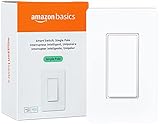
Overview: Amazon Basics offers a budget-conscious smart switch exclusively for Alexa ecosystems. This single-pole switch operates on 2.4GHz Wi-Fi without requiring a hub, delivering fundamental smart lighting control through the Alexa app. While lacking Google Home integration, it provides scheduling, voice control, and remote access for Prime households invested in Amazon’s infrastructure.
What Makes It Stand Out: The aggressive pricing undercuts major brands by 30-40%, making it accessible for cost-sensitive shoppers. Setup leverages Amazon’s ecosystem with guided video installation, creating a frictionless experience for Alexa veterans. The no-frills design focuses on core functionality without overwhelming casual users.
Value for Money: This is the cheapest UL-listed smart switch from a major retailer, though long-term software support remains unproven. The Alexa-only limitation eliminates flexibility but streamlines operation for dedicated Amazon households. Compared to Kasa’s dual-ecosystem support, you’re trading versatility for savings.
Strengths and Weaknesses: Strengths include unbeatable price, seamless Alexa integration, and straightforward installation guidance. Major weaknesses involve zero Google Home/SmartThings compatibility, basic app features, and uncertain longevity of Amazon’s Basics smart home line. The 2.4GHz restriction and neutral wire requirement still apply.
Bottom Line: Choose this only if you’re exclusively committed to Alexa and prioritize upfront savings over ecosystem flexibility. For multi-platform homes or long-term reliability, invest the extra $5-8 in Kasa. It’s a functional but narrowly-focused budget option.
5. GHome Smart Switches for Lights, WiFi Smart Light Switch Works with Alexa and Google Home, Single-Pole, Neutral Wire Required, 2.4Ghz WiFi Light Switch with APP Control, No Hub Required, UL FCC Listed

Overview: GHome’s smart switch positions itself as a cost-effective alternative to premium brands, supporting both Alexa and Google Home via 2.4GHz Wi-Fi. This single-pole switch requires neutral wiring and offers app-based control, scheduling, and grouping features. UL and FCC certifications provide baseline safety assurance, though the brand lacks Kasa’s established track record.
What Makes It Stand Out: The included jumper wires and competitive pricing target DIY installers seeking maximum value. Group control functionality allows managing multiple switches simultaneously through the GHome app, and the 1800W rating handles high-load applications like outdoor lighting. It’s a feature-complete package at a discount price.
Value for Money: Priced 20-25% below Kasa, it delivers comparable specs on paper. However, the unknown brand’s app ecosystem and long-term firmware support present risks. For rental properties or secondary spaces where absolute reliability isn’t critical, the savings are compelling. Professional installations should stick with proven brands.
Strengths and Weaknesses: Strengths include dual voice assistant support, safety certifications, and attractive pricing. Weaknesses involve an unproven app with occasional connectivity complaints, limited customer support infrastructure, and no legacy in the smart home market. The 2.4GHz-only and neutral wire requirements remain.
Bottom Line: A viable budget option for tech-savvy users comfortable troubleshooting app issues. For mainstream consumers seeking “set it and forget it” reliability, Kasa’s premium is worth paying. Treat GHome as a calculated risk for non-critical applications.
6. TP-Link Tapo Matter Smart Light Switch: Voice Control w/Siri, Alexa & Google Assistant | UL Certified | Timer & Schedule | Easy Guided Install | Neutral Wire Required | Single Pole | Tapo S505

Overview: The TP-Link Tapo S505 represents the next generation of smart switches with Matter certification, enabling seamless integration across all major smart home platforms. This single-pole switch replaces standard wall switches, offering remote control, scheduling, and voice command capabilities through Siri, Alexa, and Google Assistant. The UL-certified design ensures safety while providing professional-grade features for the modern connected home.
What Makes It Stand Out: Matter certification is the headline feature, delivering three critical advantages: universal compatibility across Apple Home, Amazon Alexa, Google Home, and Samsung SmartThings; smooth LAN control that maintains functionality during internet outages; and Multi-Admin support for simultaneous control through multiple platforms. This future-proofs your investment as the smart home industry standardizes around Matter.
Value for Money: Priced at a premium over non-Matter switches, the S505 justifies its cost through unparalleled interoperability and reliability. Equivalent single-platform switches cost $15-20, but lack cross-ecosystem flexibility. For households using multiple voice assistants or planning future smart home expansion, the $25-30 premium eliminates ecosystem lock-in and replacement costs.
Strengths and Weaknesses: Strengths include robust Matter integration, offline LAN reliability, UL safety certification, and comprehensive voice support including Siri. The app-guided installation simplifies setup. Weaknesses include requirement for neutral wire (common but not universal), single-pole limitation (no three-way support), and higher price point. The 2.4GHz-only connectivity may concern some users.
Bottom Line: The Tapo S505 is an excellent choice for tech-forward homeowners seeking maximum flexibility and future-proofing. Its Matter certification solves the smart home fragmentation problem, making it worth the premium for multi-platform households.
7. TP-Link Tapo Smart Light Switch, Single Pole, Neutral Wire Required, 2.4GHz Wi-Fi Light Switch Compatible with Alexa and Google Home, UL Certified, No Hub Required, White, Tapo S500(4-Pack)

Overview: The TP-Link Tapo S500 4-Pack delivers reliable smart switching for budget-conscious homeowners wanting whole-home automation. These single-pole switches replace standard fixtures, offering app and voice control via Alexa and Google Assistant. With UL certification and a 2-year warranty, this package provides trusted brand reliability across multiple rooms without breaking the bank.
What Makes It Stand Out: The exceptional 4-pack value proposition stands out, reducing per-switch cost to nearly half of individual purchases. TP-Link’s established reputation, backed by 8 million global users, ensures reliable performance and ongoing firmware support. The Away Mode security feature randomly cycles lights to simulate occupancy, a sophisticated touch rarely seen at this price tier.
Value for Money: At approximately $40-50 for four switches ($10-12.50 per unit), this represents outstanding value. Individual smart switches typically retail for $15-25 each, making this bundle ideal for whole-home projects. While lacking Matter certification, the cost savings allow outfitting multiple rooms for the price of one premium switch, with minimal sacrifice in core functionality.
Strengths and Weaknesses: Strengths include unbeatable bulk pricing, trusted manufacturer support, UL certification, intuitive app-guided installation, and useful Away Mode. The 2-year warranty exceeds industry standards. Weaknesses include no Matter support (limiting future interoperability), absence of Siri integration, 2.4GHz Wi-Fi limitation, and neutral wire requirement. Single-pole design restricts installation options.
Bottom Line: Perfect for homeowners wanting affordable, reliable smart lighting throughout their house. The Tapo S500 4-Pack prioritizes value and practicality over cutting-edge standards, making it ideal for Alexa/Google-centric homes.
8. TREATLIFE Smart Light Switch Single Pole Works with Alexa, Google Home and SmartThings, 2.4GHz WiFi Timer Smart Switch, Neutral Wire Required, No Hub Required, FCC Listed, 4 Pack
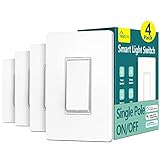
Overview: The TREATLIFE 4-Pack offers entry-level smart switching for budget-focused consumers. These single-pole, on/off switches provide basic remote control and scheduling via the Smart Life app, with voice integration for Alexa, Google Assistant, and SmartThings. Each unit includes a modern screwless wall plate and handles loads up to 1250W, making them suitable for most residential lighting applications.
What Makes It Stand Out: The aggressive pricing combined with included snap-on wall plates delivers immediate aesthetic value. Unlike competitors charging extra for plates, this package provides everything needed for clean installation. The 1250W/10A rating exceeds many rivals, supporting higher-wattage fixtures. Full SmartThings compatibility at this price point is notable for Samsung ecosystem users.
Value for Money: Typically priced under $35 for four switches (under $9 per unit), this is among the most affordable options available. While lacking UL certification (FCC listed instead) and Matter support, the cost savings are substantial—nearly 50% less than premium brands. For rental properties or budget renovations, the value proposition is compelling despite trade-offs in brand recognition and certification standards.
Strengths and Weaknesses: Strengths include lowest-in-class pricing, included screwless plates, high power rating, multi-platform voice support, and straightforward app control. Weaknesses encompass FCC rather than UL safety listing, no Matter certification, absence of dimming, 2.4GHz-only connectivity, and a less-established brand with potentially shorter support lifecycle. Single-pole limitation reduces flexibility.
Bottom Line: A practical choice for cost-sensitive projects where basic functionality trumps advanced features. The TREATLIFE 4-Pack suits landlords, garage conversions, or first-time smart home dabblers willing to accept certification compromises for significant savings.
9. Kasa Smart Dimmer Switch HS220P3, Single Pole, Needs Neutral Wire, 2.4GHz Wi-Fi Light Switch Works with Alexa and Google Home, UL Certified,, No Hub Required, 3-Pack

Overview: The Kasa Smart Dimmer Switch HS220P3 3-Pack addresses the specific need for adjustable lighting, offering true 0-100% dimming control alongside smart connectivity. These single-pole dimmers replace standard switches, enabling precise brightness adjustment via app, voice commands through Alexa/Google Assistant, or physical touch. The UL-certified design integrates seamlessly into the established Kasa ecosystem.
What Makes It Stand Out: The dimming granularity sets this apart from basic on/off switches. Single-click for instant-on and double-click fade-off demonstrates thoughtful user experience design. Scheduling integrates dimming levels—wake to gradual brightening or set evening scenes. The Kasa app’s guided installation and robust ecosystem provide reliability that generic brands cannot match.
Value for Money: Priced around $45-55 for three dimmers ($15-18 per unit), this offers premium features at mid-tier pricing. Individual smart dimmers often exceed $25 each, making this pack economical for multi-room ambiance control. While lacking Matter certification, the specialized dimming functionality justifies the cost for users prioritizing lighting atmosphere over universal protocol support.
Strengths and Weaknesses: Strengths include true dimming capability, intuitive click controls, advanced scheduling with brightness levels, UL certification, and trusted Kasa ecosystem integration. Weaknesses involve no Matter support, neutral wire requirement, single-pole only design, 2.4GHz Wi-Fi limitation, and absence of Siri integration. The 3-pack may not match every project’s needs.
Bottom Line: Ideal for users wanting more than basic on/off control. The Kasa dimmer 3-Pack excels in bedrooms, dining rooms, and living spaces where adjustable ambiance enhances comfort, making it the top choice for dimming-specific applications.
10. Kasa Matter Smart Light Switch: Voice Control w/Siri, Alexa & Google Assistant | UL Certified | Timer & Schedule | Easy Guided Install | Neutral Wire Required | Single Pole | 2.4GHz Wi-Fi | KS205

Overview: The Kasa KS205 represents TP-Link’s Matter-certified smart switch offering, bridging the Kasa ecosystem with universal smart home standards. This single-pole switch replaces traditional fixtures, delivering remote control, scheduling, and voice commands through Siri, Alexa, and Google Assistant. UL certification and the Kasa app’s guided installation ensure safety and simplicity for DIY installers.
What Makes It Stand Out: Matter certification enables cross-platform flexibility while maintaining Kasa’s polished user experience. LAN control keeps lights responsive during internet outages, and Multi-Admin support allows simultaneous management through Apple Home, Alexa, Google Home, and SmartThings. This eliminates ecosystem lock-in while preserving Kasa’s reliable hardware and intuitive app interface.
Value for Money: Positioned at a $25-30 premium over non-Matter switches, the KS205 justifies its price through future-proofing and flexibility. For users already invested in the Kasa ecosystem, it offers seamless integration without sacrificing broader compatibility. Compared to the Tapo S505, it provides equivalent Matter features with the familiarity of Kasa’s established platform, making the choice primarily brand-ecosystem preference.
Strengths and Weaknesses: Strengths include full Matter certification, offline LAN reliability, comprehensive voice assistant support (including Siri), UL listing, Away Mode security feature, and Kasa’s mature app ecosystem. Weaknesses comprise neutral wire requirement, single-pole limitation, 2.4GHz-only operation, and premium pricing. The single-unit packaging may limit whole-home projects.
Bottom Line: The Kasa KS205 is the Matter-ready choice for existing Kasa users or those preferring its ecosystem. It delivers future-proof interoperability without compromising the refined experience Kasa customers expect, making it a smart long-term investment.
Understanding Smart Light Switch Technology in 2026
What Makes a Switch “Smart” in Today’s Market
A smart switch in 2026 does far more than respond to app commands. Today’s essential models feature onboard processing power that enables local automation even when your internet connection fails. Look for switches with real-time clock functionality, onboard memory for custom scenes, and the ability to execute complex logic without cloud dependency. The most capable units include multiple radios that simultaneously communicate across different protocols, ensuring they work seamlessly with both your current devices and whatever you add next year.
Key Protocols and Connectivity Standards
Your smart switch needs to speak the right language to play nice with your broader ecosystem. Wi-Fi 6E has become the baseline for hub-free switches, offering reduced latency and better performance in crowded wireless environments. For larger homes, Thread mesh networking creates self-healing connections that eliminate dead zones without chewing through bandwidth. Zigbee and Z-Wave remain relevant for legacy system compatibility, while Bluetooth LE serves as a reliable fallback for direct phone pairing during initial setup or when other networks fail.
The Role of Matter and Thread in Modern Homes
Matter certification has become non-negotiable for switches you plan to keep beyond 2026. This universal standard ensures your switches work with any major platform today and won’t become obsolete when the next big ecosystem emerges. Thread integration takes this further by creating a robust mesh network where each switch acts as a signal repeater, strengthening your entire smart home backbone. Essential switches now include Thread border router capabilities, allowing them to bridge your Thread devices directly to your Wi-Fi network without a separate hub.
Essential Features to Look For
Dimming Capabilities and Fine-Tuning Control
Basic on/off functionality belongs to the past. Modern essential switches offer 0-100% dimming with customizable ramp rates—the speed at which lights brighten or fade. Look for adaptive dimming that learns your bulbs’ specific characteristics, preventing flicker while maximizing efficiency. The best models include “soft-on” features that gradually wake lights to full brightness, extending bulb life and creating more pleasant transitions. Pay attention to minimum load requirements, especially if you plan to control a single LED bulb.
Multi-Way and Three-Way Switch Support
Your smart switch must handle complex wiring scenarios without requiring you to replace every switch in a circuit. Essential models include dedicated traveler wire terminals and can intelligently communicate with companion switches over existing wiring. Advanced units use wireless three-way configurations, letting you add virtual switches anywhere without running new cables. This flexibility proves crucial in stairwells, long hallways, and large rooms where you need control from multiple entry points.
Energy Monitoring and Consumption Tracking
Real-time power measurement has become a must-have feature for cost-conscious homeowners. Essential switches now provide per-circuit energy data accurate to within 1%, tracking both instantaneous wattage and cumulative consumption. Look for models that store 30+ days of historical data locally and generate reports showing usage patterns, estimated costs, and efficiency recommendations. This data helps identify vampire loads and can automatically trigger alerts when devices draw unexpected power.
Built-in Motion and Ambient Light Sensors
Standalone sensors create clutter and require separate batteries. Essential 2026 switches integrate passive infrared motion detection with ambient light sensing directly into the faceplate. These sensors enable true occupancy-based lighting that considers natural daylight levels before turning on artificial lights. The most advanced models use radar-based presence detection that can sense micro-movements, preventing lights from turning off when you’re sitting still reading or working at a desk.
Compatibility Considerations
Wiring Requirements: Neutral vs. No-Neutral Options
Older homes often lack neutral wires in switch boxes—a dealbreaker for many early smart switches. Essential modern switches include capacitive coupling technology that draws minimal power through the load wire without causing LED ghosting. However, neutral-wire switches remain more stable and support higher loads. If your home was built before 1980, prioritize switches explicitly rated for no-neutral installation while planning to add neutrals during any future electrical work for maximum flexibility.
Hub vs. Hub-Free Operation
The hub debate has evolved. While hub-free Wi-Fi switches offer simple setup, they can strain your network with 20+ devices. Essential switches now provide hybrid operation—connecting directly to Wi-Fi for basic control while optionally integrating with a hub for advanced automation and local processing. Thread-based switches represent the sweet spot, using a border router (often built into smart speakers or Wi-Fi access points) that provides hub benefits without dedicated hardware. Consider your total device count and automation complexity when deciding.
Voice Assistant Integration
Every smart switch claims voice control, but implementation quality varies dramatically. Essential switches support multiple simultaneous assistants without forcing you to choose an ecosystem. Look for local voice processing capabilities that respond in under 200 milliseconds, even during internet outages. The best models include customizable voice commands and can distinguish between different household members’ voices to apply personalized lighting scenes automatically.
Mobile App Ecosystem Quality
A switch is only as smart as its app. Essential switches connect to mature apps offering intuitive scene creation, scheduling with astronomical time (sunrise/sunset), and remote access without monthly fees. The app should provide detailed diagnostics, firmware rollback options, and offline control when you’re home. Test the app’s rating and recent update history—frequent updates indicate active development, but avoid apps with recent major redesigns that alienated long-time users.
Installation and Setup Factors
DIY-Friendly vs. Professional Installation
Most smart switches target DIYers, but essential models include features that simplify tricky installations. Look for switches with wire pigtails instead of rear terminals, making them easier to fit into crowded boxes. Clear LED indicators that show power, network status, and wiring faults during installation save hours of troubleshooting. Some advanced models include auto-detecting terminals that sense line vs. load wires, eliminating the need for a multimeter in ambiguous wiring situations.
Faceplate Design and Aesthetic Options
Your switches live at eye level throughout your home, so appearance matters. Essential switches offer modular faceplates in multiple colors and materials that match modern decor. Look for customizable LED indicator behavior—whether you want subtle status lights or complete darkness in bedrooms. Touch-sensitive models provide sleek, buttonless designs but ensure they include tactile feedback. Consider switches with configurable button layouts, allowing you to choose between single large buttons or separated on/off controls based on room function.
Firmware Update Mechanisms
Security vulnerabilities and compatibility issues make regular updates crucial. Essential switches download firmware automatically but install only with your approval, preventing unexpected downtime. Look for devices with staged rollout support, where updates deploy to one switch first, letting you test before updating your whole home. The best models include offline update capabilities via USB or Bluetooth, ensuring you can patch critical security flaws even if the manufacturer servers disappear.
Network Stability and Range
A switch that drops offline weekly becomes a dumb switch fast. Essential models include dual-band Wi-Fi with intelligent roaming, automatically switching between 2.4GHz and 5GHz based on signal strength. For larger properties, switches with Thread or Zigbee meshing extend network coverage through each device. Look for switches that store and forward commands, ensuring your “all off” scene works even if one switch temporarily loses connectivity.
Advanced Functionality for Modern Homes
Scene Setting and Automation Potential
Essential switches support multi-device scenes that activate with a single tap or voice command. Look for models that store scenes locally and can trigger them based on time, occupancy, or other device states. Advanced switches include conditional logic—“if living room is occupied and it’s after sunset, set lights to 70%.” The best models offer scene inheritance, where bedroom switches automatically adopt bedtime scenes while kitchen switches use cooking scenes, all managed from a central automation engine.
Guest Access and Multi-User Management
Households rarely have just one user. Essential switches support granular permission levels, letting you give guests basic on/off control while reserving dimming and scene editing for family members. Look for temporary access codes that expire automatically and usage logs that show who activated which switch when. The most advanced models integrate with smart doorbells or security systems, automatically granting lighting control to cleaning services or dog walkers during scheduled visits.
Vacation Mode and Security Features
Smart switches should protect your home when you’re away. Essential models include randomized vacation lighting that learns your patterns and creates realistic variations. Look for integration with security systems—lights flashing red during alarm events, or pathways automatically illuminating when motion sensors detect perimeter breaches. The best switches include simulated TV light programs that replicate the flickering glow of a television, making homes appear occupied from outside.
Integration with Other Smart Home Devices
Standalone smart switches deliver limited value. Essential models act as automation triggers for other devices—turning on bathroom lights could trigger the exhaust fan and floor heating. Look for switches with IFTTT-style rule engines built-in, letting you create custom integrations without cloud services. Advanced models include API access for power users who want to build completely custom integrations with home servers or proprietary systems.
Future-Proofing Your Investment
Scalability for Whole-Home Deployment
Starting with one switch often leads to whole-home conversion. Essential switches bulk-configure through apps, letting you clone settings across dozens of devices. Look for batch firmware updates and template-based scene creation that applies consistent logic room-by-room. The best models include project management features in their apps, helping you track which rooms are complete, which need switches, and which circuits require electrical upgrades before installation.
Manufacturer Support and Longevity
The smart home industry has seen countless companies abandon products. Essential switches come from manufacturers with 5+ year track records of supporting legacy devices. Look for companies that provide written commitments to server support and have open-sourced their local control protocols as insurance. Check whether the manufacturer participates in the Matter working group—active involvement suggests they’ll remain relevant as standards evolve.
Privacy and Data Security Measures
Your lighting patterns reveal intimate details about your life. Essential switches process automation logic locally, sending minimal data to cloud servers. Look for switches with hardware encryption chips, secure boot processes, and the ability to block internet access while retaining local control. The most privacy-focused models support local-only operation through HomeKit or similar frameworks, ensuring your lighting data never leaves your home network.
Cost vs. Value Analysis
Budget switches cost less upfront but often require replacement within two years. Essential switches priced in the mid-to-premium range include features that prevent obsolescence. Calculate total cost of ownership—switches with energy monitoring can pay for themselves through identified savings within 18-24 months. Consider multi-button models that replace two or three traditional switches, reducing per-control-point costs while delivering more functionality in a single gang box.
Frequently Asked Questions
Do smart light switches work without internet?
Yes, essential smart switches include local control capabilities. They’ll respond to physical button presses, wall-mounted remote controls, and direct Bluetooth connections from your phone even during internet outages. However, voice commands through cloud-based assistants and remote access from outside your home require internet connectivity.
Can I install smart switches in an old house without neutral wires?
Absolutely. Modern essential switches include no-neutral compatibility for LED loads up to 25 watts. However, you may experience slight LED ghosting (faint glow when off) with certain bulb combinations. For best results, pair no-neutral switches with dimmable LED bulbs rated for smart switch use, or have an electrician add neutrals during other electrical work.
Will smart switches save money on my electric bill?
Energy monitoring switches typically identify 10-15% in lighting-related savings through usage awareness and automation. Occupancy sensors prevent lights from staying on in empty rooms, while dimming lights to 80% reduces energy consumption by 20% with barely noticeable brightness differences. Most homeowners recoup their investment within 2-3 years through direct energy savings and extended bulb life.
Do I need to replace all switches in a three-way circuit?
Not necessarily. Essential smart switches can work with existing mechanical switches in three-way configurations through traveler wire connections. For wireless three-way setups, you can install one smart switch and add battery-powered remote switches anywhere without new wiring. This hybrid approach saves money while delivering full smart control.
Are smart switches secure from hackers?
Essential switches include multiple security layers: WPA3 encryption for Wi-Fi, secure boot processes, and automatic security updates. The biggest vulnerability is weak network passwords, not the switches themselves. For maximum security, isolate switches on a separate IoT VLAN and choose models that support local-only control, blocking internet access entirely while retaining full functionality within your home.
What happens if the manufacturer goes out of business?
Switches with Matter and Thread support continue functioning indefinitely through local control. Essential models also support open-source home automation platforms like Home Assistant, ensuring long-term viability. Avoid switches that require proprietary cloud services for basic operation, and test local control by temporarily disconnecting your internet during the return period.
Can smart switches control ceiling fans or fireplaces?
Standard smart switches cannot control inductive fan motors or high-voltage fireplace igniters without specialized models. Essential switch lines include fan-rated versions with appropriate motor control circuitry and fireplace-rated models with high-voltage isolation. Never use a basic lighting switch for these applications, as it creates fire hazards and will fail prematurely.
How many switches can my Wi-Fi network handle?
Most consumer routers support 32-50 devices per band before performance degrades. Essential Thread and Zigbee switches don’t count against this limit since they use mesh networking. If planning 20+ Wi-Fi switches, upgrade to a Wi-Fi 6E mesh system or choose Thread-based switches that use a border router. Hybrid switches that support both Wi-Fi and Thread give you flexibility to optimize as your network grows.
Will smart switches work with my existing LED bulbs?
Most dimmable LED bulbs work, but compatibility varies. Essential switches include adaptive dimming technology that tests your bulbs during setup and adjusts parameters to prevent flicker. For guaranteed compatibility, check the switch manufacturer’s published bulb compatibility list. Non-dimmable switches work with any on/off LED bulb, while smart bulbs should not be controlled by smart switches (use smart buttons instead).
Can I paint smart switch faceplates to match my walls?
Yes, but with precautions. Essential switches offer paintable faceplate options with smooth, non-porous surfaces. Remove the faceplate, clean with alcohol, apply a plastic-adhesion primer, then use latex paint. Avoid painting over sensors, buttons, or LED indicators. For best results, order custom-colored faceplates from the manufacturer, as painting may void warranties and interfere with wireless signals if paint contains metallic pigments.
See Also
- 10 Essential Smart Light Bulbs Every Home Office Needs in 2026
- 10 Best Smart Light Switches for Energy Efficiency This Year
- 10 Essential E26 Smart Bulbs Every Smart Home Owner Needs in 2026
- 10 Essential A19 Smart Bulbs Every Modern Home Needs in 2026
- Top 10 Best Smart Light Switches for Modern Homes in 2026