Table of Contents
Imagine walking into your home and having the lights automatically adjust to your mood, the time of day, or even the movie you’re about to watch. That’s not science fiction—it’s the reality that Z-Wave lighting controllers are delivering to smart homes in 2026. As home automation technology continues to evolve at breakneck speed, Z-Wave remains the backbone of reliable, responsive lighting control for enthusiasts who demand both performance and flexibility.
Whether you’re just dipping your toes into the world of smart lighting or you’re a seasoned automation veteran looking to upgrade your existing setup, understanding the landscape of Z-Wave controllers is crucial. These devices do far more than simply turn lights on and off; they form the nervous system of your intelligent home, communicating seamlessly across a robust mesh network that gets stronger with every device you add. Let’s explore what makes these controllers essential and how to choose the right solutions for your specific needs.
Top 10 Z-Wave Lighting Controllers
Detailed Product Reviews
1. Zooz 800 Series Z-Wave Long Range Scene Controller ZEN32 800LR, White | Z-Wave Hub Required

Overview:
The Zooz ZEN32 800LR is a versatile in-wall scene controller that combines a main load-controlling button with four dedicated scene buttons. Built on the latest 800 series Z-Wave chip, it handles up to 150W of LED lighting while simultaneously serving as a central command point for your smart home. The device supports both traditional mesh networking and the new Z-Wave Long Range technology, extending reliable connectivity throughout your property.
What Makes It Stand Out:
The direct 3-way capability sets this apart from competitors—no expensive add-on switches required, just a neutral wire and proper rewiring at both boxes. Each of the five buttons supports up to seven trigger types (single tap, double tap, etc.), giving you 35 possible actions from one gang box. The 800 series chip delivers noticeably faster response times and superior signal penetration compared to older 500 series devices.
Value for Money:
At its price point, the ZEN32 replaces two devices: a smart switch and a separate scene controller. Competing solutions often require purchasing add-on switches for 3-way setups, adding $20-30 per location. The S2 security and SmartStart pairing also save valuable installation time.
Strengths and Weaknesses:
Strengths include robust hub support (especially Z-Box), clean multi-device control, and flexible wiring options. Weaknesses are the absolute requirement for a neutral wire, limited compatibility with basic Z-Wave hubs, and the need for custom drivers on some platforms like SmartThings.
Bottom Line:
Ideal for whole-room automation hubs, the ZEN32 excels when you need both local load control and centralized scene management. Verify hub compatibility before purchasing, and ensure your switch boxes contain neutral wires.
2. Zooz 800 Series Z-Wave Long Range Dimmer & Scene Controller ZEN35 800LR, White | Z-Wave Hub Required

Overview:
The Zooz ZEN35 800LR merges dimming functionality with scene control in a single in-wall device. Like its sibling ZEN32, it features a main button for direct 120V lighting control (up to 150W LED) but adds full dimming capability. The 800 series Z-Wave chip enables rapid communication and Long Range support, while maintaining the same seven trigger options per button for comprehensive automation scenes.
What Makes It Stand Out:
This is one of the few devices offering both true dimming and multi-button scene control without requiring separate units. The dimming operation is smooth and flicker-free with compatible LEDs, and you can still access 35 total button triggers across its interface. It inherits the proven 800 series hardware for exceptional signal reliability.
Value for Money:
Positioned similarly to the ZEN32, the ZEN35 justifies its cost by eliminating the need for a standalone dimmer plus scene controller. Third-party dimmer/scene controller combos often cost 30% more or sacrifice button count. The integrated solution reduces wall clutter and installation complexity.
Strengths and Weaknesses:
Strengths include combined dimming/scene functionality, rapid 800 series performance, and flexible trigger options. Weaknesses mirror the ZEN32: mandatory neutral wire, limited hub compatibility, and potential need for custom drivers. The product description lacks detail on 3-way support, though it’s likely similar to the ZEN32.
Bottom Line:
Perfect for bedrooms and living spaces where both dimming and scene control are essential. Confirm with Zooz that your specific hub supports all dimming features before buying, and ensure proper wiring is present.
3. Minoston 800 Series Z-Wave Scene Controller, 4 ZWave Button, Zwave Plus Wall Switch Remote Control, Support Long Range, Work with Z Wave Hubs (MR40Z)

Overview:
The Minoston MR40Z is a battery-powered Z-Wave scene controller offering four programmable buttons in a versatile package. Built on the 800 series chip, it delivers enhanced signal penetration without requiring any wiring. The device fits standard switch boxes or attaches magnetically to surfaces, providing flexible placement anywhere you need convenient smart home control. Each button supports four distinct scenes, enabling 16 total configurations.
What Makes It Stand Out:
True wireless freedom defines this controller—no neutral wire, no electrical box required. The magnetic mounting system allows placement on refrigerators, nightstands, or walls without modification. Its 800 series radio provides superior range over older battery-powered controllers, while S2 security ensures safe operation. The 16-scenario capacity exceeds many competitors in this price class.
Value for Money:
As one of the most affordable 800 series scene controllers, it delivers exceptional value for expanding your Z-Wave network. Battery-powered alternatives from premium brands cost 40-50% more while offering fewer scenarios. Since it’s powered by a replaceable battery, installation costs are zero compared to wired options requiring electrician services.
Strengths and Weaknesses:
Strengths include effortless installation, magnetic mounting flexibility, strong 800 series signal, and generous scene capacity. Weaknesses involve periodic battery replacements, lack of direct load control, and potential functionality limits on basic Z-Wave systems. SmartThings users must manually enable scene features.
Bottom Line:
An excellent choice for adding control points in impossible-to-wire locations. Ideal for renters or supplementing existing switches, but ensure your hub fully supports scene programming before purchasing.
4. Z-Stick 10 Pro - Zigbee 3.0 & Z-Wave 800 Series USB Adapter - Works with HomeAssistant - Zigbee2MQTT - Z-Wave Controller - Z-Wave Long Range - Up to 1 Mile Wireless Range - cloudfree

Overview:
The Z-Stick 10 Pro is a dual-protocol USB adapter supporting both Z-Wave 800 Long Range and Zigbee 3.0 networks. Powered by cutting-edge Silicon Labs chips (EFR32ZG23 for Z-Wave, EFR32MG21 for Zigbee), it serves as a universal gateway for thousands of devices. Compatible with HomeAssistant, Zigbee2MQTT, Z-Wave JS, and other open platforms, it consolidates two network coordinators into one compact dongle.
What Makes It Stand Out:
The 1-mile Z-Wave Long Range capability dramatically extends coverage compared to standard USB sticks. Its dual-radio design eliminates the need for separate Z-Wave and Zigbee coordinators, saving USB ports and reducing system complexity. The slim profile ensures adjacent ports remain accessible—a common frustration with bulkier adapters. With support for over 8000 devices, it covers nearly every ecosystem.
Value for Money:
While priced at a premium, it costs less than buying two separate high-end coordinators. Dedicated Z-Wave 800 LR sticks and Zigbee 3.0 adapters together would run 30-40% higher. For HomeAssistant users building multi-protocol systems, it’s a cost-effective consolidation that also reduces power consumption and USB port usage.
Strengths and Weaknesses:
Strengths include exceptional wireless range, dual-protocol support, compact design, and broad platform compatibility. Weaknesses involve requiring technical expertise to configure, no Windows driver support mentioned, and potential interference from USB 3.0 ports (common with all wireless sticks). Advanced users only.
Bottom Line:
An essential tool for serious home automation enthusiasts running HomeAssistant or similar platforms. Beginners should seek simpler single-protocol options, but power users will appreciate the consolidation and range.
5. Zooz 800 Series Z-Wave Long Range Remote Control & Scene Controller ZEN34 (Battery Powered), White | Z-Wave Hub Required

Overview:
The Zooz ZEN34 is a battery-powered remote and scene controller designed for flexible placement anywhere in your home. Built on the 800 series Z-Wave chip with Long Range support, it provides reliable wireless control up to 1300 feet from your hub. The paddle-style design mimics traditional switches, making it intuitive for all users. It installs in existing switch boxes or adheres to any flat surface via its magnetic base.
What Makes It Stand Out:
The magnetic base enables truly tool-free installation in unconventional locations—think bed headboards, kitchen islands, or garage workbenches. The familiar paddle interface eliminates the learning curve associated with multi-button controllers. Each paddle supports multiple trigger types, and the 800 series radio ensures commands register instantly even at distance. Battery life typically exceeds two years under normal use.
Value for Money:
Priced competitively with other premium battery controllers, the ZEN34 offers superior build quality and Zooz’s excellent support documentation. Cheaper alternatives often use weaker radios requiring repeaters or lack Long Range capability. The versatility of in-box or magnetic mounting provides more installation options than fixed-design competitors.
Strengths and Weaknesses:
Strengths include effortless installation, exceptional range, intuitive paddle interface, and strong hub support. Weaknesses are battery dependence (requires periodic replacement), no direct load control, and limited compatibility—avoid if your hub isn’t explicitly supported. Magnetic adhesion may weaken on textured surfaces.
Bottom Line:
Best-in-class for adding convenient control points without wiring. Perfect for bedrooms, workshops, or anywhere you wish a switch existed. Confirm hub compatibility and stock up on replacement batteries.
6. Z-Wave Wireless Remote Control/Scene Controller, Aeotec WallMote 7, on/Off, dim, Trigger Scenes, add a New Switch Anywhere, Battery Powered, Z-Wave hub Required, Z-Wave Plus, illumino

Overview: The Aeotec WallMote 7 is a versatile Z-Wave 700 series remote control that functions as both a portable controller and scene activator. This battery-powered device eliminates installation constraints, allowing you to add control points anywhere in your home without wiring. It communicates with any Z-Wave hub to command devices, adjust dimming levels, and trigger complex scenes with simple taps.
What Makes It Stand Out: Six multi-tap buttons support diverse commands including on/off, dim/brighten, and scene activation through single, double, and long presses. Its remarkable flexibility allows surface mounting with included tape, junction box installation, or handheld use. The WallMote 7 boasts impressive wireless range—144 feet indoors and 394 feet outdoors—while S2 encryption and SmartStart technology ensure secure, hassle-free pairing with your Z-Wave network.
Value for Money: Priced competitively against premium smart remotes, the WallMote 7 justifies its cost through exceptional versatility and Z-Wave 700 series performance. Unlike fixed-wall controllers requiring electrical work, this battery-powered solution saves installation expenses. The multi-scene capability essentially provides six switches in one device, offering significant value for comprehensive smart home setups compared to purchasing multiple single-function controllers.
Strengths and Weaknesses: Strengths include unparalleled installation flexibility, robust Z-Wave 700 series range, advanced security encryption, and intuitive multi-tap functionality that expands control options. The sleek design integrates discreetly into any décor. Weaknesses involve battery dependency requiring periodic replacement, limited utility without a compatible Z-Wave hub, and a learning curve for programming multi-tap commands. Some users may find the button size small for frequent manual operation.
Bottom Line: The Aeotec WallMote 7 excels for homeowners seeking flexible, wireless control without renovation. Its sophisticated scene management and versatile mounting make it ideal for expanding smart home coverage. Recommended for Z-Wave users wanting portable, multi-function control, though budget-conscious buyers with simple needs may prefer basic alternatives.
7. UltraPro 700 Series Add-On Switch QuickFit and SimpleWire, in-Wall White Rocker Paddle Only, Z-Wave ZigBee Wireless Smart Lighting Controls, NOT A STANDALONE Switch, 2 Pack, 68899

Overview: The UltraPro 700 Series Add-On Switch is a companion device designed to enable multi-location control of smart lighting circuits. This two-pack provides slave switches that must pair with primary Z-Wave or ZigBee smart switches from Enbrighten or UltraPro. It facilitates three-way, four-way, or five-way configurations without requiring traveler wires, simplifying complex lighting setups.
What Makes It Stand Out: Revolutionary QuickFit design reduces housing depth by 20%, easing installation in crowded wall boxes. SimpleWire technology features offset ground ports that cleverly avoid interference from mounting screws. The switch supports both residential (120VAC) and light-commercial (277VAC) applications, offering unusual versatility. Interchangeable paddles in white and light almond are included, with additional colors available separately for seamless aesthetic integration.
Value for Money: This two-pack delivers excellent value for upgrading multiple switch locations economically. Traditional three-way rewiring requires expensive electrician services, while these add-on switches eliminate costly labor and wire runs. Compared to installing separate smart switches at each location, this solution costs significantly less while providing identical functionality. The dual-voltage capability future-proofs your investment for potential commercial applications.
Strengths and Weaknesses: Strengths include innovative space-saving design, straightforward installation without traveler wires, broad compatibility with Enbrighten/UltraPro ecosystems, and flexible voltage support. The two-pack packaging offers cost savings for multi-location projects. Major weaknesses are its complete dependence on a master smart switch—this cannot function independently—and limited compatibility outside the Enbrighten/UltraPro family. The “not standalone” requirement confuses some buyers.
Bottom Line: Perfect for expanding existing Enbrighten or UltraPro smart switch installations to multiple locations without rewiring. The engineering improvements make installation noticeably easier than traditional add-on switches. Only purchase if you already own compatible primary switches, as this serves no purpose as a standalone device.
8. Zooz Z-Wave Long Range Smart Lighting XS Relay ZEN57 800LR | Z-Wave Hub Required (Sold Separately)

Overview: The Zooz ZEN57 800LR is an ultra-compact Z-Wave relay module designed for discreet installation in tight electrical boxes or directly at light fixtures. This dry-contact controller supports up to 150W of LED lighting and connects to any standard toggle or momentary wall switch, enabling smart control without replacing existing switches. It requires a Z-Wave hub and excels in installations lacking neutral wires at the switch box.
What Makes It Stand Out: Its extra-small form factor solves installation challenges in crowded junction boxes or scenarios requiring fixture-mounted placement. The dry-contact input accepts simple mechanical switches while keeping line voltage off the switch terminals for safer operation. Advanced users benefit from smart bulb mode and central scene capabilities when paired with compatible hubs. Built-in timers and customizable parameters provide sophisticated automation without complex programming.
Value for Money: The ZEN57 offers exceptional value for challenging installations where traditional smart switches won’t fit. Its competitive price point undercuts many in-wall alternatives while providing advanced features like S2 security and SmartStart pairing. The 5-year extended warranty (with registration) and lifetime technical support represent outstanding long-term value, particularly for DIY installers who may need troubleshooting assistance.
Strengths and Weaknesses: Strengths include remarkable compactness, versatile dry-contact wiring, robust Z-Wave 800LR range, advanced hub-dependent features, and industry-leading warranty coverage. It solves neutral-wire challenges elegantly. Weaknesses include incompatibility with dimmer or electronic switches, potential confusion about installation location (switch box vs. fixture), and reliance on hub support for advanced functionality. The 150W LED limit may restrict some high-output lighting applications.
Bottom Line: An excellent problem-solver for difficult installations where space or wiring constraints prevent standard smart switch use. The ZEN57’s versatility and strong support make it ideal for experienced DIYers. Ensure your hub supports advanced features to maximize its potential, and verify switch compatibility before purchasing.
9. Enbrighten Z-Wave Plus Fan Control, Works with Alexa, Google Assistant, 3-Way Compatible, ZWave Hub Required, Repeater/Range Extender, Smart Ceiling Fan Control, Smart Switch, White & Almond, 14314
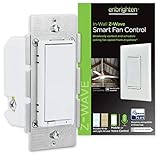
Overview: The Enbrighten 14314 is a dedicated Z-Wave Plus fan speed controller designed specifically for ceiling fan operation. This in-wall switch replaces standard switches to provide wireless control of fan speeds across high, medium, and low settings. It functions as both a smart controller and Z-Wave signal repeater, extending network range up to 150 feet while supporting three-way configurations for multi-location control.
What Makes It Stand Out: Unlike universal dimmers that can damage fan motors, this purpose-built device safely controls fan speeds with appropriate capacitive switching. It uniquely supports control of two fans simultaneously from a single switch location, reducing wall clutter. The integrated range extender functionality strengthens mesh network reliability. Interchangeable white and light almond paddles accommodate existing décor, with additional colors available separately.
Value for Money: Priced similarly to premium smart switches, this fan control justifies its cost through specialized engineering that prevents motor damage. Controlling two fans from one switch effectively provides two smart devices for the price of one, offering meaningful savings. The built-in repeater eliminates the need for separate range extenders, adding value in larger homes. Compared to smart fan receivers requiring canopy installation, this wall-switch solution offers simpler installation.
Strengths and Weaknesses: Strengths include dedicated fan-speed circuitry, dual-fan control capability, signal repeater functionality, three-way compatibility, and flexible paddle options. Installation follows standard switch replacement procedures. Weaknesses include incompatibility with lighting loads (requiring separate switches for lit fans), dependence on Z-Wave hub for smart features, and potential buzzing with certain fan models. The single-location dual-fan wiring may challenge novice installers.
Bottom Line: Essential for Z-Wave users wanting safe, reliable ceiling fan control without damaging motors. The dual-fan capability and built-in repeater make it particularly valuable for larger installations. Ensure your fan wiring is compatible, and pair with a quality hub for optimal performance. Not suitable for lighting control.
10. GE Enbrighten Z-Wave Plus Smart Switch Plug-In, 2 Simultaneously Controlled Z-Wave Outlets, Works with Alexa, Google Assistant, Repeater/Range Extender, ZWave Hub Required, 14282, White

Overview: The GE Enbrighten 14282 is a plug-in Z-Wave Plus switch providing wireless control of two grounded outlets simultaneously. This portable solution requires no wiring—simply plug into any standard outlet and connect to a compatible Z-Wave hub. It enables remote scheduling and voice control of lamps and small appliances while functioning as a Z-Wave signal repeater to extend mesh network coverage throughout your home.
What Makes It Stand Out: Dual outlets controlled in unison effectively automate paired devices without individual outlet pricing. Its space-saving design leaves the second wall outlet free for other uses, while the low-profile form factor fits discreetly behind furniture. The device works with all bulb types plus small appliances, offering unusual versatility for a plug-in switch. Manual on/off buttons provide local control when smartphone access is inconvenient.
Value for Money: This plug-in switch delivers strong value by eliminating installation costs entirely while providing two controlled outlets for the price of one smart device. Compared to installing two separate in-wall switches, the savings are substantial. The repeater functionality adds network value that dedicated smart plugs lack. For renters or those avoiding electrical work, it offers professional-grade Z-Wave control at a fraction of permanent installation costs.
Strengths and Weaknesses: Strengths include true plug-and-play installation, dual-outlet simultaneous control, broad bulb and device compatibility, space-efficient design, and integrated signal repeating. The manual buttons provide welcome backup control. Weaknesses include inability to control outlets independently, limiting flexibility for unrelated devices. It occupies a full wall outlet despite its compact design, and the 15-amp total load restriction prevents use with larger appliances. Hub dependence is absolute for smart features.
Bottom Line: Ideal for renters, beginners, or anyone seeking hassle-free Z-Wave control of paired devices. The dual-outlet design and repeater function maximize utility in a compact package. Perfect for lamps and small appliances, but those needing independent outlet control should consider alternative solutions. A practical entry point into Z-Wave automation.
Understanding Z-Wave Technology in Modern Lighting Control
Z-Wave has quietly become the unsung hero of reliable home automation, operating on a dedicated frequency that avoids the congestion plaguing Wi-Fi networks. This low-power mesh protocol allows lighting commands to hop from device to device, ensuring your commands reach even the farthest corners of your property without frustrating delays or dropouts.
How Z-Wave Mesh Networks Function
Unlike traditional hub-and-spoke systems where every device must communicate directly with a central controller, Z-Wave creates a self-healing mesh where each powered device acts as a signal repeater. When you press a switch in your living room, the signal might travel through your hallway dimmer, then your bedroom fan controller, before reaching that outdoor patio light at the edge of your property. This intelligent routing happens in milliseconds and automatically recalculates if a device goes offline.
Z-Wave vs Other Protocols
While Wi-Fi devices offer simplicity, they can bog down your wireless network and consume significantly more power. Bluetooth provides direct control but lacks the range and mesh capabilities for whole-home coverage. Zigbee competes closely but often suffers from interoperability issues between manufacturers. Z-Wave’s strict certification process ensures that devices from different brands work together flawlessly—a critical consideration when building a cohesive lighting system that you’ll rely on daily.
Key Benefits of Z-Wave Lighting Controllers for Your Smart Home
The advantages of Z-Wave extend far beyond basic on/off functionality. These systems offer a level of sophistication that transforms how you interact with your living spaces, providing both immediate convenience and long-term value to your property.
Reliable Whole-Home Coverage
A single Z-Wave network can support up to 232 devices, with a theoretical range of 100 meters per hop. In practical terms, this means even sprawling estates can achieve complete coverage without range extenders or additional hubs. The mesh nature means your network actually strengthens as you add more powered devices, creating redundant pathways that ensure commands always find their way through.
Enhanced Security Features
Z-Wave’s S2 security framework, now standard on all 2026-certified devices, employs Elliptic Curve Diffie-Hellman encryption—the same technology securing your online banking sessions. This means your lighting commands are protected from interference or malicious actors. For lighting controllers that might be controlling security floodlights or simulating occupancy while you’re away, this level of protection isn’t just nice to have; it’s essential.
Essential Features to Look for in 2026
The Z-Wave ecosystem has matured dramatically, and this year’s controllers offer capabilities that would have seemed futuristic just a few years ago. Knowing which features matter most will help you invest wisely.
Protocol Version Compatibility
Z-Wave Plus and the newer Z-Wave Long Range (Z-Wave LR) protocols offer significant improvements over older versions. Look for controllers supporting the 700 or 800 series chips, which provide extended range, longer battery life for sensors, and faster communication speeds. Backward compatibility ensures your new devices won’t orphan older hardware, but forward-looking protocol support protects your investment as the ecosystem evolves.
Neutral Wire Requirements
Many modern Z-Wave switches require a neutral wire for proper operation, especially dimmers that need constant power to maintain network connectivity. Before purchasing, check your switch boxes—homes built before the 1980s often lack neutral wires in switch loops. Some newer models offer “no-neutral” compatibility, but these may have limitations on minimum load requirements or bulb types.
Multi-Way Switching Support
Three-way and four-way switch configurations (where multiple switches control the same light) are common in hallways and staircases. Quality Z-Wave controllers handle these setups elegantly through virtual three-way technology, allowing any switch in the circuit to communicate with the master controller wirelessly. This eliminates the need for traveler wires and gives you flexibility in placement.
Dimming Capabilities
Not all dimmers are created equal. Look for controllers offering adjustable minimum and maximum dimming levels to prevent LED flicker at low settings or bulbs that won’t turn off completely. Advanced models provide customizable ramp rates (how quickly lights fade on/off) and support for different load types: incandescent, magnetic low-voltage, electronic low-voltage, and LED.
Scene and Zone Control
The ability to control multiple lights simultaneously with a single command transforms your lighting from functional to experiential. Scene controllers let you program “Movie Night,” “Dinner Party,” or “Good Morning” presets that adjust brightness, color temperature, and even bulb colors across multiple zones. Zone grouping allows logical organization of devices by room or function, simplifying automation rules and voice commands.
Types of Z-Wave Lighting Controllers
The market offers several form factors, each suited to different applications and installation scenarios. Understanding these categories helps you plan a cohesive strategy rather than piecing together incompatible components.
In-Wall Switches and Dimmers
These replace traditional switches and provide the cleanest aesthetic integration. Available in various styles from toggle to paddle to button arrays, they offer the most permanent and professional installation. Most include LED indicators showing switch status or dimming level, and many feature air-gap switches for safe bulb replacement. Consider paddle-style controllers for modern homes, while toggle-style might better suit traditional decor.
Plug-In Modules
Perfect for renters or temporary installations, plug-in modules connect between your wall outlet and lamp. They offer the easiest setup—simply pair and plug in—while providing dimming or on/off control for floor lamps, table lamps, or holiday lighting. Some models include two controlled outlets and always-on USB charging ports, adding functionality without consuming additional wall space.
Bulb Adapters and Retrofit Options
These screw into existing light sockets, allowing you to smarten individual fixtures without touching wiring. Ideal for ceiling fans with built-in lights, outdoor fixtures, or rented spaces where electrical work isn’t permitted. While convenient, remember that each adapter consumes a Z-Wave node, and the physical switch must remain on for remote control to function.
Scene Controllers and Keypads
Wall-mounted keypads with multiple buttons provide centralized control for complex lighting scenes. Place one by your entry door to trigger “Away,” “Home,” or “Evening” modes. Battery-powered versions install anywhere without wiring, while mains-powered models act as repeaters. Look for customizable button labels and backlighting that adjusts based on ambient light levels.
Installation Considerations
Proper installation determines whether your Z-Wave lighting system becomes a joy or a frustration. Planning ahead prevents common pitfalls that can derail your automation dreams.
DIY vs Professional Installation
If you’re comfortable working with electrical wiring and understand how to safely de-energize circuits, many Z-Wave switches offer straightforward installation. However, complex multi-way setups, homes with aluminum wiring, or installations involving new circuit runs warrant professional help. The cost of an electrician is minimal compared to the risk of electrical shock or code violations that could complicate future home sales.
Electrical Safety Considerations
Always turn off power at the breaker, not just the switch, and use a non-contact voltage tester to confirm wires are dead before touching them. Take photos of existing wiring before disconnecting anything, and never assume wire colors are standard—always verify with a tester. If your switch box is metal, ensure proper grounding, and check that box fill calculations accommodate the slightly larger size of smart switches.
Integration with Major Smart Home Platforms
A Z-Wave controller’s value multiplies when it plays nicely with your broader smart home ecosystem. Compatibility determines how you interact with your lights daily.
Hub and Gateway Compatibility
While some Z-Wave devices offer standalone operation, most require a central hub. Popular platforms like SmartThings, Hubitat, Home Assistant, and Fibaro each have strengths. SmartThings offers cloud-based convenience and broad device support. Hubitat provides local processing for speed and privacy. Home Assistant gives maximum customization for technical users. Verify your chosen controllers are officially supported by your hub to ensure full feature access and reliable operation.
Voice Assistant Integration
Alexa, Google Assistant, and Siri can all control Z-Wave lighting through compatible hubs. The experience varies—Alexa offers the most robust smart home skills, Google excels at natural language understanding, and Siri provides the best privacy protections. Test voice commands before finalizing your setup; some hubs support more natural phrasing like “dim living room lights to 30%” while others require rigid syntax.
Advanced Automation Capabilities
Beyond manual control, Z-Wave lighting truly shines when you unleash its automation potential. These features transform your home from simply smart to genuinely intelligent.
Scheduling and Timer Functions
Basic scheduling turns lights on/off at set times, but advanced controllers offer astronomical timers that adjust with sunrise/sunset times throughout the year. Randomization features simulate occupancy when you’re on vacation, varying on/off times slightly each day to appear more natural. Look for controllers that store schedules locally, so they continue functioning even if your hub goes offline.
Motion and Sensor-Based Triggers
Link your lighting controllers to Z-Wave motion sensors, door/window sensors, or even moisture detectors. Configure hallway lights to gently illuminate at 20% brightness for late-night bathroom trips. Have your garage lights automatically turn on when the door opens. Set bathroom exhaust fans to run for 10 minutes after the light turns off. The key is granular control—different rules for different times of day prevent annoying activations while maximizing convenience.
Energy Efficiency and Cost Savings
Smart lighting isn’t just about convenience; it’s a powerful tool for reducing energy consumption and utility bills. Modern Z-Wave controllers provide insights and automation that make saving power effortless.
Monitoring Energy Consumption
Many 2026 controllers include built-in energy monitoring, reporting real-time and cumulative power usage for connected lights. This data reveals which fixtures consume the most electricity and helps identify inefficient bulbs. Some hubs can generate monthly reports showing usage trends, making it easy to quantify your savings and identify opportunities for improvement.
Optimizing Usage Patterns
Automation eliminates the classic energy waste of lights left on in empty rooms. Combine occupancy sensors with dimming controllers to maintain adequate lighting at reduced power levels. Use scene controllers to ensure only necessary lights activate for specific activities. The cumulative effect is significant—most households reduce lighting-related energy consumption by 30-40% after implementing comprehensive Z-Wave control.
Troubleshooting Common Issues
Even well-planned systems encounter hiccups. Knowing how to diagnose and resolve common problems keeps your lighting reliable and frustration-free.
Connectivity Problems
If a device becomes unresponsive, first try a network heal—most hubs offer this function, which forces each device to rediscover optimal routing paths. Physical obstacles like new furniture or appliances can block signals, so consider adding a repeater device if issues appear suddenly. Remember that battery-powered devices don’t repeat signals; you need mains-powered controllers to strengthen your mesh.
Firmware Update Issues
Manufacturers regularly release firmware updates adding features or fixing bugs. Always update devices while they’re physically accessible—don’t update that remote attic switch until you’re prepared to manually reset it if something goes wrong. Some hubs allow staged updates during off-hours, while others require manual initiation. Read release notes carefully; occasionally updates introduce changes that require adjusting your automation rules.
Future-Proofing Your Z-Wave Lighting Investment
Technology moves fast, but a thoughtful approach ensures your lighting system remains relevant and expandable for years to come.
Scalability for Future Expansion
Choose controllers that support over-the-air firmware updates and have a track record of manufacturer support. Consider buying a few extra devices during initial installation—having spare identical switches ensures consistent aesthetics and simplifies replacements. Document your device IDs, installation locations, and automation rules in a spreadsheet; this becomes invaluable as your system grows or if you need to rebuild your hub configuration.
Emerging Z-Wave Technologies
Z-Wave LR promises to extend range up to several miles and support thousands of devices on a single network, though it requires compatible hubs. Matter, the new universal smart home standard, is beginning to integrate with Z-Wave bridges, potentially opening your system to a broader ecosystem. While you shouldn’t wait for future standards, choosing devices from manufacturers active in these developments increases the likelihood of upgrade paths.
Frequently Asked Questions
What makes Z-Wave better than Wi-Fi for lighting control?
Z-Wave operates on a dedicated 908.42 MHz frequency (in North America) that doesn’t interfere with your Wi-Fi network. It creates a mesh network where each device extends the range, consumes far less power, and uses standardized protocols ensuring compatibility across brands. Wi-Fi devices can congest your network and typically require cloud connections, introducing latency and potential privacy concerns.
Do I need a neutral wire for Z-Wave switches?
Most modern Z-Wave dimmers and switches require a neutral wire to maintain constant power for the radio and dimming circuitry. However, several manufacturers offer no-neutral compatible models specifically designed for older homes. These work best with incandescent or compatible LED bulbs and may have minimum load requirements. Always check your switch boxes before purchasing.
Can I mix Z-Wave devices from different manufacturers?
Absolutely. The Z-Wave Alliance’s strict certification process ensures interoperability between brands. You can pair switches from one manufacturer with dimmers from another and control them through a third-party hub. This flexibility lets you choose the best device for each application rather than being locked into a single ecosystem.
How many devices can a Z-Wave network support?
A standard Z-Wave network supports up to 232 devices, which is sufficient for most residential applications. The newer Z-Wave Long Range specification supports thousands of devices and extends range dramatically, though it requires compatible hubs and devices. For typical homes, you’ll rarely approach the 232-device limit even with comprehensive lighting control.
Will Z-Wave devices work during internet outages?
Yes, Z-Wave devices communicate locally through your hub. If your hub supports local processing (like Hubitat or Home Assistant), all automation, schedules, and manual controls continue working without internet. Cloud-dependent hubs may lose remote access and voice control but basic switch operation remains functional. Direct Z-Wave associations between devices work completely independently of any hub or internet connection.
What’s the difference between Z-Wave Plus and regular Z-Wave?
Z-Wave Plus (500 series) offers 50% longer battery life, 250% more bandwidth, 67% greater range, and improved pairing procedures compared to original Z-Wave. It also requires mandatory over-the-air firmware updates and supports additional device classes. Most devices sold since 2016 are Z-Wave Plus, and you should prioritize this standard for new purchases.
Can I install Z-Wave switches myself?
If you have basic electrical knowledge and can safely turn off breakers and verify wires are de-energized, many switches are DIY-friendly. However, if your home has aluminum wiring, lacks neutral wires, or requires new circuit runs, hire a licensed electrician. The $100-200 installation cost is worthwhile compared to safety risks and potential code violations.
How do I prevent LED bulbs from flickering with Z-Wave dimmers?
First, ensure your dimmer is LED-compatible and rated for your bulbs’ wattage. Set the dimmer’s minimum level higher (usually 15-20%) to prevent low-end flicker. Some advanced dimmers offer adjustable dimming curves specifically for LED loads. Using high-quality dimmable LEDs from reputable manufacturers also significantly reduces flicker issues.
What happens if my Z-Wave hub stops working?
Your switches will continue functioning as manual controls, but you’ll lose automation, remote access, and voice control. Some devices support direct associations, allowing basic automation between sensors and switches without a hub. Always choose a hub with local processing capabilities and maintain regular backups of your configuration to minimize downtime if replacement becomes necessary.
Are Z-Wave lighting controllers worth the investment?
For most homeowners, yes. Quality Z-Wave switches last 10+ years, reduce energy consumption by 30-40%, and add convenience that becomes indispensable. They also increase home value, with smart lighting consistently ranking among the most desirable tech features for homebuyers. The initial investment typically pays for itself through energy savings within 3-5 years while providing daily quality-of-life improvements.
See Also
- 10 Essential Insteon Devices Every Home Automation Enthusiast Needs in 2026
- How to Choose the 10 Best Z-Wave Lighting Controllers for Your Home in 2026
- 10 Top-Rated Z-Wave Lighting Controllers According to Experts in 2026
- The 10 Ultimate Best Z-Wave Lighting Controllers for Seamless Integration in 2026
- 10 Best Z-Wave Lighting Controllers for Smart Homes in 2026