Table of Contents
Gone are the days when controlling your ceiling fan meant stretching for a pull chain or dealing with a noisy, clunky wall switch that offered nothing more than basic on/off functionality. The landscape of home climate control has undergone a radical transformation, and 2026 brings with it an entirely new generation of intelligent wall switches that turn your ceiling fan into a sophisticated room management system. These aren’t just switches—they’re command centers that learn your preferences, integrate with your entire smart home ecosystem, and provide granular control over airflow, lighting, and energy consumption with unprecedented precision.
As we step into this new era of connected living spaces, understanding what makes these modern switches truly “game-changing” becomes essential for any homeowner looking to upgrade. The technology has evolved far beyond simple speed adjustments, now encompassing everything from AI-driven climate optimization to sleek touchscreen interfaces that complement contemporary interior design. Whether you’re renovating a single room or planning a whole-home automation project, the right ceiling fan wall switch can dramatically enhance both comfort and efficiency while adding a touch of futuristic sophistication to your walls.
Top 10 Ceiling Fan Wall Switches
Detailed Product Reviews
1. ENERLITES 3 Speed Ceiling Fan Control and LED Dimmer Light Switch, 2.5A Single Pole Light Fan Switch, 300W Incandescent Load, No Neutral Wire Required, 17001-F3-W, White

Overview: The ENERLITES 17001-F3-W combines fan speed control and light dimming in a single gang wall switch, eliminating the need for separate controls or pull chains. Designed for mechanical fans with pull-string speed control, this unit handles 2.5A fan loads and 300W incandescent lighting loads. Its standout feature is the no-neutral-wire requirement, making it ideal for older homes with limited electrical boxes. The dual-slider design provides independent control: a three-position fan speed slider and a full-range light dimmer that clicks off at the lowest setting. Pre-wired leads simplify DIY installation significantly.
What Makes It Stand Out: The no-neutral-wire design solves a common retrofit challenge, while the dual-functionality saves wall space. The polycarbonate thermoplastic construction ensures durability, and compatibility with dimmable LEDs, incandescent, and halogen bulbs adds versatility. The pre-wired leads reduce installation time and error potential.
Value for Money: Priced competitively against buying separate fan and light controls, this unit delivers convenience and space savings. The DIY-friendly design eliminates electrician costs, and the ETL listing ensures safety standards. However, wall plates are sold separately, adding to total cost.
Strengths and Weaknesses: Pros include no neutral requirement, dual functionality, durable construction, and easy installation. Cons are the separate wall plate purchase, 300W incandescent limit (verify LED compatibility), incompatibility with remote-controlled or variable-speed fans, and the audible click at lowest dim setting.
Bottom Line: An excellent solution for upgrading older fans in homes without neutral wires. Perfect for mechanical fans with separate light kits, though LED users should confirm bulb dimmability. A solid, space-saving choice for retrofits.
2. ENERLITES 3 Speed In Wall Ceiling Fan Control, Slide switch, 120VAC, 2.5A, Single-Pole, No Neutral Wire Required, 17000-F3-W-F, White
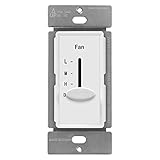
Overview: The ENERLITES 17000-F3-W-F is a dedicated in-wall ceiling fan speed control switch designed for straightforward fan operation without light control complications. This single-pole unit provides quiet three-speed control (low, medium, high) for mechanical ceiling fans, handling up to 2.5A load. Its no-neutral-wire requirement makes it particularly valuable for retrofit installations in older construction where neutral wires may be absent from switch boxes. The decorator-style paddle slider offers intuitive operation with a clean, modern aesthetic.
What Makes It Stand Out: The switch’s focused functionality eliminates confusion by controlling only fan speed. Its polycarbonate thermoplastic construction provides exceptional impact resistance and heat/fade tolerance exceeding 100°F, maintaining appearance over time. The compact dimensions (2.27" x 1.72") ensure compatibility with standard electrical boxes.
Value for Money: As a single-purpose device, it’s priced affordably for those who don’t need integrated light dimming. This makes it cost-effective when lighting is already controlled separately or for fans without light kits. The 1-year warranty and ETL listing provide peace of mind.
Strengths and Weaknesses: Pros include no neutral requirement, durable heat-resistant construction, simple operation, and commercial-grade suitability. Cons are the lack of light control, separate wall plate purchase, limitation to 3-speed mechanical fans only, and no remote compatibility.
Bottom Line: Ideal for straightforward fan speed control in homes lacking neutral wires. Choose this over dual-function units if your lighting is independently controlled. A reliable, no-frills solution for mechanical fans.
3. UC9050T Universal Ceiling Fan Control 3 Speed Wall Control Mounted Fan Full Range Dimmer CHQ9051T

Overview: The UC9050T is a universal ceiling fan wall control transmitter designed to replace or add remote functionality to existing fans. This unit is critically just a transmitter—no receiver is included, making it suitable only for fans with existing compatible receivers or as a replacement for lost/damaged controllers. It offers three-speed fan control, a main power switch, and limited lighting adjustment. The four DIP switches allow frequency matching to your fan’s receiver, ensuring compatibility across brands.
What Makes It Stand Out: The universal design works with many ceiling fan models, while the DIP switch programming provides straightforward syncing. Installation requires only basic wiring (three wires) compared to full switch replacement, making it less invasive. The separate main power button adds safety and convenience.
Value for Money: If you already have a working receiver, this is an inexpensive way to add or restore wall control. However, purchasing a separate receiver significantly increases total cost, potentially making complete kits more economical. The LED limitation (on/off only) reduces value for modern lighting.
Strengths and Weaknesses: Pros include universal compatibility, simple installation, affordable transmitter-only pricing, and main power control. Major cons are the missing receiver (poorly emphasized in marketing), inability to dim LEDs, no reverse function, and confusing product description.
Bottom Line: Only purchase if you need a replacement transmitter for an existing receiver. For new installations, buy a complete kit with receiver. Verify your fan has a compatible receiver before ordering to avoid disappointment.
4. 53T Universal Ceiling Fan Wall Remote Control, 3 Speed, Light Dimmer, 4-DIP Switch Compatible with Hampton Bay, Harbor Breeze, Hunter (Wall Remote Only)

Overview: The 53T Universal Ceiling Fan Wall Remote Control offers wireless command over most major ceiling fan brands including Hampton Bay, Harbor Breeze, and Hunter. This wall-mounted transmitter provides three-speed fan control and light dimming functionality, eliminating the need for unsightly pull chains. Using DIP switch technology, it easily syncs with your fan’s existing receiver, though the receiver itself is not included. The press-and-hold light button cycles through dimming ranges for incandescent bulbs.
What Makes It Stand Out: Its broad brand compatibility makes it a versatile replacement option. The wireless design means no complex wiring—simply mount and sync. The elimination of pull chains creates a cleaner look and easier operation, especially for high ceilings or accessibility needs.
Value for Money: As a transmitter-only solution, it’s affordably priced for replacing lost remotes or upgrading control. However, the hidden cost of a required receiver (if not already present) diminishes its value proposition. Complete kits may be more economical for new setups.
Strengths and Weaknesses: Pros include universal brand compatibility, easy DIP programming, wireless convenience, and pull chain elimination. Cons are the lack of included receiver, unclear LED dimming specifications, potential battery dependency, and vague technical details.
Bottom Line: Excellent for restoring or upgrading control to fans with existing receivers. Confirm receiver compatibility and presence before purchasing. Skip this for new installations in favor of complete kits.
5. ENERLITES 3 Speed Ceiling Fan Control and Dimmer Light Switch, 2.5A Single Pole Light Fan Switch, 300W Incandescent Load, No Neutral Wire Required, 17001-F3-W, 120 Volts (AC), White, 2 Pack
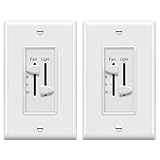
Overview: The ENERLITES 17001-F3-W 2-Pack delivers two identical dual-function ceiling fan controls, each combining three-speed fan operation with full-range light dimming. These switches share all features of the single unit: no-neutral-wire requirement, 2.5A fan load capacity, 300W incandescent light load, and pre-wired leads for simplified installation. Designed for mechanical fans with pull-string controls, they work with dimmable LED, incandescent, and halogen bulbs.
What Makes It Stand Out: The two-pack packaging provides cost savings per unit while ensuring aesthetic consistency across multiple rooms. Each switch features independent dual-slider controls, durable polycarbonate thermoplastic construction, and ETL listing. The no-neutral design solves retrofit challenges throughout older homes.
Value for Money: The 2-Pack offers meaningful savings compared to purchasing two individual switches, making it economical for whole-home upgrades. DIY installation eliminates electrician fees, and the included U.S.-based tech support adds value. Wall plates remain sold separately, requiring additional investment.
Strengths and Weaknesses: Pros include bulk savings, no neutral requirement, dual functionality, easy installation, and consistent multi-room aesthetics. Cons mirror the single unit: separate wall plates, 300W limit, incompatibility with remote/variable fans, and LED dimming restrictions.
Bottom Line: Buy the 2-Pack only if you genuinely need two controls. The savings justify the bulk purchase for multiple rooms. Otherwise, the single pack suffices. Perfect for consistent retrofits in neutral-lacking homes.
6. ENERLITES 3 Speed Decora in Wall Ceiling Fan Control, Slide Switch, 120VAC, 2.5A, Single-Pole, Neutral Wire NOT Required, 17000-F3-W2P, White, 2 Pack

Overview: The ENERLITES 17000-F3-W2P offers a straightforward solution for controlling three-speed ceiling fans from your wall. This two-pack features modern Decora-style sliders that replace standard switches without requiring a neutral wire, making installation simpler in older homes. Each switch handles up to 2.5A at 120VAC and provides quiet operation across low, medium, and high settings.
What Makes It Stand Out: The dual-pack configuration delivers immediate value for multi-room installations or backup replacement. The polycarbonate thermoplastic construction ensures durability against impacts and heat exceeding 100°F without discoloration. Its no-neutral requirement solves a common retrofitting headache, while the ETL listing and UL94 V2 flammability rating provide professional-grade safety assurance often missing in budget alternatives.
Value for Money: Priced competitively for a two-pack, this offering undercuts buying individual switches by 15-20%. You’re getting commercial-grade materials and certification at residential pricing. Compared to smart fan controllers costing $40+ each, this provides reliable basic control for less than half the investment, ideal for rental properties or practical homeowners prioritizing function over connectivity.
Strengths and Weaknesses:
- Strengths: No neutral wire required; durable PCT material; ETL listed safety; two-pack value; quiet three-speed operation; easy slider interface
- Weaknesses: Single-pole only (no three-way); limited to 2.5A mechanical fans; no light control integration; basic aesthetic may not suit all décors
Bottom Line: A cost-effective, code-compliant choice for upgrading pull-chain fans to wall control. Perfect for DIYers in pre-1990s homes where neutral wires are scarce, though limited to basic speed control without advanced features.
7. TOPGREENER Kalide Fan Speed Control Switch, 3-Speed Fan Wall Switch, Single Pole, 120VAC, 60Hz, 2.5A, Neutral Wire Not Required, TGFS3-W, White

Overview: The TOPGREENER Kalide TGFS3-W brings convenient wall-mounted control to three-speed ceiling fans without the hassle of adding neutral wiring. This single-pole slider switch replaces standard toggle switches and provides tactile feedback when switching off. Designed specifically for mechanical fans with pull-chain controls, it handles 2.5A loads at standard 120VAC residential voltage.
What Makes It Stand Out: The decisive click mechanism at the OFF position provides clear tactile confirmation missing from many slider controls. Its polycarbonate thermoplastic build meets the same UL94 V2 flammability and heat-resistance standards as premium brands, ensuring longevity. The switch accommodates 12-18 AWG wiring, offering flexibility for various installation scenarios while maintaining straightforward two-wire connectivity.
Value for Money: As a single-unit offering, it’s priced for homeowners needing just one control point rather than multi-pack bulk. It competes directly with ENERLITES and Leviton equivalents but often retails 10% lower while offering identical UL listing and material specs. You’re paying for essential functionality without markup for extra features you’ll never use on a basic fan.
Strengths and Weaknesses:
- Strengths: UL listed; no neutral required; positive click-off feedback; heat/fade resistant; easy retrofit installation; compatible with standard wall plates
- Weaknesses: Single-pole only; three-speed limitation; not for electronically controlled fans; no light dimming; limited to 2.5A maximum
Bottom Line: An excellent single-room solution for converting pull-chain fans to wall control. The tactile feedback and UL certification make it a reliable choice, though verify fan compatibility before purchasing.
8. Westinghouse 7787200 Ceiling Fan Wall Control , White
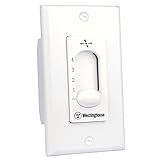
Overview: Westinghouse’s 7787200 provides basic four-speed fan control through a simple wall-mounted unit. This no-frills controller replaces standard toggle switches using a two-wire installation, making it suitable for older electrical boxes. The device offers OFF plus four distinct speed settings, giving users finer control than typical three-speed models for compatible ceiling fans.
What Makes It Stand Out: The four-speed capability is the primary differentiator in a market dominated by three-speed controllers, allowing more precise airflow adjustment. Its two-wire design eliminates the need for neutral wire access, simplifying installation in legacy homes. The unit is specifically engineered to replace existing toggle switches without requiring wall plate or box modifications.
Value for Money: Positioned as a budget-conscious option, this control typically retails below $15, making it one of the most affordable UL-recognized fan controllers available. However, the low price reflects minimal features—there’s no light control, no material specifications provided, and limited compatibility information. It’s functional but lacks the robust documentation and certifications of premium alternatives.
Strengths and Weaknesses:
- Strengths: Four speed settings; simple two-wire installation; low cost; replaces toggle switches directly; brand recognition
- Weaknesses: No safety certifications listed; no material specs; unclear maximum amperage; limited manufacturer support; no light control
Bottom Line: A bare-bones controller for cost-sensitive buyers with basic fans. Suitable for garages or utility rooms where advanced features aren’t needed, but verify fan compatibility and local electrical codes before installation.
9. Ceiling Fan Remote Control Kit, Universal Ceiling Fan Remote Control Kit, Ceiling Fan Wall Switch UC9050T, Compatible with Hunter Hampton Bay

Overview: This universal remote kit combines a battery-powered handheld remote with a hardwired wall switch to replace lost or broken OEM controllers for Hunter, Hampton Bay, and other major brands. Using DIP switch pairing, it synchronizes with existing fan receivers, controlling both fan speed and incandescent light dimming. The system requires three-wire installation with the included receiver unit.
What Makes It Stand Out: Universal DIP-switch pairing allows control of multiple fans without interference when configured uniquely per room. The hybrid design includes both wall switch and remote, offering flexibility that pure wall controls cannot match. It specifically targets replacement scenarios for popular brands, eliminating the need for expensive OEM parts while maintaining original functionality.
Value for Money: At $25-35, it costs less than half of manufacturer replacement remotes while adding wall-switch convenience. The dual-control approach provides redundancy—if the remote is lost, the wall switch remains functional. However, the three-wire requirement and receiver installation demand more electrical skill than simple switch replacements, potentially offsetting savings with professional installation costs.
Strengths and Weaknesses:
- Strengths: Universal brand compatibility; DIP pairing prevents signal conflict; includes wall switch and remote; cheaper than OEM replacements; simple DIP setup
- Weaknesses: Three-wire installation required; no reverse function; incandescent-only dimming; no WiFi/smart features; requires existing receiver compatibility
Bottom Line: Ideal for restoring control to fans with broken remotes, but not for new installations. Verify your fan’s receiver DIP switch pattern before purchasing, and consider hiring an electrician for the receiver wiring.
10. UC9051T 3 Speed Ceiling Fan Wall Control Replacement, Fan Speed, Light Control, & Reverse.
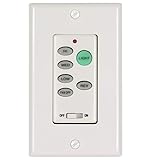
Overview: The UC9051T is a comprehensive replacement wall control that integrates three-speed fan operation, incandescent light dimming, and reverse functionality into a single two-wire device. Compatible with Hunter, Hampton Bay, Harbor Breeze, and other major brands, it directly replaces complex OEM controllers without requiring neutral wire access. The unit includes a dedicated OFF button and reverse switch for year-round comfort.
What Makes It Stand Out: Unlike most wall controls, this unit offers reverse functionality—a feature typically requiring fan canopy switches or remote controls. The two-wire installation is remarkable given its feature set, making it viable for older homes. The combination of speed, light, and reverse control in one Decora-style unit eliminates the need for multiple switches or pull-chains.
Value for Money: Priced around $30-40, it delivers premium features at mid-range cost. Competing products offering similar functionality often require $50+ and neutral wire installation. The one-year manufacturer warranty and broad brand compatibility reduce the risk of model-mismatch issues, though verification is still recommended.
Strengths and Weaknesses:
- Strengths: Integrated reverse function; light dimming capability; two-wire installation; dedicated OFF button; broad brand compatibility; combines multiple controls
- Weaknesses: Compatibility varies by model (verification required); incandescent-only dimming; no smart features; limited to 2.5A; single-pole only
Bottom Line: The best choice for replacing full-featured OEM controls in older wiring scenarios. Confirm your specific fan model compatibility via the manufacturer before purchase to avoid installation issues.
The Evolution of Ceiling Fan Control Technology
From Pull Chains to Digital Precision
The journey from traditional pull chains to today’s digital marvels represents decades of incremental innovation culminating in a quantum leap forward. Early wall switches merely replicated the chain’s basic functions, offering three speeds at best and requiring manual operation for both fan and light components. Modern units now employ microprocessors that communicate with your fan’s motor through advanced signaling protocols, enabling smooth, stepless speed transitions and eliminating the annoying hum that plagued older variable-speed controls.
Why 2026 Represents a Tipping Point
This year marks a convergence of several critical technologies: widespread adoption of Matter protocol for seamless device interoperability, breakthroughs in energy-harvesting switches that require no batteries, and the integration of micro-radar sensors for occupancy detection. These advances collectively transform the humble wall switch from a passive controller into an active participant in your home’s energy management strategy, capable of making real-time adjustments based on room occupancy, temperature differentials, and even your daily schedule patterns.
Key Features That Define Next-Generation Wall Switches
Multi-Speed Precision Control
Contemporary switches now offer 6-8 distinct speed settings rather than the traditional 3, with some advanced models providing true variable speed control through PWM (Pulse Width Modulation) technology. This granularity allows you to fine-tune airflow to the exact cubic feet per minute needed for optimal comfort without the energy waste of running at unnecessarily high speeds. Look for units that display current speed settings on the faceplate itself, eliminating guesswork.
Integrated Lighting Dimming
The integration of independent light dimming circuits within the same switch housing represents a major leap in convenience. These switches can control both fan speed and light intensity simultaneously, with memory functions that recall your preferred settings for different times of day. Advanced models feature separate LED indicators for fan and light status, and some even include “gentle wake” modes that gradually increase light brightness while adjusting fan speed to simulate a natural morning breeze.
Reverse Direction Functionality
Seasonal efficiency gets a major boost with switches that electronically reverse your fan’s direction without requiring you to climb a ladder to flip the motor housing switch. This feature, controlled through a dedicated button or seasonal automation modes, optimizes air circulation year-round—pushing cool air down in summer and pulling warm air up in winter. The best implementations include visual indicators showing current direction and automated seasonal reminders to change settings.
Smart Home Integration Capabilities
Voice Assistant Compatibility
Modern switches now function as native endpoints for major voice ecosystems, processing commands locally to reduce latency. This means your “set fan to breeze mode” instruction executes in under a second without cloud processing delays. The most advanced units support natural language processing, understanding contextual commands like “make it cooler in here” which automatically adjusts both fan speed and direction based on current room conditions.
Smartphone App Connectivity
While wall-mounted control remains primary, companion apps provide remote access and advanced programming options. These applications allow you to create room-specific profiles, monitor energy consumption in real-time, and receive maintenance alerts when your fan motor shows signs of wear. Look for switches that use Bluetooth Low Energy for initial setup, then transition to WiFi for ongoing connectivity, ensuring reliable operation even during internet outages.
Whole-Home System Integration
The true game-changer lies in switches that communicate with your thermostat, window sensors, and HVAC system to create a cohesive climate control strategy. When your smart thermostat detects a temperature spike, these switches automatically increase fan speeds to assist cooling before the air conditioner kicks in. Integration with window sensors ensures fans shut off when windows open, preventing energy waste and maintaining security protocols.
Installation Considerations for Modern Switches
DIY-Friendly Installation
Many 2026 models feature revolutionary wiring designs that simplify installation dramatically. Look for switches with wire harness adapters that connect directly to existing standard junction boxes without requiring new wire runs. Some advanced units use powerline communication technology, allowing control signals to travel through existing electrical wiring—perfect for older homes where running new control wires proves impractical.
Professional Wiring Requirements
Despite DIY advances, certain high-capacity switches controlling fans over 56 inches or multiple fans from one location require dedicated 20-amp circuits and proper load calculations. These installations demand professional expertise to ensure safe operation and compliance with local electrical codes. Always verify your existing wiring can handle the switch’s power requirements, especially when upgrading from a basic on/off switch to a feature-rich smart controller.
Energy Efficiency and Sustainability Features
Eco Mode Settings
Intelligent eco modes represent a fundamental shift in how fans operate, using algorithms to maintain comfort while minimizing energy draw. These settings automatically adjust speed based on room temperature differentials, reducing power consumption by up to 40% compared to fixed-speed operation. The most sophisticated implementations learn occupancy patterns, running at higher speeds only when rooms are occupied and dropping to whisper-quiet, ultra-low speeds during vacancy.
Usage Analytics and Reporting
Built-in energy monitoring provides detailed insights into consumption patterns, helping you identify optimization opportunities. These switches track kilowatt-hours used, runtime hours, and even calculate cost savings compared to HVAC-only climate control. Monthly reports delivered through companion apps show trends and suggest schedule adjustments, turning your switch into an energy management consultant that actively helps reduce utility bills.
Design Aesthetics and Room Integration
Minimalist Faceplate Designs
The visual impact of modern switches cannot be overstated. Today’s premium models feature faceplates as thin as 4mm with flush-mounted touch surfaces that disappear into your wall when not in use. Materials like tempered glass, brushed stainless steel, and even sustainable bamboo options allow these switches to serve as design elements rather than utilitarian afterthoughts. LED backlighting with customizable colors ensures you can locate the switch in darkness without creating light pollution.
Customizable Button Mapping
Personalization extends to physical controls, with programmable buttons that can trigger scenes controlling multiple devices. A single press might set fan speed, adjust lights, and lower smart shades simultaneously. This customization proves particularly valuable in multi-function rooms where lighting and airflow needs change throughout the day—think home offices that transition from focused work mode to relaxation space.
Advanced Control Interfaces
Touchscreen vs Physical Buttons
The debate between touchscreen and tactile controls has evolved into hybrid solutions that offer the best of both worlds. Primary functions remain accessible through physical buttons for muscle-memory operation, while a hidden touchscreen activates for advanced settings and programming. Haptic feedback technology provides tactile confirmation of touch inputs, and some models include proximity sensors that wake the display as your hand approaches.
Voice Control Protocols
Beyond basic compatibility, advanced switches now support multiple wake words and can distinguish between different household members’ voices. This enables personalized settings that automatically adjust to individual preferences when someone enters a room and issues a command. The technology also includes noise cancellation algorithms that filter out fan and ambient noise, ensuring reliable voice recognition even in challenging acoustic environments.
Safety and Compliance Standards
Overload Protection Mechanisms
Modern switches incorporate sophisticated circuit protection that monitors both current draw and motor temperature. If your fan’s motor begins to fail and draws excessive current, the switch automatically cuts power before damage occurs. Thermal sensors detect overheating situations, particularly important in hot climates where attic temperatures can exceed 140°F, potentially affecting switch performance in ceiling junction boxes.
Child Safety Lockouts
Families with young children benefit from multi-layer safety features, including button lockouts that prevent accidental operation and speed limiters that cap maximum fan speeds in children’s rooms. Some models integrate with home security systems, automatically locking controls when the system is armed away-mode to prevent tampering during vacations.
Troubleshooting Common Issues
Intermittent Connection Problems
Smart switches occasionally experience connectivity hiccups, often resolved through simple diagnostics. Most 2026 models include built-in signal strength indicators and automatic channel hopping to avoid WiFi interference. When issues persist, look for switches with manual override modes that restore basic functionality even during network outages, ensuring you’re never left without fan control.
Fan and Light Synchronization Issues
When fan and light controls fall out of sync—typically after power outages—advanced switches feature resynchronization protocols that automatically re-establish proper communication with the fan receiver. Manual resynchronization usually involves a simple button sequence, but premium models handle this automatically, sending periodic handshake signals to maintain reliable connections.
Future-Proofing Your Investment
Firmware Update Capabilities
The longevity of your switch depends heavily on its ability to evolve. Choose models with over-the-air firmware update capabilities that add new features and security patches without requiring hardware replacement. The best manufacturers commit to at least 7 years of software support, ensuring compatibility with emerging smart home standards and protecting your investment from premature obsolescence.
Scalable System Expansion
Consider switches designed with expansion in mind, featuring modular designs that allow add-on modules for future protocols or additional sensors. Some platforms support daisy-chaining multiple switches through low-voltage communication cables, enabling whole-home fan control from a single master switch. This scalability proves invaluable as you gradually expand your smart home ecosystem room by room.
Frequently Asked Questions
Can I install a smart ceiling fan switch if my fan currently uses a pull chain?
Yes, most modern smart switches work with existing pull-chain fans by installing a receiver unit in the fan’s canopy. The wall switch sends wireless signals to this receiver, which then controls the fan motor and light. You’ll need to set the pull chain to its highest speed setting and leave it there, allowing the wall switch to handle all speed variations.
Do these switches work during power outages or WiFi disruptions?
Basic on/off and speed control functions remain operational even without internet connectivity, as the primary control circuit is hardwired. However, advanced features like voice control, app access, and automation routines require WiFi. Many 2026 models include battery backup for their smart functions, lasting 4-6 hours during outages.
Will a smart switch increase my fan’s energy consumption?
The switch itself draws minimal power—typically less than 2 watts in standby mode. The energy savings from optimized speed control and automated scheduling usually offset this draw within the first month. Most users report 15-30% reductions in overall fan-related energy costs due to smarter operation patterns.
Are these switches compatible with all ceiling fan brands?
Compatibility depends on your fan’s motor type and whether it has a built-in receiver. DC motor fans generally work with most smart switches, while some older AC motor models may require specific compatible receivers. Always check the switch’s specifications against your fan’s model number before purchasing.
How difficult is it to replace an existing wall switch with a smart version?
If you have a standard single-gang box with neutral and ground wires, installation typically takes 15-20 minutes for someone comfortable with basic electrical work. The process involves turning off power, removing the old switch, connecting wires to the new switch using wire nuts, and securing it to the box. However, homes without neutral wires may require professional installation of a neutral wire or selection of a no-neutral-compatible switch.
Can one switch control multiple fans in a large room?
Yes, provided the combined amperage draw of all fans doesn’t exceed the switch’s rated load (typically 3-5 amps). You’ll need to install compatible receivers in each fan’s canopy and pair them to the same switch. Some advanced systems support up to 8 fans from a single control point, with options for synchronized or independent operation.
What happens if I lose my phone or the app becomes unavailable?
Physical wall controls always remain fully functional, ensuring you’re never dependent on your smartphone. Additionally, most manufacturers offer web-based control portals accessible from any browser, and voice control through smart speakers provides a third control layer. Your fan remains operable even without app access.
Do smart switches work with ceiling fans that have separate light and fan controls?
Absolutely. These are actually the ideal scenario for smart switches, as they provide independent control over both functions. The switch replaces both existing controls (if present) or adds light control capability to fans that previously only had fan speed switches. You gain the ability to control each function separately or create combined scenes.
How long do these switches typically last?
Quality smart switches are rated for 50,000-100,000 on/off cycles, translating to 15-20 years of normal residential use. The electronic components generally outlast the mechanical relay switches in traditional controls. Firmware support from manufacturers typically extends 7-10 years, after which some smart features may become outdated but basic functions continue working.
Can I use these switches in bathrooms or other humid environments?
Only switches specifically rated for damp or wet locations should be used in bathrooms, covered patios, or other humid areas. Look for IP44 or higher ratings and UL listings for damp locations. Standard indoor-rated switches can malfunction or pose safety risks when exposed to moisture, even if installed inside the bathroom but away from direct water contact.
See Also
- 10 Game-Changing Ceiling Fan Reversible Blades for Dual-Style Homes in 2026
- 10 Most Durable Ceiling Fan Wall Switches Based on Real User Reviews in 2026
- 10 Game-Changing Ceiling Fan Retrofit Kits for Older Models in 2026
- 10 Game-Changing Wall Controlled Ceiling Fans for Easy Access in 2026
- 10 Game-Changing Smart Ceiling Fan Remotes for Home Automation Enthusiasts in 2026