Table of Contents
The way we control our home lighting has undergone a remarkable transformation, and 2026 represents a pivotal moment in this evolution. Wi-Fi light switches have moved far beyond simple on/off functionality, becoming sophisticated command centers for your entire lighting ecosystem. Whether you’re renovating your space, building a smart home from scratch, or simply tired of fumbling for switches in the dark, these intelligent devices offer unprecedented convenience, energy efficiency, and integration possibilities that were science fiction just a decade ago.
What makes this year’s crop of smart switches particularly exciting is how they’ve matured to solve real-world problems. We’re seeing breakthroughs in installation simplicity, cross-platform compatibility, and features that genuinely enhance daily life rather than just adding tech for tech’s sake. This guide will walk you through everything that matters when choosing a Wi-Fi light switch in 2026—from the technical specifications that separate premium options from basic models to the design considerations that ensure your switches complement your home rather than complicate it.
Top 10 Wi-Fi Light Switches
Detailed Product Reviews
1. Kasa Smart Light Switch HS200, Single Pole, Needs Neutral Wire, 2.4GHz Wi-Fi Light Switch Works with Google Home, UL Certified, No Hub Required, White

Overview: The Kasa HS200 is TP-Link’s flagship single-pole smart switch, bringing reliable Wi-Fi control to standard lighting circuits. Requiring a neutral wire and 2.4GHz Wi-Fi, it connects directly to your home network without a hub. The switch supports voice commands through Alexa and Google Assistant, plus remote operation via the Kasa app. With UL certification and a Silicon Valley pedigree, it targets users seeking a safe, straightforward smart home entry point.
What Makes It Stand Out: The step-by-step app-guided installation significantly reduces electrician dependency for DIYers. Kasa’s “Away Mode” randomly cycles lights to simulate occupancy, adding a security layer most budget switches skip. Trusted by over 4 million users, the brand’s ecosystem maturity shows in its stable app performance and routine reliability. The switch maintains manual wall operation while offering seamless digital control, bridging traditional and smart homes elegantly.
Value for Money: Priced in the mid-range, the HS200 justifies its cost through certified safety and proven reliability. While cheaper alternatives exist, the UL listing and robust app support prevent the frustration of flaky connectivity or fire hazards. It’s comparable to switches $5-10 cheaper but delivers superior long-term value through firmware updates and ecosystem stability. For a primary residence, the premium is worthwhile.
Strengths and Weaknesses: Strengths: Excellent app-guided setup; reliable remote access; dual voice assistant support; UL safety certification; Away Mode security feature; no hub required; manual override preserved. Weaknesses: Requires neutral wire (non-negotiable); 2.4GHz Wi-Fi only; single-pole limitation; professional installation recommended for novices; slightly pricier than no-name brands.
Bottom Line: The Kasa HS200 is the smart switch sweet spot for homeowners prioritizing safety and reliability. Its thoughtful features and trusted brand make it worth the modest premium over budget options. Ideal for first-time smart home adopters.
2. GHome Smart Switches for Lights, WiFi Smart Light Switch Works with Alexa and Google Home, Single-Pole, Neutral Wire Required, 2.4Ghz WiFi Light Switch with APP Control, No Hub Required, UL FCC Listed

Overview: GHome’s entry delivers core smart switch functionality at a budget-friendly price point. This single-pole switch requires neutral wiring and 2.4GHz Wi-Fi, offering app and voice control through Alexa and Google Assistant. UL and FCC certifications are surprising at this price tier. The package includes jumper wires for installation, though they’re incompatible with smart bulbs. It targets cost-conscious buyers wanting multi-switch deployment without brand premiums.
What Makes It Stand Out: The aggressive pricing combined with legitimate safety certifications makes this a rare value proposition. Group control functionality lets users manage multiple switches simultaneously through the GHome app—a feature often reserved for premium ecosystems. The inclusion of jumper wires simplifies certain installations, and sunset/sunrise scheduling provides automation sophistication beyond basic timers.
Value for Money: This is among the cheapest certified smart switches available. You’re saving 30-40% versus Kasa while retaining essential features and safety approvals. For whole-home installations requiring 5+ switches, the savings compound dramatically. The trade-off is betting on a less-established brand’s long-term app support. It’s perfect for rental properties or secondary spaces where absolute reliability is secondary to cost.
Strengths and Weaknesses: Strengths: Exceptionally affordable; UL/FCC certified; group control capability; sunset/sunrise scheduling; includes jumper wires; no hub needed. Weaknesses: Obscure brand with uncertain longevity; app may lack polish; jumper wires incompatible with smart bulbs; 2.4GHz only; limited third-party integration.
Bottom Line: GHome is the value champion for bulk smart switch deployments. If you’re comfortable with a newer brand and primarily need basic scheduling and voice control, the cost savings are compelling. Verify your wiring before purchase.
3. Kasa Smart Light Switch HS200P3, Single Pole, Needs Neutral Wire, 2.4GHz Wi-Fi Light Switch Compatible with Alexa and Google Home, UL Certified, No Hub Required, 3 Count -Pack of 1 , White

Overview: This is the HS200’s three-pack variant, delivering identical functionality in a bulk bundle. Each single-pole switch requires neutral wiring and 2.4GHz Wi-Fi, connecting to Alexa and Google Assistant. You get the same UL-certified hardware and Kasa app experience, but at a per-unit discount. Designed for homeowners executing whole-room or whole-house upgrades, it eliminates repetitive purchasing while ensuring aesthetic consistency across installations.
What Makes It Stand Out: The bundle pricing reduces per-switch cost by 15-20% versus individual purchases, making premium features more accessible for large projects. Kasa’s app-guided installation scales efficiently across multiple units once you’re familiar with the process. The three-pack ensures uniform firmware versions and appearance, avoiding the mismatch risk of buying switches separately over time. It’s a turnkey solution for upgrading a hallway, kitchen, or master bedroom suite.
Value for Money: Excellent value for multi-switch projects. You’re getting Kasa’s reliability and safety certifications at near-budget brand pricing per unit. The upfront investment pays off if you actually need three switches; buying individually would cost significantly more. Compared to mixing brands, the ecosystem consistency prevents app confusion. For single-switch needs, though, it’s overkill.
Strengths and Weaknesses: Strengths: Bulk discount on premium hardware; consistent quality across units; simplifies large installations; full Kasa feature set; UL certified; reliable app ecosystem. Weaknesses: Requires three compatible installation locations; higher upfront cost; same single-pole limitations as individual HS200; neutral wire mandatory everywhere.
Bottom Line: Buy this pack if you’re planning multiple upgrades. The per-unit savings and ecosystem uniformity justify the bundle. For one-off installations, stick to the single switch. It’s the most economical way to get trusted Kasa quality throughout your home.
4. Kasa Smart Switch 2-Gang HS200-2, Single Pole,Neutral Wire Required, 2.4GHz Wi-Fi Light Switch Compatible with Alexa and Google Home, UL Certified, No Hub Required, White

Overview: Kasa’s HS200-2 consolidates two independent smart switches into a single gang box, solving space constraints while maintaining full functionality. Each side controls a separate circuit, requiring neutral wires for both. It supports 2.4GHz Wi-Fi, Alexa, Google Assistant, and SmartThings. The unit fits standard two-gang wall plates, providing a clean, integrated look for controlling multiple lights or fans from one location without cluttering your wall with separate smart switches.
What Makes It Stand Out: The space-saving design is the headline feature, eliminating the need for two separate smart switches and reducing installation complexity. It maintains individual control of each circuit while offering unified scheduling and Away Mode. The Kasa app’s guided setup handles the dual-circuit configuration intelligently. This is one of the few reputable dual smart switches that doesn’t require a proprietary hub, making it ideal for retrofitting tight electrical boxes.
Value for Money: Priced 30-40% less than two individual Kasa switches, it’s a clear winner for dual-circuit locations. You save on both hardware and installation time. However, it’s only valuable if you actually have two circuits in one box—otherwise you’re paying for unused capacity. For new constructions or renovations, it’s perfect; for single-circuit boxes, it’s unnecessary.
Strengths and Weaknesses: Strengths: Two switches in one unit; cost-effective versus separate switches; space efficient; full Kasa feature set; UL certified; individual circuit control. Weaknesses: Requires two neutral wires; limited to locations with dual-circuit boxes; more complex installation; higher single-unit cost; 2.4GHz only.
Bottom Line: The HS200-2 is the ideal solution for double-switch locations. It delivers Kasa’s proven reliability while halving your wall clutter and installation effort. Verify your box has two circuits before purchasing—if so, this is a no-brainer.
5. Amazon Basics Smart Light Switch, Single Pole, Works with Alexa Only, Voice Control, Schedule, 2.4 GHz Wi-Fi, No Hub Required, Easy to Install, White
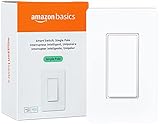
Overview: Amazon’s house-brand smart switch offers a stripped-down, Alexa-exclusive experience for minimalist smart homes. This single-pole switch requires neutral wiring and 2.4GHz Wi-Fi, connecting directly to Alexa without third-party apps or hubs. It supports scheduling through Alexa Routines and basic voice commands. The design prioritizes simplicity over flexibility, making it a plug-and-play option for households fully committed to the Amazon ecosystem and seeking the lowest possible price from a recognizable brand.
What Makes It Stand Out: The deep Alexa integration eliminates app bloat—setup and control happen entirely within the Alexa app. Step-by-step video installation guidance is more comprehensive than text-only instructions. The “no hub required” claim is truly realized here, as it leverages your existing Echo devices for a zero-footprint control system. It’s the simplest path from zero to voice-controlled lighting for Prime members.
Value for Money: Among the cheapest options from a major brand, undercutting even GHome. However, the Alexa-only limitation means Google users must look elsewhere. For Alexa households, it’s exceptional value—effectively a loss leader to lock you into Amazon’s ecosystem. The savings vanish if you later need Google compatibility, requiring replacement. It’s disposable tech pricing with acceptable quality.
Strengths and Weaknesses: Strengths: Extremely affordable; seamless Alexa integration; video installation guide; no separate app needed; simple scheduling; Prime shipping. Weaknesses: Alexa ONLY—no Google/HomeKit support; limited advanced features; basic build quality; 2.4GHz only; neutral wire required; no manual app control without Alexa.
Bottom Line: Perfect for Alexa-only homes wanting the cheapest reliable switch. The ecosystem lock-in is fine if you’re all-in on Amazon, but it’s a dead-end for mixed-platform users. Buy for simplicity, not flexibility. Avoid if you ever plan to switch voice assistants.
6. Leviton Decora Smart Switch, Wi-Fi 2nd Gen, Neutral Wire Required, Works with Matter, My Leviton, Alexa, Google Assistant, Apple Home/Siri & Wired or Wire-Free 3-Way, D215S-1RW, White

Overview: The Leviton Decora Smart Switch represents the premium tier of Wi-Fi lighting controls, designed for homeowners seeking maximum compatibility and future-proofing. This second-generation model requires a neutral wire and supports both single-pole and 3-way configurations. It integrates with virtually every major smart home ecosystem through Wi-Fi connectivity and upcoming Matter support.
What Makes It Stand Out: Leviton’s Matter readiness sets it apart from most competitors, ensuring seamless operation across Apple Home, Amazon Alexa, Google Home, SmartThings, and more simultaneously. The wire-free 3-way capability eliminates the need for traveler wires between switches, simplifying installation in existing homes. Its robust scheduling features include sunset/sunrise automation and randomized vacation mode for enhanced security.
Value for Money: Priced at a premium ($40-50), this switch justifies its cost through exceptional build quality, brand reliability, and unparalleled ecosystem support. While cheaper alternatives exist, none match Leviton’s comprehensive compatibility and professional-grade features. The 3-way flexibility alone saves significant installation costs compared to running new wires.
Strengths and Weaknesses:
- Strengths: Matter support future-proofs your investment; versatile 3-way installation options; works with more platforms than any competitor; robust vacation randomization; trusted brand with excellent support
- Weaknesses: Highest price point in its class; requires neutral wire (common but limiting); firmware update needed for Matter activation; larger depth may challenge shallow boxes
Bottom Line: Ideal for tech enthusiasts and whole-home installations where maximum compatibility matters. The premium price delivers professional-grade reliability and future-proofing that budget options cannot match.
7. GHome Smart Switches for Lights, WiFi Smart Light Switch Works with Alexa and Google Home, Single-Pole, Neutral Wire Required, 2.4Ghz WiFi Light Switch with APP Control, No Hub Required, UL FCC Listed

Overview: The GHome Smart Switch offers an entry-level solution for basic smart lighting control, targeting budget-conscious consumers who want reliable voice control without complexity. This single-pole switch requires a neutral wire and operates exclusively on 2.4GHz Wi-Fi networks, supporting up to 1800W loads with full UL and FCC safety certification.
What Makes It Stand Out: Exceptional safety credentials at this price point differentiate GHome from no-name alternatives. The straightforward installation process and dedicated GHome app provide reliable remote control and scheduling. Its 15A/1800W rating exceeds many competitors, handling heavier loads like multiple fixtures or ceiling fans safely.
Value for Money: At approximately $12-15 per switch, this represents one of the best values in smart lighting. The UL/FCC certification provides peace of mind rarely found in budget options. While lacking advanced features like Matter support or 3-way compatibility, it delivers core functionality—voice control, scheduling, and remote access—at a fraction of premium brand prices.
Strengths and Weaknesses:
- Strengths: UL/FCC certified for safety; excellent 1800W power rating; very affordable; simple installation; reliable basic scheduling
- Weaknesses: 2.4GHz Wi-Fi only; no Apple HomeKit support; single-pole only; incompatible with smart bulbs; limited ecosystem integration; basic app interface
Bottom Line: Perfect for first-time smart home users or rental properties where cost matters more than advanced features. The safety certifications make it a trustworthy budget choice for basic lighting automation.
8. TREATLIFE Smart Light Switch Single Pole Works with Alexa, Google Home and SmartThings, 2.4GHz WiFi Timer Smart Switch, Neutral Wire Required, No Hub Required, FCC Listed, 4 Pack

Overview: The TREATLIFE 4-Pack delivers exceptional value for whole-home smart lighting conversions, providing four single-pole switches at a bulk price point. Each switch requires neutral wiring and 2.4GHz Wi-Fi, integrating with major platforms through the Smart Life app. The included screwless wall plates offer a clean, modern aesthetic without additional purchases.
What Makes It Stand Out: The four-pack bundle dramatically reduces per-switch cost, making whole-home automation financially accessible. The screwless snap-on plates provide a premium finish typically costing extra. Comprehensive Smart Life app integration enables grouping, sharing access, and detailed scheduling across all switches from one interface.
Value for Money: Priced around $35-40 for four switches (under $10 each), this package offers unbeatable value for multi-room installations. The FCC certification and included accessories eliminate hidden costs. While the 1250W/10A rating is lower than some alternatives, it’s sufficient for most residential lighting circuits.
Strengths and Weaknesses:
- Strengths: Incredible per-unit value; includes screwless plates; SmartThings compatibility; easy group control; FCC certified; ideal for bulk installations
- Weaknesses: Lower 1250W rating limits heavy loads; single-pole only; no dimming function; 2.4GHz Wi-Fi exclusive; no Apple HomeKit support; cannot use with smart bulbs
Bottom Line: Best choice for outfitting multiple rooms on a tight budget. The 4-pack value outweighs limitations for standard lighting circuits, making it ideal for apartments or starter homes.
9. TP-Link Tapo Matter Smart Light Switch: Voice Control w/Siri, Alexa & Google Home | UL Certified | Timer & Schedule | Easy Guided Install | Neutral Wire Required | Single Pole | Tapo S505(2-Pack)

Overview: TP-Link’s Tapo S505 brings Matter certification to the masses with this future-ready smart switch two-pack. Requiring neutral wiring and 2.4GHz Wi-Fi, these single-pole switches offer seamless integration across all major platforms. The Tapo app provides step-by-step installation guidance, while UL certification ensures safety compliance.
What Makes It Stand Out: Native Matter support enables true multi-platform control without workarounds, allowing simultaneous operation through Apple Home, Alexa, Google, and SmartThings. The LAN control feature maintains functionality during internet outages through direct device communication. Multi-Admin capability lets different household members use their preferred ecosystem simultaneously.
Value for Money: At roughly $25-30 for two switches, the S505 hits the sweet spot between budget and premium options. Matter certification future-proofs your investment as the smart home standard evolves. The 2-pack pricing makes it economical for multi-switch projects while delivering advanced features typically found in $40+ switches.
Strengths and Weaknesses:
- Strengths: Native Matter support; LAN control during outages; Multi-Admin for family use; UL certified; app-guided installation; excellent cross-platform compatibility
- Weaknesses: Single-pole only; requires neutral wire; 2.4GHz Wi-Fi limitation; no dimming; installation may challenge novices despite guidance
Bottom Line: The smartest choice for buyers prioritizing future compatibility. Matter support ensures this switch remains relevant as smart home standards consolidate, making it ideal for tech-forward households.
10. Kasa Smart Dimmer Switch HS220, Single Pole, Needs Neutral Wire, 2.4GHz Wi-Fi Light Switch Works with Alexa and Google Home, UL Certified, No Hub Required, 1 Pack

Overview: The Kasa HS220 distinguishes itself as the only dimmer-enabled switch in this lineup, offering granular brightness control alongside standard smart features. This single-pole switch requires neutral wiring and 2.4GHz Wi-Fi, integrating seamlessly with Alexa and Google through the reliable Kasa app. UL certification and TP-Link’s reputation ensure dependable performance.
What Makes It Stand Out: Dimming capability transforms any room’s ambiance while potentially extending bulb life and reducing energy consumption. The unique “Gentle Off” feature slowly fades lights, perfect for bedrooms or children’s rooms. Precise brightness scheduling allows gradual wake-up lighting or subtle evening transitions unavailable with standard on/off switches.
Value for Money: Priced around $18-22, the HS220 commands a modest premium over basic switches but delivers genuine dimming functionality typically costing $25-30 elsewhere. The feature set and Kasa ecosystem reliability justify the price for anyone needing brightness control. For non-dimmable applications, cheaper alternatives exist.
Strengths and Weaknesses:
- Strengths: True dimming capability; Gentle Off fade feature; trusted Kasa ecosystem; UL certified; advanced scheduling; reliable performance
- Weaknesses: Single-pole only; requires neutral wire; no Apple HomeKit support; 2.4GHz Wi-Fi only; incompatible with non-dimmable LED issues; no Matter support
Bottom Line: Essential for spaces requiring ambiance control. The dimming features and Gentle Off function make it perfect for bedrooms, dining rooms, and living spaces where basic on/off switching falls short.
The Evolution of Smart Lighting Control
From Basic Switches to Intelligent Systems
Remember when a dimmer switch felt revolutionary? Today’s Wi-Fi-enabled switches have completely redefined what we should expect from a wall control. The modern smart switch acts as a networked node in your home, capable of communicating with dozens of other devices while processing complex automation rules. These aren’t just remote controls for your lights—they’re programmable logic controllers that happen to fit in a standard wall box. The shift from simple relay switches to microprocessor-controlled systems means your lighting can now respond to occupancy, time of day, weather conditions, and even your location relative to home.
What Makes a Wi-Fi Switch “Game-Changing”
A truly transformative smart switch does more than connect to your phone. The game-changing models of 2026 feature adaptive learning capabilities, understanding your patterns and suggesting optimizations. They offer millisecond-level responsiveness that feels instantaneous, even when controlled remotely. Most importantly, they maintain rock-solid reliability when your internet hiccups, storing automation rules locally so your lights keep working even during outages. The best implementations also feature power-harvesting technology, drawing minimal standby power while maintaining constant network readiness.
Key Features That Define Next-Generation Switches
Advanced Connectivity Standards
Wi-Fi 6E and emerging Wi-Fi 7 support have become the new baseline for premium switches, offering lower latency and better performance in crowded network environments. But connectivity goes beyond just Wi-Fi specs. Look for switches that support Thread and Matter protocols alongside traditional Wi-Fi—these create a mesh network that becomes more robust as you add devices. The real magic happens when a switch can intelligently switch between connection methods, using Thread for local communication and Wi-Fi for remote access without you ever noticing the handoff.
Multi-Way Circuit Compatibility
Three-way and four-way switch setups have traditionally been a nightmare for smart home enthusiasts, but 2026’s designs have cracked this code. Modern switches use proprietary communication protocols over existing traveler wires or eliminate the need for them entirely through wireless synchronization. The key specification to verify is whether a switch can function as both master and slave in multi-way configurations without requiring a dedicated companion switch. This flexibility saves money and simplifies installation in stairways, hallways, and large rooms with multiple entry points.
Dimming Capabilities and Fine-Tuning
Not all dimmers are created equal, and the difference between a mediocre and excellent dimming experience lies in the details. Leading switches now offer customizable dimming curves—linear, logarithmic, or custom profiles that match different bulb types. The minimum dimming level has also become crucial; the ability to dim LEDs down to 1% without flicker separates premium from standard options. Some advanced models even feature per-bulb calibration, learning the exact characteristics of your specific LED fixtures to eliminate that annoying ghost glow when “off.”
Energy Monitoring Integration
Real-time power consumption tracking has shifted from a novelty to a necessity. Next-gen switches provide circuit-level monitoring that feeds data into your home energy management system. Look for models that can differentiate between standby power and active consumption, helping you identify vampire loads. The most sophisticated options integrate with utility company demand response programs, automatically adjusting your lighting during peak grid stress in exchange for bill credits. This transforms your light switch from a convenience device into a money-saving tool.
Voice Control Ecosystems
While Alexa and Google Assistant compatibility is table stakes, the depth of integration matters enormously. The best switches of 2026 support natural language processing for complex commands like “set the kitchen to cooking mode” or “make the living room feel like a movie theater.” More importantly, they handle multi-user households intelligently, recognizing different family members’ voices and applying personalized lighting preferences. Check for local voice processing capabilities that keep your commands private and functional even when cloud services are down.
Installation Considerations for 2026
Neutral Wire Requirements
The eternal neutral wire question continues to evolve. While many switches still require a neutral connection for reliable operation, “no-neutral” designs have become more sophisticated and stable. However, the trade-off involves minimum load requirements—no-neutral switches often need at least 25 watts of LED load to prevent flickering. If your home lacks neutral wires in switch boxes, consider switches with power-harvesting technology that can operate reliably with as little as 3 watts. Always verify your specific wiring configuration before purchasing, as this remains the number one cause of installation headaches.
DIY vs Professional Installation
The calculus on DIY installation has shifted as switches have become more capable but also more complex. While single-pole replacements remain straightforward for anyone comfortable with basic electrical work, multi-way circuits, switch-loop configurations, and homes with aluminum wiring demand professional expertise. The cost of professional installation has actually decreased as electricians have become more familiar with smart devices, typically running $50-75 per switch compared to $100+ just two years ago. Factor this into your budget, especially for whole-home deployments.
Multi-Gang and Multi-Pole Scenarios
Fitting multiple smart switches into a single wall box presents unique challenges beyond just physical space. Heat dissipation becomes critical when you have 3-4 switches generating warmth in a confined area. Next-generation switches address this with thermal management features and reduced standby power. For multi-pole circuits controlling 240V loads like water heaters or heavy-duty lighting, verify that the switch is specifically rated for your voltage and amperage needs. The wrong switch here isn’t just inconvenient—it’s dangerous.
Older Home Compatibility Solutions
Pre-1980s homes present special challenges: smaller electrical boxes, no grounding, cloth-insulated wires, and sometimes even knob-and-tube remnants. Modern smart switches have adapted with shallower designs that fit legacy boxes and advanced safety features that protect fragile wiring. Some models include built-in ground fault detection that compensates for ungrounded installations. For historic homes where you can’t modify wiring, battery-powered smart switches that mount over existing ones provide a non-invasive solution that preserves original fixtures.
Smart Home Integration Deep Dive
Matter Protocol Support
Matter has finally delivered on its promise of true interoperability, and 2026 switches are all-in. A Matter-certified switch seamlessly joins Apple HomeKit, Google Home, Amazon Alexa, and Samsung SmartThings without separate hubs or bridge devices. The protocol’s local control priority means your automations execute faster and keep working during internet outages. When evaluating switches, look for Matter 1.2 certification or higher, which includes improved support for dimming, multi-way configurations, and energy reporting across all platforms.
Apple HomeKit, Google, and Alexa Integration
Each ecosystem offers distinct advantages that influence switch selection. HomeKit users should prioritize switches with HomeKit Adaptive Lighting, which automatically adjusts color temperature throughout the day. Google Home enthusiasts benefit from switches with deep Nest integration, allowing your lights to respond to security camera events. Alexa households gain the most from switches that support Alexa Guard, using lighting to simulate occupancy when you’re away. The key is matching switch capabilities to your primary ecosystem rather than trying to optimize for all three equally.
Hub vs Hub-Free Operation
The hub debate has evolved from philosophical to practical. Hub-free Wi-Fi switches remain the simplest entry point, connecting directly to your router and cloud services. However, hub-based systems (whether proprietary or Matter/Thread) offer superior reliability, faster response times, and reduced Wi-Fi congestion. The middle ground—switches that work hub-free but gain superpowers when paired with an optional hub—provides the best of both worlds. Consider your long-term smart home plans: if you’ll eventually have 20+ devices, a hub-based architecture will provide a noticeably better experience.
Scene and Automation Creation
The sophistication of a switch’s automation engine often determines its real-world usefulness. Look for devices that support conditional logic: “turn on lights IF motion detected AND after sunset AND I’m home.” The best switches offer visual automation builders in their apps, making complex programming accessible. Advanced features include circadian rhythm lighting that gradually shifts color temperature, vacation modes that learn and replay your patterns, and integration with calendar events to prepare lighting for “work from home” days versus weekends.
Design and Aesthetics
Touch vs Physical Button Interfaces
The interface choice dramatically impacts daily satisfaction. Capacitive touch panels offer sleek, modern aesthetics and easy cleaning but can be accidentally triggered and provide no tactile feedback in the dark. Physical buttons with haptic feedback give you confidence that you’ve activated the switch without looking, while hybrid designs combine touch surfaces with click mechanisms. Consider household members’ preferences—elderly users and young children often struggle with pure touch interfaces, while tech enthusiasts prefer their minimalist appeal.
LED Indicator Customization
That tiny status LED can be either helpful or infuriating depending on its implementation. Premium switches let you customize indicator brightness, color, and behavior. Want the LED off when the light is on but dimly lit when off for nighttime location finding? That’s now configurable. Some switches even use the indicator for secondary notifications—pulsing blue when your security system is armed, flashing red during a smoke alarm, or glowing green when your garage door is open. This turns your switch into an ambient information display.
Color and Finish Options
White and almond are no longer your only choices. Leading manufacturers now offer switches in matte black, brushed nickel, champagne bronze, and even custom color-matching services. More importantly, interchangeable faceplates allow you to update your look without replacing the entire switch. For truly seamless integration, some premium switches offer paintable faceplates that blend into your wall color. Consider how the switch material ages—metal plates feel premium but can interfere with Wi-Fi signals if not properly engineered.
Minimalist vs Traditional Designs
Design philosophy affects more than appearance—it influences functionality. Ultra-minimalist switches with hidden controls and no visible branding create a clean, futuristic look but can frustrate guests unfamiliar with your system. Traditional designs that look like standard Decora switches maintain familiarity while hiding smart capabilities. The emerging trend is “invisible intelligence”: switches that appear completely conventional but respond to taps, holds, and double-clicks with different smart functions. This approach satisfies both design purists and smart home enthusiasts.
Advanced Functionality
Remote Access Security
With great connectivity comes great responsibility. The best switches of 2026 feature hardware-level security with secure boot, encrypted storage, and regular automatic firmware updates. Look for switches that support WPA3 encryption and offer two-factor authentication for app access. More importantly, verify that remote access is opt-in rather than mandatory—some budget switches constantly ping overseas servers, creating potential security vulnerabilities. Local-only modes that disable cloud connectivity while retaining full functionality represent the gold standard for privacy-conscious users.
Vacation Mode Features
Basic vacation modes randomly toggle lights to simulate occupancy, but advanced implementations have elevated this to an art form. Modern switches learn your actual usage patterns over weeks, then replay them with realistic variations. They can coordinate with smart blinds and TVs to create a comprehensive away simulation. The most sophisticated options integrate with your security system, automatically activating vacation mode when you arm the alarm and deactivating upon your return. Some even factor in local sunrise/sunset times and weather patterns to make the simulation more convincing.
Scheduling and Circadian Rhythm
The intersection of scheduling and health-focused lighting represents one of the most compelling reasons to upgrade. Leading switches now include pre-built circadian rhythm programs that automatically adjust brightness and color temperature to support your natural sleep-wake cycle. These integrate with your calendar to provide bright, cool light during work hours and warm, dim light in the evening. For shift workers, manually configurable circadian programs can artificially create the right light cues regardless of actual time. The key is granular control—being able to adjust the curve for your specific needs rather than accepting a one-size-fits-all program.
Power-Through Technology
One of the most innovative developments is power-through circuitry that maintains smart functionality even when the switch is “off.” Traditional switches completely interrupt power, but modern designs can keep their radios and processors running while appearing off to the load. This enables instant-on response from voice commands and maintains mesh network connectivity. The technology also allows for “always-on” low-level dimming that prevents LED ghosting while keeping the light technically off. Verify that any switch you consider includes this feature—it dramatically improves the user experience.
Making Your Purchase Decision
Price vs Performance Balance
The smart switch market spans from $15 budget models to $100+ premium options, with meaningful differences at each tier. Budget switches ($15-25) offer basic remote control and scheduling but often lack multi-way support, have limited dimming ranges, and may require cloud connectivity. Mid-range switches ($30-50) hit the sweet spot for most users, offering Matter support, solid dimming, and good app experiences. Premium switches ($60-100+) justify their cost through superior build quality, advanced energy monitoring, local processing, and design flexibility. Consider your total cost of ownership—a $40 switch that lasts 10 years is cheaper than a $20 switch replaced every 2 years.
Warranty and Support Considerations
Electrical devices should last decades, not years. Look for switches with minimum 3-year warranties, with 5-year warranties indicating manufacturer confidence. More important than length is support quality—does the company offer phone support, responsive email help, and an active community forum? Check their firmware update history; companies that regularly update 5-year-old devices demonstrate long-term commitment. Avoid switches from brands that have disappeared from the market or have a reputation for abandoning products after 12-18 months. Your switch should outlast your smartphone, not the other way around.
Future-Proofing Your Investment
The smart home landscape evolves rapidly, so choose switches that can grow with you. Matter certification is non-negotiable for future compatibility. Switches with over-the-air update capability can gain new features years after purchase. Modular designs that allow you to upgrade the smart module while keeping the mechanical switch represent the ultimate in future-proofing. Consider switches that support emerging standards like energy grid integration and carbon intensity tracking—these will become increasingly valuable as utilities modernize. The goal is buying a switch that feels more capable in three years than it did on day one.
Frequently Asked Questions
Do Wi-Fi light switches work when the internet is down?
Most modern switches store automation rules locally and will continue executing schedules and responding to manual control during internet outages. However, remote access via smartphone apps and voice control typically require internet connectivity. Switches with Matter/Thread support maintain full functionality on your local network even without internet.
Can I install a smart switch without a neutral wire?
Yes, many manufacturers offer no-neutral variants specifically for older homes. These work reliably but may require a minimum load (typically 25+ watts of LED lighting) to prevent flickering. For very low-load circuits, consider switches with power-harvesting technology or hire an electrician to run a neutral wire—often a simpler job than you’d expect.
Will smart switches work with any LED bulb?
Compatibility has improved dramatically, but not all combinations work perfectly. Look for switches with adjustable dimming curves and minimum load settings. Bulbs labeled “dimmable” and certified by the switch manufacturer provide the best results. For problematic bulbs, installing a load resistor or “dummy load” often resolves flickering and ghosting issues.
How many smart switches can my Wi-Fi network handle?
Standard consumer routers typically support 30-50 connected devices before performance degrades. If planning a whole-home deployment, consider switches that support Thread/Matter to offload traffic from Wi-Fi, or upgrade to a mesh Wi-Fi system designed for high device counts. Enterprise-grade access points can handle hundreds of devices.
Are smart switches safe? Do they increase fire risk?
UL-listed smart switches meet the same safety standards as traditional switches and include additional protections like over-temperature shutdown and overload detection. The fire risk is actually lower than with old, failing mechanical switches. Ensure proper installation and don’t exceed the switch’s rated amperage (typically 15 amps for lighting circuits).
Can I mix smart switches from different brands?
Thanks to Matter protocol, switches from different brands now work together seamlessly within the same ecosystem. You can control all Matter-certified switches through a single app like Apple Home, Google Home, or SmartThings. However, advanced features like energy monitoring may still require the manufacturer’s native app.
Do smart switches use electricity when off?
Yes, but minimally—typically 0.5-1.5 watts to keep the radio and processor active. This costs roughly $1-3 per year per switch. Premium switches with power-harvesting technology reduce standby consumption to under 0.5 watts. For comparison, the LED bulbs they control often consume more phantom power when off.
How long do smart switches last?
Quality smart switches are rated for 50,000-100,000 on/off cycles and 10+ years of service. The mechanical relay is usually the first failure point. Switches with solid-state switching (no physical relay) may last even longer. Firmware support from the manufacturer typically continues for 5-7 years after a model is discontinued.
Can smart switches control ceiling fans or appliances?
Standard smart switches are only rated for lighting loads and will be damaged by fan motors or appliances. Use switches specifically rated for motor loads (often called “fan controllers”) for ceiling fans. For appliances, smart relays installed in junction boxes or smart plugs are safer options that provide proper overload protection.
What’s the difference between a smart switch and a smart bulb?
Smart switches control the entire fixture, work with any bulb, and maintain manual wall control. Smart bulbs offer color changing and individual control but require constant power, meaning your wall switch must stay on. For whole-room lighting, smart switches are generally more practical. For lamps and accent lighting, smart bulbs provide more flexibility. Many homeowners use both for different applications.
See Also
- 10 Game-Changing Wi-Fi Light Switches for Remote Management in 2026
- 10 Game-Changing Wi-Fi Light Switches for Renters in 2026
- 10 Game-Changing Wi-Fi Light Switches for Modern Homes in 2026
- 10 Best Wi-Fi Light Switches After 6 Months of Testing in 2026
- How to Choose the 10 Best Wi-Fi Light Switches for Multi-Room Control in 2026