Table of Contents
High ceilings create an undeniable sense of grandeur and spaciousness, but they also present unique climate control challenges that standard ceiling fans simply cannot address. As we move into 2026, the convergence of advanced smart home technology and innovative engineering has revolutionized how we approach air circulation in these voluminous spaces. Smart ceiling fans have evolved far beyond simple on-off switches, now offering sophisticated automation, voice control, and energy optimization that can transform your living experience while complementing your home’s architectural beauty.
Selecting the ideal smart ceiling fan for elevated installations requires careful consideration of factors that don’t apply to standard ceiling heights. From extended downrod requirements to powerful motor specifications and robust smart connectivity that won’t be interrupted by distance, every element demands thoughtful evaluation. This comprehensive guide walks you through the essential criteria for identifying top-tier smart ceiling fans that will perform flawlessly in your high-ceiling environment, ensuring you invest in a solution that delivers both cutting-edge technology and reliable performance for years to come.
Top 10 Ceiling Fans for High Ceilings


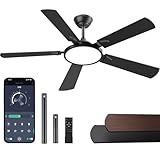


Detailed Product Reviews
Understanding the Unique Challenges of High Ceiling Installations
Why Standard Fans Don’t Measure Up for Tall Spaces
Standard ceiling fans are engineered for rooms with ceilings between 8 and 9 feet high, leaving them woefully inadequate for spaces with 12-foot, 15-foot, or even cathedral-height ceilings. The primary limitation lies in blade-to-floor distance, which affects both air movement efficiency and safety. Fans mounted too high create weak, dissipated airflow that fails to reach occupied spaces effectively. Additionally, the motor power in conventional models isn’t designed to push air across the expanded vertical distance, resulting in disappointing performance despite operating at maximum speed. High-ceiling environments also introduce unique installation complexities, including extended wiring runs and the need for specialized mounting hardware that can support the increased weight and torque of more powerful units.
The Physics of Air Circulation in Voluminous Rooms
The science of air movement changes dramatically when you’re dealing with thousands of cubic feet instead of hundreds. Warm air naturally rises and collects near the ceiling, creating temperature stratification that can make your living space feel drafty and inefficient. A properly sized smart ceiling fan for high ceilings must generate enough velocity to break up these layers and create a continuous circulation pattern that reaches the floor. This requires not just raw power, but also precision-engineered blade designs that can move large volumes of air without creating uncomfortable drafts or excessive noise. The fan’s ability to reverse direction for seasonal operation becomes even more critical in tall spaces, as the winter warming effect can significantly reduce heating costs when warm air is pulled down from the ceiling.
Essential Smart Features for Modern Ceiling Fans
Voice Control Integration and Compatibility
In 2026, voice control has become a baseline expectation rather than a premium feature, but implementation quality varies significantly. Look for fans that support multiple voice ecosystems simultaneously, allowing you to control operations through your preferred platform without being locked into a single ecosystem. The best implementations respond to natural language commands like “set the fan to breeze mode” or “reduce fan speed by 30 percent” rather than requiring rigid, memorized phrases. Pay attention to how the fan handles offline scenarios—does it retain basic voice functionality if your internet connection drops, or does it become completely non-responsive? The integration should feel seamless, not like an afterthought bolted onto a traditional fan design.
App-Based Controls and Remote Access
A sophisticated mobile application serves as your command center for smart ceiling fan operation, especially when dealing with installations that are physically out of reach. The ideal app provides granular control over speed settings, direction, timer functions, and lighting integration without lag or connectivity issues. For high ceilings, remote access becomes particularly valuable—you can adjust settings without retrieving a physical remote or using a pull chain that’s impossible to reach. Evaluate whether the app offers group controls for multiple fans, scene creation that coordinates fan operation with other smart devices, and detailed energy consumption tracking. The user interface should be intuitive enough for all household members to navigate while offering advanced settings for power users who want to fine-tune performance.
Automated Scheduling and Climate Responsiveness
The true value of smart technology emerges when your ceiling fan anticipates your needs rather than simply responding to commands. Advanced models now incorporate learning algorithms that track your usage patterns and automatically adjust speed based on time of day, occupancy, and even outdoor weather conditions. Climate responsiveness takes this further by integrating with indoor temperature sensors to maintain consistent comfort levels. For high-ceiling applications, this feature proves invaluable as the fan can automatically increase speed during heat accumulation periods or switch to winter mode when indoor temperatures drop. Look for systems that allow you to create conditional rules, such as “increase speed if room temperature exceeds 75°F and motion is detected.”
Critical Technical Specifications to Evaluate
Motor Power and Airflow Efficiency Metrics
When dealing with elevated installations, motor specifications become non-negotiable performance indicators. A fan destined for high ceilings requires a high-torque motor, typically rated at least 200 RPM with a power draw of 75-100 watts at maximum speed. More important than raw power is the airflow efficiency, measured in CFM (cubic feet per minute) per watt. Premium smart fans for tall spaces should deliver 8,000+ CFM while maintaining efficiency ratings above 70 CFM per watt. The motor type also matters—DC motors offer superior energy efficiency and quieter operation compared to traditional AC motors, though they come at a higher initial cost. For cathedral ceilings exceeding 15 feet, consider models with dual-motor configurations that can synchronize operation for maximum air movement.
Blade Span and Pitch Optimization
Blade design directly impacts how effectively air reaches floor level in tall rooms. For ceilings between 12-15 feet, a blade span of 60-72 inches typically provides optimal coverage, while spaces with 16-foot-plus ceilings benefit from 72-84 inch spans. Blade pitch—the angle at which blades slice through air—should fall between 12-15 degrees for high-ceiling applications. Shallower pitches move air too gently across long vertical distances, while steeper pitches can create uncomfortable downdrafts and strain the motor. The number of blades also influences performance; three-blade designs often achieve higher maximum speeds and better airflow efficiency, while five-blade configurations operate more quietly and distribute air more evenly across large horizontal spaces.
Downrod Length Requirements and Adjustability
The downrod keeps your fan at the optimal height—typically 8-9 feet from floor to blade bottom—for effective air circulation. For a 15-foot ceiling, this means a 6-foot downrod, while a 20-foot cathedral ceiling might require a 10-foot or longer rod. Smart ceiling fans designed for high installations offer modular downrod systems with secure locking mechanisms that prevent wobbling at extended lengths. Look for models that include multiple downrod options or offer custom length ordering. The mounting system must maintain perfect stability even with significant extension, as any wobble becomes amplified over distance and can damage both the fan and ceiling structure. Quick-connect wiring systems in the downrod simplify installation and reduce the risk of connection failures.
Installation Considerations for Elevated Mounting
Safety Protocols for High Ceiling Installation
Installing a ceiling fan at 15+ feet introduces serious safety risks that demand professional-grade precautions. The mounting location must support at least 50 pounds of static weight plus dynamic loads from rotation. For ceilings over 12 feet, you’ll need a specialized high-ceiling mounting kit with reinforced brackets that distribute weight across multiple joists. Electrical boxes must be rated for ceiling fan support—standard light fixture boxes will fail catastrophically under the torque and weight. Consider installing a service platform or permanent access point during construction, as future maintenance becomes exponentially more difficult and dangerous without safe reach. Always verify local building codes, as many jurisdictions require licensed electrician installation for ceilings above certain heights.
Electrical Requirements and Wiring Challenges
Extended downrods create unique electrical challenges that standard installations don’t face. The wiring must maintain consistent gauge and insulation quality across the entire length to prevent voltage drop and overheating. Smart fans require continuous power for their connectivity modules, meaning you cannot install them on switched circuits that completely cut power—the smart features would reset constantly. For high ceilings, consider running a dedicated 20-amp circuit to support the fan plus integrated lighting, especially in great rooms where the fan becomes a primary fixture. Wireless signal strength becomes problematic at distance; ensure your Wi-Fi router can broadcast strongly to the fan’s location, or install a mesh network node nearby. Some advanced models now include Power over Ethernet (PoE) options for more reliable connectivity in challenging installations.
Professional vs. DIY Installation Decisions
While handy homeowners might tackle standard ceiling fan installation, high-ceiling mounting demands serious consideration of professional installation. The risk of dropping a heavy fan from 15+ feet, combined with complex electrical work and the need for specialized scaffolding or lifts, makes professional installation a wise investment. Certified installers carry insurance that protects you from liability if something goes wrong and understand the structural requirements for safe long-term operation. They can also properly balance and test the fan at full speed, which is crucial for extended downrod installations where minor imbalances cause major wobbling. If you choose the DIY route, rent appropriate equipment—including stable scaffolding, not just a tall ladder—and have a helper present at all times. Never attempt to lift a smart ceiling fan alone on an extended downrod; the weight distribution becomes unwieldy and dangerous.
Design and Aesthetic Factors for 2026
Contemporary Style Trends for Smart Fans
The visual presence of a ceiling fan becomes more pronounced in rooms with high ceilings, making design selection crucial to your overall aesthetic. Current trends favor minimalist profiles with integrated smart lighting that eliminates the need for separate fixtures. Flush-mounted motor housings with slender blade designs create a lighter visual footprint, while matte finish metals in warm bronze or graphite tones complement modern interior palettes. For smart fans, the control interface should be nearly invisible—no bulky receivers or visible sensors. Some designs now incorporate the smart hub directly into the motor housing, maintaining clean lines. Consider how the fan appears from multiple viewing angles; in open-concept spaces with lofted areas, you’ll see the fan from below and potentially from elevated positions.
Material Durability in Hard-to-Reach Locations
When your ceiling fan sits 18 feet in the air, you want materials that withstand years of exposure without frequent maintenance. Composite polymer blades resist warping and moisture better than natural wood, especially important in spaces where temperature stratification creates condensation issues. Marine-grade stainless steel hardware prevents corrosion in humid environments, while powder-coated finishes resist fading and chipping from UV exposure in sun-drenched rooms. The motor housing should feature sealed bearings and gaskets that protect internal electronics from dust accumulation and moisture. For smart components, conformal coating on circuit boards prevents failure from humidity and temperature cycling. Remember that cleaning and dusting become monumental tasks at height, so selecting materials that naturally resist dust buildup saves countless hours of dangerous maintenance work.
Lighting Integration Options
Smart ceiling fans for high ceilings often serve as the primary light source in voluminous spaces, making integrated lighting both practical and aesthetically desirable. Look for LED systems with adjustable color temperature ranging from warm 2700K to cool 5000K, allowing you to customize ambiance throughout the day. Lumen output should reach 3,000+ for adequate illumination in large rooms with high ceilings. Smart dimming capabilities that work via voice command and app control eliminate the need for separate wall dimmers. Some advanced models offer directional lighting panels that you can adjust remotely to highlight specific areas below. Consider emergency backup power for lighting circuits—if your smart fan’s connectivity fails, you should still be able to turn lights on manually or through a hardwired switch.
Performance Metrics That Matter
CFM Ratings for Large Space Coverage
Cubic feet per minute (CFM) represents the volume of air a fan moves, and high ceilings demand exceptional performance in this metric. For rooms with ceilings over 12 feet, target fans rated for 8,000-10,000 CFM on high speed. However, raw CFM doesn’t tell the complete story—how that air moves through your space matters equally. High-velocity airflow that creates a narrow column of wind provides little comfort in large rooms. Instead, look for fans that generate high CFM while maintaining a broad, gentle airflow pattern. Some manufacturers now provide “effective CFM” ratings that account for ceiling height, giving you a more realistic performance expectation. For multi-story great rooms, consider installing two smaller smart fans rather than one massive unit, as this creates better cross-ventilation and more even temperature distribution.
Noise Levels and Acoustic Performance
A fan’s mechanical noise becomes more noticeable in rooms with high ceilings due to sound reflection and the fact that you’re often sitting further from the noise source. Quality smart fans for tall spaces should operate at less than 35 decibels on medium speed—roughly the sound level of a quiet library. DC motors inherently run quieter than AC alternatives, making them preferable for high-ceiling installations where motor hum travels further. Blade design also impacts acoustics; winglets and trailing edge modifications reduce turbulent noise. Smart features should include “sleep modes” that automatically reduce speed and noise levels during nighttime hours. Be wary of fans that produce electrical hum from their smart components—poorly shielded circuitry can introduce annoying high-frequency noise that permeates quiet rooms.
Energy Consumption and Efficiency Ratings
Smart ceiling fans should deliver substantial energy savings, particularly in high-ceiling spaces where HVAC systems work overtime to combat temperature stratification. Look for ENERGY STAR certification with efficiency ratings above 75 CFM per watt. DC motor fans typically consume 70% less electricity than comparable AC models while delivering superior airflow. Smart scheduling features maximize savings by coordinating fan operation with your HVAC system—running the fan to distribute conditioned air allows you to set your thermostat several degrees higher in summer or lower in winter. Some advanced models integrate directly with smart thermostats, creating a unified climate control system that optimizes whole-home energy usage. Calculate potential savings by considering that an efficient smart fan operating 12 hours daily might cost only $15-25 annually in electricity while reducing HVAC expenses by 15-30%.
Smart Home Ecosystem Integration
Compatibility with Major Platforms
Your smart ceiling fan should seamlessly integrate with your existing smart home infrastructure rather than forcing you to adopt another proprietary ecosystem. In 2026, the leading platforms include major voice assistants, whole-home automation hubs, and emerging Matter-compatible devices. Verify that the fan’s smart module receives regular firmware updates to maintain compatibility as platforms evolve. The best implementations allow you to control the fan through multiple interfaces simultaneously—voice commands, mobile app, wall panel, and physical remote—without conflicts. Check whether the fan supports local control (functions without internet) for essential operations, as cloud-only devices become useless during network outages. For high ceilings, reliable connectivity is paramount since manually accessing the fan during a system failure becomes a major undertaking.
Multi-Device Synchronization
In expansive spaces with high ceilings, your smart fan rarely operates in isolation. It should coordinate with smart thermostats, motorized window treatments, and air purifiers to create comprehensive climate zones. Look for fans that support scene creation, such as “evening relaxation” that dims lights, reduces fan speed, and adjusts HVAC setpoints simultaneously. Geofencing capabilities allow the fan to respond to your presence—turning on when you arrive home and adjusting based on which room you occupy. For homes with multiple smart fans, group controls let you synchronize operation across floors, creating consistent airflow patterns throughout vertical spaces. The synchronization should happen with minimal lag; high-quality systems respond to group commands within milliseconds, not seconds.
Firmware Updates and Long-Term Support
Smart devices are only as good as their ongoing software support. When evaluating ceiling fans for high installations, prioritize manufacturers with a proven track record of providing firmware updates for at least 5-7 years post-purchase. The update process should be automatic and seamless, occurring during low-usage hours without requiring manual intervention. Check whether the fan’s smart module is replaceable rather than permanently integrated—this allows you to upgrade connectivity standards (like moving from Wi-Fi 6 to Wi-Fi 7) without replacing the entire unit. For high-ceiling fans, this modular approach proves especially valuable given the installation complexity and cost. Investigate the manufacturer’s policy on security updates; smart home devices can become vulnerable to hacking if not regularly patched, and a ceiling fan 18 feet in the air isn’t something you want failing due to a cyberattack.
Advanced Features Worth Considering
Motion Sensors and Occupancy Detection
Integrated motion sensors transform your smart fan from a reactive device into a proactive climate management system. For high ceilings, look for sensors with a detection range of at least 20 feet and a wide field of view to cover the entire room below. Advanced models distinguish between human movement and pets, preventing unnecessary operation. Occupancy-based controls should offer adjustable timeout periods—anywhere from 5 minutes to 2 hours—so the fan doesn’t shut off immediately when you sit still. Some systems integrate with whole-home presence detection, keeping the fan running if people are detected elsewhere in an open-concept space. The sensor placement matters; it should be angled downward from the motor housing without creating blind spots under the fan itself.
Temperature and Humidity Monitoring
Built-in environmental sensors elevate smart fan functionality by enabling true automation rather than simple scheduling. High-quality fans include precision temperature sensors accurate to ±0.5°F and humidity sensors within ±3% relative humidity. These sensors should sample conditions every 30-60 seconds, allowing the fan to respond quickly to changing conditions. For high ceilings, dual-sensor configurations that measure both ceiling-level and room-level conditions provide the most intelligent operation. The fan can then automatically adjust speed when it detects heat stratification or activate condensation prevention modes when humidity rises near the ceiling. Data logging capabilities let you track environmental patterns over time, helping you optimize both fan settings and whole-home HVAC strategies.
Learning Algorithms and Adaptive Performance
The cutting edge of smart fan technology includes AI-driven learning that observes your preferences and automatically adjusts operation without manual programming. These systems track which speeds you select at different times of day, how you coordinate fan operation with HVAC usage, and even correlate outdoor weather conditions with your indoor climate preferences. Over 2-4 weeks, the fan develops a personalized comfort profile and begins anticipating your needs. For high-ceiling installations, adaptive performance proves especially valuable as the system learns how long it takes to effectively circulate air in your specific space and adjusts pre-cooling or pre-heating schedules accordingly. The best implementations allow you to review and modify the learned behaviors, ensuring the automation enhances rather than frustrates your comfort.
Budget Planning and Value Assessment
Understanding Price Tiers and Features
Smart ceiling fans for high ceilings fall into three general price categories that reflect capabilities and build quality. Entry-level smart fans ($200-400) offer basic app control and voice compatibility but typically lack advanced sensors and use less powerful AC motors. Mid-range options ($400-700) provide robust CFM ratings suitable for 12-15 foot ceilings, reliable smart integration, and quality DC motors. Premium models ($700-1,200+) deliver the high CFM needed for cathedral ceilings, advanced AI features, integrated environmental sensors, and premium materials designed for decades of maintenance-free operation. When budgeting, factor in installation costs, which can range from $150-500 for high-ceiling mounting depending on complexity. Remember that the cheapest upfront option often becomes the most expensive long-term choice when you account for energy inefficiency, limited lifespan, and lack of software support.
Long-Term Cost Savings Calculations
The true value of a smart ceiling fan emerges over years of operation, particularly in high-ceiling spaces where HVAC costs run high. Calculate potential savings by comparing the fan’s wattage (typically 20-35W for DC models) against your air conditioner’s consumption (2,000-5,000W). Running a smart fan to maintain comfort allows you to raise your thermostat by 4-6°F in summer, reducing cooling costs by 15-25%. In a 2,500 square foot home with high ceilings, this can translate to $300-500 annual savings. Winter operation delivers similar benefits by redistributing warm air, potentially reducing heating costs by 10-15%. Factor in the fan’s lifespan—quality units last 15-20 years—meaning your total savings could exceed $5,000 over the product’s lifetime, easily justifying a premium initial investment.
Warranty and Support Considerations
Comprehensive warranty coverage proves especially important for hard-to-reach installations. Seek fans with lifetime warranties on the motor and at least 5-year coverage on all other components, including smart modules. The warranty should specifically cover high-ceiling installations, as some manufacturers limit coverage based on downrod length. Evaluate the manufacturer’s support infrastructure—do they offer 24/7 technical assistance for smart features? Is there a network of certified repair technicians who can safely service fans at height? Some premium brands now include “serviceability clauses” that guarantee free professional maintenance visits during the warranty period, a valuable perk for high installations. Check whether the warranty transfers if you sell your home, as this can impact resale value in luxury properties where high-ceiling fans are standard features.
Maintenance and Accessibility Solutions
Cleaning Strategies for Hard-to-Reach Fans
Dust accumulation on high-mounted fans happens faster than you might expect, as rising air currents carry particles upward where they settle on elevated surfaces. Plan your cleaning strategy before installation. Extended-reach dusters with microfiber heads can clean blades from floor level if you choose a fan with smooth, sealed surfaces. Some homeowners install a pulley-mounted cleaning system during construction—a discreet rope system that allows you to lower a cleaning pad from the fan to floor level. For deep cleaning, consider fans with quick-release blade systems that let you remove and clean blades safely at ground level. Smart self-diagnostic features can alert you when dust buildup affects motor performance or balance, taking guesswork out of maintenance scheduling. Never use pressure washers or spray cleaners on high-mounted fans, as moisture can seep into the motor housing and smart components.
Component Longevity in High-Mount Applications
The combination of height, temperature variations, and constant vibration places unique stresses on ceiling fan components. Capacitors in the smart control module are often the first failure point, especially when exposed to heat accumulation near the ceiling. Premium fans use solid-state capacitors rated for 10,000+ hours at elevated temperatures. Bearing quality directly impacts lifespan—look for sealed, permanently lubricated bearings rated for continuous operation. The smart connectivity module should be thermally isolated from the motor housing to prevent heat-related failures. For installations in coastal or humid climates, conformal coating on all circuit boards prevents corrosion that can disable smart features. Consider fans with modular component design that allows you to replace the smart module, light kit, or even motor independently, extending the overall system lifespan without requiring complete replacement.
Troubleshooting Remote Smart Features
When your fan is 18 feet in the air, you can’t easily reset it or check connections when smart features malfunction. Prioritize fans with robust remote diagnostics that allow you to troubleshoot connectivity issues through the mobile app. The system should provide clear error messages indicating whether problems stem from Wi-Fi signal strength, server connectivity, or hardware failures. Some advanced models include a physical reset button accessible via a long pole, allowing you to reboot the smart module without climbing. For persistent issues, remote technical support that can access diagnostic logs and push firmware fixes without requiring physical access proves invaluable. Ensure the fan retains basic manual control—typically via a pull chain or wall switch—as a failsafe when smart features fail. This backup becomes essential in extreme weather when you need fan operation regardless of connectivity status.
Frequently Asked Questions
What is the optimal mounting height for a smart ceiling fan in a room with a 16-foot ceiling?
For 16-foot ceilings, mount the fan so the blade bottoms sit 9-10 feet above the floor, requiring a 6-7 foot downrod. This height maximizes airflow reach while maintaining safety clearance. Always measure from the finished floor to the lowest point of the fan blades, accounting for any flooring changes after installation.
How do I ensure reliable Wi-Fi connectivity for a smart fan mounted 15+ feet high?
Install a mesh Wi-Fi node or access point on the same floor as the fan, positioned within 30 feet and free from major obstructions. Before final installation, test signal strength at the mounting location using your smartphone. Some premium fans include directional antennas or support for 2.4GHz and 5GHz bands, improving connection reliability at distance.
Can smart ceiling fans effectively reduce my heating and cooling costs in rooms with cathedral ceilings?
Yes, when properly sized and configured, smart fans can reduce HVAC costs by 15-30% in high-ceiling spaces. In winter, reverse operation pushes warm ceiling air downward, allowing lower thermostat settings. In summer, forward circulation creates wind chill effects that let you raise air conditioning setpoints. Smart automation maximizes these savings by optimizing operation timing.
Are DC motors worth the extra cost for high-ceiling applications?
DC motors justify their premium price through 70% better energy efficiency, quieter operation, and finer speed control—typically 6-8 speeds versus 3 for AC motors. The reduced energy consumption translates to faster payback in large spaces, while quieter operation becomes more noticeable in rooms where fan noise travels further. The extended lifespan of DC motors also reduces replacement frequency in hard-to-reach installations.
What safety certifications should I look for in a smart fan for high ceilings?
Verify UL or ETL listing specifically for ceiling fan use, not just general electrical safety. For high ceilings, look for additional certification for extended downrod mounting. The fan should be rated for damp or wet locations if installed in areas prone to humidity stratification. Smart components should carry FCC certification for electromagnetic interference to ensure they don’t disrupt other wireless devices.
How do I calculate the right blade span for my high-ceiling room?
Measure your room’s square footage and multiply by 3 to get the approximate CFM requirement. For example, a 400 sq ft room needs ~1,200 CFM. Then select a fan with appropriate blade span: 52" blades deliver 5,000-6,000 CFM, 60" blades provide 6,000-7,500 CFM, and 72" blades generate 7,500-10,000+ CFM. For ceilings over 15 feet, choose the largest span that fits your space aesthetically.
Will smart ceiling fans work during a power outage or internet disruption?
Smart features require both power and internet connectivity, but quality fans include manual override capabilities. During power outages, the fan won’t operate unless you have whole-home battery backup. However, during internet disruptions, local control via physical remote or pull chain should still function. Premium models offer limited offline smart control through local network connections that don’t require cloud servers.
What maintenance schedule should I follow for a high-mounted smart ceiling fan?
Dust blades monthly using an extended duster to maintain balance and efficiency. Check for wobbling seasonally by observing from floor level—any noticeable shake indicates balance issues requiring professional attention. Smart diagnostic features should alert you to motor or connectivity problems. Schedule professional inspection every 3-5 years to check mounting stability, electrical connections, and motor bearing condition.
Can I integrate my smart ceiling fan with solar panel systems or home battery storage?
Most smart ceiling fans operate on standard 120V AC power, making them compatible with homes using solar with battery backup. DC motor fans with direct DC input options offer even better integration, running directly from battery storage without inverter losses. Some advanced models include power consumption monitoring that helps you optimize solar usage by scheduling fan operation during peak generation hours.
How long should I expect a premium smart ceiling fan to last in a high-ceiling installation?
Quality smart ceiling fans designed for high ceilings should provide 15-20 years of reliable service. The motor itself often carries a lifetime warranty, while smart modules typically last 7-10 years before requiring replacement. Factors that reduce lifespan include excessive dust accumulation, voltage fluctuations, and extreme temperature cycling near the ceiling. Choosing modular designs with replaceable smart components extends the effective lifespan significantly.