Table of Contents
If you’ve ever walked into an empty room only to realize the ceiling fan has been spinning at full speed for hours, you’re not alone. Traditional ceiling fans are notorious energy wasters, blindly whirring away regardless of whether anyone’s actually enjoying the breeze. This “set it and forget it” mentality costs homeowners hundreds of dollars annually in unnecessary electricity consumption while contributing to carbon emissions that could easily be avoided.
Enter the world of smart ceiling fans—intelligent climate control solutions that adapt to your lifestyle instead of working against it. These modern marvels combine cutting-edge technology with everyday functionality to create a more comfortable, efficient, and connected home environment. Unlike their predecessors, smart fans can sense occupancy, respond to voice commands, sync with your thermostat, and even learn your daily routines to optimize airflow automatically. This guide will walk you through everything you need to know about selecting the perfect smart ceiling fan for your space, focusing on the features that matter most for energy savings and seamless smart home integration.
Top 10 Smart Ceiling Fans


Detailed Product Reviews
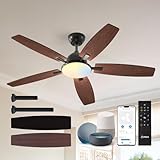
1. Dreo Smart Ceiling Fans with Lights, Low Profile Ceiling Fan with Alexa/App, 52’’ Dimmable Lighting & Color Tuning, RGB Ambient Light for Living Room, Game Room, Easy Installation, Quiet, Black

Overview: The Dreo Smart Ceiling Fan merges powerful ventilation with cutting-edge smart home integration. Delivering 6040 CFM peak airflow at under 45dB, this 52-inch black fixture offers six speeds and three modes (Sleep, Natural, Auto) via app control, making it ideal for living rooms and game rooms where personalized comfort and dynamic ambiance are equally important.
What Makes It Stand Out: The RGB ambient lighting system distinguishes this fan, offering millions of colors across Constant, Breath, and Circle modes controlled through the app. The revolutionary one-blade, one-screw installation system eliminates the frustration of misaligned screw holes. With 12 app-adjustable speeds, 6 brightness levels, and 5 color temperatures (2700-6500K), plus preset modes like Sunrise and Sunset, customization reaches professional levels.
Value for Money: Positioned in the $250-350 premium tier, the Dreo justifies its cost through unique RGB capabilities and robust engineering. While basic fans cost $100-150, this model’s smart features, quiet operation, and lighting versatility compete directly with high-end alternatives, offering gamers and smart home users features unavailable elsewhere.
Strengths and Weaknesses: Pros include seamless Alexa/Google integration, ultra-quiet performance, stress-free installation, and unparalleled lighting customization. The memory function and 12-hour timer enhance convenience. Cons include heavy reliance on the app for advanced features and potentially overwhelming options for users preferring simple wall-switch operation.
Bottom Line: This fan excels for tech enthusiasts and gamers wanting dynamic RGB ambiance. If you value smart home integration and customizable lighting over basic functionality, the Dreo is an excellent investment that transforms both comfort and atmosphere.
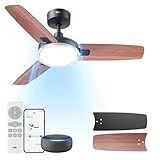
2. Sofucor 52" Smart Ceiling Fan, Indoor/Outdoor Ceiling Fans with Lights and Remote, Compatible with Alexa/Google/App, 3-Color Light 6-Speed Timing Reversible DC Motor for Bedroom Living Room Patio

Overview: The Sofucor 52" Smart Ceiling Fan delivers versatile climate control for both indoor and outdoor spaces. With a whisper-quiet DC motor operating below 30dB and generating 5000 CFM, this fixture integrates with Alexa and Google while offering three control methods for maximum flexibility in bedrooms, living rooms, or covered patios.
What Makes It Stand Out: True indoor/outdoor capability distinguishes this fan, supported by three included downrods (5"/10"/24") accommodating various ceiling heights and slopes up to 15°. The pure copper DC motor saves 75% energy over AC alternatives. Its three-way control system—voice, app, and remote—ensures accessibility regardless of your smart home setup.
Value for Money: Competitively priced for an outdoor-rated smart fan, the Sofucor offers excellent value. Comparable outdoor smart fans typically run $200-300, and the inclusion of multiple downrods and robust motor technology makes this a cost-effective all-season solution without sacrificing quality.
Strengths and Weaknesses: Pros include outdoor durability, ultra-quiet operation, flexible mounting options, and energy efficiency. The reverse airflow function maximizes year-round utility. Cons are limited to three light colors versus competitors’ broader ranges, and the 5000 CFM airflow, while adequate, trails some premium indoor-only models.
Bottom Line: Ideal for covered patios or rooms needing slope mounting, this fan balances smart features with weather-resistant construction. Choose Sofucor if outdoor capability and installation flexibility outweigh having the absolute highest airflow.
3. ZMISHIBO 52 Inch Ceiling Fan with Light, App&Remote Control, Flush Mount Low Profile, Dimmable 20W LED Light, Quiet Reversible Motor for Bedroom, Living Room, Apartment, Black

Overview: The ZMISHIBO 52-Inch Ceiling Fan delivers smart functionality in an ultra-low-profile flush mount design ideal for apartments and bedrooms with ceiling height constraints. Producing 3057 CFM airflow from its quiet DC motor, this black fixture combines 20W dimmable LED output with app and remote control at a budget-friendly price point.
What Makes It Stand Out: The true flush mount installation maximizes headroom where traditional fans won’t fit. Stepless color temperature adjustment from warm 3000K to cool 6500K provides infinite customization, while the memory function preserves your exact preferences. The pure copper motor delivers whisper-quiet operation typically reserved for premium models.
Value for Money: Positioned as the value champion, this fan offers core smart features—app control, dimming, and color tuning—for approximately $150-180. Compared to basic $80 non-smart fans, the upgrade cost is justified. While premium models exceed $250, ZMISHIBO provides essential automation without financial strain.
Strengths and Weaknesses: Pros include compact design, quiet operation, excellent light customization, and affordability. The 2000-lumen output brightly illuminates most spaces. Cons are modest airflow limiting large-room effectiveness and lack of native voice assistant integration. Installation requires more precision than blade-pre-attached models.
Bottom Line: An outstanding choice for budget-conscious buyers or rooms with low ceilings. If you need smart features and space efficiency more than maximum airflow, this fan delivers exceptional value without compromising essential functionality.
4. Dreo Smart Ceiling Fan with Lights, 52 Inch, 12 Speeds & 3 Fan Modes, Stepless Color Tones, Dimmable LED Light, 12H Timer, Quiet DC Motor, Remote/APP/Alexa Control, White Ceiling Fans Indoor

Overview: The Dreo Smart Ceiling Fan in white offers intelligent climate control emphasizing automation and performance. Its brushless DC motor generates 5673 CFM through 12 speeds and three modes while maintaining whisper-quiet operation below conversation level, making it ideal for bedrooms and living spaces prioritizing both power and serenity without colorful distractions.
What Makes It Stand Out: Customizable preset modes and routines differentiate this model, allowing one-tap scene activation for reading, working, or nighttime use. The 14° angled blade design maximizes airflow efficiency. With stepless brightness (1-100%) and color temperature (2700-6500K), plus a 12-hour timer, automation possibilities are extensive and precise.
Value for Money: Competing in the $250-350 premium tier, this fan’s value lies in performance and refinement rather than RGB flashiness. The brushless DC motor’s durability and the 5673 CFM output justify the cost for buyers wanting maximum air movement with smart convenience, offering better value than similarly-priced competitors with lower airflow ratings.
Strengths and Weaknesses: Pros include exceptional airflow, ultra-quiet brushless motor, comprehensive app-based automation, and voice assistant compatibility. The all-season reversible function adds year-round utility. The primary con is the absence of RGB lighting—a drawback for some, a benefit for others seeking sophistication. Premium pricing may deter budget buyers.
Bottom Line: Choose this Dreo model if raw performance and smart automation matter more than colorful ambiance. It’s the ideal ceiling fan for large rooms where powerful, quiet airflow and intelligent scheduling create the perfect environment.
5. Ohniyou Ceiling Fans with Lights, 52’’ Low Profile Ceiling Fan with Light and Remote/APP Control, Modern Flush Mount Ceiling Fan for Indoor Bedroom Living Room, Dimmable, Qiuet DC Motor, Black

Overview: The Ohniyou 52" Low Profile Ceiling Fan combines modern aesthetics with ultra-quiet operation. Featuring a reversible DC motor producing 4580 CFM at just 20dB, this black fixture offers app and remote control with three color temperatures and 5-100% dimming, suitable for bedrooms, living rooms, and covered patios where silence and style are paramount.
What Makes It Stand Out: The double-sided blade design provides reversible aesthetics—black on one side, wood-grey on the other—adapting to changing décor without blade replacement. The claimed 30-minute installation targets DIYers frustrated with complex assemblies. With noise levels at just 20dB, this is among the quietest fans available.
Value for Money: Positioned in the $180-220 mid-range, this fan competes aggressively with premium indoor models while offering unique design flexibility. The dual-finish blades effectively provide two fans in one, while the ultra-quiet motor technology typically commands higher prices, making it a strong value for noise-sensitive buyers.
Strengths and Weaknesses: Pros include exceptional quietness, versatile blade styling, straightforward installation, and adequate airflow. The 18W LED provides efficient illumination. Cons are limited to three light colors versus competitors’ five or more, and the 4580 CFM airflow, while solid, trails top-tier models. No native voice integration mentioned.
Bottom Line: Perfect for style-conscious buyers and light sleepers prioritizing quiet operation. If you value adaptable aesthetics and near-silent performance over maximum airflow and RGB features, this fan delivers an impressive balance of form and function.
Understanding Smart Ceiling Fan Technology
What Makes a Ceiling Fan “Smart”?
A smart ceiling fan goes far beyond a simple on/off switch and pull chain. At its core, “smart” means connectivity and intelligence. These fans contain integrated Wi-Fi or Bluetooth radios that allow them to communicate with your smartphone, voice assistants, and other smart home devices. The true intelligence comes from built-in sensors and software that enable autonomous operation based on environmental conditions, occupancy, or pre-set schedules. Unlike traditional fans that run at constant speeds until manually adjusted, smart fans can modulate their performance in real-time, responding to temperature changes, humidity levels, or even the number of people in a room.
The Evolution from Traditional to Smart Fans
The journey from basic ceiling fans to intelligent climate controllers represents decades of incremental innovation. Early ceiling fans were purely mechanical, offering limited speed control through capacitor-based regulators that consumed energy even when the fan was off. The first major leap came with remote-controlled fans, which added convenience but not true intelligence. Today’s smart fans represent a paradigm shift—they’re not just controllable devices but active participants in your home’s energy ecosystem. This evolution mirrors the broader transformation of household appliances from standalone utilities to interconnected smart home components.
Energy Efficiency Benefits
How Smart Fans Reduce Energy Consumption
Smart ceiling fans slash energy usage through several ingenious mechanisms. Occupancy sensors ensure the fan only operates when rooms are actually in use, eliminating the primary source of waste. Variable DC motors consume up to 70% less electricity than traditional AC motors while delivering superior airflow. Integration with smart thermostats creates a coordinated cooling strategy where fans handle moderate temperature regulation, allowing air conditioners to cycle less frequently. Many models also feature eco-modes that automatically adjust speed based on ambient temperature, maintaining comfort while minimizing power draw.
The Impact on Your Utility Bills
The financial benefits of smart ceiling fans become apparent within the first few billing cycles. During summer months, a properly utilized smart fan can reduce air conditioning costs by 15-30% by creating wind-chill effects that make rooms feel 4-8 degrees cooler. In winter, reversing the fan direction at low speeds pushes warm ceiling air downward, cutting heating expenses by up to 10%. The typical household can expect to save between $150 and $400 annually, depending on climate, home size, and energy rates. These savings accelerate when multiple fans work in concert throughout the house, creating a whole-home approach to climate efficiency.
Seasonal Energy Savings Strategies
Smart fans excel at year-round energy optimization when used strategically. In summer, program your fan to run counterclockwise at higher speeds during peak heat hours, then automatically reduce speed as evening temperatures drop. Set humidity-triggered routines that increase airflow when moisture levels rise, reducing the need for dehumidifiers. During winter, schedule clockwise rotation at low speeds to recirculate warm air without creating drafts. Spring and fall benefit from temperature-based automation where fans activate only when indoor temperatures exceed comfortable thresholds, delaying the need for heating or cooling systems entirely.
Key Features to Look For
Wi-Fi Connectivity and App Control
Robust Wi-Fi connectivity forms the backbone of any smart fan’s functionality. Look for 2.4GHz compatibility, which offers better range through walls than 5GHz bands. The companion app should provide intuitive speed control, direction changes, lighting adjustments, and access to advanced scheduling features. Premium apps include energy monitoring dashboards that track consumption patterns and suggest optimization strategies. Offline functionality is crucial—ensure the fan maintains basic operation even when internet service is interrupted. Consider apps that support multiple users with customizable permission levels, allowing family members to control the fan without granting full smart home access.
Voice Assistant Integration
Seamless voice control transforms how you interact with your ceiling fan. Compatibility with major platforms like Amazon Alexa, Google Assistant, and Apple HomeKit enables hands-free operation from anywhere in your home. Advanced integration includes natural language commands such as “set the living room fan to summer mode” or “sync bedroom fan with thermostat.” Check for grouped command capabilities that let you control multiple fans simultaneously. Some systems support conditional voice routines—like automatically turning off all fans when you say “goodnight” or “I’m leaving.” The best implementations respond to voice commands even during Wi-Fi outages by storing basic commands locally.
Automated Scheduling and Timers
Sophisticated scheduling separates truly smart fans from merely connected ones. Look for multi-scene programming that adjusts fan behavior throughout the day based on room usage patterns. Advanced timers can coordinate with sunrise/sunset times rather than just clock hours. Vacation modes simulate occupancy by randomly activating fans to deter burglars. The most intelligent systems learn your habits over time, suggesting schedule optimizations based on actual usage data. Ensure the fan supports separate schedules for different seasons and can automatically switch between summer and winter rotation modes on specific dates.
Variable Speed Settings and DC Motors
The number and granularity of speed settings directly impact both comfort and efficiency. Premium smart fans offer 6-10 speed levels compared to the traditional 3-4, allowing precise airflow tuning. DC motors represent the gold standard, operating whisper-quiet while using significantly less electricity. These motors maintain consistent torque across all speeds, eliminating the sluggish performance common at low speeds with AC motors. Look for fans that remember your preferred speed for different scenarios—like “sleep mode” at a gentle 15% or “cooling boost” at 85% power. The ability to adjust speeds in 1% increments provides maximum control for perfectionists.
Reversible Motor Direction
Seasonal versatility hinges on effortless direction changes. Smart fans should allow motor reversal through the app or voice commands, not just a physical switch on the motor housing. The best implementations include seasonal presets that automatically adjust direction and speed based on calendar dates or outdoor temperature thresholds. Visual indicators in the app show current rotation direction, eliminating guesswork. Some advanced models feature automatic seasonal transitions that notify you when it’s time to switch directions and execute the change with a single tap. This feature proves especially valuable for fans installed on high ceilings where manual switches are inaccessible.
Built-in Lighting Options
Integrated smart lighting transforms ceiling fans into multi-function fixtures. Look for adjustable color temperature ranges from warm 2700K to cool 5000K, allowing you to match lighting to activities and times of day. Dimming capabilities should offer smooth, flicker-free transitions from 1-100% brightness. The ability to control fan and light independently is essential—avoid models that tie both functions to a single wall switch. Advanced options include circadian rhythm lighting that automatically adjusts throughout the day to support natural sleep-wake cycles. For bedrooms, seek out “night modes” that provide minimal ambient light without disrupting sleep.
Occupancy and Temperature Sensors
Onboard sensors elevate smart fans from reactive to proactive devices. Motion detectors ensure the fan activates when you enter a room and powers down after a set vacancy period, typically 5-30 minutes. Temperature sensors enable autonomous speed adjustments based on real-time conditions rather than pre-set schedules. The most advanced units combine multiple sensor types—detecting both motion and heat signatures to distinguish between empty rooms and stationary occupants. Look for adjustable sensor sensitivity to prevent false triggers from pets or passing hallway traffic. Some premium models integrate humidity sensors, automatically increasing airflow when moisture levels rise to maintain comfort without air conditioning.
Smart Home Integration
Compatibility with Major Smart Home Platforms
True smart home integration extends beyond basic voice commands. Evaluate fans that function as native devices within your existing ecosystem—whether that’s SmartThings, Hubitat, or Home Assistant. This integration enables complex automation sequences, like coordinating fan speed with smart blinds and air purifiers. Matter certification represents the emerging standard for cross-platform compatibility, ensuring your fan works seamlessly regardless of your chosen smart home platform. Check for IFTTT support, which opens endless possibilities for connecting fan behavior to external triggers like weather forecasts or your daily commute schedule.
Creating Automation Routines
The real power of smart fans emerges when they participate in whole-home automation. Design morning routines that gradually increase fan speed while raising smart blinds and starting coffee makers. Create movie scenes that dim fan lights and set optimal airflow for screen viewing. Advanced users can implement temperature differential strategies—activating fans only when the temperature between floors exceeds a certain threshold, naturally balancing whole-home climate. The most sophisticated setups use presence detection across multiple rooms, moving airflow optimization throughout the house as family members transition from bedrooms to kitchen to living spaces.
Using Smart Fans in Multi-Device Scenarios
Smart fans perform best as team players in a connected home ecosystem. Coordinate with smart thermostats to create a “cooling cascade” where fans activate first, delaying AC startup until absolutely necessary. Pair with window sensors to automatically shut off fans when windows open, preventing energy waste. Integration with air quality monitors allows fans to increase circulation when VOC or CO2 levels rise. For homes with whole-house fans, smart ceiling fans can work in concert—using predictive algorithms to determine the most efficient combination of localized and centralized cooling based on outdoor conditions and indoor occupancy patterns.
Installation and Setup Considerations
DIY Installation vs Professional Help
Most smart ceiling fans suit handy homeowners comfortable with basic electrical work, but several factors complicate DIY installation. Smart fans require neutral wires at the ceiling box—absent in many pre-1980s homes, necessitating professional electrical upgrades. The additional weight of Wi-Fi modules and sensors makes secure mounting more critical than with traditional fans. If you’re replacing a standard fan, DIY installation typically takes 1-3 hours. However, new locations without existing boxes, rooms with vaulted ceilings, or any uncertainty about electrical capacity warrant hiring a licensed electrician. Professional installation usually costs $100-$300 but ensures proper balancing, Wi-Fi signal optimization, and warranty compliance.
Wiring Requirements for Smart Features
Smart fans demand more robust electrical infrastructure than their predecessors. A dedicated neutral wire is non-negotiable for powering the smart module when the fan appears “off.” Most manufacturers require a minimum 15-amp circuit, though 20-amp is preferable for fans with powerful DC motors and integrated lighting. Consider the Wi-Fi signal strength at the installation location—metal junction boxes and thick plaster ceilings can attenuate wireless signals. Some advanced installations benefit from dedicated 2.4GHz Wi-Fi extenders or mesh network nodes placed strategically nearby. For multi-fan setups, ensure your router can handle the additional device load, as each fan counts as a separate connected device.
Ceiling Height and Room Size Factors
Proper sizing ensures your smart fan delivers optimal efficiency rather than wasted energy. For rooms up to 144 square feet, choose 36-44 inch blade spans. Medium rooms up to 225 square feet need 50-54 inch fans. Large spaces over 400 square feet require 60-inch fans or multiple units. Ceiling height determines mounting options: standard 8-foot ceilings need low-profile “hugger” mounts, while 9-foot ceilings work with traditional downrod mounts. Rooms with ceilings over 10 feet require extended downrods, with the fan blades positioned 8-9 feet above floor level for maximum effectiveness. Vaulted ceilings may need angled mounting kits and longer downrods to maintain proper blade clearance.
Design and Aesthetic Options
Modern vs Traditional Styles
Smart technology now hides within virtually any design aesthetic, eliminating the need to compromise style for functionality. Modern designs feature clean lines, integrated LED panels, and metallic finishes like brushed nickel or matte black. Traditional options include oil-rubbed bronze fixtures with faux candle lights and carved wood blades. Transitional designs bridge both worlds with simple silhouettes and versatile finishes. The key is ensuring the smart features remain accessible regardless of style—some traditional designs hide Wi-Fi modules behind decorative motor housings that might impact signal strength. Consider how the fan’s appearance integrates with your existing décor, remembering that this fixture becomes a focal point in any room.
Indoor vs Outdoor Smart Fans
Outdoor smart fans require specific certifications and construction that indoor models lack. Look for damp-rated fans for covered porches and patios, featuring weather-resistant motors and sealed control modules. Wet-rated fans suit exposed locations like pergolas, with fully waterproof electronics and corrosion-resistant hardware. Outdoor installations present unique Wi-Fi challenges—signals must penetrate exterior walls, often requiring mesh network extenders. Temperature extremes also affect performance; ensure the operating range includes your region’s seasonal variations. Some outdoor smart fans include specialized modes for insect deterrence, using specific airflow patterns to discourage mosquitoes and flies during entertaining hours.
Blade Materials and Motor Finishes
The materials significantly impact both performance and maintenance requirements. Wood blades offer classic aesthetics but may warp in humid environments, affecting balance and efficiency. MDF blades with moisture-resistant coatings provide budget-friendly alternatives with consistent performance. ABS plastic blades excel in durability and suit modern designs, though they may feel less premium. Aluminum blades offer excellent outdoor performance but can create more noise at high speeds. Motor finish options extend beyond aesthetics—powder-coated finishes resist corrosion better than painted surfaces, while brushed metals hide dust and fingerprints. Consider how blade pitch affects efficiency; steeper pitches move more air but require more powerful motors, directly impacting energy consumption.
Cost Analysis and Value
Initial Investment vs Long-Term Savings
Smart ceiling fans command premium prices, typically ranging from $200 to $600 compared to $50-$150 for basic models. This higher upfront cost purchases advanced DC motors, Wi-Fi modules, sensors, and sophisticated software development. Calculate the payback period by dividing the price difference by your expected annual energy savings—most homeowners break even within 18-36 months. Factor in intangible benefits like increased home value and enhanced comfort. Premium models costing over $500 often include features like integrated air purifiers or speakers, providing additional value streams. Consider purchasing during off-season sales (winter months) when retailers discount inventory, reducing initial investment without sacrificing capabilities.
Warranty and Durability Factors
Smart fans contain more failure points than traditional models, making warranty coverage crucial. Seek manufacturers offering at least 10-year motor warranties and 3-year warranties on electronic components. Some premium brands provide lifetime motor warranties, reflecting confidence in DC motor durability. Read warranty fine print carefully—many exclude damage from power surges, which can devastate sensitive Wi-Fi modules. Consider purchasing fans through retailers offering extended warranty plans that cover electronics specifically. Durability indicators include sealed bearing systems, powder-coated finishes, and robust mobile apps with regular firmware updates. Customer service quality matters immensely when smart features malfunction; research manufacturer responsiveness through reviews before committing.
Troubleshooting and Maintenance
Common Connectivity Issues
Wi-Fi-enabled fans occasionally drop connections, requiring systematic troubleshooting. First, verify the fan receives adequate power—intermittent electrical supply causes more connectivity issues than weak Wi-Fi signals. Check for firmware updates that resolve known connectivity bugs. If the fan connects to a 5GHz network, switch to 2.4GHz for better range and penetration. Mesh network users should ensure the fan connects to the nearest node, not a distant router. Factory resetting the fan and re-adding it to your smart home platform often resolves persistent issues. Document your fan’s MAC address during installation—this simplifies reconnection if you change routers or network passwords.
Keeping Your Smart Fan Updated
Firmware updates deliver performance improvements, security patches, and new features long after purchase. Enable automatic updates in the companion app to ensure you never miss critical fixes. However, manually check for updates monthly, as some manufacturers roll out features gradually. Before updating, verify the fan blades are stationary and the fixture is secure—updates sometimes cause brief motor activations. Read update release notes to understand new capabilities and any changes to automation behavior. For integrated smart home platforms, ensure fan firmware updates don’t break existing routines; test key automations after each update. Some manufacturers sunset support for older models, so research the company’s update history before purchasing to avoid premature obsolescence.
Frequently Asked Questions
1. Do smart ceiling fans work when the internet goes down?
Yes, most smart ceiling fans retain basic functionality during internet outages. The fan will continue to operate using the most recent settings, and wall switches remain functional. However, app control and voice commands won’t work until connectivity is restored. Some advanced models store schedules locally, ensuring automation continues uninterrupted.
2. Can I install a smart ceiling fan myself if I’m not an electrician?
If you’re comfortable with basic electrical work and have a neutral wire in your ceiling box, DIY installation is feasible. However, if your home lacks a neutral wire, you need complex wiring, or you’re installing in a new location, hiring a licensed electrician is strongly recommended for safety and warranty compliance.
3. How much money can I realistically save with a smart ceiling fan?
Typical households save $150-$400 annually depending on climate, home size, and energy rates. The savings come from reduced air conditioning usage, automated occupancy-based operation, and the superior efficiency of DC motors. Homes in hot climates with high electricity rates see the fastest payback periods.
4. Will a smart ceiling fan interfere with my other Wi-Fi devices?
Smart fans use minimal bandwidth—equivalent to a smart bulb. However, each fan counts as a connected device on your router. Most modern routers handle 50+ devices, but if you’re near capacity, consider a mesh network system to accommodate additional smart home devices without performance degradation.
5. What’s the difference between a DC motor and an AC motor in smart fans?
DC motors are significantly more efficient (using up to 70% less energy), operate virtually silently, and offer more precise speed control with 6-10 settings versus 3-4 with AC motors. They’re also lighter and more compact, allowing for sleeker fan designs. The higher upfront cost pays for itself through energy savings and superior performance.
6. Can smart ceiling fans integrate with my existing smart thermostat?
Yes, most premium smart fans integrate directly with Nest, Ecobee, and other major smart thermostats. This allows coordinated cooling strategies where fans activate first, delaying AC startup. The integration typically works through your smart home platform rather than direct fan-to-thermostat communication.
7. Are smart ceiling fans suitable for outdoor use?
Only fans specifically rated for outdoor use (damp or wet rated) are suitable. These feature weather-sealed electronics, corrosion-resistant materials, and specialized coatings. Indoor smart fans will fail quickly in outdoor conditions due to moisture damage and temperature extremes affecting sensitive electronic components.
8. How do I know what size smart fan I need for my room?
Measure your room’s square footage and choose accordingly: up to 144 sq ft = 36-44 inch blades; 144-225 sq ft = 50-54 inch blades; over 400 sq ft = 60+ inch blades or multiple fans. Also consider ceiling height—blades should be 8-9 feet from the floor for optimal airflow and safety.
9. What happens if the smart features fail? Can I still use the fan?
All smart fans include manual override capabilities through wall switches or pull chains. If the smart module fails completely, the fan reverts to traditional operation with basic speed control. However, you lose automation, app control, and voice commands until the module is repaired or replaced.
10. How long do smart ceiling fans typically last?
The motor itself typically lasts 15-20 years, similar to traditional fans. However, the smart module lifespan is harder to predict, usually 5-10 years depending on update support and component quality. Purchasing from established manufacturers with strong warranty coverage and update histories maximizes long-term value and extends usable life.
See Also
- Stop Wasting Energy with the 10 Best Energy Efficient Ceiling Fans This Year
- Stop Wasting Energy with the 10 Best Modern Ceiling Fans This Year
- Stop Humidity Buildup with the 10 Best Outdoor Smart Ceiling Fans This Year
- Stop Noise Disturbance with the 10 Best Quiet Smart Ceiling Fans This Year
- Stop High Energy Bills with the 10 Best Energy Efficient Ceiling Fans This Year