Table of Contents
As we step into 2026, the humble ceiling fan has evolved far beyond its simple on-and-off origins. Today’s smart ceiling fans are sophisticated climate control hubs that seamlessly integrate with our connected lifestyles, offering unprecedented levels of comfort, energy efficiency, and aesthetic appeal. These modern marvels don’t just circulate air—they learn your preferences, respond to voice commands, sync with your thermostat, and even adjust automatically based on room occupancy or outdoor weather conditions.
The transformation of ceiling fans into intelligent home devices represents one of the most practical yet exciting developments in smart home technology. Unlike many gadgets that feel like novelties, smart ceiling fans deliver tangible benefits that impact your daily comfort and utility bills. Whether you’re building a new home, renovating a modern space, or simply upgrading your existing fixtures, understanding what makes these next-generation fans worth the investment will help you make informed decisions that enhance your living environment for years to come.
Top 10 Smart Ceiling Fans
Detailed Product Reviews
1. Dreo Smart Ceiling Fans with Lights, Low Profile Ceiling Fan with Alexa/App, 52’’ Dimmable Lighting & Color Tuning, RGB Ambient Light for Living Room, Game Room, Easy Installation, Quiet, Black

Overview: The Dreo Smart Ceiling Fan delivers powerful 6040 CFM airflow at under 45dB through a sleek 52-inch low-profile design. This black fan integrates six speeds, three modes (Sleep, Natural, Auto), and 12 additional app-adjustable speeds for precise climate control. Its LED system offers six brightness levels across five color temperatures (2700-6500K), complemented by unique RGB ambient lighting that transforms room atmosphere with customizable color modes.
What Makes It Stand Out: Dreo’s RGB lighting system with Constant, Breath, and Circle modes provides infinite color choices, a feature rarely found in ceiling fans. The revolutionary one-blade-one-screw installation eliminates misalignment headaches, drastically reducing setup time. With app presets for Sunrise, Sunset, Reading, and Working, plus a 12-hour timer and memory function, it offers unmatched customization. Alexa integration and reversible airflow controlled via app or remote further enhance its smart credentials.
Value for Money: Positioned in the premium tier, this fan justifies its price through superior airflow performance and lighting versatility that eliminates need for separate smart bulbs or ambient light strips. While basic smart fans start around $150, Dreo’s 6040 CFM output, advanced scheduling, and true RGB capability consolidate multiple devices into one investment, saving money long-term despite higher upfront cost.
Strengths and Weaknesses:
- Pros: Exceptional RGB lighting; highest CFM output (6040); innovative easy-install system; extensive app controls (12 speeds); Alexa integration; memory function; quiet operation.
- Cons: RGB may not suit traditional decor; <45dB is good but not whisper-quiet; low-profile design limits sloped ceiling use; premium pricing excludes budget buyers.
Bottom Line: The Dreo Smart Ceiling Fan excels for tech-savvy users wanting maximum customization and powerful performance. Its RGB lighting and superior airflow make it ideal for modern living spaces and game rooms where ambiance equals importance with function.
2. Ohniyou Ceiling Fans with Lights, 52’’ Low Profile Ceiling Fan with Light and Remote/APP Control, Modern Flush Mount Ceiling Fan for Indoor Bedroom Living Room, Dimmable, Qiuet DC Motor, Black

Overview: The Ohniyou 52-inch ceiling fan operates at an ultra-quiet 20dB while delivering 4,580 CFM through six speed settings. Its reversible DC motor provides year-round comfort, and the 18W LED offers three color temperatures (3000K/4500K/6000K) with 5-100% dimming. The flush-mount design features double-sided blades, while comprehensive app and remote controls enable convenient operation.
What Makes It Stand Out: Ohniyou’s remarkable 20dB noise level makes it one of the quietest fans available—perfect for bedrooms and light sleepers. The reversible double-sided blade design (black and wood-grey) allows instant style adaptation without extra purchases. Its claimed 30-minute installation, supported by detailed video guidance, significantly reduces typical ceiling fan setup frustration and time investment.
Value for Money: This mid-to-upper tier fan competes strongly against premium brands costing $50-100 more. The combination of whisper-quiet operation, reversible dual-finish blades, and robust 4,580 CFM airflow delivers exceptional value. While lacking RGB lighting, its superior noise performance and flexible styling make it a smarter investment for tranquility-focused buyers than flashier alternatives with higher decibel ratings.
Strengths and Weaknesses:
- Pros: Ultra-quiet 20dB operation; reversible dual-finish blades; straightforward 30-min installation; full app/remote functionality; energy-efficient DC motor; suitable for covered outdoor use; flicker-free dimmable LED.
- Cons: No RGB or advanced lighting modes; 4,580 CFM is solid but not class-leading; limited to three fixed color temps; app interface less polished than major brands.
Bottom Line: The Ohniyou ceiling fan is perfect for noise-sensitive environments like bedrooms or nurseries. Its dual-finish blades and straightforward installation make it an excellent value choice for those prioritizing peace and versatility over flashy smart features.
3. Sofucor 52" Smart Ceiling Fan, Indoor/Outdoor Ceiling Fans with Lights and Remote, Compatible with Alexa/Google/App, 3-Color Light 6-Speed Timing Reversible DC Motor for Bedroom Living Room Patio

Overview: Sofucor’s versatile 52-inch smart ceiling fan delivers 5,000 CFM with a whisper-quiet DC motor under 30dB for both indoor and outdoor covered spaces. It offers three control methods—voice, app, and remote—with Alexa/Google integration. The 18W LED provides three color temperatures with 10-100% dimming, while the reversible motor ensures year-round comfort. Multiple downrods accommodate various ceiling heights and slopes up to 15 degrees.
What Makes It Stand Out: The Sofucor’s true differentiator is indoor/outdoor versatility with included 5", 10", and 24" downrods for flexible installation on flat or sloped ceilings—a feature rarely bundled at this price. The pure copper DC motor delivers 75% energy savings compared to AC motors, while the 2/4-hour sleep timer provides thoughtful power management. Most components arrive pre-assembled, streamlining installation significantly.
Value for Money: This fan offers outstanding value by combining outdoor-rated durability with premium smart features typically reserved for pricier models. Competitors often charge $200+ for indoor/outdoor versatility alone. With three downrods, voice control compatibility, and strong 5,000 CFM performance, it undercuts specialized outdoor fans while matching their build quality and exceeding their feature set.
Strengths and Weaknesses:
- Pros: Indoor/outdoor rated; three included downrods; sloped ceiling compatible (≤15°); 75% energy savings; Alexa/Google integration; quiet <30dB operation; pre-assembled components; strong 5,000 CFM airflow.
- Cons: Only three color temp options; no RGB lighting; app interface can be finicky; 2/4-hour timer less flexible than competitors’ 12-hour options; installation video quality varies.
Bottom Line: The Sofucor Smart Ceiling Fan is the go-to choice for covered patios or sloped-ceiling installations. Its bundled downrods and outdoor durability make it unbeatable value for those needing versatile placement without sacrificing smart functionality.
4. ZMISHIBO 52 Inch Ceiling Fan with Light, App&Remote Control, Flush Mount Low Profile, Dimmable 20W LED Light, Quiet Reversible Motor for Bedroom, Living Room, Apartment, Black

Overview: The ZMISHIBO 52-inch flush-mount ceiling fan offers a streamlined solution for modern apartments, delivering 3,057 CFM average airflow through a quiet reversible DC motor. Its 20W LED produces 2000 lumens with stepless color temperature adjustment from 3000K to 6500K and 10-100% dimming. The low-profile design suits ceiling height constraints, while app and remote controls provide convenient smart operation without voice assistant dependency.
What Makes It Stand Out: ZMISHIBO’s stepless color temperature tuning provides infinite light customization between warm and cool white—a feature often limited to presets in competing models. The 20W LED’s impressive 2000-lumen output effectively brightens larger spaces, while the memory function retains both light and fan settings after power cycles. Its focus on core functionality over flashy extras results in a reliable, no-frills smart fan experience that prioritizes everyday usability.
Value for Money: This fan competes in the budget-friendly smart category, typically priced 20-30% below premium alternatives. While its 3,057 CFM airflow is modest compared to high-performance models, the stepless dimming and color tuning, combined with robust build quality and pure copper motor, deliver features that outperform its price point. It’s ideal for smaller rooms where maximum airflow isn’t critical but lighting quality matters.
Strengths and Weaknesses:
- Pros: Stepless color temperature adjustment; bright 2000-lumen LED; memory function; quiet operation; low-profile flush mount; straightforward app/remote; reversible motor; attractive modern design.
- Cons: Lower 3,057 CFM airflow; no voice assistant integration; limited smart scheduling options; no RGB or ambient lighting; not suitable for sloped ceilings; installation instructions could be clearer.
Bottom Line: The ZMISHIBO ceiling fan is perfect for apartment dwellers or those seeking quality smart lighting with modest airflow needs. Its stepless tuning and bright LED make it a budget-smart choice for smaller living spaces where installation height is limited.
5. Roomratv 52 Inch Smart Ceiling Fan with Light,App Control,Ultra Silent Reversible DC Motor Fan Remote Control Compatible with Alexa Google home(black)

Overview: The Roomratv 52-inch smart ceiling fan emphasizes ultra-silent operation and comprehensive smart home integration, working with Alexa, Google Home, and multiple app platforms including SmartLife and Tuya. Its reversible DC motor generates six speeds across three modes—Normal, Sleep, and Natural—with noise under 50dB. The integrated dimmable LED offers 3000K-6000K color tuning with 10-100% brightness control, while flexible 1-8 hour timing supports energy-conscious usage patterns.
What Makes It Stand Out: Roomratv’s broad smart home compatibility across multiple platforms (SmartEra, SmartLife, Tuya) ensures seamless integration regardless of your existing ecosystem—a flexibility many competitors lack. The specialized Sleep mode with gentle breeze settings makes it particularly suitable for nurseries and bedrooms. Its eight-hour maximum timer surpasses many rivals, allowing extended overnight operation without manual intervention for better sleep comfort.
Value for Money: This fan sits in the competitive mid-range segment, offering premium voice control compatibility without the premium price tag. While its <50dB noise level isn’t class-leading, the multi-platform support and extended timer functionality provide practical value that exceeds similarly priced alternatives focused on single app ecosystems. The reversible motor and three operational modes deliver year-round utility that justifies the investment.
Strengths and Weaknesses:
- Pros: Multi-platform app compatibility (SmartLife, Tuya, etc.); Alexa/Google voice control; 1-8 hour flexible timer; three operational modes including Sleep; reversible motor; standard 52" size fits most rooms; straightforward installation.
- Cons: <50dB is louder than premium quiet models; no RGB lighting; CFM rating not specified; app experience varies by platform; limited color temp options; no memory function mentioned; build quality less documented than major brands.
Bottom Line: The Roomratv Smart Ceiling Fan is ideal for smart home enthusiasts using multiple platforms. Its flexible timer and Sleep mode make it a solid bedroom choice, though noise-sensitive buyers should consider quieter alternatives for primary sleeping spaces.
6. Sofucor 52" Smart Ceiling Fan, Indoor/Outdoor Ceiling Fans with Lights and Remote, Compatible with Alexa/Google/App, 3-Color Light 6-Speed Timing Reversible DC Motor for Bedroom Living Room Patio

Overview: The Sofucor 52" Smart Ceiling Fan delivers versatile climate control for indoor and covered outdoor spaces. This three-in-one smart device integrates voice, app, and remote control with a powerful DC motor generating up to 5500 CFM airflow. Designed for year-round comfort, it features reversible blade rotation and customizable lighting across three color temperatures, making it suitable for bedrooms, living rooms, and patios.
What Makes It Stand Out: This fan’s triple-control flexibility sets it apart—seamlessly switch between Alexa/Google voice commands, smartphone app, or traditional remote. The pure copper DC motor operates below 30dB while consuming 75% less energy than AC motors. Its all-season functionality includes forward rotation for summer cooling and reverse circulation for winter warmth distribution. The package includes three downrods (5"/10"/24") supporting sloped ceilings up to 15°, with most components pre-assembled for 30-minute installation.
Value for Money: Priced competitively for a feature-rich smart fan, it offers exceptional value through energy savings and multi-location versatility. The included installation accessories and robust 5500 CFM performance rival premium brands costing significantly more. For users seeking smart home integration without RGB lighting premiums, this represents a practical mid-range investment.
Strengths and Weaknesses: Pros: Powerful yet quiet operation; versatile three-way control; true indoor/outdoor versatility; energy-efficient DC motor; straightforward 30-minute installation; comprehensive downrod options for various ceiling heights.
Cons: Limited to three fixed color temperatures (no stepless adjustment); lacks RGB ambient lighting; outdoor rating unspecified—suitable only for covered patios; sleep timer restricted to 2/4 hour presets.
Bottom Line: The Sofucor 52" excels for those prioritizing powerful airflow, quiet operation, and smart control over advanced lighting effects. Its indoor/outdoor flexibility and easy installation make it ideal for covered patios and large interior spaces where performance trumps flashy features.
7. ZMISHIBO 52 Inch Smart Ceiling Fans with RGB Lights, Low Profile Flush Mount Ceiling Fan with Alexa/App/Remote Control, Dimmable 20W LED Light, Black Modern Fan for Living Room, Bedroom, Game Room

Overview: ZMISHIBO’s 52-inch smart ceiling fan targets tech-savvy users seeking vibrant ambiance alongside climate control. This flush-mount fixture combines voice, app, and remote operation with a showstopping RGB lighting system capable of 16 million+ colors. The six-speed DC motor maintains whisper-quiet operation below 30dB, making it suitable for bedrooms, living rooms, and entertainment spaces where atmosphere matters as much as airflow.
What Makes It Stand Out: The expansive RGB lighting system is the headline feature—offering stepless brightness (10%-100%) and color temperature adjustment between 3000K-6000K alongside dynamic ambient effects. The light memory function restores previous settings automatically, while the reversible motor enables year-round use. Five plywood blades balance durability with lightweight efficiency, and the low-profile design suits modern interiors with ceiling height constraints.
Value for Money: This fan occupies a sweet spot for RGB enthusiasts, delivering premium lighting features typically found in higher-priced designer fixtures. The combination of smart controls, quiet operation, and extensive customization justifies its cost for users who will utilize the color-changing capabilities regularly.
Strengths and Weaknesses: Pros: Unmatched RGB customization with 16M colors; stepless dimming and color temperature; ultra-quiet DC motor; light memory function; straightforward 30-minute installation; low-profile design for lower ceilings.
Cons: RGB features may overwhelm users wanting simple illumination; app requires Bluetooth activation; limited 2-hour sleep timer; flush mount limits airflow directionality compared to downrod models.
Bottom Line: Perfect for game rooms and modern living spaces where lighting ambiance is paramount. The ZMISHIBO justifies its price for users who’ll exploit its RGB capabilities, though those seeking basic smart fan functionality may find the feature set excessive.
8. Dreo Smart Ceiling Fans with Lights, Low Profile Ceiling Fan with Alexa/App, 52’’ Dimmable Lighting & Color Tuning, RGB Ambient Light for Living Room, Game Room, Easy Installation, Quiet, White

Overview: Dreo’s 52-inch smart ceiling fan positions itself as a premium airflow and lighting solution for contemporary spaces. Generating an impressive 6040 CFM maximum airflow at under 45dB, it offers granular control through six base speeds, three operational modes, and 12 app-exclusive speed settings. The white finish and sleek design complement modern living rooms and game rooms where both performance and aesthetics are non-negotiable.
What Makes It Stand Out: This fan’s lighting system is extraordinarily comprehensive—featuring six brightness levels, five color temperatures (2700K-6500K), and immersive RGB ambient lighting with Constant, Breath, and Circle modes. App-based scheduling includes Sunrise and Sunset presets that automatically adjust illumination throughout the day. The one-blade-one-screw installation system eliminates alignment frustrations, while the 12-hour timer and memory function enhance usability.
Value for Money: Positioned at the higher end of the smart fan market, its value derives from exceptional airflow performance and lighting sophistication unmatched by competitors. The effortless installation system and extensive customization options justify the premium for tech-forward homeowners.
Strengths and Weaknesses: Pros: Highest-in-class 6040 CFM airflow; extensive lighting customization; intuitive app with scene presets; revolutionary easy-install blade system; 12-hour timer; reversible motor for seasonal use.
Cons: 45dB noise level slightly higher than premium competitors; RGB and advanced features may intimidate less tech-savvy users; low-profile design reduces ceiling clearance benefits; premium pricing.
Bottom Line: Ideal for large living spaces and game rooms demanding maximum airflow and lighting versatility. The Dreo excels when performance and customization are prioritized, though budget-conscious buyers may find equally quiet alternatives with simpler feature sets.
9. Amico Ceiling Fans with Lights, 52 inch Smart Ceiling Fan with Remote/APP/Alexa Control, Reversible DC Motor, 5 Blades, 6 Speeds, 3CCT, Dimmable, Noiseless, Wifi Ceiling Fan for Farmhouse, Bedroom
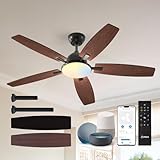
Overview: Amico’s 52-inch smart ceiling fan prioritizes serenity and efficiency for noise-sensitive environments. Engineered around a reversible all-copper DC motor, it achieves an remarkable 20dB noise level—comparable to falling leaves—while delivering six adjustable wind speeds. The A-grade energy efficiency rating promises 80% electricity savings over traditional AC fans, making it ideal for bedrooms, nurseries, and farmhouse-style spaces where quiet operation is essential.
What Makes It Stand Out: The whisper-quiet 20dB operation is genuinely exceptional, creating a disturbance-free environment perfect for light sleepers, babies, and elderly family members. The three-color temperature system (3000K/4000K/6000K) offers practical versatility without complexity, while 10%-100% dimming accommodates diverse activities. The reversible motor circulates warm air in winter and cool air in summer, and the remote doubles as a wall switch after mounting.
Value for Money: This fan delivers premium acoustic engineering at a mid-tier price point. Long-term energy savings combined with uncompromising quietness create compelling value for families prioritizing comfort over flashy features. The straightforward functionality avoids premium pricing associated with RGB systems.
Strengths and Weaknesses: Pros: Unbeatable 20dB ultra-quiet operation; top-tier A energy efficiency; simple, reliable three-color lighting; versatile control options; remote-to-wall-switch conversion; reversible motor for year-round use.
Cons: No RGB or advanced ambient lighting; limited timer presets (2/4 hours only); design leans traditional, potentially clashing with ultra-modern decor; app experience less refined than premium competitors.
Bottom Line: The definitive choice for bedrooms and family spaces where silence is paramount. Amico sacrifices flashy lighting for exceptional acoustic performance and energy savings, making it perfect for households with infants, elderly residents, or anyone sensitive to noise pollution.
10. Dreo Smart Ceiling Fans with Lights, 42 Inch Black Ceiling Fan, 12 Speeds & 3 Fan Modes, Stepless Color Tones, Dimmable LED Light, 1-12H Timer, Quiet DC Motor, Remote/APP/Alexa/Wall Switch Control
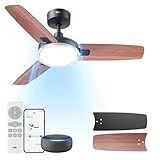
Overview: Dreo’s 42-inch black ceiling fan delivers granular control and sophisticated design for smaller contemporary spaces. Despite its compact footprint, it offers an impressive 12 speed settings and three operational modes accessible via remote, app, Alexa, or wall switch. The integrated 2400-lumen LED provides stepless brightness and an expanded 2700K-6500K color range, while the reversible black/wood grain blades and crystal light cover add visual interest to living rooms, bedrooms, and kitchens.
What Makes It Stand Out: The extensive speed control—12 settings via app versus six on remote—allows precise airflow customization rarely seen in this size category. The one-tap reversal function simplifies seasonal transitions without disassembly. Aesthetic versatility shines through reversible blade finishes and a chic crystal diffuser. The 1-12 hour timer offers unmatched flexibility compared to competitors’ limited presets, and FTC-certified 50% energy reduction demonstrates measurable efficiency gains.
Value for Money: This fan punches above its weight class, offering premium control granularity and design flair at a price point typically associated with basic smart fans. The multi-control versatility and extended timer range justify investment for style-conscious users in compact-to-medium rooms.
Strengths and Weaknesses: Pros: Exceptional 12-speed granularity; flexible 1-12 hour timer; stylish reversible blade design; crystal light cover aesthetic; true multi-control (including wall switch); quiet sub-31dB operation; one-tap seasonal reversal.
Cons: 42-inch diameter limits coverage for large rooms; lower 3400 CFM average airflow; black finish may not suit all decor; smaller blade span reduces overall air movement compared to 52-inch alternatives.
Bottom Line: An excellent compact solution for apartments and smaller rooms where control precision and design matter. The Dreo 42" trades coverage area for granular customization and aesthetic appeal, making it ideal for intimate spaces rather than open-plan living areas.
Why Smart Ceiling Fans Are Revolutionizing Modern Homes
The shift toward intelligent ceiling fans isn’t just about adding another app to your phone—it’s about reimagining how we experience comfort in our personal spaces. These devices serve as the perfect bridge between traditional home fixtures and the fully automated homes of the future. By integrating with broader smart home ecosystems, they contribute to a cohesive environment where temperature, lighting, and air quality work in harmony.
What sets 2026’s smart ceiling fans apart is their ability to think for themselves. Advanced onboard processors analyze room conditions in real-time, adjusting speed and direction based on factors like humidity levels, thermostat settings, and even the number of people detected in a space. This autonomous operation means you’re not constantly reaching for a remote or smartphone; the fan anticipates your needs before you realize them yourself.
The Evolution from Traditional to Intelligent
Remember when ceiling fans had three speeds and a pull chain? That simplicity has given way to multi-dimensional control systems that offer granular command over every aspect of operation. Modern smart fans feature variable speed motors with dozens of incremental settings rather than the traditional three or four speeds. This precision allows for subtle adjustments that maintain perfect comfort without the jarring jumps between settings that older fans required.
The intelligence extends beyond speed control. Directional automation now responds to seasonal changes, automatically switching from downdraft mode in summer to updraft mode in winter to redistribute warm air that collects near ceilings. Some advanced models even factor in local weather forecasts, preemptively adjusting their operation when a cold front or heat wave is approaching.
Whole-Home Climate Integration
Smart ceiling fans in 2026 don’t operate in isolation—they communicate directly with your HVAC system to create a synchronized comfort strategy. When your air conditioning kicks on, the fan automatically adjusts to complement the cooling effort rather than working against it. This coordination can reduce HVAC runtime by up to 30%, translating to significant energy savings and extended equipment life.
The integration goes deeper with multi-zone homes. Fans in different rooms can communicate with each other, creating pressure differentials that improve overall air circulation throughout your house. This networked approach eliminates hot and cold spots while maintaining consistent comfort levels from room to room.
Key Smart Features to Look for in 2026 Models
When evaluating smart ceiling fans for your modern home, certain features have become essential rather than optional. The baseline expectations have risen dramatically, and understanding which capabilities truly matter will help you separate genuine innovation from marketing fluff.
Adaptive Learning Algorithms
The most sophisticated fans now employ machine learning to understand your household’s patterns. They track when rooms are typically occupied, which temperatures you prefer at different times of day, and how you manually adjust settings. Over a few weeks, the fan builds a comfort profile and begins making proactive adjustments. If you consistently increase the speed at 3 PM when afternoon sun hits your living room, the fan will start doing it automatically.
These learning systems also account for seasonal shifts, recognizing that your preferences in July differ from those in December. The best implementations allow multiple user profiles, so each family member’s preferences can be accommodated when they’re detected in a room.
Precision Environmental Sensors
Gone are the days when a fan simply spun faster or slower. Modern units come equipped with arrays of sensors that monitor temperature, humidity, air quality, and occupancy. The temperature sensor ensures the fan responds to actual room conditions rather than thermostat settings from a different location. Humidity sensors trigger increased circulation when moisture levels rise, preventing that sticky feeling before it starts.
Air quality sensors represent one of the newest additions, detecting particulates and VOCs. When air quality degrades, the fan increases circulation to help your air purification systems work more effectively. Occupancy sensors ensure you’re not cooling empty rooms, while also enabling automatic shutoff when everyone leaves.
Bidirectional Smart Dimming Integration
Lighting integration has reached new levels of sophistication in 2026 models. If your fan includes an integrated light kit, smart dimming capabilities should work in both directions—meaning the fan can adjust its light output based on natural light levels, time of day, or activity in the room. Morning routines might trigger bright, cool-toned light, while evening movie watching prompts warm, dimmed illumination.
The most advanced systems sync with circadian rhythm research, automatically adjusting color temperature throughout the day to support your natural sleep-wake cycle. This feature transforms your ceiling fan into a wellness device that contributes to better sleep and overall health.
Understanding Smart Home Integration Protocols
Compatibility remains one of the biggest concerns for smart home enthusiasts. With multiple competing standards, ensuring your new ceiling fan works with your existing ecosystem requires some technical knowledge.
Matter Standard Adoption
The Matter protocol has finally achieved mainstream adoption in 2026, and it should be your primary requirement for any smart ceiling fan purchase. This universal standard ensures your fan works seamlessly across Apple HomeKit, Google Home, Amazon Alexa, and Samsung SmartThings without compatibility issues. Fans with Matter certification can be controlled by any compatible app or voice assistant, eliminating ecosystem lock-in.
Matter also enables local control, meaning your fan continues to operate even when internet service is disrupted. This reliability factor is crucial for a device that impacts your daily comfort. The standard’s robust security framework protects against the vulnerabilities that plagued early IoT devices.
Wi-Fi 6E and Thread Networking
Connectivity hardware has evolved significantly. Look for fans supporting Wi-Fi 6E, which offers dedicated bandwidth for smart home devices, reducing lag and improving responsiveness. The 6 GHz band provides interference-free communication, crucial for fans installed in homes with dozens of connected devices.
Thread mesh networking has become equally important for larger homes. Fans with Thread capability act as network extenders for other Thread devices, strengthening your overall smart home mesh. This low-power protocol is particularly valuable for battery-powered accessories like remote controls or wall switches that communicate with the fan.
Backward Compatibility Considerations
Even in 2026, you might have older smart home devices that haven’t been updated to the latest standards. Quality smart fan manufacturers include bridge functionality that can translate commands between old and new protocols. This future-proofs your investment while respecting your existing setup.
Some fans include infrared receivers that work with legacy universal remotes, providing a fallback control method when you don’t want to use voice or app commands. This hybrid approach acknowledges that sometimes simple physical controls are still the most convenient option.
Design Trends for Modern Smart Ceiling Fans
Aesthetics matter as much as intelligence in modern homes. The design language of smart ceiling fans has evolved to complement contemporary architecture rather than clash with it.
Minimalist Integrated Designs
The most sought-after designs in 2026 feature ultra-thin profiles with integrated LED light panels that disappear when turned off. These fans mount flush to the ceiling, creating a sleek, floating appearance that works beautifully in rooms with clean lines and minimal ornamentation. The motor housings are compact and often finished in matte textures that absorb rather than reflect light.
Blade designs have become more sculptural, with some models featuring retractable blades that extend only when spinning. This transformative design allows the fixture to function as a simple pendant light when the fan isn’t needed, perfect for rooms where aesthetics sometimes trump airflow.
Material Innovation
Sustainable materials dominate current design trends. Fans feature blades crafted from compressed bamboo fiber, recycled ocean plastics, and even mycelium-based composites. These eco-friendly materials don’t sacrifice performance—in fact, many offer superior durability and noise dampening compared to traditional wood or plastic.
Metal finishes have moved beyond basic brushed nickel and oil-rubbed bronze. Titanium coatings provide exceptional corrosion resistance for coastal installations, while physical vapor deposition creates durable, fingerprint-resistant surfaces in unique colors like champagne gold and graphite blue.
Customizable Aesthetic Modules
Modularity has become a key selling point. Many premium fans allow you to swap blade sets, light kits, and even motor covers to refresh your room’s look without replacing the entire unit. Magnetic attachment systems make these transformations tool-free, enabling seasonal decor changes or updates to match evolving interior design trends.
Some manufacturers offer designer collaboration series where you can purchase limited-edition blade designs or light diffusers created by well-known interior designers. This approach treats the ceiling fan as a fashion accessory rather than a purely functional appliance.
Energy Efficiency and Sustainability Advances
Environmental consciousness drives much of the innovation in smart ceiling fan technology. The efficiency gains go far beyond simple ENERGY STAR ratings.
DC Motor Efficiency Breakthroughs
Brushless DC motors have become the standard, consuming up to 70% less electricity than traditional AC motors. The latest iterations feature regenerative braking systems that capture energy when slowing down and return it to your home’s electrical system. While the individual energy recovery is small, it adds up over thousands of cycles across the fan’s lifetime.
These motors operate nearly silently, with decibel ratings often below 30 dB even at higher speeds. The efficiency also translates to less heat generation, which is particularly important in rooms with lower ceilings where motor heat could affect comfort.
Solar Integration and Battery Backup
Forward-thinking models now include optional solar panels that mount on your roof and connect directly to the fan’s DC motor. This setup allows the fan to operate entirely off-grid during daylight hours, perfect for sunrooms, covered patios, or homes pursuing net-zero energy consumption.
Integrated battery backup systems provide 4-6 hours of runtime during power outages. Unlike whole-home battery systems, these compact units power only the fan and its light, maintaining comfort and safety lighting when the grid goes down. The batteries recharge automatically when power returns.
Carbon Footprint Tracking
Advanced smart fans include energy monitoring that calculates your carbon savings compared to running HVAC systems alone. Through companion apps, you can track your environmental impact over time, with some programs even translating your savings into equivalent trees planted or miles not driven.
These tracking features often include gamification elements, allowing you to compete with neighbors or set personal sustainability goals. The data can be shared with utility companies to qualify for additional green energy rebates or time-of-use rate discounts.
Installation Considerations for Smart Ceiling Fans
Installing a smart ceiling fan involves more than just mounting hardware. The electrical and network requirements demand careful planning to ensure optimal performance.
Electrical Infrastructure Requirements
Most smart ceiling fans require a neutral wire at the ceiling box, which wasn’t standard in homes built before the 1980s. While adapters exist, they can limit functionality and reliability. If you’re in an older home, budget for an electrician to run proper wiring before installation.
Dedicated circuits are recommended for fans with larger motors or integrated air purification systems. While not always necessary, a dedicated 15-amp circuit prevents interference from other appliances and ensures consistent performance. This is especially important in kitchens or workshops where power tools might share circuits.
Network Signal Strength
Your fan’s smart features depend on strong Wi-Fi or Thread signals. Before installation, use your phone to test signal strength at the ceiling location. If you’re showing less than two bars, consider installing a mesh network node in the room or opting for a fan with external antenna options.
Some manufacturers offer powerline networking adapters that use your home’s electrical wiring to create a reliable network connection. This approach bypasses Wi-Fi entirely, providing enterprise-grade reliability for mission-critical comfort control.
Smart Switch vs. Smart Fan Control
You’ll need to decide whether to control the fan through a smart wall switch or rely entirely on the fan’s built-in intelligence. Smart switches provide convenient physical control and ensure the fan has power for automation features. However, they add another point of potential failure and can complicate voice control commands.
The hybrid approach works best: install a simple on/off smart switch that ensures power availability, then control speed and features through the fan’s app or voice commands. This setup prevents the common issue of someone flipping a physical switch and cutting power to your automated fan.
Voice Control and AI Capabilities
Natural language processing has transformed how we interact with ceiling fans, moving beyond simple on/off commands to nuanced, contextual control.
Context-Aware Voice Commands
Modern smart fans understand complex, multi-part commands like “set the bedroom fan to gentle breeze mode for sleeping” or “sync the living room fan with the thermostat.” The AI interprets these requests by accessing historical data about your preferences, current room conditions, and even your calendar.
Voice assistants can now differentiate between household members by voice print, automatically loading individual comfort profiles. When you ask for “my preferred setting,” the fan knows whether you like gentle circulation or powerful airflow based on who’s speaking.
Proactive AI Suggestions
The most advanced systems don’t wait for commands—they offer suggestions through your smart speaker or phone notifications. The AI might notice that every Tuesday at 7 PM you increase the fan speed while cooking dinner and proactively ask if you’d like to automate this pattern.
These suggestions extend to maintenance reminders, energy-saving opportunities, and even seasonal adjustments. The AI might detect that your fan is working harder than usual due to dust buildup and recommend a cleaning schedule before performance degrades.
Multi-Language and Accessibility Features
Voice control now supports dozens of languages and dialects natively, with regional accent adaptation improving recognition accuracy. For accessibility, advanced fans integrate with eye-tracking software and gesture controls for users with mobility limitations.
Some models include haptic feedback in their remote controls, providing tactile confirmation of commands for visually impaired users. The combination of multiple control modalities ensures everyone can operate the fan comfortably regardless of physical abilities.
Mobile App Functionality and User Experience
The companion app is your primary interface for advanced configuration and monitoring. A well-designed app transforms the user experience from frustrating to delightful.
Intuitive Dashboard Design
Top-tier apps feature customizable dashboards that display the information most relevant to you. Parents might prioritize child safety locks and scheduling, while energy-conscious users want real-time power consumption and cost tracking front and center.
The best interfaces use visual metaphors like airflow animations and color-coded comfort zones rather than overwhelming you with raw data. Drag-and-drop scheduling allows you to create complex routines by simply moving icons on a timeline, making automation accessible to non-technical users.
Remote Access and Geofencing
Cloud connectivity enables control from anywhere with internet access. Checking if you left the fan running after leaving for vacation takes seconds, and you can turn it off remotely to save energy.
Geofencing capabilities automatically adjust fan operation based on your location. As you drive home from work, the fan can start cooling your bedroom so it’s comfortable when you arrive. When the last person leaves the house, all fans can enter eco-mode to minimize energy use.
Firmware Updates and Feature Expansion
Quality smart fans receive regular firmware updates that add new features and improve performance. The app should handle these updates automatically during low-usage hours, ensuring your fan gets better over time without manual intervention.
Some manufacturers have opened their platforms to third-party developers, allowing for unexpected feature additions. A developer might create a plugin that syncs your fan with your fitness tracker, increasing airflow during post-workout cooldown periods.
Smart Sensors and Automation Features
The sensor arrays in 2026’s smart ceiling fans enable automation scenarios that feel like magic when implemented correctly.
Occupancy and Presence Detection
Advanced infrared and radar sensors detect not just if someone is in the room, but where they are and how many people are present. The fan can direct airflow toward occupied areas while reducing circulation in empty corners, creating personalized comfort zones.
Pet detection algorithms differentiate between human and animal movement, preventing false triggers from cats or dogs. You can set different automation rules for when pets are home alone versus when humans are present, ensuring furry family members stay comfortable without wasting energy.
Environmental Trigger Systems
Humidity sensors can trigger increased circulation when levels rise above comfortable thresholds, preventing mold growth and that oppressive sticky feeling. Temperature sensors work independently of your thermostat, creating micro-climate control for individual rooms.
Light sensors enable circadian rhythm lighting adjustments while also detecting when sunny conditions warm a room, prompting preemptive cooling. Air quality sensors can ramp up circulation when VOCs or particulates spike, working in concert with air purifiers to maintain healthy indoor air.
Integration with Sleep and Wellness Tracking
Sleep tracking integration represents one of the most innovative trends. By connecting to your wearable device or under-mattress sensor, the fan can adjust airflow based on your sleep stage. During deep sleep, it reduces speed to prevent disturbance. If it detects you’re getting too warm during REM sleep, it increases circulation just enough to maintain comfort without waking you.
Wellness-focused automation extends to home office setups. Fans can sync with your computer’s calendar, increasing airflow during stressful meetings or when you’ve been sedentary for too long, promoting alertness and comfort.
Price Ranges and Value Expectations in 2026
Smart ceiling fans span a wide price spectrum, and understanding what you get at each tier helps set realistic expectations for your budget.
Entry-Level Smart Fans ($150-$300)
Fans in this range offer basic smart connectivity—typically Wi-Fi control through a proprietary app and voice assistant compatibility. You’ll get variable speed control and scheduling, but sensor arrays are limited to basic temperature and occupancy detection. Build quality is solid but uses standard materials like painted MDF blades and basic DC motors.
These models work well for guest bedrooms, home offices, or as an introduction to smart fan technology. They lack the advanced AI and multi-protocol support of premium models but deliver core smart functionality reliably.
Mid-Range Options ($300-$600)
This sweet spot offers the best value for most homeowners. Expect Matter certification, robust sensor suites including humidity and air quality monitoring, and high-quality materials like sustainable wood or composite blades. Motors are nearly silent, and integration with major smart home platforms is seamless.
You’ll find features like circadian lighting, advanced scheduling, and basic learning algorithms. Build quality supports 10-15 year lifespans, and warranty coverage typically extends to 5-7 years. These fans suit primary living spaces and master bedrooms where performance and aesthetics both matter.
Premium Smart Fans ($600-$1,200+)
High-end models justify their price with cutting-edge features like AI-powered automation, solar integration options, and designer aesthetics. Materials include aircraft-grade aluminum, hand-finished wood veneers, and innovative composites. Every component is engineered for maximum efficiency and longevity.
Expect features like multi-user voice recognition, predictive maintenance alerts, and integration with professional home automation systems like Control4 or Crestron. These fans often include white-glove installation services and extended warranties up to 15 years. They’re ideal for showcase homes or rooms where the fan is a central design element.
Maintenance and Longevity of Smart Ceiling Fans
Smart features add complexity, but proper maintenance ensures your investment lasts decades. The maintenance needs differ from traditional fans in several key ways.
Digital Maintenance Tracking
The fan’s app now tracks runtime hours, motor temperature, and vibration patterns to predict when maintenance is due. Rather than arbitrary annual schedules, you receive alerts based on actual usage and performance degradation. The system might detect bearing wear through subtle changes in motor noise and recommend servicing before failure occurs.
Some apps include video tutorials that guide you through cleaning and minor repairs, with augmented reality overlays showing exactly which screws to remove or components to clean. This self-service approach saves money while ensuring proper maintenance.
Firmware and Security Updates
Unlike traditional fans, smart models require ongoing software maintenance. Reputable manufacturers commit to security updates for at least 10 years, protecting against emerging vulnerabilities. The fan should automatically install these updates during predetermined maintenance windows, typically between 2-4 AM.
If a manufacturer discontinues support, open-source firmware communities sometimes continue updates for popular models. When purchasing, research the manufacturer’s track record for long-term software support to avoid premature obsolescence.
Component Accessibility and Repairability
Sustainability trends have pushed manufacturers to design fans with modular, replaceable components. The smart control module should be accessible without disassembling the entire fan, allowing for easy upgrades or replacements if technology changes. Look for fans with readily available replacement parts and clear repair documentation.
Blade balance sensors can detect when cleaning is needed or when a blade has become unbalanced, preventing the wobble that shortens motor life. Some premium models include self-balancing mechanisms that automatically adjust for minor imbalances.
Troubleshooting Common Smart Fan Issues
Even the best smart ceiling fans encounter problems. Knowing how to diagnose and resolve common issues saves time and prevents unnecessary service calls.
Connectivity Dropouts
The most frequent complaint involves fans losing Wi-Fi connection. This often stems from weak signals at ceiling height or network congestion. Start by checking if other devices in the room maintain stable connections. If not, the issue is your network, not the fan.
For persistent dropouts, try assigning the fan a static IP address in your router settings. This prevents IP conflicts that can cause disconnections. Some fans allow you to adjust Wi-Fi power saving modes—disabling aggressive power saving can improve stability at the cost of slightly higher standby power consumption.
Voice Command Misunderstandings
When your smart assistant can’t control the fan, the problem is usually naming conflicts or skill configuration. Ensure your fan has a unique name that doesn’t conflict with other devices (“bedroom fan” is better than just “fan”). Check that you’ve enabled the correct skill or integration in your assistant’s app and that your accounts are properly linked.
If commands work intermittently, try simplifying the device name and creating routines for complex operations. Instead of saying “set the living room fan to summer breeze mode,” create a routine triggered by “I’m hot” that executes the desired settings.
Sensor Calibration Drift
Environmental sensors can lose accuracy over time. Most apps include calibration routines you should run seasonally. For temperature sensors, compare readings to a reliable thermometer placed near the fan. Humidity sensors can be calibrated using the salt test method, though many apps now include automatic calibration against local weather data.
If occupancy sensors become too sensitive or not sensitive enough, check for environmental changes. New furniture arrangements can alter radar patterns, while changes in lighting conditions affect infrared sensors. Recalibrating the sensor array through the app usually resolves these issues.
Safety Features and Certifications
Smart ceiling fans include advanced safety features that protect both the device and your family, but understanding certifications ensures you’re getting genuine protection.
Overload and Thermal Protection
Quality smart fans continuously monitor motor temperature and current draw. If the motor overheats due to dust buildup or bearing failure, the system shuts down automatically and sends an alert to your phone. This prevents fire hazards and motor damage. Overload protection similarly cuts power if the blades become obstructed or the motor draws excessive current.
These safety systems should be UL or ETL listed, with certifications specific to smart devices. Look for fans that meet UL 507 standards for ceiling fans and UL 916 for energy management equipment, ensuring the smart components meet the same safety standards as the mechanical parts.
Child and Pet Safety Innovations
Smart fans can automatically enter “child mode” when they detect small humans or animals in the room, limiting maximum speed to prevent injury from curious hands or paws. Some models include pinch-detection sensors that stop blade rotation instantly if resistance is detected, similar to garage door safety systems.
Blade materials have evolved to be softer and more flexible at the edges while maintaining rigidity where it matters for performance. This reduces injury risk without sacrificing airflow efficiency. Look for fans with blade guards or shrouded designs if child safety is a primary concern.
Cybersecurity Certifications
With ransomware attacks targeting IoT devices, cybersecurity matters. Reputable manufacturers submit their devices for independent security audits and obtain certifications like ioXt (Internet of Things Security). The fan should use end-to-end encryption for all communications and store data locally rather than in the cloud when possible.
Check if the manufacturer offers a bug bounty program, which indicates confidence in their security and commitment to addressing vulnerabilities. Regular security patches should be automatic and mandatory, not optional updates users might ignore.
Customization Options for Personalized Comfort
The ability to tailor your fan’s behavior to your exact preferences separates good smart fans from truly great ones. Customization goes far beyond simple speed settings.
Creating Custom Airflow Patterns
Advanced fans allow you to design custom airflow programs that vary speed, direction, and timing in complex sequences. You might create a “gentle waves” pattern that slowly increases and decreases speed to simulate natural ocean breezes, or a “focused work” pattern that maintains steady, distraction-free circulation.
These patterns can incorporate external triggers. Your “exercise mode” might start with gentle airflow during warm-up, increase to maximum during intense activity, then gradually decrease for cool-down—all synchronized with your fitness app or heart rate monitor.
Seasonal and Weather-Based Profiles
Create distinct profiles for different seasons that automatically activate based on calendar dates or local weather conditions. Your “spring” profile might emphasize air circulation and pollen reduction, while “winter” focuses on warm air redistribution and humidity control.
Weather API integration allows your fan to respond to changing conditions. When a storm approaches, the fan can increase circulation to compensate for pressure changes. During wildfire season, it can work with air purifiers to maintain indoor air quality when outdoor air becomes hazardous.
Multi-User and Room-Specific Adjustments
Households with varying comfort preferences benefit from multi-user profiles that automatically adjust when different people are present. The fan learns that Dad likes stronger airflow while Mom prefers gentle circulation, compromising with diagonal airflow patterns when both are detected.
Room-specific customization accounts for unique architectural features. A fan in a room with high ceilings might have a “winter” setting that runs at higher speeds to push warm air down effectively, while a bedroom fan uses ultra-quiet, low-speed settings optimized for sleep.
Making Your Final Decision: A Buyer’s Checklist
With so many factors to consider, a systematic approach ensures you select the perfect smart ceiling fan for your specific needs and home environment.
Assessing Your Smart Home Ecosystem
Start by listing all your current smart home platforms and devices. Ensure any fan you consider is compatible with your primary ecosystem, preferably through Matter certification. Check if you need hub devices or if the fan connects directly to your network.
Consider your technical comfort level. If you enjoy tinkering, a fan with open API access and IFTTT support offers unlimited customization. If you prefer set-it-and-forget-it simplicity, choose a fan with robust out-of-the-box automation that requires minimal configuration.
Prioritizing Must-Have Features
Create a tiered list of features: must-have, nice-to-have, and unnecessary. Must-haves might include Matter support, quiet operation below 35 dB, and occupancy sensors. Nice-to-haves could be circadian lighting and air quality monitoring. Unnecessary features might include solar integration if you live in an apartment or advanced AI if you’re uncomfortable with machine learning in your home.
Be realistic about which features you’ll actually use. A fan with 20 automation triggers sounds impressive, but if you’ll only use basic scheduling, you’re paying for complexity you don’t need.
Planning for Future Expansion
Consider how your needs might evolve. If you’re planning to add more smart home devices, choose a fan with Thread mesh capability that strengthens your network. If you might move in a few years, select a model with transferable warranty and universal installation hardware that works in various ceiling types.
Look for manufacturers with clear roadmaps for firmware updates and feature additions. A fan that’s excellent today but receives no updates will feel outdated in two years, while a solid mid-range model that gains new capabilities through updates offers better long-term value.
Frequently Asked Questions
How difficult is it to install a smart ceiling fan compared to a traditional one?
Installation complexity is similar, with the addition of connecting the fan to your Wi-Fi network during setup. Most smart fans include clear app-based guided installation that walks you through each step. The electrical connections are identical to traditional fans, but you may need to install a compatible wall switch if you want physical controls. If you’re comfortable installing a standard ceiling fan and setting up smart home devices, you can likely handle a smart fan installation. Otherwise, professional installation typically costs $100-200 and ensures optimal performance.
Will a smart ceiling fan work if my internet goes down?
Yes, but with limitations. Fans with Matter certification and Thread networking continue to operate via local control even without internet. You can use voice commands through smart speakers on the same network and control the fan through its app while at home. However, remote access from outside your home and cloud-based features like weather integration will be unavailable until internet service returns. Basic functions like speed control and scheduling that are stored locally on the fan will continue working normally.
Do smart ceiling fans use more electricity than traditional fans?
Actually, they typically use less. The DC motors common in smart fans are inherently more efficient than AC motors in traditional fans. Smart features like occupancy detection and automated scheduling prevent unnecessary operation, further reducing energy consumption. While the smart components draw a small amount of standby power (usually 1-2 watts), the overall energy savings from optimized operation more than offset this. Most users see a 20-40% reduction in fan-related electricity usage compared to traditional fans left running unnecessarily.
Can I integrate a smart ceiling fan with my existing smart home system?
If your fan has Matter certification, it will work seamlessly with all major platforms including Apple HomeKit, Google Home, Amazon Alexa, and Samsung SmartThings. For older systems, check compatibility with specific protocols like Zigbee or Z-Wave. Most quality smart fans support multiple standards simultaneously. Before purchasing, verify the fan works with your specific hub or voice assistant by checking the manufacturer’s compatibility list or testing with a similar device.
How long do smart ceiling fans typically last?
The mechanical components—motor, bearings, and blades—last 15-20 years, similar to high-quality traditional fans. The smart control module typically has a shorter lifespan of 7-10 years, but most manufacturers design these to be replaceable without replacing the entire fan. Software support usually continues for 10 years after purchase, with security updates potentially longer. Choosing a fan from an established manufacturer with a track record of long-term support maximizes your investment’s lifespan.
Are smart ceiling fans noisy?
Modern smart fans are significantly quieter than traditional models. DC motors produce less mechanical noise, and precision balancing reduces wobble and vibration. Most quality smart fans operate below 30 decibels on low speeds (quieter than a whisper) and remain under 45 decibels at maximum speed. Smart features like vibration sensors can detect when noise increases due to dust buildup or imbalance, alerting you to maintenance needs before noise becomes noticeable.
What happens if the manufacturer stops supporting my smart fan?
If a manufacturer discontinues support, core functions will continue working locally, but cloud features and app updates will cease. Some manufacturers open-source their firmware when ending support, allowing the community to maintain updates. To minimize risk, choose fans with Matter certification and local API access, which ensures continued compatibility with major smart home platforms regardless of manufacturer support. Avoid fans that require proprietary cloud services for basic operation.
Can smart ceiling fans help with heating costs in winter?
Absolutely. Smart fans excel at winter operation through automated direction reversal and speed optimization. In updraft mode, they gently pull cool air up and push warm air down from the ceiling without creating a draft. Smart scheduling can run the fan only when rooms are occupied and temperature differentials warrant circulation. Integration with smart thermostats ensures the fan complements your heating system rather than working against it, typically reducing heating costs by 10-15%.
Do I need a hub to control a smart ceiling fan?
Most modern smart fans connect directly to your Wi-Fi network and don’t require a separate hub. However, using a smart home hub like SmartThings or Hubitat offers benefits including local control, more sophisticated automation, and reduced Wi-Fi congestion. Fans with Thread networking act as their own mini-hubs, extending the mesh network to other devices. If you have more than a few smart devices, a hub improves overall system reliability and response times.
How secure are smart ceiling fans from hacking?
Reputable smart fans include multiple security layers: encrypted communications, secure boot processes, and regular security updates. Look for certifications like ioXt and ensure the manufacturer has a bug bounty program. Keep firmware updated and use strong, unique passwords for your smart home accounts. Disable unnecessary cloud features if you’re concerned about privacy. While no connected device is 100% hack-proof, major manufacturers treat security seriously and quickly patch discovered vulnerabilities.
See Also
- The 10 Ultimate Best Smart Ceiling Fans for Modern Homes in 2026
- 10 Game-Changing Smart Ceiling Fans for Modern Homes in 2026
- 2026’s Top 10 Smart Ceiling Fans for Outdoor Patios
- 10 Premium Smart Ceiling Fans for Luxury Homes (Worth the Investment)
- The 10 Ultimate Best Smart Ceiling Fans for Smart Homes in 2026